
Executive Overview
The move represents a major escalation in Ankara’s defensive posture regarding the ongoing Russo-Ukrainian war. For weeks, Turkish authorities have watched with growing alarm as the Black Sea—a vital maritime corridor for global energy and agricultural commodities—morphs into a high-risk combat zone. The immediate catalyst for the restrictions appears to be a violent uptick in kinetic strikes targeting merchant shipping, including recent drone and missile attacks that injured Turkish citizens and severely damaged Turkish-owned vessels.
While Ankara has not issued a formal decree regarding the closures, the operational reality on the ground is unmistakable. Vessels heading toward Russia’s Novorossiysk terminal—a cornerstone of global oil and grain exports—are facing unprecedented hurdles, with authorities citing the need for extended "application reviews." Some operators report that the restrictions are being applied broadly to ships destined for Ukrainian ports as well, effectively acting as a regulatory chokehold on Black Sea maritime commerce.
This intervention by a crucial NATO member places unprecedented pressure on international supply chains. Coming at a time when global oil flows are already fractured by conflict-driven disruptions in the Middle East and the Strait of Hormuz, the effective closure of key Black Sea transit routes threatens to send shockwaves through international commodity markets. With wheat prices already hovering near multi-year highs and energy markets perpetually on edge, the geopolitical friction within Turkey’s territorial waters underscores the fragile state of global trade security.
Detailed Chronology of the Crisis
The friction point that culminated in Turkey’s current maritime bottleneck developed over several weeks of escalating kinetic activity in the Black Sea, marked by a systematic expansion of target profiles by both Russian and Ukrainian forces.
July 2025: The Caspian Pipeline Consortium and the First Warning Signs
The current crisis traces its operational roots back to July, when the security environment around key export terminals began to deteriorate rapidly. During a wave of strikes in the eastern Black Sea, a Turkish-flagged merchant ship was struck in the vicinity of the Caspian Pipeline Consortium (CPC) oil terminal near Novorossiysk.
The attack was not an isolated incident; it formed part of a coordinated series of strikes that forced the CPC facility—responsible for a significant share of Kazakh and Russian oil exports to global markets—to repeatedly halt and restart its loadings. These disruptions signaled to Ankara that commercial shipping in the northern Black Sea was no longer insulated from the broader theater of war.
Early August 2025: Direct Casualties and Diplomatic Alarm
The situation deteriorated from economic disruption to direct physical threat in early August. On August 4, the Turkish Foreign Ministry confirmed that a group of Turkish citizens had sustained injuries following targeted drone strikes on two separate Turkish-owned merchant vessels operating in the region.
The psychological and political impact in Ankara was immediate. Owning vital commercial maritime assets and bearing responsibility for the lives of its citizens at sea, the Turkish government shifted from passive diplomatic appeals to active operational intervention.
In a sharply worded statement released on August 4, the Turkish Foreign Ministry declared:
"We reiterate our call to all relevant actors, especially the warring parties, to urgently implement concrete measures to ensure navigational safety in the Black Sea."
The ministry warned that any further escalation would yield "multifaceted negative consequences," explicitly highlighting the severe dangers posed to international food security.
August 8, 2025: The De Facto Operational Shutdown
By August 8, the warnings translated into bureaucratic reality. Ship-tracking data compiled by Bloomberg revealed a stark bifurcation in Black Sea traffic. While vessels bound for southern and western Black Sea destinations—such as ports in Bulgaria, Romania, Georgia, and domestic Turkish terminals—continued their northbound journeys through the Dardanelles unhindered, vessels scheduled for Novorossiysk and targeted Ukrainian facilities were stalled.

The Directorate General of Coastal Safety began informing ship operators that it could not issue transit permits for these high-risk voyages, or alternatively required extensive, undefined periods to "review" transit applications. When pressed for clarification, Turkish officials remained tight-lipped, directing queries to the Transport and Infrastructure Ministry in Ankara. As of press time, the ministry has declined or failed to respond to repeated email and phone inquiries outside normal business hours, leaving the maritime community to navigate a policy of calculated ambiguity.
Supporting Context & Metrics: The Anatomy of the Turkish Straits
To understand the global impact of Turkey’s operational squeeze, one must examine the unique geography and legal framework governing the Turkish Straits—collectively comprising the Bosphorus, the Marmara Sea, and the Dardanelles.
[Black Sea]
    │
    ▼
[Bosphorus Strait] (Istanbul - 40,000+ annual transits)
    │
    ▼
[Sea of Marmara]
    │
    ▼
[Dardanelles Strait] (Key bottleneck where Turkey is delaying permits)
    │
    ▼
[Aegean Sea / Mediterranean]
Strategic Chokepoints of Global Trade
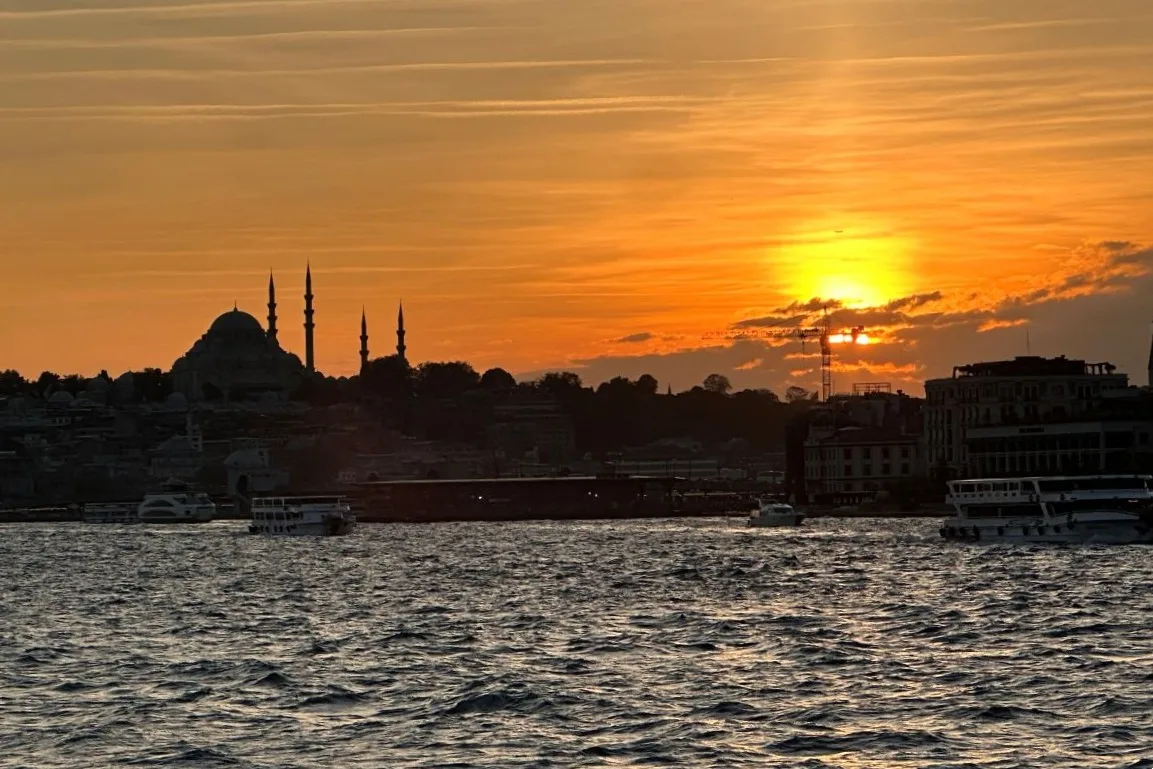
The Bosphorus and Dardanelles straits are among the most heavily trafficked and strategically sensitive waterways on earth. Serving as the sole maritime gateway connecting the Black Sea to the Aegean and, by extension, the Mediterranean, these narrow, winding corridors are the logistical umbilical cord for Eastern Europe and Central Asia.
According to official statistics from the Turkish Transport and Infrastructure Ministry, more than 40,000 commercial vessels successfully navigated the Bosphorus in 2025 alone. These waters carry a staggering volume of global commodities:
- Crude Oil and Refined Products: Millions of barrels per day originating from Russian Black Sea ports and Kazakh fields flow through these straits to European and Asian refiners.
- Agricultural Commodities: The "breadbasket of the world," encompassing Ukraine and southern Russia, relies on this maritime highway to export vast quantities of wheat, corn, barley, and sunflower oil to developing nations across Africa, the Middle East, and Asia.
The Montreux Convention and Legal Precedents
Turkey’s authority over these waters is anchored in historical international law, most notably the 1936 Montreux Convention Regarding the Regime of the Turkish Straits. Under this treaty, Turkey is bound to guarantee freedom of passage for merchant vessels during times of peace. However, the convention also explicitly grants Ankara the sovereign right to regulate navigational safety and take defensive or precautionary measures if it perceives a direct threat to its security or neutrality.
This is not the first time Ankara has leveraged regulatory mechanisms to assert control during the conflict. In 2022, following the implementation of sweeping European Union sanctions that excluded certain Russian-linked shipments from Western maritime insurance pools, Turkey demanded that all transiting vessels provide ironclad proof of valid third-party liability insurance. The move caused temporary congestion as hundreds of tankers anchored off the straits, proving that Ankara is fully willing to use bureaucratic friction as a security lever.
Official Statements and Diplomatic Fallout
The opaque nature of Turkey’s new restrictions has left shipowners, charterers, and international regulators scrambling for clarity. The silence from the Transport and Infrastructure Ministry in Ankara stands in stark contrast to the urgency expressed by the Turkish Foreign Ministry just days prior.
The Balancing Act of a NATO State
As a member of NATO that shares a maritime border with both Russia and Ukraine, Turkey has walked a precarious diplomatic tightrope since the outbreak of the full-scale war in 2022. Ankara has refused to join Western sanctions against Moscow while simultaneously supplying advanced military hardware to Kyiv and maintaining its role as the custodian of the Montreux Convention.
However, the physical targeting of Turkish-owned commercial shipping assets has challenged this delicate balancing act. When commercial drones and missiles strike vessels flying the Turkish flag or crewed by Turkish nationals, the conflict ceases to be a distant geopolitical abstraction; it becomes a direct domestic and economic security issue. By weaponizing the permit approval process, Ankara is signaling to both Moscow and Kyiv that it will not passively absorb the collateral damage of their escalating war.
International Repercussions and Market Panic
The international shipping community has reacted with profound concern. Maritime trade associations have warned that indefinite delays in the Dardanelles create an unacceptable level of uncertainty for ship operators, who face massive demurrage costs when vessels are held at anchor indefinitely.
Furthermore, the ripple effects are being felt intensely across global commodity exchanges.
- Energy Markets: The restrictions coincide with severe disruptions in Middle Eastern energy corridors, particularly the reduced flows through the Strait of Hormuz driven by the ongoing conflict involving Iran. With Persian Gulf and Black Sea oil transit channels simultaneously compromised, global energy security faces a compounded crisis.
- Agricultural Markets: The vulnerability of the Black Sea grain corridor has long been a source of anxiety for food security organizations. Following the intensification of attacks on ports like Novorossiysk and Ukrainian hubs, international wheat futures spiked to a two-year high in July. The new bottlenecks imposed by Turkey threaten to lock existing grain supplies inside the Black Sea basin, cutting off vital exports to food-insecure regions.
Future Outlook: Navigating Uncharted Waters
As the situation develops, market analysts and geopolitical observers are closely monitoring Ankara for any sign of official policy formalization or relaxation. Several key indicators will determine the trajectory of Black Sea trade in the coming months:
- Duration of the "Reviews": If the delays at the Dardanelles stretch from days into weeks, shipowners will likely begin rerouting or canceling Black Sea bookings entirely, effectively enacting a private-sector blockade out of fear of indefinite detention.
- Bilateral Pressure: Moscow and Kyiv will inevitably lobby Ankara to ease restrictions. Russia relies heavily on Novorossiysk to fund its wartime economy through uninterrupted oil and grain exports, while Ukraine depends on maritime access for its economic survival.
- Kinetic Developments: The ultimate resolution of this crisis depends on the behavior of the warring parties. Unless Russia and Ukraine agree to respect a de facto demilitarized zone or implement robust navigational safety protocols in the Black Sea, Turkey is unlikely to lift its restrictive posture.
For global supply chain managers, the message is stark: the world’s critical maritime chokepoints are increasingly vulnerable to geopolitical friction. As Turkey prioritizes the safety of its citizens and territory by slamming the brakes on Black Sea traffic, international trade must prepare for prolonged volatility, higher freight and insurance costs, and the persistent threat of commodity shortages.