Executive Overview
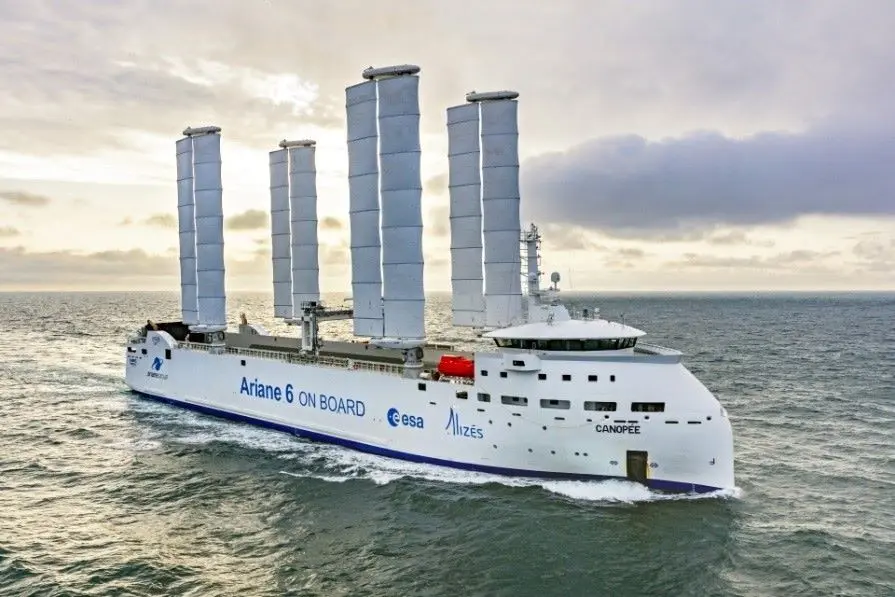
According to data released by the International Windship Association (IWSA), the commercial shipping sector has officially surpassed a critical milestone: more than 100 large commercial vessels are now actively operating with commercial wind propulsion systems installed. Together, these pioneering ships represent an aggregate cargo capacity exceeding six million deadweight tonnage (DWT). More importantly, the market dynamic has shifted perceptibly. Single-vessel demonstration projects and isolated pilot trials—which characterized the sector for much of the preceding decade—are rapidly being superseded by fleet-wide investment strategies, large-scale deployment programs, and a surge in repeat orders from major global shipowners.
This accelerating adoption curve is not happening in a vacuum. As the International Maritime Organization (IMO) and regional regulatory bodies—such as the European Union’s Emissions Trading System (EU ETS) and FuelEU Maritime initiatives—enforce stricter carbon intensity indicators and penalties, maritime operators are desperately seeking immediate, drop-in solutions to slash fuel consumption. While alternative zero-carbon fuels like green ammonia, green methanol, and hydrogen command headlines, their widespread bunkering infrastructure, scalability, and economic viability remain years—if not decades—away for large swathes of the deep-sea fleet.
Wind propulsion, by contrast, offers an immediately available, abundant, and zero-marginal-cost energy source that can be retrofitted onto existing tonnage or engineered into newbuilds. As the maritime world converges on Hamburg this September for the prestigious Shipbuilding, Machinery and Marine Technology (SMM) trade fair, the unprecedented presence of 40 IWSA member companies exhibiting and hosting events serves as an unmistakable barometer of the sector’s new gravitas. Wind propulsion is no longer just an auxiliary feature; it is rapidly becoming a cornerstone of modern commercial fleet decarbonization.
Detailed Chronology: From Novelty to Mainstream Maritime Asset
To fully understand the weight of the commercial milestones achieved in 2026, it is vital to trace the evolutionary trajectory of wind-assisted ship propulsion over the past fifteen years. The modern renaissance of wind propulsion began in the early 2010s, sparked by the 2008 global financial crisis and the subsequent introduction of the IMO’s Energy Efficiency Design Index (EEDI). At that time, shipowners faced severe overcapacity and depressed freight rates, making fuel efficiency paramount. Early innovators began dusting off century-old concepts—such as Flettner rotors, rigid suction sails, large-scale kites, and soft wing sails—adapting them with modern composite materials, computer-aided fluid dynamics (CFD), and automated control systems.
During the mid-to-late 2010s, the sector operated almost exclusively in the realm of research and development. Governments and classification societies viewed wind installations with intense skepticism regarding structural integrity, stability calculations, and aerodynamics. However, a handful of forward-thinking independent shipowners, driven by corporate sustainability goals and early regulatory foresight, agreed to host pilot installations. These early trials generated crucial empirical data proving that auxiliary wind propulsion could reliably shave between 5% and 25% off a vessel’s main engine fuel consumption, depending on route, vessel type, and technology choice.
The breakthrough phase commenced post-2020, catalyzed by the post-pandemic supply chain crunch and soaring bunker prices. As global carbon regulations tightened from conceptual frameworks into enforceable legal mandates, the economic calculus for shipowners shifted dramatically. Pilot projects transitioned into commercial contracts. Technology providers scaled up manufacturing capabilities, moving away from artisanal workshop production to industrialized fabrication of suction sails, rotor sails, and folding wing rigs.
By 2024 and 2025, the market experienced a compounding effect. Successful first-time buyers began placing repeat orders to equip entire series of newbuild bulkers, tankers, and general cargo ships. This culminated in the current state of play in 2026. The milestone of 100 operational vessels carrying over six million DWT of cargo highlights a maturing industrial ecosystem. Financial institutions, shipyards, and naval architects now routinely integrate wind-assisted propulsion into early-stage vessel designs, cementing its status as an established asset class within commercial shipping.
Supporting Context & Metrics: Quantifying the Wind Propulsion Revolution
The transformation of the wind propulsion sector is best understood through hard metrics, operational economics, and macroeconomic pressures facing the maritime supply chain.
Fleet Penetration and Cargo Capacity
The crossing of the 100-vessel operational threshold, representing more than 6 million DWT, marks an inflection point in maritime logistics. While this figure still represents a small fraction of the tens of thousands of commercial ships traversing global oceans, its significance lies in the velocity of growth and the diversity of vessel types adopting the technology. Suction sails, rotor sails, soft wings, and hard wing systems are no longer confined to niche ro-ro vessels or specialized bulk carriers; they are being successfully integrated onto oil tankers, chemical carriers, dry bulkers, and even container feeder ships.
Recent industry milestones underscore this diversification. For instance, the recent delivery of newbuild tankers equipped with advanced suction sail technology demonstrates that even hazardous cargo segments—traditionally conservative when it comes to adopting novel deck infrastructure—are embracing wind-assisted solutions to meet stringent Carbon Intensity Indicator (CII) ratings.
Economic Drivers: Fuel Savings vs. Compliance Costs
The primary catalyst for this rapid adoption is financial survival and optimization in an era of expensive compliant fuels. Heavy Fuel Oil (HFO) and Marine Gasoil (MGO) remain volatile, while upcoming alternative green fuels carry a projected cost premium of two to four times traditional bunker prices.
Wind propulsion acts as a vital economic hedge against this fuel price volatility. By capturing free kinetic energy directly from the atmosphere, wind propulsion systems reduce the shaft power required from the main engine to maintain a target speed. Empirical operational data gathered across global trade routes indicates that modern wind propulsion systems deliver immediate, measurable fuel savings ranging from 5% to over 30% annually, depending on the vessel’s operational profile and route climatology.
Furthermore, these fuel savings translate directly into a proportional reduction in greenhouse gas (GHG) emissions. Under the EU ETS, where shipowners must surrender carbon allowances for voyages touching European ports, and under the IMO’s CII framework—which penalizes vessels with declining environmental ratings—avoided emissions represent millions of dollars in direct compliance cost savings. A vessel that maintains an ‘A’ or ‘B’ CII rating thanks to wind assist avoids commercial obsolescence, commands higher charter rates, and remains attractive to cargo owners under pressure to reduce Scope 3 supply chain emissions.
Official Statements: Industry Leaders Speak on the 2026 Milestone
The gravity of the sector’s evolution has been met with vocal enthusiasm from industry leaders and trade association executives. Gavin Allwright, Secretary General of the International Windship Association (IWsa), captured the mood of the industry in a definitive August 24 press release ahead of the SMM trade fair in Hamburg.
"The pace of commercial adoption continues to accelerate," Allwright stated. "We are seeing new installations, repeat orders, and larger deployment programmes becoming the norm rather than the exception. Wind propulsion has firmly established itself as a practical, commercially viable technology that is delivering measurable fuel savings and emissions reductions today, and this is reflected in the heightened presence of wind propulsion at the industry’s largest trade fair."
Allwright emphasized that the structural shift in shipping culture is mirrored by the sheer footprint of the wind propulsion sector at upcoming global maritime exhibitions. With 40 IWSA member companies descending upon Hamburg to showcase hardware, software, and engineering services, the contrast with past decades is stark.
"The growing presence of wind propulsion at SMM mirrors the wider transformation taking place across commercial shipping," Allwright continued. "What was once regarded as a niche, ‘blue skies’ technology has rapidly become an increasingly mainstream element of vessel decarbonisation strategies, offering shipowners immediate reductions in fuel consumption while complementing alternative fuels and energy efficiency measures. The growth in use of this energy source reflects increasing confidence from shipowners and reinforces the important role wind will play in shipping’s energy transition."
This perspective is echoed by major maritime classification societies, equipment manufacturers, and progressive shipowners. Class societies—such as DNV, Bureau Veritas, and Lloyd’s Register—have updated their rulebooks to provide clear, standardized pathways for the certification and structural approval of wind propulsion systems, significantly reducing the regulatory friction that once plagued early adopters.
Future Outlook: The Road Ahead for Wind-Assisted Shipping
As the maritime industry looks beyond 2026 toward the IMO’s increasingly stringent mid-century decarbonization targets, the future outlook for wind propulsion is exceptionally robust, albeit accompanied by distinct engineering, financial, and operational challenges.
Scaling Up and Industrialization
The immediate bottleneck for the wind propulsion sector is no longer market skepticism or lack of proof-of-concept data; rather, it is manufacturing capacity and shipyard integration. As shipowners transition from single-vessel trials to fleet-wide rollouts involving dozens of ships, technology providers must scale their supply chains. Establishing strategic partnerships with major global shipyards—particularly in Asia, where the vast majority of commercial newbuilds are constructed—is essential to ensure that wind propulsion systems can be installed efficiently during the newbuild phase or retrofitted rapidly during scheduled drydockings.
Hybrid Energy Systems and Route Optimization
Looking forward, wind propulsion will not exist in isolation. The most sophisticated decarbonization strategies rely on hybrid energy ecosystems. Shipowners are increasingly combining wind-assisted propulsion with advanced hull coatings, air lubrication systems, waste heat recovery, and alternative fuel engines (such as dual-fuel methanol or LNG engines).
Moreover, advanced digital twin technology and AI-driven weather routing software are revolutionizing how ships utilize wind. Modern voyage optimization algorithms do not merely calculate the shortest physical path between two ports; they dynamically chart courses that maximize exposure to favorable wind patterns while avoiding severe storms, optimizing both safety and energy capture in real time.
Regulatory and Financial Tailwinds
Regulatory frameworks will continue to act as the primary macroeconomic tailwind for the sector. As regional carbon pricing expands and the IMO finalizes its global economic measures—potentially including a universal greenhouse gas levy on marine fuels—the economic penalty for burning fossil fuels will skyrocket. In this high-cost environment, the return on investment (ROI) for wind propulsion systems will compress further, making installations exceptionally attractive even for financially conservative shipowners.
Furthermore, green financing mechanisms, Poseidon Principles alignment, and sustainability-linked loans are increasingly rewarding shipowners who proactively integrate zero-emission technologies like wind propulsion into their fleets, unlocking cheaper capital and favorable insurance premiums.
Conclusion
The year 2026 will be remembered in maritime history books as the moment wind propulsion decisively shook off its historical associations and stepped into the vanguard of modern commercial shipping. Surpassing 100 operational vessels and six million DWT of cargo capacity is a powerful testament to engineering resilience, economic pragmatism, and environmental necessity. As the maritime world gathers in Hamburg for SMM, the message emanating from the docks and boardrooms alike is unequivocal: the wind is firmly back in shipping’s sails, driving the industry steadily toward a cleaner, more sustainable horizon.