
Executive Overview
In a major development reshaping the North American retail landscape, iconic Canadian outdoor and lifestyle brand Roots is officially going private. The transaction, spearheaded by brand management heavyweight Marquee Brands in strategic partnership with operating partner JM&A, brings an end to Roots’ tenure as a publicly traded entity—a status it held following its initial public offering (IPO) in late 2017.
The deal follows a rigorous, months-long strategic review process that began in March 2026, during which Roots’ board of directors weighed multiple acquisition proposals aimed at securing the company’s long-term financial stability. While financial terms of the private buyout have not been publicly disclosed, leadership from both Marquee Brands and JM&A have moved swiftly to reassure consumers, retail partners, and employees that the brand’s distinct cultural footprint will remain firmly planted in Canada.
Under the terms of the acquisition, JM&A will take operational control of designing, developing, manufacturing, and distributing the brand’s signature men’s and women’s apparel lines. Furthermore, JM&A will manage the physical retail footprint and e-commerce ecosystems across both Canada and the United States. This includes the continued operation of Roots’ fleet of more than 100 brick-and-mortar storefronts spanning North America.
For Marquee Brands, the acquisition adds another globally recognized name to a robust portfolio that already includes household names such as Sur La Table, Laura Ashley, Destination Maternity, BCBG, and A Pea in the Pod. The move builds on an aggressive period of expansion for Marquee Brands, which notably acquired a majority stake in storied Italian fashion house Roberto Cavalli earlier in the spring of 2026.
Despite transitioning to private ownership, executives are doubling down on maintaining the authenticity of a brand that has served as a cornerstone of Canadian pop culture and outdoor apparel for nearly half a century. However, the buyout also arrives at a critical inflection point: while Roots has shown encouraging top-line revenue growth and steady retail comparable sales, the company has simultaneously battled widening net losses, reflecting the broader economic headwinds, inflationary pressures, and operational transformations plaguing the mid-tier apparel sector.
Detailed Chronology: From Public Struggles to Private Buyout
The Public Era and Early Growing Pains
Roots was founded in 1973 by Michael Budman and Don Green in Toronto, quickly capturing the Canadian imagination with its beaver logo, premium leather goods, and comfortable cabin fleece. For decades, the brand expanded steadily as a privately held entity, becoming an unofficial uniform for Canadian cottage country and a celebrated national symbol.
Seeking to scale operations and accelerate international growth, Roots went public in October 2017 on the Toronto Stock Exchange (TSX). However, the transition to the public markets proved bumpy. The company faced intense scrutiny over quarterly earnings, shifting retail dynamics, and the high costs of scaling its U.S. footprint.
The pressures of public ownership culminated dramatically in 2020. Amid the onset of the COVID-19 pandemic, Roots’ U.S. subsidiary, Roots USA Corporation, filed for Chapter 7 bankruptcy liquidation, resulting in the immediate closure of seven retail locations south of the border. The pandemic forced the company to abruptly pivot its capital allocation strategy, pull back on risky international expansions, and rethink its entire North American operational model.
The Turnaround Strategy
In the wake of its U.S. bankruptcy restructuring, Roots embarked on a multiyear turnaround strategy. Guided by executive leadership, the brand focused heavily on margin protection, supply chain optimization, and digital transformation.
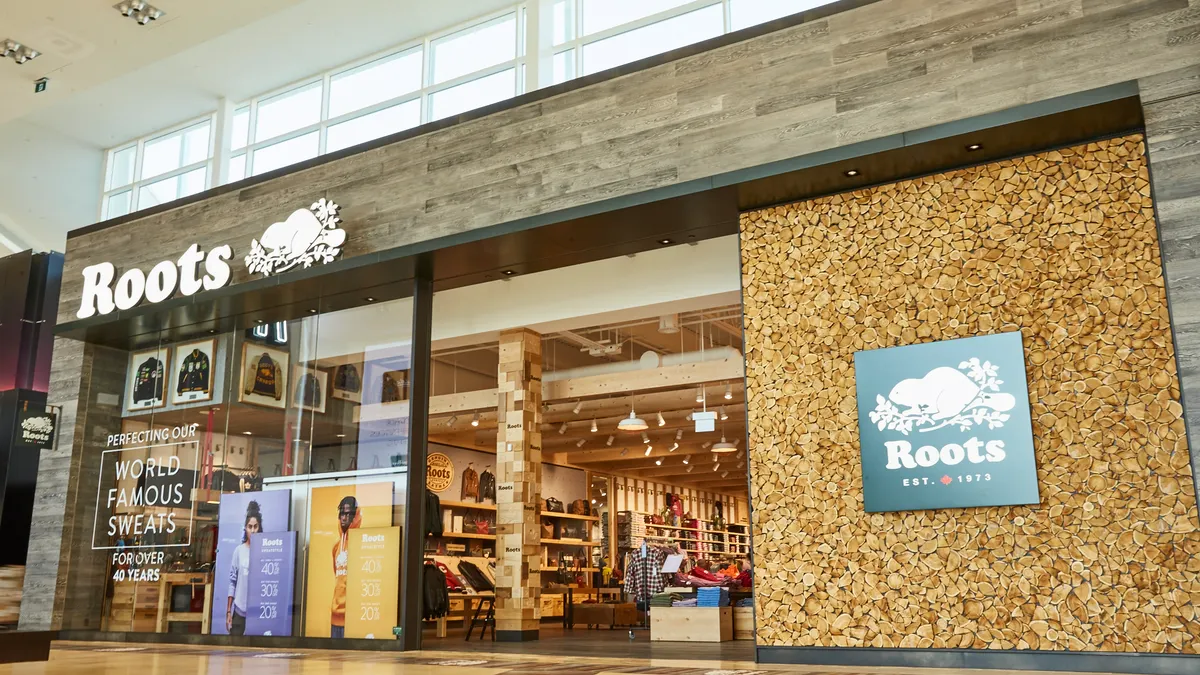
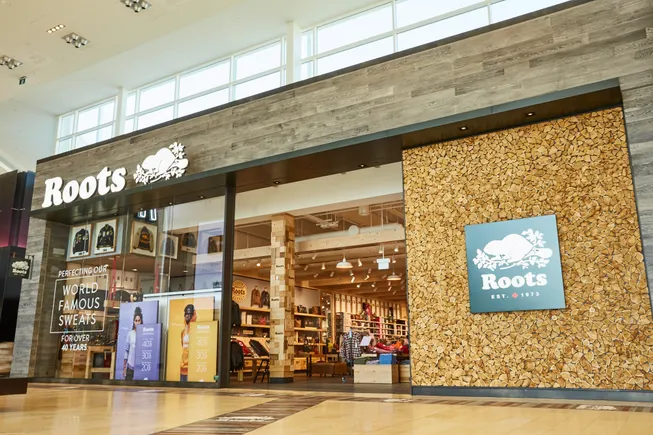
A core pillar of this turnaround strategy involved ruthlessly pruning underperforming real estate. Roots systematically evaluated its physical store fleet, closing unproductive locations to reduce overhead while simultaneously investing in experiential flagship stores—such as its prominent location in Toronto’s Yorkdale Mall—that celebrated the brand’s heritage with warm wood and cork detailing.
Parallel to its store rationalization efforts, Roots doubled down on product innovation. The company modernized its classic silhouettes, introduced sustainable materials to align with contemporary consumer values, and leaned into high-profile collaborative collections that resonated with younger demographics. These strategic pivots slowly began to stabilize the brand’s core Canadian operations, positioning it as an attractive acquisition target for private equity and brand management firms looking for established intellectual property with strong emotional resonance.
The Strategic Review and Sale Process
By early 2026, the retail environment had evolved considerably, marked by persistent inflationary pressures, volatile consumer discretionary spending, and fierce competition from fast-fashion and direct-to-consumer digital brands. Recognizing the limitations of operating as a small-cap public company in an unforgiving market, Roots officially announced a strategic review in March 2026 to explore a potential sale of the business.
The announcement initiated a competitive bidding process. Investment bankers and financial advisors fielded multiple acquisition proposals from various interested buyers. Ultimately, the proposal led by Marquee Brands—in partnership with JM&A—emerged as the winning bid. The transaction offers public shareholders a definitive exit while providing Roots with the financial muscle, operational backing, and portfolio synergies necessary to bypass the daily pressures of quarterly public reporting.
Supporting Context & Financial Metrics: Analyzing the Roots Balance Sheet
To fully understand why Roots opted to take its operations private, one must examine the delicate dichotomy of its recent financial performance. On one hand, the brand has demonstrated impressive resilience in its top-line sales; on the other hand, bottom-line profitability has remained an elusive and costly challenge.
Q1 Fiscal 2026 Financial Results
In its most recently reported financial quarter prior to the acquisition announcement, Roots posted total sales of CA$42.6 million. This figure represented a notable 6.5% year-over-year increase compared to the corresponding period in fiscal 2025. Furthermore, the company reported positive momentum in retail comparable sales, which grew by 3.2%, signaling that consumer demand for the brand’s core apparel and heritage collections remained healthy despite broader economic uncertainties.

The Profitability Puzzle
However, beneath the veneer of top-line revenue growth lay deepening financial stress. Roots’ net loss for the quarter widened significantly, exceeding CA$10 million—a worsening of more than 27% compared to the same period the previous year.
Analysts point to several compounding factors driving these widening losses:
- Escalating Operating Costs: Inflationary pressures on raw materials, particularly cotton and leather, alongside rising labor and logistics costs, have compressed profit margins.
- Omnichannel Investments: Upgrading e-commerce infrastructure, enhancing cybersecurity, and maintaining a hybrid retail-digital model require substantial, ongoing capital expenditure.
- Public Company Overhead: Complying with regulatory reporting, public relations, and governance standards imposes heavy administrative costs on smaller-cap public retailers—costs that can be dramatically streamlined under private ownership.
By taking the company private, Marquee Brands and JM&A can absorb these financial fluctuations without the punitive short-term scrutiny of public equity markets. This operational freedom will allow management to execute long-term strategic investments in inventory management, digital marketing, and supply chain efficiency without the immediate pressure of satisfying Wall Street or Bay Street quarterly earnings expectations.
Official Statements: Preserving Cultural Heritage While Scaling Globally
The acquisition agreement is steeped in a deliberate balancing act: reassuring a fiercely loyal domestic consumer base that Roots will not lose its Canadian soul, while signaling to international markets that the brand is ready for aggressive global expansion.
Heath Golden, Chief Executive Officer of Marquee Brands, emphasized the cultural weight of the acquisition in an official statement released on August 21, 2026:
"Taking on Roots is an incredible honour, and our strategic partnership with JM&A ensures the brand remains anchored in Canadian culture. With that foundation in place, we see significant global opportunity to extend Roots into new categories, markets, and consumer segments, while remaining true to all that makes the brand distinctive."
Golden’s remarks underscore Marquee Brands’ specialized business model. As a premier global brand manager and acquisition firm, Marquee typically focuses on identifying heritage brands with deep consumer affinity, optimizing their operational structures through trusted partners, and scaling their intellectual property across diverse international markets and product categories.
Complementing this vision, the operating partner tasked with day-to-day execution—JM&A—released details outlining the structural framework of the transition. JM&A will assume direct oversight of product design, advanced material development, global manufacturing, and distribution channels for both men’s and women’s apparel. Additionally, JM&A will manage the direct-to-consumer apparatus, encompassing both the e-commerce platforms and the physical retail fleet of over 100 stores across Canada and the United States.

Industry insiders note that keeping core operations anchored in Canada is a calculated public relations and operational necessity. Roots is woven deeply into the fabric of Canadian identity—from Olympic uniform sponsorships in past decades to ubiquitous green and red cabin socks found in households nationwide. Any perceived dilution of that heritage under American or foreign private equity stewardship could have triggered consumer backlash. By explicitly detailing that the transaction is "designed to preserve all that makes Roots uniquely Canadian," leadership has successfully framed the buyout as a protective evolution rather than a foreign takeover.
Future Outlook: What’s Next for Roots Under Marquee Brands?
As Roots transitions into its next chapter as a private enterprise, retail analysts are closely watching to see how Marquee Brands and JM&A execute their dual mandate of safeguarding cultural heritage while driving aggressive growth. Several key strategic vectors are expected to define the brand’s trajectory over the coming years:
1. Product Diversification and Category Expansion
While Roots has historically been synonymous with fleece hoodies, sweatpants, leather boots, and cabin-style apparel, private ownership provides the financial runway to experiment with new product categories. Observers anticipate potential expansions into adjacent lifestyle segments, such as home goods, activewear, travel accessories, and enhanced footwear collections, leveraging Marquee Brands’ expertise in licensing and brand extension.
2. Strategic International Expansion
Having learned hard lessons from its turbulent U.S. retail expansion in the late 2010s and subsequent bankruptcy of its American subsidiary, Roots is expected to approach geographic expansion with calculated precision. Rather than rushing into capital-intensive brick-and-mortar rollouts abroad, the brand will likely utilize Marquee Brands’ global network and digital-first strategies to test international markets, particularly in Asia and Europe, where authentic North American heritage brands often command strong consumer appeal.
3. Omnichannel Refinement
The physical store fleet will remain a critical touchpoint for the brand. The successful integration of JM&A’s operational framework means that existing stores—such as the flagship locations in major Canadian shopping centres—will likely continue receiving aesthetic upgrades. These stores serve as experiential marketing hubs that reinforce brand loyalty. Simultaneously, digital investments will focus on seamless inventory integration, personalized online shopping experiences, and optimized logistics to curb shipping costs and improve delivery speeds.
4. Rationalizing the Bottom Line
Ultimately, the primary metric of success for this private equity-backed buyout will be the return of sustained bottom-line profitability. By eliminating the administrative burdens of public company compliance and leveraging JM&A’s manufacturing and supply chain efficiencies, Roots will have the structural agility needed to trim excess operational fat, negotiate better supplier terms, and steer the company back into the black.
Conclusion
The acquisition of Roots by Marquee Brands and JM&A marks a watershed moment for one of Canada’s most cherished retail institutions. By bidding farewell to the public markets, Roots sheds the restrictive quarterly pressures that have weighed on its financial performance in recent years. If leadership successfully executes its promise to keep the beaver logo deeply anchored in Canadian culture while smartly expanding its global footprint, this private-equity pivot could serve as a masterclass in revitalizing a heritage brand for the modern retail era.