Executive Overview
However, the retail landscape is notoriously unforgiving, and the winds have shifted. According to recent financial disclosures and retail analyst reports, sales at these popular beauty shop-in-shops fell for the second consecutive quarter, registering a 4% decline in the second quarter following a similar downturn in Q1. Compounding the issue, Kohl’s executive leadership has confirmed that they expect this softened performance to persist through the remainder of the fiscal year.
This deceleration arrives during an otherwise brutal period for Kohl’s core business operations. The department store recently marked its eighteenth straight quarter of declining comparable sales—though industry watchers note this latest report represents its best overall performance trajectory since the third quarter of 2021. While bright spots exist, such as a 3% comparable sales growth in the company’s revamped private-label portfolio, the sudden stumble of its primary growth vehicle has raised urgent questions among investors and industry analysts.
Why is a concept that was once virtually bulletproof suddenly losing its shine? According to Kohl’s leadership, the downturn is driven by a complex matrix of factors: a temporary lack of fresh product pipelines, localized weakness within specific beauty categories—most notably skincare—and strategic headwinds caused by expanded distribution models from major beauty houses. Yet, despite these short-term hurdles, retail strategists maintain that the long-term fundamentals of the partnership remain intact. As Kohl’s prepares for the critical upcoming holiday season with aggressive inventory expansions, exclusive holiday outposts, and a massive fragrance tower rollout, the coming months will test whether this temporary glow-down is merely a speed bump or a sign of deeper structural fatigue in the department store beauty model.
Detailed Chronology: The Rise, Stumble, and Current Reality of Sephora at Kohl’s
To fully understand the gravity of the current sales slump, one must trace the trajectory of the collaboration from its ambitious inception to its present-day challenges.
The Honeymoon Phase: Injecting Youth Into Legacy Retail
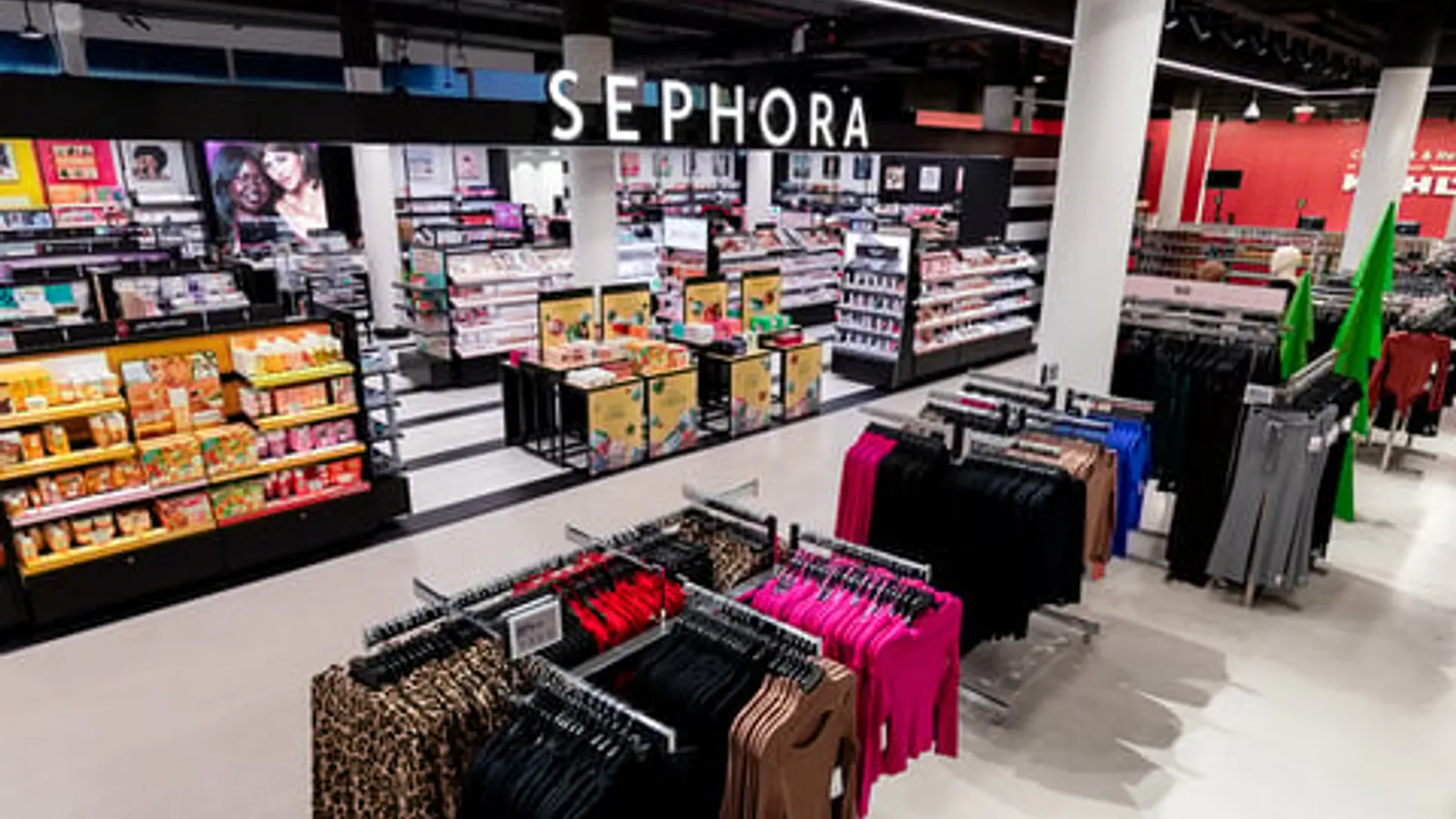
When Kohl’s first announced its partnership with Sephora, Wall Street took immediate notice. Traditional department stores had been struggling for over a decade to maintain relevance with millennial and Gen Z consumers, who increasingly favored direct-to-consumer digital brands, specialty beauty retailers, or fast-fashion giants. By embedding immersive, prestige-branded Sephora boutiques—complete with signature black-and-white branding and trained beauty advisors—directly into its floor plans, Kohl’s successfully hacked the code of experiential retail.
By late 2021 and throughout 2022, the rollout gathered aggressive momentum. Foot traffic surged as shoppers who had not stepped foot in a Kohl’s in years arrived to browse prestige skincare, makeup, and hair care products. According to research from Fitch Ratings, these shop-in-shops quickly scaled to account for approximately 10% of Kohl’s total top-line revenue. For a time, the partnership seemed capable of single-handedly dragging Kohl’s out of its long-term comparable sales slump.
The Turning Point: Consecutive Quarterly Declines
The cracks in the armor began to show in early 2026. Following years of uninterrupted expansion, the first quarter of the fiscal year delivered an unexpected shock: Sephora at Kohl’s experienced its first quarterly sales contraction. While management initially attributed the dip to normal seasonal volatility and shifting consumer shopping habits, the release of second-quarter data in August 2026 confirmed a persistent downward trend.
A 4% year-over-year sales drop in Q2 marked the second consecutive quarter of negative growth for the shop-in-shops. More concerning for investors was management’s forward-looking guidance, explicitly stating that the weaker performance is expected to stretch across the third and fourth quarters, effectively wiping out expectations of a third-quarter recovery.
The Broader Corporate Picture
This beauty-specific slowdown unfolds against the backdrop of Kohl’s wider corporate turnaround efforts. The department store chain officially marked its eighteenth consecutive quarter of declining comparable sales, a stark reminder of the persistent structural challenges facing mid-tier brick-and-mortar retail.
However, context is vital. GlobalData research pointed out that while comps continued to slide overall, Q2 2026 represented Kohl’s best comparative performance since Q3 2021. Furthermore, internal corporate strategies are showing signs of life elsewhere: Kohl’s newly revamped private-label portfolio posted an encouraging 3% comparable sales growth, offering a much-needed counterweight to the stagnation witnessed in its premier partnership. Nevertheless, because Sephora at Kohl’s carries such a heavy weight in the retailer’s financial ecosystem, any weakness in the beauty segment resonates powerfully across the balance sheet.
Supporting Context & Metrics: Macro Beauty Trends vs. Micro Stumbles
A curious paradox defines the current situation: while Sephora at Kohl’s is experiencing a localized sales slump, the broader American beauty industry is enjoying robust, sustained health. Understanding this divergence is essential to diagnosing the root causes of Kohl’s recent performance.
The Broader U.S. Beauty Boom
Data compiled by market research firm Circana highlights that beauty has remained a standout performer in the U.S. retail market throughout the first half of 2026, defying broader economic anxieties and cautious consumer spending patterns. Driven by an insatiable consumer appetite for fragrance, prestige skincare, and self-care-focused goods, the beauty sector continues to post enviable numbers:
- Prestige Beauty: Sales in the prestige segment climbed 7% year-over-year during the first half of 2026, comfortably pushing total revenues past the $17 billion mark.
- Mass Retail Beauty: Mass-market beauty channels mirrored this momentum, also registering a 7% increase and surpassing $39 billion in aggregate sales.
These figures illustrate that consumers are still very much willing to spend discretionary dollars on cosmetics, fragrances, and wellness items. People are prioritizing personal care as an accessible luxury, meaning the issue at Kohl’s is not a lack of consumer desire for beauty products writ large, but rather specific operational, product-assortment, and distribution dynamics unique to the department store channel.
The Skincare Slump and Product Pipeline Bottlenecks
During a conference call with financial analysts on a Wednesday morning in August 2026, Kohl’s Chief Executive Officer Michael Bender offered granular transparency regarding the performance drivers behind the second-quarter decline.
According to Bender, performance across beauty sub-categories was notably uneven. While traditional strongholds such as fragrance, hair care, and prestige makeup continued to post healthy figures, one major sector weighed down the entire division:

"Skin care had a challenging quarter," Bender told analysts.
Beyond category-specific softness in skincare, Bender pointed to a temporary drought in product innovation and new brand activations. Retailers in the prestige space rely heavily on the "newness factor"—the rapid rotation of viral product launches, exclusive celebrity brands, and limited-edition drops that generate organic social media buzz and drive urgent foot traffic. At the same time, Kohl’s faced headwinds stemming from the expanded distribution models of a few larger, heritage beauty brands that now sell their products widely across competing mass and specialty channels, diluting the exclusive urgency that once drove shoppers to the department store format.
Official Statements and Industry Expert Analysis
The shifting fortunes of Sephora at Kohl’s have generated significant commentary from corporate leadership and independent financial analysts alike, offering a comprehensive view of what lies ahead.
Executive Perspective: Michael Bender on Near-Term Headwinds
Kohl’s leadership is realistic about the hurdles standing in the way of an immediate turnaround. Addressing analysts during the Q2 earnings call, CEO Michael Bender outlined the timeline for recovery:
"We expect the softer performance we’ve seen year to date to persist until we can reach full scale with new brands and cycle through the headwinds from expanded distribution from a few of the bigger brands," Bender stated.
This candid admission underscores that management views the current contraction not as a permanent structural failure of the shop-in-shop concept, but as a transitional phase. To overcome these obstacles, Kohl’s must recalibrate its brand mix, introduce fresher product assortments, and absorb the market saturation effects caused by brands widening their omnichannel footprint outside of exclusive partnerships.
Financial Analysis: David Silverman of Fitch Ratings
Independent market experts remain fundamentally optimistic about the long-term viability of the partnership, pointing to the undeniable structural advantages of embedding a powerhouse beauty retailer inside a traditional department store footprint.
David Silverman, Senior Director at Fitch Ratings, shared his perspective with Retail Dive via email:

"Longer term, we expect beauty to remain a contributor to comps at Kohl’s due to inherent strength in the beauty category and the benefits of its Sephora partnership."
Silverman’s analysis reinforces the idea that the current downturn is a cyclical adjustment rather than a secular decline. The underlying consumer affinity for prestige beauty, paired with the massive convenience of the Kohl’s real estate footprint, creates a fundamentally sound economic engine that should rebound once current inventory and distribution headwinds are successfully navigated.
Future Outlook: Holiday Strategies and the Path to Recovery
With the critical holiday shopping season fast approaching, leadership at both Kohl’s and Sephora are executing a multi-layered strategic pivot designed to reignite consumer enthusiasm, reverse the two-quarter sales slide, and restore beauty as a primary growth engine.
Expanding Assortments and Curated Merchandising
Recognizing that a lack of product freshness contributed heavily to the Q2 slump, Sephora at Kohl’s is aggressively expanding its merchandise assortment ahead of the winter holidays. The strategy focuses on deepening inventory across high-demand categories while introducing curated gift sets designed to capture holiday spend.
Key elements of the upcoming holiday rollout include:
- Dedicated Holiday Outposts: Sephora at Kohl’s will deploy specialized holiday outposts in 130 strategically selected stores. These curated pop-up style zones will feature high-demand holiday gift sets, exclusive collaborations, and trending beauty kits specifically targeted at gift-givers seeking convenience and prestige brands under one roof.
- The Fragrance Tower Rollout: Scheduled for a nationwide launch in November, dedicated fragrance towers will be installed in 250 Kohl’s locations. Given that fragrance has remained one of the most resilient and high-performing sub-categories throughout 2026, this targeted expansion aims to capture high-margin holiday gift purchases during the peak retail quarter.
The Road Ahead: Can Kohl’s Recapture the Magic?
The coming quarters will serve as a definitive stress test for the Kohl’s-Sephora alliance. While consecutive quarterly declines are undeniably painful for a department store chain fighting to stabilize its core business, the strategic diagnosis is clear. By addressing skincare softness, cycling through broader brand distribution saturation, and executing a dynamic holiday merchandising playbook, the retailer hopes to turn the page on its recent slump.
For millions of consumers, the convenience of picking up prestige skincare alongside everyday apparel remains an attractive proposition. If management’s strategic recalibrations hit the mark, Sephora at Kohl’s may soon shed its current headwinds and return to the role it played so successfully for years: the undeniable crown jewel of Kohl’s ongoing retail reinvention.