
Executive Overview
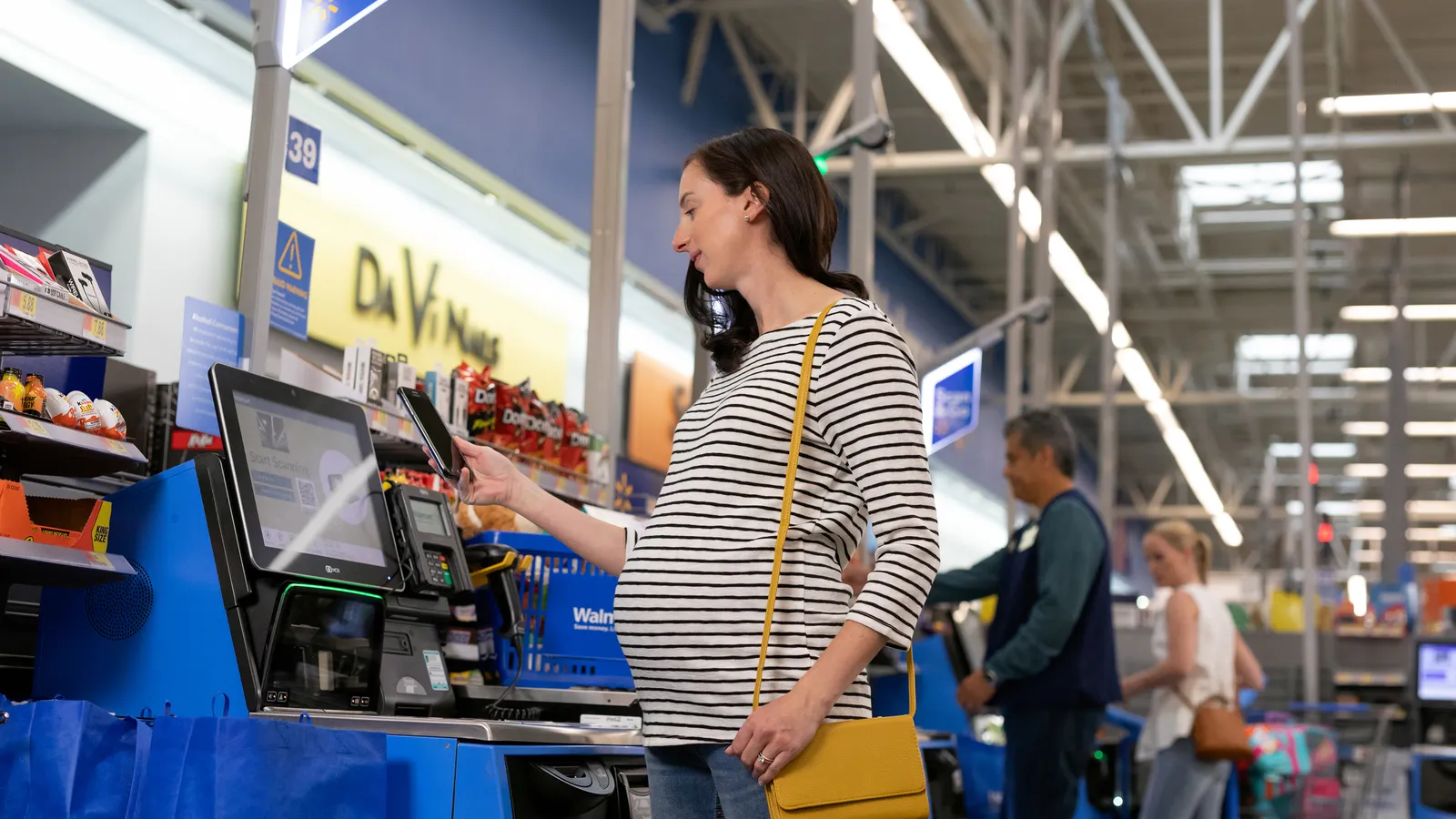
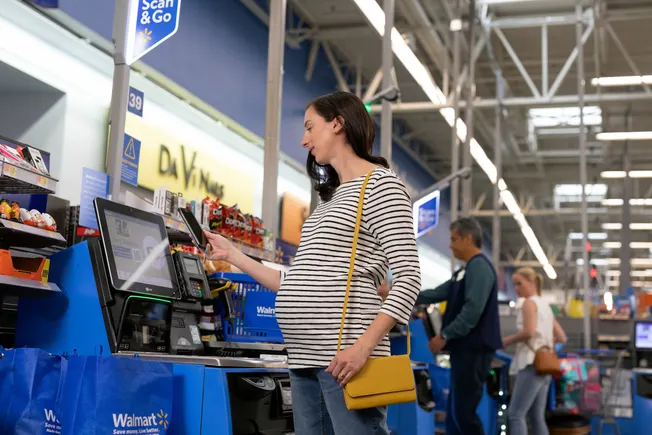
In a monumental shift that marks the end of one of the most stubborn technological standoffs in modern retail history, Walmart has officially announced that it is finally rolling out support for mainstream tap-to-pay options—including Apple Pay and Google Pay—at select Walmart and Sam’s Club locations. The company confirmed that this long-awaited expansion will scale rapidly, with full nationwide deployment across all U.S. stores slated for completion by the end of the year.
For over a decade, the world’s largest retailer by annual revenue stood as the most prominent holdout against third-party digital wallets. While nearly every major grocery, department, and convenience store chain embraced contactless near-field communication (NFC) payments as standard consumer infrastructure, Walmart stubbornly kept its gates closed to popular smartphone wallets. Instead, the retail titan forced its hundreds of millions of shoppers to rely on proprietary or closed-loop systems.
This policy pivot is more than just a concession to consumer convenience; it signals a fundamental reassessment of Walmart’s retail strategy. By opening its checkout lanes to Apple Pay, Google Pay, Samsung Pay, Garmin Pay, and other wearable-based NFC systems, Walmart is acknowledging that the frictionless checkout expectations of the modern consumer outweigh the strategic benefits of maintaining a walled garden. As the company moves toward universal tap-to-pay integration, industry analysts are closely watching to see how this transition will impact transaction speeds, customer satisfaction metrics, and Walmart’s overarching efforts to control the multi-billion-dollar cost of payment processing.
Detailed Chronology: From CurrentC Resistance to the Tap-to-Pay Breakthrough
To understand the magnitude of Walmart’s 2026 reversal, one must look back at the calculated, highly coordinated efforts the retailer undertook to control the point-of-sale ecosystem.
The Merchant Customer Exchange (MCX) and CurrentC
In the early 2010s, as smartphone-based digital wallets began to gather momentum, a consortium of major American retailers—spearheaded by Walmart, Target, CVS, and Best Buy—formed the Merchant Customer Exchange (MCX). Terrified of paying exorbitant interchange and card network fees to traditional financial institutions, this powerful coalition set out to build a rival mobile payment platform named CurrentC.
CurrentC was designed to bypass traditional credit card networks entirely by pulling funds directly from a user’s checking account via an automated clearing house (ACH) transfer or through store-branded cards. To force consumers and merchants onto this platform, major members of MCX actively disabled NFC payment terminals in their stores, blocking Apple Pay upon its dramatic 2014 debut.
The strategy, however, was a catastrophic failure. CurrentC was plagued by security vulnerabilities—including a high-profile data breach during its beta testing phase—along with clunky user interfaces, cumbersome account linking processes, and an absence of consumer trust. By 2016, the MCX coalition quietly dissolved, and CurrentC was shuttered into retail history.
The Rise of Walmart Pay
Following the collapse of CurrentC, Walmart pivoted internally rather than opening its doors to external tech giants. The retailer developed and launched Walmart Pay, a proprietary QR-code-based digital wallet integrated directly into the core Walmart mobile app.
Walmart Pay allowed shoppers to link credit cards, debit cards, gift cards, and Walmart reward balances to their accounts. At checkout, customers used their phone’s camera to scan a dynamic QR code displayed on the point-of-sale terminal, authorizing the payment through the app. While Walmart lauded the system for keeping customer data siloed within its proprietary ecosystem and integrating seamlessly with its loyalty programs, it never achieved the universal ubiquity or consumer love enjoyed by Apple Pay or Google Pay. It remained an extra hurdle for shoppers accustomed to simply tapping their phones or watches against a terminal.

The 2026 Turning Point
Despite its loyalty to Walmart Pay and its broader fintech ambitions, consumer friction at the checkout lane eventually reached a tipping point. Recognizing that modern shoppers increasingly expect tap-to-pay functionality as a baseline requirement of the retail experience, Walmart leadership authorized a pilot program in mid-2026 to test universal contactless payment acceptance at select stores.
Buoyed by successful initial trials—which proved that NFC integration could coexist with the retailer’s massive transaction volume without bottlenecking checkout lines—Walmart pulled the trigger on a full enterprise rollout. Alongside Apple Pay and Google Pay, the company’s internal documentation confirms that Samsung Pay, Garmin Pay, and various other wearable-enabled digital wallets are now being activated, with nationwide store coverage guaranteed before the calendar year runs out.
Supporting Context & Metrics: The Economics of Walmart’s Payment Strategy
While consumer convenience is the most obvious driver of this change, Walmart’s relationship with payment technology has always been deeply rooted in the cold economics of interchange fees.
The Cost of Processing Payments
As the largest retailer on the planet, Walmart processes billions of individual transactions annually. Every time a customer swipes, inserts, or taps a traditional credit or debit card issued by an independent bank, the retailer is forced to pay interchange fees—often referred to as "swipe fees"—to the card networks (Visa, Mastercard, American Express, Discover) and issuing financial institutions.
For non-Walmart branded cards, these fees represent one of the single largest overhead operating costs for the company. By steering customers away from standard cards and toward proprietary methods, Walmart historically sought to slash these expenses. When third-party wallets like Apple Pay process transactions, they typically route through the standard card networks, meaning Walmart still incurs standard interchange fees. The decision to accept these wallets indicates that the friction and lost sales caused by rejecting consumer preferences had finally begun to outweigh the potential cost savings of exclusion.

Fintech Experiments and Alternative Rails
Walmart has spent the past decade pursuing alternative financial technologies designed to lower the cost of payments and capture new revenue streams from financial services.
In 2021, Walmart partnered with Silicon Valley venture capital firm Ribbit Capital to launch a stealth fintech startup based in Bentonville, Arkansas. This initiative eventually birthed financial products such as the digital OnePay card, designed to offer seamless, low-cost digital banking and payment alternatives directly to consumers within the Walmart ecosystem.
Furthermore, Walmart has aggressively integrated Buy Now, Pay Later (BNPL) options to capture spending from budget-conscious shoppers and younger demographics who favor installment-based purchasing. For years, San Francisco-based Affirm Holdings held an exclusive partnership as the primary provider of BNPL installment loans across Walmart’s physical and digital properties. However, the retail landscape shifted dramatically when Swedish fintech giant Klarna Group partnered with the Walmart-backed fintech ecosystem to introduce competing financing options directly inside the retail giant’s digital payment app.
These maneuvers prove that Walmart is not abandoning its ambitions to dominate retail finance; rather, it is splitting its strategy. While retaining its proprietary financial products and partnerships on the back end, it is finally conceding the point-of-sale interface to the consumer’s preferred front-end technology.
Official Statements and Industry Reactions
The payments industry has reacted with a mixture of vindication and excitement following Walmart’s announcement. For years, fintech commentators, payments experts, and consumer advocates have criticized Walmart’s isolationist approach to point-of-sale technology.

Industry analyst networks have noted that the move represents a mature realization by Walmart executive leadership. In a frequently asked questions update published on the retailer’s corporate portal, company representatives outlined the expansion of contactless options with a matter-of-fact tone, emphasizing that the rollout is designed to "streamline the checkout experience for millions of daily shoppers."
Competitors and retail analysts point out that Walmart’s capitulation leaves virtually zero major U.S. retailers holding out against mainstream digital wallets. With Target, Home Depot, Costco, and now Walmart all offering full tap-to-pay capability, the era of retailer-specific mobile wallet exclusivity has officially drawn to a close.
Payment network executives have similarly praised the move, noting that consumer adoption of contactless cards and mobile NFC payments has skyrocketed post-pandemic. Consumers no longer view tap-to-pay as a novelty; it is a fundamental expectation of hygiene, speed, and security at the cash register.
Future Outlook: What This Means for the Future of Retail
As Walmart moves toward total nationwide tap-to-pay integration by the end of 2026, several key questions remain regarding the future of the checkout lane:
- The Fate of Walmart Pay: Will consumers continue to use Walmart Pay now that Apple Pay and Google Pay are readily available? While Walmart Pay offers integration with the Walmart+ loyalty program and digital receipts, analysts expect usage of the proprietary app to decline as shoppers default to the supreme convenience of their phone’s native operating system wallet.
- Checkout Speed and Efficiency: NFC transactions are notoriously fast, often shaving crucial seconds off individual transaction times compared to chip-and-PIN or cash handling. Across thousands of high-volume Supercenters, these cumulative time savings could significantly improve throughput, reduce labor friction, and shorten lines during peak holiday shopping rushes.
- The Next Frontier in Retail Tech: With the payment wars at the register largely settled by consumer demand, attention will now pivot toward how retailers leverage the data captured by these transactions. Expect Walmart to double down on personalized digital advertising, automated loyalty rewards, and frictionless cashier-less checkout technologies, ensuring that while the method of payment has opened up, the ecosystem keeping the customer loyal remains tightly locked.
Ultimately, Walmart’s embrace of Apple Pay and Google Pay marks a watershed moment. It proves that even the most powerful retail behemoth on earth must ultimately bend to the gravitational pull of consumer preference.