
Executive Overview
The retaliatory measures are a direct response to the collapse of high-stakes trade negotiations between Ottawa and the administration of U.S. President Donald Trump. Those talks cratered late on August 21, immediately preceding a sweeping U.S. executive action that slapped a staggering 50% import tax on foundational Canadian goods, including structural plywood, commercial liquor, electrical equipment, and hockey gear.
In a searing address in Ottawa, Prime Minister Carney minced no words regarding the gravity of the situation. “You’re at war when you get attacked,” Carney told reporters. “We got attacked.”
By choosing to fight fire with fire, Canada places itself in an exclusive and combative club. Alongside China, Canada stands as one of the very few global economies willing to meet U.S. protectionism with direct, punitive retaliation. The decision represents an immense political and economic gamble for Carney, a former two-time central banker who initially ascended to power on a nationalist platform of resistance, only to spend much of his early tenure pursuing a measured, conciliatory approach. With billions of dollars in cross-border commerce hanging in the balance—and nearly $900 billion in annual bilateral trade now threatened by a potential spiral of escalating duties—the global economy is watching nervously to see how Washington and Ottawa navigate this unprecedented rupture.
Detailed Chronology: From Conciliation to Confrontation
To understand how Canada and the United States reached this precarious precipice, one must trace the winding trajectory of Mark Carney’s premiership. When Carney seized the reins of Canadian leadership last year, he did so on the back of a strident campaign promising to stand up to Donald Trump. The U.S. President had initiated his second term by openly floating the provocative notion of absorbing Canada as the "51st state" through the application of raw "economic force."
Despite this adversarial opening salvo, Carney initially pivoted toward diplomacy. Believing that pragmatic engagement could insulate the Canadian economy from protectionist shocks, he adopted a conciliatory playbook. In a series of calculated concessions, Carney:
- Rolled back the retaliatory tariffs previously implemented by his predecessor, Justin Trudeau.
- Eradicated a contentious digital services tax that had long drawn the ire of the White House.
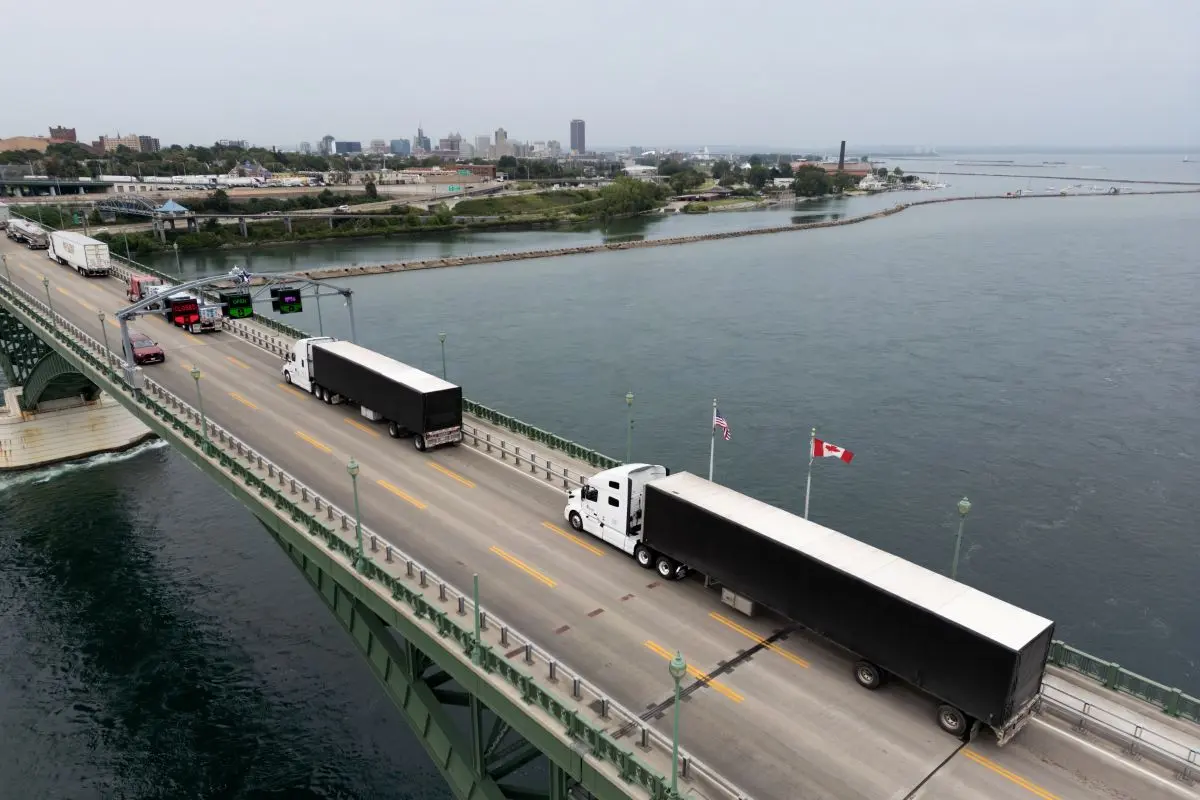
- Renegotiated a critical cross-border infrastructure deal on terms heavily favorable to the United States, facilitating the completion of the bridge connecting Detroit, Michigan, to Windsor, Ontario.
However, these good-faith gestures failed to secure a lasting truce. On August 22, President Trump bypassed traditional legislative channels, invoking a rarely utilized, Depression-era authority under Section 338 of a 1930 trade law. This obscure statute allowed the administration to unilaterally impose 50% import levies on roughly $20 billion in annual Canadian shipments.
The Collapse at the Negotiating Table
The final breakdown of talks on the night of August 21 exposed deep, irreconcilable divisions over structural trade policies. According to Prime Minister Carney, negotiations imploded over several key friction points:
- Automotive Content and Heavy Trucks: The two delegations had discussed lowering the U.S. auto tariff—set at a punishing 25% on non-U.S. content in Canadian-made vehicles—down to 15%. However, the White House dug in its heels, refusing to extend this tariff relief to medium- and heavy-duty commercial trucks, such as those rolling off the assembly lines at Ford Motor Co.’s sprawling suburban Toronto facility.
- Infringement on Canadian Sovereignty: American negotiators attempted to impose strict caps on Canada’s sovereign right to negotiate independent trade pacts with other global partners.
- Cultural and Linguistic Demands: The U.S. side introduced unacceptable stipulations concerning Canadian cultural policies and French-language regulations.
Furthermore, these bilateral fractures are casting a long, dark shadow over the broader, rolling reviews of the United States-Mexico-Canada Agreement (USMCA), which entered a state of profound uncertainty after President Trump declined to formally renew the pact in July.
Recognizing that conciliation had hit a dead end, Carney abandoned his diplomatic posture and resurrected the combative rhetoric he famously deployed at the World Economic Forum in Davos earlier this year. In that January address, he urged mid-sized nations to unite against superpower economic coercion—a speech that drew sharp public reprimands from Trump.
"Our government understood before many that America would transform all of its commercial relationships, that it would put a series of tariffs on its closest allies and use economic integration as a weapon," Carney declared on August 22. "We recognized that sometimes its signature was written in pencil."
Supporting Context & Metrics: The Anatomy of a Trillion-Dollar Relationship
The economic interdependence between Canada and the United States is vast, complex, and deeply asymmetric. For decades, the border has functioned less as a barrier and more as a seamless supply chain conduit.
According to data compiled by the U.S. Commerce Department, Canada remains the single largest buyer of American goods and services outside of the European Union. Conversely, the United States is by far Canada’s primary export market, absorbing massive quantities of crude oil, automobiles, and vital auto parts. The enduring U.S. trade deficit with its northern neighbor is driven primarily by the relentless importation of Canadian crude, the bulk of which flows out of the oil-rich province of Alberta.
Key Economic Metrics at Stake:
- Bilateral Trade Volume: Nearly $900 billion in goods and services were exchanged between the two nations last year.
- Energy Security: Canada powers a massive share of the American industrial engine, supplying 99% of U.S. natural gas imports, 85% of electricity imports, and 60% of total crude oil imports.
- Targeted Retaliation: The $20 billion in Canadian counter-tariffs—launching on September 8—will specifically target U.S. steel, dairy products, household appliances, agricultural machinery, advanced electronics, and pulp and paper.
"Canada fuels American growth," Carney emphasized during his briefing. "I don’t think they want us to stop sending it."
Yet, the collateral damage of a protracted trade war will be felt acutely on both sides of the border. Carney openly acknowledged that the counter-tariffs will temporarily drive up living costs, diminish consumer choice for ordinary Canadians, penalize blameless American enterprises, and complicate future bilateral cooperation.
Compounding the economic friction, ordinary citizens are increasingly taking matters into their own hands. Spurred by nationalist sentiment and political encouragement, Canadian travel to the United States has plummeted since Trump’s return to the White House. Border states and premier American tourist destinations—most notably Las Vegas—are recording steep losses in Canadian tourism revenue as travelers boycott U.S. goods and destinations.
Official Statements and Domestic Political Alignment
In times of national crisis, political fault lines often fracture or realign. In this instance, Carney’s aggressive stance has forged a remarkable, if fragile, domestic consensus across Canada’s fractious political landscape.
Doug Ford’s Push for Strategic Leverage
Doug Ford, the populist premier of Ontario—Canada’s most populous province and the industrial heartland—emerged from days of silence to offer his unequivocal backing for dollar-for-dollar retaliation. In a detailed letter to the Prime Minister, Ford underscored Canada’s formidable negotiating leverage, pointing directly to the country’s vast reserves of energy and critical minerals.
Furthermore, Ford urged the federal government to weaponize provincial trade power by targeting consumer goods originating from politically sensitive states that form the bedrock of Donald Trump’s electoral coalition.
"Products from these states should face the full force of Canada’s response," Ford wrote, explicitly naming Florida, Texas, Iowa, and Wisconsin as prime targets.
Ford is no stranger to cross-border skirmishes; he has previously locked horns with the White House over proposed U.S. taxes on Ontario electricity exports and has run aggressive anti-tariff advertising campaigns south of the border.
Cross-Party Approval
Even political rivals have rallied behind the Liberal government’s decision to walk away from a bad deal. Jason Kenney, the prominent former conservative premier of Alberta, took to social media to praise Carney’s resolve.
"Canada clearly made a serious, good faith effort to get greater stability and market access, and remains ready to find a fair, balanced agreement," Kenney posted. "लेकिन we are not cravenly surrendering in the face of constant economic and political aggression."
Public Sentiment
Polling data confirms that the Prime Minister’s hardline stance enjoys profound backing among the Canadian populace. A comprehensive survey published by Leger Marketing revealed that 56% of surveyed Canadians favor a rigid, uncompromising approach: taking a hard line and offering no further concessions. Moreover, the poll indicated robust public support for exploring even more radical economic measures, such as imposing steep export taxes on energy bound for the U.S. and levying special digital service taxes on U.S. tech platforms like Netflix.
When pressed by reporters on whether his calculus was driven purely by domestic approval ratings or the turmoil in the U.S. bond market—where yields have spiked amid macroeconomic uncertainty—Carney demurred. However, he offered a pointed observation regarding financial markets: "Markets sometimes ignore these fundamentals, and then all of a sudden they focus on them."
Future Outlook: Navigating Uncharted Waters
As September 8 approaches, the shadow of a deepening trade war looms large over North America. U.S. officials made it clear during the final hours of the August negotiations that any Canadian retaliation would be met with further American escalation, raising the terrifying specter of an uncontrolled, self-reinforcing downward spiral between two nations bound together by geography, history, and commerce.
The immediate future hinges on whether either administration possesses the political appetite—or the institutional flexibility—to de-escalate. President Trump’s reliance on emergency executive authorities, such as Section 338, suggests an administration willing to circumvent standard diplomatic channels to achieve protectionist objectives. Conversely, Prime Minister Carney has crossed a Rubicon of his own; having branded the U.S. actions as an unprovoked "attack," backing down now would carry a devastating political cost at home.
For global supply chains, multinational corporations, and everyday citizens from Toronto to Texas, the message is stark. The era of frictionless North American integration has drawn to a close. As the ink dries on Canada’s $20 billion counter-tariff schedule, both nations must prepare for a turbulent new normal—one where economic nationalism dictates policy, and the foundational rules of international trade are, quite literally, written in pencil.