
Executive Overview
Yet, a seismic shift is underway. Within boardrooms across tech, the calculus has fundamentally changed. When private equity giants or sprawling conglomerates acquire high-growth software-as-a-service (SaaS) startups for billions, a predictable post-acquisition execution playbook almost immediately goes into effect.
The strategy is direct: raise prices, sunset legacy tiers, and systematically dismantle the free-to-use mechanics that originally drove the product’s adoption.
The latest and most glaring casualty of this trend is Loom, the asynchronous video messaging platform acquired by Atlassian in late 2023 for nearly $1 billion. Atlassian’s recent policy overhaul effectively eliminates the "Creator Lite" role—a free collaborative seat type that allowed passive stakeholders within paid workspaces to watch, comment, and record in a limited capacity at zero incremental cost. Overnight, thousands of companies found themselves facing a stark choice: automatically convert every passive watcher into a fully paid creator seat, or engage in a frantic administrative audit to purge their own user lists before the billing cycle hits.
This move is not an isolated incident. From Salesforce’s retrenchment of Slack’s free message history to Intuit’s aggressive contraction of Mailchimp’s free contact limits, and IBM’s sunsetting of legacy free tiers following its acquisition of HashiCorp, a multi-year trend has solidified. Corporate acquirers are trading long-term viral distribution for short-term average revenue per user (ARPU) expansion.
As seat-count growth stagnates in an era marked by macroeconomic headwinds and corporate austerity, tech giants are aggressively mining their existing account footprints for untapped revenue. However, in doing so, they risk converting organic growth loops into collections problems—and opening the door wide for agile competitors willing to keep the top of the funnel open.
Detailed Chronology: The Anatomy of the Post-Acquisition Squeeze
To understand how software pricing models shift from expansionary to extractive, one must look at the recurring timeline that defines the modern tech conglomerate. The pattern is remarkably consistent: an innovative startup scales rapidly on the back of a generous free tier, commands a massive enterprise valuation, undergoes a high-profile acquisition, and within 12 to 36 months, undergoes a severe structural pricing revision.
The EchoSign Precedent: Adobe’s Playbook
The phenomenon is not entirely new. Over a decade ago, serial tech entrepreneur and investor Jason Lemkin lived through this exact evolution firsthand. Following Adobe’s acquisition of his electronic signature startup, EchoSign (later Adobe Sign), the free edition—which had quietly acquired millions of users over time, carried negligible marginal costs, and served as the primary top-of-funnel engine for small prosumer customers—was targeted for removal.
Enterprise sales teams historically harbored an institutional disdain for the free tier. Free users rarely converted directly into massive enterprise contracts, and inbound support tickets from the low end were viewed as a drain on corporate resources. Weeks after Lemkin’s departure, the new general manager ripped out the free tier. While the move instantly achieved its internal goals of quieting support queues and cutting off low-end sales noise, it simultaneously triggered a slow, structural decline in brand awareness and organic word-of-mouth momentum.
The Atlassian-Loom Migration
Fast forward to late 2023: Atlassian acquired Loom for approximately $975 million, banking on the premise that async video would integrate seamlessly into Jira and Confluence workflows. For a time, the ecosystem hummed along. But in mid-2026, Atlassian executed a structural shift that rattled workspace administrators across the globe.
Under the updated policy, Loom eliminated the Creator Lite seat—the free tier that allowed team members inside a paid workspace to watch and interact without triggering licensing fees. According to Atlassian’s integration and support documentation, every single Creator Lite user is automatically upgraded to a full paid Creator status upon integration. Administrators are given a narrow grace period until their next billing cycle to manually deactivate any user they do not wish to pay for. Miss that window, and those passive watchers land directly on the corporate invoice.
Mathematically, the financial impact is jarring. A collaborative engineering workspace featuring 10 active recorders and 90 passive watchers previously paid strictly for the 10 core creators. Under Atlassian’s new model, that exact same workspace is suddenly billed for all 100 users. While Loom’s standalone Starter plan technically remains at $0—capped at 25 recordings and 5-minute durations—the free seat inside a paying corporate account has been entirely eradicated.
The Mailchimp, Slack, and HashiCorp Timeline
This tightening of the belt is rippling horizontally across software categories:
- Mailchimp (Intuit): After Intuit’s massive acquisition, Mailchimp’s legendary free tier has faced a systematic, multi-year contraction. In 2022, the free plan supported up to 2,000 contacts. By 2023, that ceiling was halved to 500. Multi-step automations were stripped away in mid-2025, and a subsequent adjustment in early 2026 dropped the limit to a mere 250 contacts and 500 monthly sends—representing an approximate 87% reduction in capacity over a four-year window. Competitors like MailerLite quickly mirrored these moves, trimming their own free subscriber thresholds.
- Slack (Salesforce): Exactly twelve months after Salesforce finalized its $27.7 billion acquisition of Slack in July 2021, the company announced a sweeping overhaul of its free tier. The legendary 10,000-message searchable history and 5GB storage cap were unceremoniously replaced with a flat, rolling 90-day window. Small open-source projects, community groups, and boot-strapped teams suddenly faced a quarterly memory wipe, prompting widespread migration to alternative communication rails.
- HashiCorp (IBM): Following IBM’s $6.4 billion acquisition of HashiCorp, completed in February 2025, the corporate integration playbook followed an identical clock. Thirteen months later, HCP Terraform’s legacy free tier was terminated, replaced by a heavily restricted model capped at just 500 managed resources.
Supporting Context & Metrics: The Economics of the Seat Squeeze
Why are multi-billion-dollar technology conglomerates willing to risk alienating their user bases to capture revenue from passive viewers and low-end accounts? The answer lies in the shifting macroeconomic realities of the software industry, particularly in the dawn of the Age of AI.
The Stagnation of Traditional Seat Growth
For the past two decades, SaaS pricing models have been inextricably tied to per-seat licensing. Companies bought software based on headcount. However, as global enterprise headcount growth has plateaued, and as artificial intelligence begins to automate away administrative overhead, traditional per-seat revenue models are hitting a brick wall.
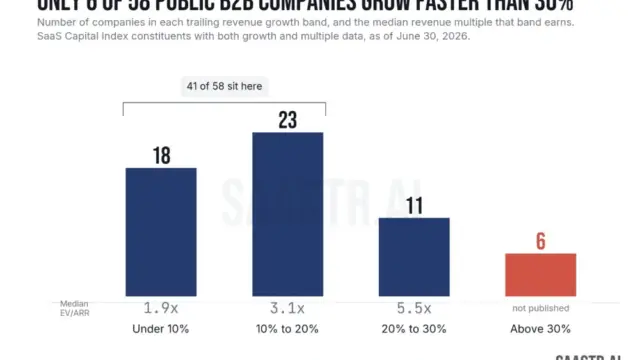
When corporate headcount stops growing, per-seat software revenue stops growing with it. Publicly traded software vendors facing intense scrutiny from Wall Street analysts are routinely punished when organic expansion slows. This reality forces executive leadership teams to look inward at the massive, unbilled pools of users already residing inside their existing corporate accounts: free viewers, occasional guests, view-only stakeholders, and "Creator Lites."
Unlike brand-new customer acquisition, extracting revenue from existing free users requires virtually zero sales pipeline investment and no new product engineering work. It is an internal tax levied on an existing audience.
Atlassian’s Financial Realities
Atlassian’s corporate financial reports illustrate why leadership feels emboldened to make these moves. In Q3 FY26, Atlassian posted revenue of $1.787 billion—a stellar 32% year-over-year increase—with Cloud revenue jumping 29% and a non-GAAP operating margin sitting comfortably at 34%. Company leadership explicitly pointed to paid seat expansion, higher Average Revenue Per User (ARPU), and cross-sell momentum as the primary drivers of this growth.
From an accounting perspective, automatically converting 90 free Loom viewers into 90 paid creator seats is an immediate win for ARPU expansion. It manufactures top-line growth through corporate policy changes rather than traditional sales execution.
The Divergence: Figma and Miro’s Alternative Path
Intriguingly, not all software giants are executing this exact play. Figma faced an identical strategic crossroads when it restructured its entire seat model in March 2025. Rather than charging enterprise accounts for every pair of eyes that landed on a design file, Figma took the opposite approach.
Figma preserved a completely free View seat with view and comment access across Design, Slides, and FigJam, while introducing an affordable $3-per-month collaborative tier for active stakeholders. Crucially, Figma’s default onboarding rules dictate that new users automatically join with a free View seat, and workspace administrators maintain explicit, upfront approval authority over any seat upgrades that incur costs.
Miro enacted a similar philosophy, keeping casual visitors free on paid plans and guests free on business-tier accounts. These companies recognize a fundamental product-led truth: the stakeholder who merely comments on a design file or views a digital whiteboard is the primary vector through which the software naturally virally spreads across an enterprise. By pricing that stakeholder at zero or a nominal fee, they protect the top of the funnel. Atlassian, conversely, chose to price those exact same passive touchpoints at full professional rates—treating Loom not as a core structural platform, but as a secondary asset ripe for monetization.
Official Statements and Counter-Arguments: Do New Features Justify the Hike?
Atlassian’s public defense of its Loom pricing overhaul rests heavily on the argument of product velocity. Leadership points to a massive wave of recent feature deployment: AI-generated titles, automated meeting recaps, action-item extraction, video-to-text integration that automatically spins up Jira issues and Confluence documents, multi-language transcription, and enterprise-grade data residency and SCIM controls.
Atlassian argues that Loom is no longer a simple, lightweight video recorder; it is an intelligent enterprise utility.
However, enterprise software analysts and customer success leaders have leveled three sharp criticisms against this justification:
- The AI Firewall: Nearly all of Atlassian’s advanced AI features are cordoned off behind the higher-tier Business + AI plan, which commands a separate, premium price tag of $24 per user. The base-tier customers being forced out of their free viewer seats are not gaining access to these high-end AI capabilities without an additional upgrade.
- Double-Dipping on Innovation: Atlassian’s own internal support documentation explicitly notes that pricing adjustments made in 2024 already accounted for the platform’s substantial technical innovation. Using the same feature set to justify another aggressive pricing squeeze on the legacy user base two years later feels, to many workspace administrators, like double-dipping.
- Misalignment of Utility and Cost: A "Creator Lite" user was, by definition, an individual who rarely recorded videos. Atlassian’s documentation frames the forced conversion as a generous upgrade, arguing that these users now enjoy unlimited recording and AI access. Yet, forcing a company to pay $180 to $288 annually for an employee who merely watches team updates and occasional async memos is a difficult pill to swallow. As many customer success leaders have noted on professional networks, you cannot successfully bill an administrative stakeholder for a meeting notetaker they never asked for and do not use.
Future Outlook: The Risks of the Collections Model
The fundamental bet Atlassian, Intuit, and Salesforce are making is that their software products have become so deeply entrenched in modern corporate plumbing that enterprise customers will simply swallow the price increases rather than endure the friction of switching vendors.
There is historical precedent for this. Enterprise inertia is powerful, and if a tool is tightly coupled with Jira, Confluence, or Salesforce, IT administrators may grumble, pay the invoice, and quietly absorb the cost.
However, the downside risk is severe. By converting a proven viral distribution asset into a rigid collections problem, these tech giants are fundamentally altering their product dynamics. When an administrator receives an unexpected invoice driven by automated seat conversions, their rational economic response is not to blindly approve the charge—it is to audit, restrict, and deactivate.
The 85 passive watchers who get cut off from a Loom workspace do not suddenly stop needing asynchronous communication tools. Instead, they begin actively searching for alternative platforms that do not penalize teams for watching, listening, and collaborating.
As the renewal cohorts roll out over the coming twelve months, the market will render its verdict. While short-term ARPU metrics may spike on corporate balance sheets, the quiet erosion of the top-of-funnel growth engine may well leave an inviting opening for the next wave of disruptive, product-led startups willing to give away the view.