Executive Overview
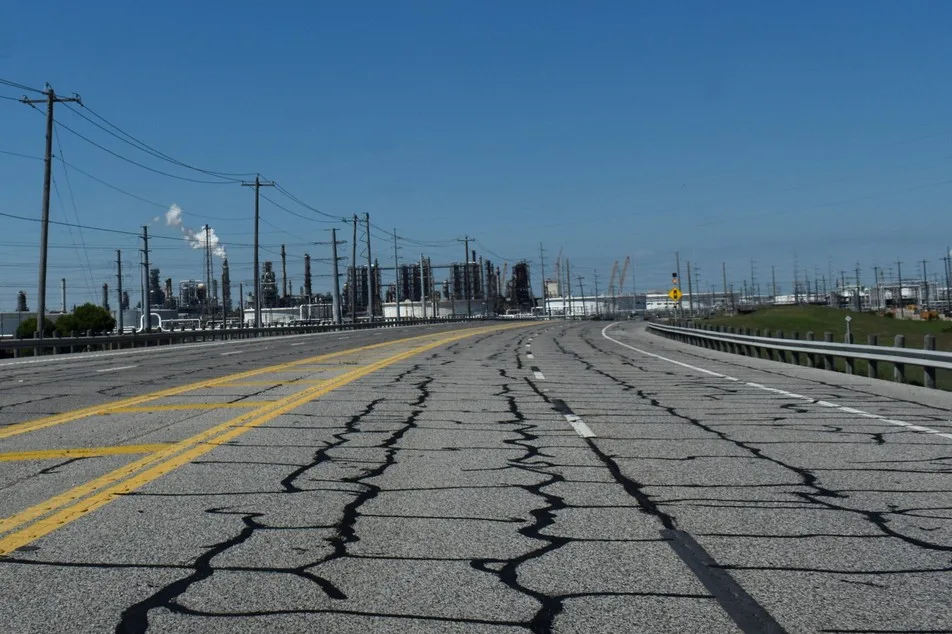
Between 2018 and 2024, the percentage of American roads classified as being in poor condition decreased by only a marginal fraction. This stagnation occurs against a backdrop of worsening strain on bridges, tunnels, ports, and intermodal freight corridors. The persistent disconnect between capital outlays and physical outcomes points to a systemic policy failure. Lawmakers find themselves trapped in an endless loop of authorizations and short-term fixes, repeatedly allocating vast sums for construction and repair only to watch projects stall, experience severe budget overruns, or fail to address root causes entirely.
To unpack this institutional dysfunction, SupplyChainBrain Editor-in-Chief Bob Bowman recently sat down with Beth Osborne, President and Chief Executive Officer of Smart Growth America. Their discussion sheds light on why infrastructure policy continues to repeat cyclical mistakes, the absence of long-term institutional memory in policymaking, and whether the nation can pivot toward a sustainable strategy that prioritizes repair over expansion before the next structural failure occurs.
Detailed Chronology: The Evolution of America’s Infrastructure Crisis
To understand how the United States arrived at its current crossroads of spending abundance and physical scarcity, it is necessary to examine the historical trajectory of transportation funding over the past several decades.
The Post-Interstate Era and Deferred Maintenance
The roots of the modern infrastructure crisis trace back to the completion of the Interstate Highway System in the late 20th century. Having constructed the most ambitious engineering marvel in modern history, federal and state policymakers shifted their focus from construction to ongoing maintenance. However, maintenance lacks the ribbon-cutting fanfare and political optics of groundbreaking ceremonies. Consequently, politicians across successive administrations routinely deferred routine upkeep to fund flashier, new capacity projects.
By the turn of the 21st century, the Highway Trust Fund—historically fueled by federal fuel taxes that have remained frozen since 1993—began facing chronic shortfalls. Inflation eroded the purchasing power of the gas tax, forcing Congress to rely on general revenue transfers just to keep federal transportation programs solvent. This structural underfunding laid the groundwork for a reactive, crisis-driven approach to infrastructure management.
The Trillion-Dollar Infusions (2018–2024)
As economic growth placed heavier burdens on freight logistics networks, supply chain bottlenecks made national headlines. In response, federal lawmakers attempted to engineer a macroeconomic turnaround through landmark legislative vehicles:
- The FAST Act (Fixing America’s Surface Transportation Act) & Subsequent Extensions: Providing baseline multi-year funding, these measures attempted to bridge the gap between deteriorating assets and funding needs, but ultimately fell victim to formulaic distributions that prioritized highway expansion over state-of-good-repair initiatives.
- The Infrastructure Investment and Jobs Act (IIJA): Signed into law with bipartisan fanfare, the IIJA injected roughly $1.2 trillion into the nation’s physical systems, with hundreds of billions earmarked specifically for roads, bridges, and public transit.
- The Cumulative $1.5 Trillion Threshold: As captured in the Repair Priorities 2026 report, the combined deployment of federal, state, and local capital hit unprecedented heights between 2018 and 2024.
Yet, despite this historic financial mobilization, the pavement condition index nationwide has remained stubbornly flat. For every mile of roadway repaired, state departments of transportation (DOTs) often take on new lane-miles of highway expansion that they cannot afford to maintain in the long run.
Supporting Context & Metrics: The Repair Priorities 2026 Findings
The release of the Repair Priorities 2026 report by Transportation for America and Taxpayers for Common Sense provides empirical weight to long-standing industry criticisms. The data paints a troubling picture of systemic inefficiency, misaligned incentives, and a persistent refusal to confront the math of asset management.
1. The Pavement Paradox
According to the report, the national share of urban and rural roadways rated in "poor" condition saw an almost imperceptible decline between 2018 and 2024. State DOTs across the country routinely report spending the vast majority of their federal formula funds on "maintenance and preservation," yet road quality fails to reflect these expenditures.
Why? The primary culprit is induced expansion and unfunded liabilities. When state agencies use federal capital grants to build new highway lanes, beltways, or interchanges, they inherit a permanent, long-term obligation to resurface, pave, and maintain those concrete surfaces for the next 30 to 50 years. Because budgets are inherently finite, money spent clearing the backlog of existing repairs is routinely siphoned off to service the maintenance footprint of newly constructed assets.
2. Beyond the Pavement: The Intermodal Blind Spot
Roads represent only the most visible facet of the transportation grid. The U.S. supply chain relies heavily on an integrated ecosystem of:
- Bridges: Thousands of structurally deficient bridges span major freight corridors, carrying heavy trucking fleets past their original engineering design lives.
- Ports and Inland Waterways: Coastal ports face unprecedented container volumes, while locks and dams along interior river systems experience frequent, disruptive mechanical failures.
- Freight Rail and Intermodal Terminals: Bottlenecks at rail-to-truck transfer points continue to drive up logistics costs and greenhouse gas emissions.
The report emphasizes that federal spending bills rarely mandate rigorous accountability metrics. Money flows to states based on statutory formulas rather than performance-driven outcomes. As a result, funds intended to modernize supply chains are frequently diluted across thousands of localized, politically motivated projects that do little to improve regional or national freight mobility.
Official Statements and Expert Analysis: Inside the Policy Loop
To explore the structural drivers behind this policy inertia, SupplyChainBrain Editor-in-Chief Bob Bowman spoke at length with Beth Osborne, President and CEO of Smart Growth America.
The Endless Policy Loop
During the podcast interview, Osborne addressed the fundamental frustration felt by economists, taxpayers, and supply chain professionals alike: why do lawmakers keep making the same mistakes?
"We are caught in an endless loop," Osborne explained to Bowman. "Lawmakers authorize massive amounts of funding for construction, maintenance, and repair, only to watch those projects fail, go severely underfunded, or never even materialize. Then, a couple of election cycles later, the whole process starts over again."
This loop is exacerbated by a dangerous institutional amnesia. Every few years, congressional turnover, shifting committee assignments, and changing gubernatorial administrations result in a loss of institutional memory. Incoming lawmakers arrive eager to announce new signature projects rather than auditing the failures of previous funding cycles. Consequently, the lessons learned by engineers, urban planners, and logistics experts are routinely overwritten by political expediency.
New Construction vs. System Repair: A False Dichotomy?
A central debate in modern infrastructure policy is whether public capital should be funneled into expanding capacity (building new roads and transit lines) or preserving what is already there (fixing potholes, upgrading bridges, and modernizing existing rail).
Osborne argues that treating this as an either/or choice misses the underlying structural disease. The United States has far overbuilt its transportation network relative to its long-term capacity to pay for its upkeep. Continuing to fund highway expansion without addressing the existing maintenance backlog is akin to adding rooms to a house while the roof is actively caving in.
"Going forward, we have to ask ourselves a hard question: can we ever break this vicious cycle?" Osborne noted. Despite the systemic hurdles, she expressed cautious optimism. Change is possible, she argued, but it requires a fundamental shift in how the federal government evaluates project utility, measures return on investment, and holds state-level decision-makers accountable.
Future Outlook: Breaking the Cycle and Re-Engineering U.S. Logistics
As the United States looks toward the latter half of the 2020s and beyond, the stakes for the nation’s supply chain and economic competitiveness could not be higher. Modern manufacturing, e-commerce, and global trade demand a resilient, highly reliable transportation network. If federal infrastructure spending continues to yield diminishing returns, the economic toll—manifested in vehicle wear-and-tear, lost hours in traffic, delayed freight shipments, and higher consumer prices—will mount.
Path Forward: Key Reform Imperatives
To dismantle the status quo and ensure that taxpayer dollars translate into tangible physical improvements, policy experts and industry leaders suggest several structural reforms:
- Shift from Formulas to Performance Metrics: Federal funding allocations must be tied directly to measurable outcomes. States that successfully reduce their backlog of deficient bridges and poor-condition pavement should be rewarded, while those that continuously prioritize low-utility expansion over core maintenance should face funding adjustments.
- Incorporate Full-Lifecycle Cost Accounting: Every proposal for new construction must include a legally binding, fully funded lifecycle maintenance plan. If a state agency cannot demonstrate how it will pay for the upkeep of a new highway lane over its 40-year lifespan, federal grants for its construction should be withheld.
- Prioritize Multimodal Freight Corridors: Supply chain resilience requires a balanced approach that integrates rail, maritime ports, air cargo, and highway networks. Funding must be concentrated on removing known bottlenecks rather than spreading capital thinly across disparate, low-impact local projects.
- Preserve Institutional Memory: Building bipartisan, cross-administration oversight committees can help insulate infrastructure planning from short-term political cycles, ensuring that long-term asset management strategies survive changes in congressional leadership.
Conclusion
The findings of the Repair Priorities 2026 report serve as a five-alarm warning for U.S. policymakers. Pumping trillions of dollars into a broken delivery mechanism will not heal the nation’s infrastructure; it will only accelerate the accumulation of unfunded liabilities.
As Beth Osborne emphasized, breaking the vicious cycle of neglect and reactive spending is difficult, but not impossible. By prioritizing fiscal discipline, rigorous asset management, and a ruthless focus on state-of-good-repair, the United States can finally build a transportation network worthy of its economic potential—turning multi-trillion-dollar investments into lasting, reliable prosperity.