
Executive Overview
In an era marked by shifting federal budgets and administrative funding pressures, this dual-use revelation could not be more timely. Originally conceived purely for deep-space exploration, the telescope’s unmatched combination of a massive field of view and high-sensitivity infrared imaging grants it an extraordinary capacity to detect, track, and characterize near-Earth objects (NEOs). While ground-based observatories and upcoming dedicated missions like NASA’s Near-Earth Object (NEO) Surveyor will bear the brunt of asteroid-hunting duties, Roman is poised to act as an invaluable force multiplier. By scanning vast swathes of the night sky with unprecedented speed, the observatory can quickly triage ambiguous space rocks, refine orbital trajectories by orders of magnitude, and help scientists determine which asteroids pose an actual threat to Earth and which are harmless celestial wanderers.
Detailed Chronology: From Deep-Space Pioneer to Planetary Defender
The journey of the Nancy Grace Roman Space Telescope—named in honor of NASA’s first chief astronomer, who is widely celebrated as the "Mother of Hubble"—has been characterized by ambitious scientific goals and persistent budgetary friction.
The Conception and Initial Purpose
Approved over a decade ago under the moniker WFIRST (Wide-Field Infrared Survey Telescope), the mission was designed to fill a massive observational blind spot in astrophysics. While the Hubble Space Telescope provided stunning, ultra-deep imagery of narrow patches of the sky, and the James Webb Space Telescope (JWST) was engineered to peer back to the earliest epochs of galaxy formation, astronomers lacked an observatory capable of surveying wide cosmic landscapes with infrared precision.
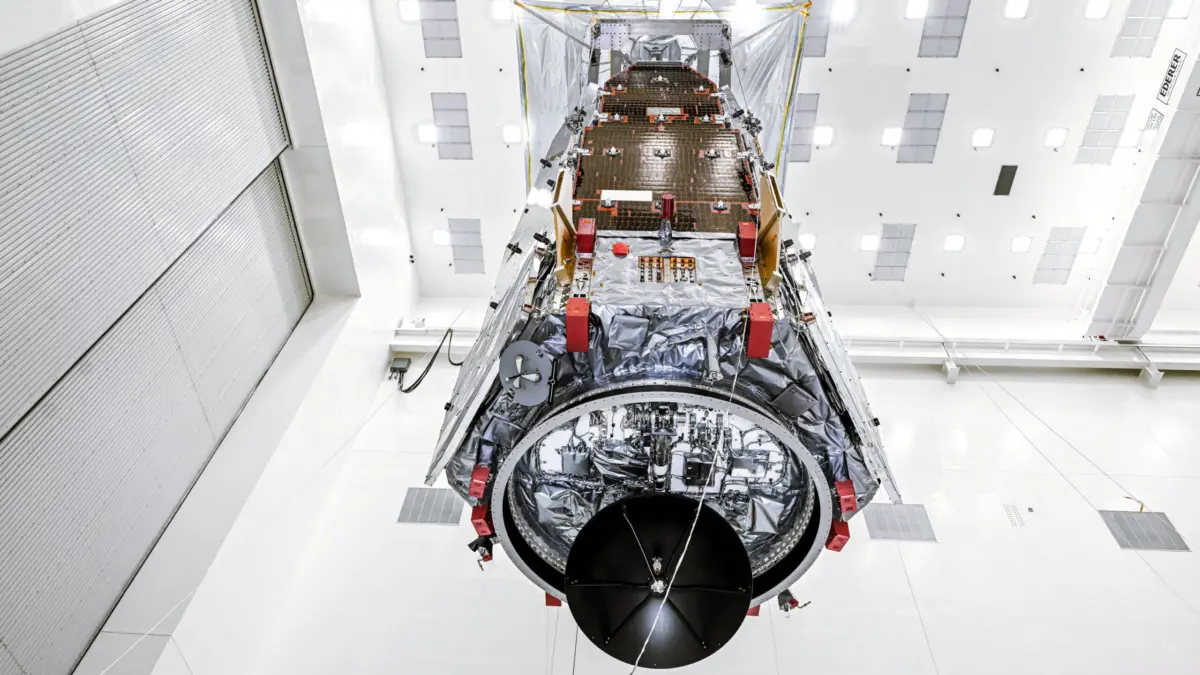
Equipped with a super-wide-angle, 300-megapixel infrared camera, Roman can capture an image roughly 100 times larger than anything Hubble can manage. Its primary directive was clear: map the large-scale structure of the universe, discover thousands of new exoplanets via gravitational microlensing, and study the mysterious forces driving cosmic expansion. Planetary defense was entirely absent from its foundational mission profile.
The 2025 Budgetary Crucible
The pivot toward planetary utility was accelerated by political and economic realities. Throughout its development cycle, the mission faced repeated legislative hurdles, culminating in another round of significant funding cuts proposed by the Trump administration. To secure broader, bipartisan support from lawmakers and demonstrate immediate, tangible value to taxpayers, NASA scientists began evaluating the mission through a broader lens.
In July 2025, NASA planetary scientist Rick Cosentino posed a critical question to his peers at the Space Telescope Science Institute (STScI) in Baltimore: Could the observatory be leveraged for planetary defense to elevate its visibility and reinforce its indispensability?
The Breakthrough Proposal
Answering that call, STScI researcher Bryan Holler led a multi-institutional team of astronomers and planetary scientists to investigate Roman’s capabilities in tracking hazardous space rocks. Their subsequent proposal, set to be formally presented at the Europlanet Science Congress, proves that Roman’s sprawling field of view and infrared vision allow it to spot small, elusive asteroids down to 60 feet (approximately 18 meters) in length.
This detection threshold is of paramount significance. Objects of this scale are comparable to the Chelyabinsk meteor that unexpectedly exploded over Russia in 2013. That impact unleashed an energy equivalent to 500,000 tons of TNT, shattered windows across six cities, and sent roughly 1,500 people to hospitals.
Supporting Context & Metrics: The Scale of the Threat and Telescope Collaboration
To understand why Roman’s secondary mission is so vital, one must examine the staggering scale of the near-Earth asteroid population and the limitations of current tracking infrastructure.
The Anatomy of the Threat
NASA’s Planetary Defense Coordination Office, alongside international partner organizations, categorizes near-Earth objects by size and potential destructive capacity:
- "City-Killer" Asteroids (460 feet and larger): Astronomers estimate that roughly 25,000 objects of this size possess orbits that bring them close to Earth. Just over half of these have been successfully cataloged. An impact by an object of this magnitude would result in catastrophic, irreversible regional devastation.
- Intermediate Asteroids (165 feet / 50 meters): There are an estimated 230,000 asteroids of this scale orbiting near our planet, of which fewer than 10% have been discovered. While they would not induce global extinction, a direct strike on an urban center would unleash energy comparable to a large thermonuclear weapon—minus the radioactive fallout.
- Small Impactors (60 feet / 18 meters and below): These objects, typified by the Chelyabinsk event, strike with alarming frequency relative to human lifespans and are notoriously difficult for ground-based optical telescopes to spot proactively until they are dangerously close.
Overcoming Observational Bottlenecks
Traditional ground-based telescopes perform admirably, but they face inherent physical limitations. They are restricted to nighttime operations, hampered by cloud cover and light pollution, and forced to peer through Earth’s turbulent atmosphere, which distorts incoming light.
To bridge this gap, NASA is scheduled to launch the Near-Earth Object (NEO) Surveyor space telescope in 2027. Positioned between Earth and the sun, NEO Surveyor will utilize infrared optics to locate roughly 90% of city-killer-sized near-Earth asteroids within a decade.
However, telescope resources—both in space and on the ground—are fiercely contested and perpetually oversubscribed. When a new NEO is discovered, it frequently possesses a non-zero impact probability, yet astronomers lack the immediate telescope time to track and refine its trajectory. This is where the broader observational network comes into play.
A Symphony of Observatories
Roman will not operate in a vacuum. It joins an elite vanguard of modern astronomical instruments, including:
- The James Webb Space Telescope (JWST): Specializes in deep-space targets and high-resolution follow-up studies, though its narrow field of view makes it inefficient for sweeping large areas of the sky for fast-moving rocks.
- The Vera C. Rubin Observatory: Currently executing a 10-year survey of the entire southern night sky from a mountaintop in Chile, expected to discover up to 89,000 near-Earth asteroids.
- The NEO Surveyor: The dedicated planetary defense workhorse.
- The Nancy Grace Roman Space Telescope: The wide-field surveyor capable of tying disparate observations together.
[NEO Surveyor / Rubin Observatory]
        │
        ▼ (Spots potential hazard with high orbital uncertainty)
[Nancy Grace Roman Space Telescope]
        │
        ▼ (Leverages massive field of view to refine trajectory by orders of magnitude)
[Benign Travelers] ──> (Cleared; no action needed)
[Hazardous Objects] ──> [JWST / Ground-Based Follow-ups] ──> (Planetary Defense Mission: Deflection / Mitigation)
Official Statements and Technical Adjustments
Integrating planetary defense capabilities into an astrophysics-focused telescope is not without its operational challenges. Because Roman is fundamentally designed to look through and beyond our solar system to capture crystal-clear images of distant galaxies, its automated data-processing pipelines are programmed to filter out local noise.
"Streaks, whether caused by cosmic rays, satellite constellations, instrument glitches, or passing asteroids, are caught by the software and discarded," explains Andy Rivkin, a planetary scientist and planetary defense researcher at the Johns Hopkins Applied Physics Laboratory in Laurel, Maryland.
To bypass this limitation, astronomers plan to manually query and mine those discarded data streams, analyzing the filtered streaks to isolate genuine near-Earth asteroids.
Furthermore, Roman’s immense field of view gives it a logistical edge that dedicated narrow-field telescopes cannot match. Bryan Holler notes: "Roman can provide infrared observations of more asteroids than JWST could hope to observe in a reasonable amount of observing time."
By observing a patch of the sky containing multiple newly discovered, uncertain asteroid tracks, Roman can cross-reference viewing angles. Because Roman occupies a unique orbital position distinct from both NEO Surveyor and the Vera C. Rubin Observatory, its slightly offset perspective allows scientists to apply trigonometric parallax principles. This drastically reduces the time required to narrow down orbital uncertainty corridors.
NASA leadership has embraced this multifunctional evolution. Alise Fisher, the astrophysics communications lead at NASA headquarters in Washington, D.C., emphasizes the broader utility of the mission: "Roman will sample such a large volume of the cosmos that we’ve long known it will offer vast opportunities for a range of additional science."
Beyond simply tracking motion, Roman’s infrared instruments provide critical compositional diagnostics. By analyzing the thermal infrared signature reflected and emitted by an asteroid, scientists can determine whether the object is a dense metallic body, a stony silicate rock, or a carbon-rich, volatile-laden primitive fragment.
"This in turn provides strong clues to the composition and thereby the density and mass of the asteroid," Holler explains. "Which are important when estimating the impact damage or, less ghoulishly, the effort required to nudge it out of its current orbit." Knowing whether an asteroid requires a massive kinetic impactor (such as the successful DART mission) or a more extreme deflection strategy dictates the entire timeline of human planetary defense planning.
Future Outlook: A Dual-Purpose Guardian
As the launch date at the end of August approaches, the sentiment surrounding the Nancy Grace Roman Space Telescope has evolved from anxiety over political funding cuts to excitement over its newfound versatility.
It will not replace dedicated planetary defense missions like NEO Surveyor, nor is it primarily tasked with orbiting Earth solely to watch for inbound impactors. Its primary mandate remains firmly rooted in fundamental astrophysics: unlocking the secrets of dark matter, mapping billions of galaxies, and cataloging thousands of exoplanetary systems.
Yet, as it sweeps its 300-megapixel infrared gaze across the cosmos, it will perform a vital, life-saving side hustle. While hunting for supernovas at the edge of the observable universe, the Nancy Grace Roman Space Telescope will simultaneously stand watch over the inner solar system—helping secure a safer future for all eight billion inhabitants of planet Earth.