
Executive Overview: The Architecture of a New Global Paradigm
The theme for the 2026 edition—"Electronics as the Basis of the All-Electric Society"—represents a profound shift in how the industry views its role. No longer confined to the silos of consumer gadgets or isolated industrial machinery, the electronics ecosystem is now the foundational layer for a fully electrified, carbon-neutral world. From the wide-bandgap semiconductors powering smart grids to the edge-AI chips optimizing energy consumption in real-time, electronica 2026 is poised to showcase the technological roadmap for the next decade of human progress.
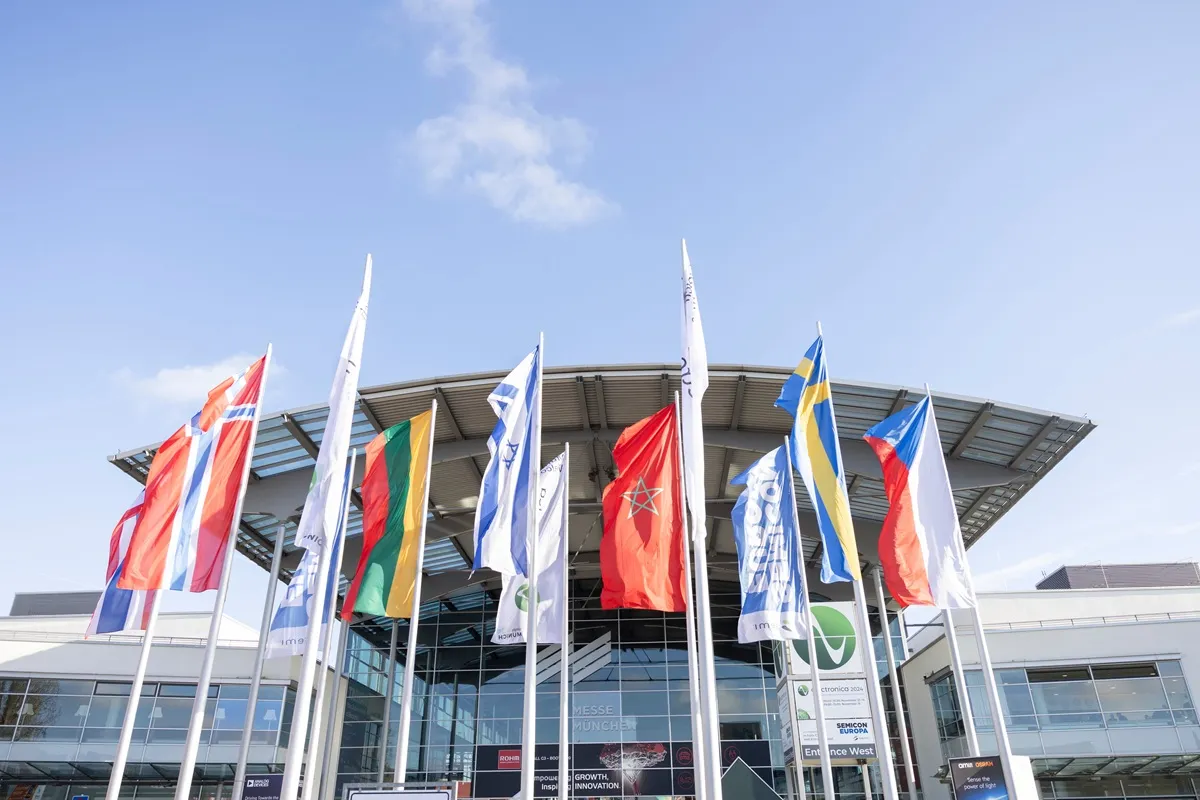
This year’s event is set to host approximately 3,500 exhibitors from over 60 countries, occupying the vast expanse of the Munich exhibition grounds alongside the co-located Semicon Europa. As the industry moves toward a "systems-thinking" approach, the event will bridge the gap between microscopic chip design and macroscopic infrastructure, addressing the critical challenges of energy efficiency, cyber resilience, and the relentless expansion of Artificial Intelligence (AI).
Detailed Chronology: Sixty-Two Years of Evolution
To understand the weight of electronica 2026, one must look at the event’s historical trajectory. Founded in 1964, electronica began as a modest gathering focused on discrete components like vacuum tubes and early transistors. Over the decades, it mirrored the industry’s shifts: the rise of the integrated circuit in the 70s, the personal computing revolution of the 80s, the mobile explosion of the late 90s, and the IoT (Internet of Things) era of the 2010s.
The Pivot to the "All-Electric Society"
The transition to the 2026 theme began in the wake of the 2022 and 2024 shows, where the focus shifted from "connectivity" to "sustainability." The "All-Electric Society" is a vision where carbon-neutral energy is the primary form of energy worldwide, distributed through intelligent networks.

By 2026, this vision has moved from theory to implementation. The chronology of the industry leading up to this event has been defined by:
- 2020–2022: The supply chain crisis that highlighted the strategic importance of semiconductor sovereignty.
- 2023–2024: The explosion of Generative AI, which placed unprecedented demands on data center power consumption.
- 2025–2026: The legislative push in Europe and North America (such as the EU Cyber Resilience Act) that mandated security and efficiency at the hardware level.
Supporting Context & Metrics: The Scale of Innovation
The sheer scale of electronica 2026 reflects the burgeoning importance of the electronics sector in the global economy. According to recent industry data, the global semiconductor market is on a trajectory to reach $1 trillion by 2030, and electronica serves as the primary marketplace for the technologies driving this growth.
Key Metrics for 2026:
- Exhibitor Diversity: 3,500 exhibitors, with a significant increase in representation from the automotive, renewable energy, and medical technology sectors.
- Global Reach: Participation from over 60 countries, emphasizing the shift toward a more regionalized yet interconnected supply chain.
- The Semicon Synergy: The co-location with Semicon Europa (occupying two-and-a-half halls) ensures that the entire value chain—from wafer fabrication equipment to end-user systems—is represented under one roof.
- Technical Forums: Specialized tracks hosted by AspenCore will dive deep into Power Electronics, Embedded Systems, and Chiplets, reflecting the three pillars of modern hardware engineering.
The Triple Challenge: AI, Energy, and Security
The 2026 agenda is dominated by three intersecting pressures:
- AI Everywhere: AI is no longer a software-only phenomenon. It requires specialized "agentic" AI hardware for EDA (Electronic Design Automation) and inference at the edge.
- Thermal Management: As computing power increases, the energy density of systems has skyrocketed. Exhibitors will showcase advanced liquid cooling and high-efficiency power modules (GaN and SiC) to manage these thermal loads.
- The Regulatory Landscape: With the EU Cyber Resilience Act in full effect, "Security by Design" has moved from a marketing slogan to a legal requirement for any connected device sold in the European market.
Official Statements: Insights from the Leadership
In a comprehensive dialogue regarding the event’s direction, the executive team at Messe München emphasized that electronica 2026 is designed to be a catalyst for cross-industry collaboration.
Caroline Pannier, Exhibition Director for electronica, highlighted the shifting demands on engineers:

"Artificial intelligence places whole new demands on electronic systems. What’s needed are powerful, energy-efficient, and secure solutions in which hardware, software, and connectivity work together seamlessly. At electronica 2026, we aren’t just showing components; we are showing the nervous system of the modern world."
Marvin Buchet, Deputy Exhibition Director, elaborated on the historical significance of the Munich venue:
"For over six decades, Munich has been the meeting point for the global electronics community. Our role is to provide a platform where the ‘All-Electric Society’ becomes tangible. Whether it is a startup showcasing a new carbon nanotube ecosystem or a giant like Intel or Nidec presenting the latest in robotics and edge AI, the goal is the same: integrated system thinking."
The leadership team pointed out that "systems thinking" is the defining trend of 2026. Developers can no longer afford to optimize a single sensor or processor in a vacuum. Instead, they must consider the entire lifecycle—from raw material sourcing to end-of-life recycling and software updateability.
Technical Deep-Dive: The Pillars of the 2026 Program
1. The Power Electronics Revolution
At the heart of the "All-Electric Society" is the ability to convert and manage power with minimal loss. electronica 2026 will feature a massive expansion in the Power Electronics forum. The focus is on the transition from Silicon to Wide-Bandgap (WBG) materials like Silicon Carbide (SiC) and Gallium Nitride (GaN). These materials are essential for reducing the size of EV inverters and increasing the efficiency of renewable energy storage systems.

2. Chiplets and Heterogeneous Integration
As Moore’s Law faces physical limits, the industry is turning to Chiplets. By breaking a large processor into smaller, specialized functional blocks, manufacturers can increase yields and lower costs. The 2026 event will feature dedicated sessions on the "agentic AI" in EDA, which allows for the rapid design of these complex, multi-die systems.
3. Cyber Resilience and the "Security by Design" Mandate
The threat landscape has evolved. Modern electronic systems—from smart thermostats to industrial cobots—are now targets for sophisticated cyberattacks. electronica 2026 will showcase hardware-based security solutions, such as Trusted Execution Environments (TEEs) and cryptographic accelerators, that help companies comply with the EU Cyber Resilience Act. This move toward "Security by Design" ensures that protection is baked into the silicon, rather than added as a software afterthought.
4. Edge AI in Healthcare and Automation
Referencing recent breakthroughs, the fair will highlight how Systems Architecture for Healthcare Edge AI is bringing clinical-grade inference directly to the patient’s bedside. Similarly, companies like Nidec are positioning precision reducers and motors for the next generation of humanoids and automated logistics, all powered by the high-efficiency electronics on display.
Future Outlook: Toward 2030 and Beyond
As we look toward the end of the decade, the themes established at electronica 2026 will likely dictate the winners and losers of the global economy. The transition to an All-Electric Society is not merely a technical challenge; it is a socio-economic necessity.
The "Munich Manifesto" that emerges from this trade fair will likely emphasize Circular Electronics. We are moving toward a future where "Software-Defined Hardware" allows devices to be updated and repurposed rather than discarded. The integration of carbon nanotube (CNT) ecosystems and other advanced materials will further reduce the environmental footprint of the very chips that are saving the planet.

Furthermore, the role of the electronics engineer is being redefined. The 2026 attendee is as much a software architect and a sustainability expert as they are a hardware designer. By fostering this multidisciplinary approach, electronica 2026 ensures that the electronics industry remains the primary engine of global innovation.
For those navigating the complexities of the modern world, the message from Munich is clear: The future is electric, it is intelligent, and it is being built one component—and one system—at a time.
About the Event:
- Dates: November 10–13, 2026
- Location: Messe München, Germany
- Co-located with: Semicon Europa
- Registration: Open via the official electronica website.