Executive Overview
Following preliminary signals discovered via updated legal documents and customer policy notifications, Wispr Flow has officially launched its dedicated Mac notetaker. Operating on a model similar to prominent market competitor Granola, the new tool leverages system audio to transcribe conversations seamlessly without requiring an artificial, bot-style participant to join virtual rooms. Beyond basic transcription, the system utilizes advanced artificial intelligence to sanitize raw transcripts, distill key action items, and allow users to intuitively query across historical meeting data using natural language. Furthermore, users can now view live transcripts in real time and prompt the AI to catch them up on discussions on the fly.
This strategic expansion represents far more than a routine product update; it signals a fundamental evolution for Wispr Flow. By moving upstream from voice-to-text dictation into full-scale meeting intelligence, the startup is positioning itself to capture richer contextual data about its users’ workflows. In doing so, Wispr Flow is stepping directly into the ring against established heavyweights like Granola, Fireflies.ai, Read AI, Otter.ai, and Fathom. Backed by substantial financial momentum and soaring private valuations, the company’s latest move could redefine how professionals capture, search, and act upon verbal communication.
Detailed Chronology: From Legal Footprints to Official Launch
The trajectory of Wispr Flow’s expansion into meeting intelligence unfolded rapidly over a matter of months, transitioning from quiet administrative preparations to a full-scale public release.
The Paper Trail: Terms of Service Discoveries
The first clear indications of Wispr Flow’s pivot emerged not from a polished marketing press release, but from the unglamorous world of corporate compliance. Eagle-eyed observers noticed sudden, unannounced revisions made to the company’s Terms of Service and Privacy Policy. Around the same period, customers began receiving email notifications outlining sweeping updates to these legal frameworks, designed specifically to accommodate data processing models associated with incoming features.
A forensic review of the refreshed legal terms revealed newly minted clauses explicitly dedicated to "Meeting Data" and the mechanics of a soon-to-be-released "Notetaker" utility. The company explicitly outlined how raw audio inputs would be harvested and transformed:
"For Notetaker, Input may also include Meeting Data, including meeting audio, participant information, meeting metadata, speaker labels, meeting transcripts, and other information processed in connection with a meeting. Output may include AI-generated meeting transcripts, summaries, action items, meeting insights, speaker attribution, and other meeting-related content."
This language confirmed industry suspicions: Wispr Flow was no longer content merely converting isolated dictation into text. It was building a comprehensive ingestion engine designed to parse multi-party conversations, extract semantic meaning, and categorize professional interactions at scale.
The Official Launch and System Architecture
Building upon the groundwork laid by its updated compliance framework, Wispr Flow officially dropped its Mac notetaker app. Rather than deploying disruptive, bot-based calendar integrators that infiltrate Zoom or Microsoft Teams rooms—an approach that often draws user friction and privacy concerns—Wispr Flow adopted a local, non-intrusive architecture.
Mirroring the technical philosophy popularized by Granola, the Wispr Flow Mac notetaker captures system audio natively. This means the application listens passively to the machine’s audio output, generating precise transcriptions without announcing an unfamiliar AI bot to meeting attendees.
Upon completion or during the live session, the system swings into action. Key features of the newly launched notetaker include:
- Live Transcription: Users can view real-time text generation as conversations unfold.
- AI Catch-Up Prompts: Participants who join late or need a quick refresher can ask the AI to summarize what they missed instantly.
- Automated Post-Processing: Raw, unformatted transcripts are automatically cleaned up, eliminating filler words, stutters, and false starts.
- Action Item Extraction: The AI automatically detects commitments, tasks, and follow-ups, organizing them into actionable checklists.
- Cross-Meeting Querying: Users can search and query across their entire historical meeting database using conversational prompts, effectively creating a personalized knowledge base built entirely from spoken dialogue.
Supporting Context & Metrics: Financial Winds and Competitive Landscapes
Wispr Flow’s aggressive product expansion does not occur in a vacuum. It is propelled by a combination of surging financial backing, a booming market for voice-first AI agents, and intense pressure to diversify revenue streams in an oversaturated productivity landscape.
Financial Runway and Soaring Valuations
Wispr Flow has proven to be an investor darling. To date, the startup has successfully secured more than $81 million in venture capital funding. Its previous financing rounds brought the company’s valuation to a respectable $700 million—a testament to the rapid adoption of its core voice dictation software.
However, the company’s financial trajectory has accelerated dramatically. Reports from outlets like Bloomberg indicate that Wispr Flow has been engaged in high-stakes funding talks aimed at pushing its private valuation to an eye-watering $2 billion. Such astronomical figures reflect investor enthusiasm for verticalized generative AI applications that can successfully embed themselves into daily enterprise workflows. By evolving from a standalone dictation utility into a core operational notetaker, Wispr Flow is attempting to justify this steep valuation by capturing a much larger share of the enterprise software stack.
Entering a Crowded Arena
Despite its financial strength, Wispr Flow enters a market segment populated by deeply entrenched competitors who have spent years refining their respective value propositions:
- Granola: Widely recognized for pioneering the lightweight, system-audio-based notetaking experience on Mac, Granola recently captured massive market attention with a $125 million funding round that valued the company at $1.5 billion as it scales into broader enterprise applications.
- Fireflies.ai: A veteran in the space, Fireflies has continually innovated by introducing mini-apps designed to extract specialized insights out of vast repositories of meeting archives.
- Read AI: Expanding aggressively beyond simple transcription, Read AI recently launched an email-based "digital twin" designed to autonomously manage complex schedules and answer queries on behalf of busy executives.
- Otter.ai: Long considered a household name in meeting transcription, Otter has steadily pushed to transform itself from a passive meeting scribe into an active enterprise assistant.
- Fathom: Known for its developer-friendly and user-centric free tiers, Fathom raised significant capital ($17 million) to fuel its own expansion into automated meeting summaries and CRM integrations.
The Strategic Rationale: Context Is King
Why risk entering such a hyper-competitive market? The answer lies in data context.
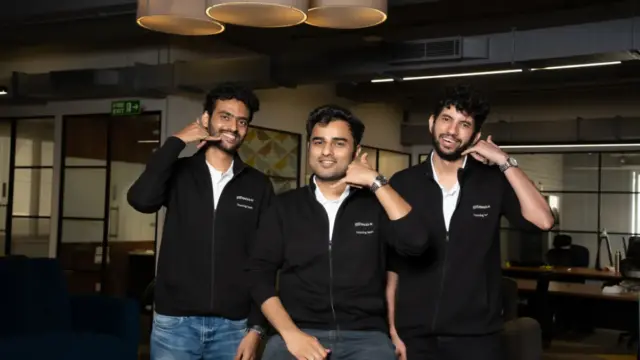
Wispr Flow’s co-founder, Tanay Kothari, has previously articulated a grander vision in various media appearances: building a deeply integrated, proactive AI assistant. While voice dictation apps capture isolated bursts of thought—such as drafting an email, writing a memo, or sending a Slack message—they lack holistic context about a user’s broader professional life.
By introducing a meeting notetaker, Wispr Flow gains continuous access to the rich contextual fabric of its users’ workdays. It learns project acronyms, team dynamics, client preferences, and ongoing company initiatives. This deep contextual reservoir allows the AI to automate complex, multi-step workflows far beyond simple sentence cleanup. For instance, a dictation app that understands what was discussed in a morning strategy meeting can draft follow-up documents with astonishing accuracy, utilizing specific internal nomenclature pulled directly from the audio recording.
Official Statements and Industry Response
True to form for fast-moving startups navigating high-stakes product launches and sensitive compliance updates, Wispr Flow’s leadership has kept communication tightly controlled. When pressed for detailed commentary regarding the long-term roadmap of the notetaker app, official representatives from Wispr Flow did not respond to multiple requests for further comment.
The silence from the executive suite has only fueled speculation among enterprise tech analysts. Industry observers are divided on whether Wispr Flow intends to keep its notetaker strictly as a lightweight, privacy-focused Mac utility akin to Granola, or if the company plans to build out a heavier, infrastructure-heavy recording and archiving platform that competes directly with enterprise-wide deployment models like Otter and Microsoft Copilot.
Early user reception on developer forums and tech communities, however, has been largely positive. Power users who rely heavily on macOS workflows have praised the system-audio approach, noting that avoiding awkward calendar bots eliminates the social friction often associated with recording work conversations.
Future Outlook: The Next Frontier of Voice AI
As Wispr Flow establishes its footing in the meeting intelligence arena, the broader implications for the future of human-computer interaction become increasingly clear. The traditional boundaries separating dictation tools, transcription services, and AI assistants are rapidly dissolving.
Consolidation and Convergence
We are witnessing a convergence toward the "unified conversational layer." In the near future, users will not distinguish between the tool they use to dictate a quick note, the system that records their Zoom sync, and the agent that schedules their calendar. These capabilities will merge into a continuous ambient intelligence layer that listens, learns, and executes tasks across all digital touchpoints.
For Wispr Flow, success will depend heavily on execution and privacy compliance. As enterprises grow increasingly protective of their internal data, tools that process audio locally or maintain strict data governance standards will hold a distinct competitive advantage. The decision to use system audio rather than invasive meeting bots is a step in the right direction for privacy-conscious organizations.
What Lies Ahead
Over the coming quarters, all eyes will be on Wispr Flow to see if it can successfully convert its massive war chest and soaring valuation into market share. Key milestones to watch include:
- Cross-Platform Expansion: While the initial notetaker launch focuses squarely on macOS, expanding the system-audio architecture to Windows and mobile operating systems will be crucial for capturing enterprise-wide adoption.
- Ecosystem Integrations: Deepening integrations with project management tools (like Jira, Notion, and Asana) and enterprise CRMs (such as Salesforce and HubSpot) will dictate whether the notetaker remains a passive archive or becomes an active operational hub.
- Enterprise Security Certifications: Securing robust enterprise-grade compliance certifications (such as SOC 2 Type II and GDPR frameworks) will be mandatory if Wispr Flow wishes to court Fortune 500 clients currently vetting offerings from entrenched giants.
Wispr Flow has made its calculated bet: the future of productivity belongs to those who control both the input (dictation) and the context (meetings). Whether this high-stakes expansion allows the startup to dethrone established incumbents or simply carves out a lucrative niche among Mac power users remains one of the most compelling narratives in modern consumer and enterprise tech.