Executive Overview
This unprecedented expansion has collided head-on with the realities of local infrastructure. Across the country, American municipalities are pushing back against facilities that strain local electrical grids, siphon municipal water supplies, and shatter the peace of suburban and rural neighborhoods with relentless acoustic pollution. What began as quiet municipal grievances has transformed into a national movement of resistance, characterized by state-level construction moratoria, fierce political recall elections, and a profound erosion of trust between local citizenry and the tech conglomerates driving the boom.
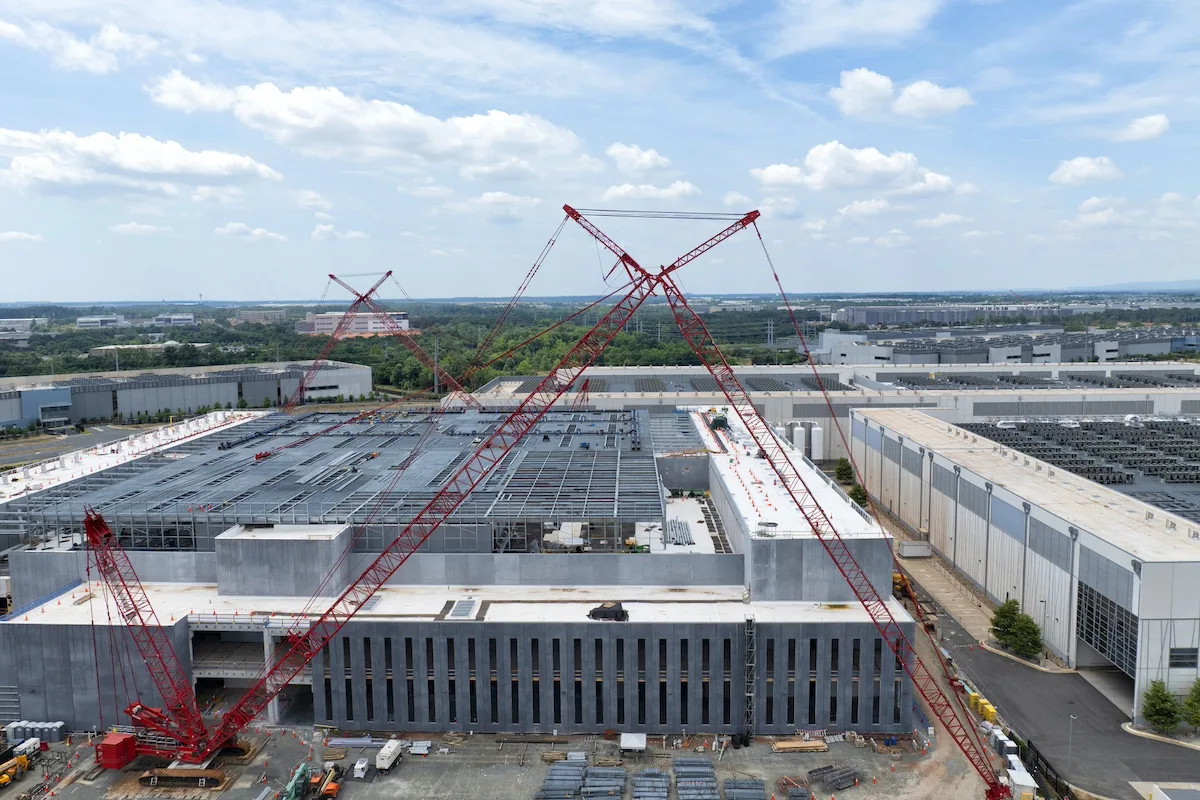
According to data compiled by ConstructionConnection, data center projects entering construction in the United States surged by an astounding 190% year-over-year in 2025. Behind this statistical spike lies a heavy environmental and infrastructural toll. The World Resources Institute estimates that a single state-of-the-art facility can consume as much electricity as 100,000 average American homes, with the largest campuses scaling up to twenty times that amount. Furthermore, the immense heat generated by these hyper-scale operations requires millions of gallons of water daily for cooling, placing local utilities under extreme duress.
Yet, beyond the metrics of kilowatt-hours and gallons, the core conflict driving these community rebellions is systemic opacity. Burdened by non-disclosure agreements, shielded by corporate secrecy laws, and approved by municipal boards far removed from public scrutiny, data center developers have routinely bypassed meaningful community engagement. The resulting backlash—ranging from voter-led ousters of mayors to sweeping statewide bans—signals that the current trajectory of AI infrastructure development is politically and socially unsustainable. To secure a viable future for technological innovation, both industry leaders and policymakers must reconcile the unyielding demands of the digital age with the legitimate preservation needs of local communities.
Detailed Chronology of a National Backlash
The friction between high-tech expansion and local governance reached a boiling point throughout 2025 and 2026, transforming isolated zoning disputes into a coordinated national legislative and political reckoning.
The Legislative Wave: State and Municipal Halts
Faced with fragmented federal oversight and grid systems buckling under unexpected loads, state legislatures and municipal councils stepped into the regulatory void to pump the brakes on unchecked expansion.
- July 2025: New York enacted the nation’s first statewide moratorium on new data center approvals, halting permitting processes for up to one year to allow state agencies to study the cumulative environmental and grid impacts of heavy computing facilities.
- August 2025: Less than a month after New York’s historic pause, Texas—the nation’s reigning hub for energy-intensive industries—followed suit, announcing a temporary freeze on data center approvals to conduct a comprehensive statewide infrastructure audit.
- Late 2025 to Mid-2026: Similar temporary bans, moratoriums, and zoning freezes took root in cities and counties across Missouri, Indiana, Georgia, Colorado, North Carolina, and Washington state, as local leaders attempted to catch up to an industry moving faster than municipal planning frameworks could accommodate.
The Political Fallout: Voter Rebellions
These top-down legislative pauses were catalyzed, fundamentally, by explosive grassroots outrage. Across the American heartland, voters used the ballot box to punish elected officials who fast-tracked massive digital infrastructure projects without adequate public consultation.
- April 2025 (Festus, Missouri): In this community of 12,000 residents just outside St. Louis, public fury over the approval of a $6 billion data center boiled over into a historic municipal recall. Voters successfully ousted their mayor and four of the eight sitting city council members who had voted in favor of the development.
- September 2026 (Independence, Missouri): The mayor of Independence faced a severe voter recall push after casting deciding votes to award billions of dollars in tax breaks to a staggering $150 billion data center project, illustrating that even astronomical sums of projected investment are no longer insulated from public wrath.
- November 2026 (Yukon, Oklahoma): Voters organized a high-stakes recall election targeting their mayor, who had actively facilitated the sale of prime local land to a major data center developer, highlighting a growing public intolerance for backroom economic development deals.
Supporting Context & Metrics: The Resource Footprint of AI
To understand the ferocious nature of the community pushback, one must examine the staggering resource consumption intrinsic to modern machine learning infrastructure. The computational power required to train and run large language models translates directly into immense physical demands on local ecosystems.
Energy Demands and Grid Strain
The World Resources Institute notes that a standard mid-sized data center demands power equivalent to approximately 100,000 households. However, the hyper-scale facilities currently breaking ground to support next-generation artificial intelligence models routinely dwarf that figure, consuming up to 20 times that amount of energy—rivaling the power consumption of small industrial cities. This sudden surge has forced utility companies to delay the retirement of fossil-fuel plants, extend the lifespans of aging coal-fired generators, and pass rising infrastructure upgrade costs down to ordinary residential ratepayers.
The Water Crisis
In addition to electricity, data centers require vast quantities of water to dissipate the intense heat generated by thousands of densely packed servers running continuously at maximum capacity. A single mid-sized facility typically consumes the equivalent water volume of 1,000 households strictly for evaporative cooling purposes. Larger campuses, by comparison, require water allocations matching municipalities of up to 50,000 people.
While engineering innovations such as closed-loop and direct-to-chip cooling systems can theoretically cut water usage by up to 70%, these advanced technologies remain expensive and insufficiently widespread to offset the sheer volume of new construction. Furthermore, these systems create a Catch-22: closed-loop configurations often require significantly more electricity to vent heat into the atmosphere without relying on water evaporation, thereby compounding the strain on local electrical grids.
The Human Toll: Noise Pollution
Beyond invisible resource drains, residents living in the immediate vicinity of data centers face sensory disruption. Facilities frequently emit a constant, low-frequency humming noise generated by massive banks of cooling fans and industrial HVAC units. Reported noise levels frequently reach 96 decibels—an acoustic intensity equivalent to a gas-powered lawn mower running directly outside a bedroom window, or a commercial food blender operating at maximum speed on a continuous loop.
Medical professionals and local health advocates have documented severe physiological and psychological symptoms among neighbors living near poorly buffered facilities. Reported ailments include chronic headaches, vertigo, nausea, severe sleep disturbances, ear pain, and stress-induced hypertension.
The Transparency Deficit in Finance and Operation
Fueling the community mistrust is a pervasive lack of visibility into how these projects are funded and operated. According to policy research group Good Jobs First, 36 states currently offer specialized economic development subsidies tailored for data center projects. Yet, of those 36 states, only 11 disclose the names of the companies receiving public tax breaks. Among those 11 transparent states, none disclose the ultimate corporate parent company behind the localized subsidiaries collecting the funds, and only five reveal the actual dollar amounts of the subsidies awarded.
Simultaneously, data center operators routinely refuse to disclose precise figures regarding their local water and energy consumption, hiding behind proprietary data classifications. When pressed by local zoning boards or concerned citizens, operators frequently argue that divulging operational specifics would compromise facility security or expose proprietary algorithmic architectures to industrial competitors. This combination of financial secrecy and operational obscurity leaves communities blind to the true costs they are absorbing until construction is well underway.
Official Statements & Expert Perspectives
Industry analysts, urban planners, and political strategists agree that while the current model of data center expansion is broken, the underlying technology driving it is permanent. Navigating this impasse will require a fundamental shift in how developers engage with the public.
"The massively negative pushback is due to one glaring mistake: the utter lack of transparency by both the companies involved in building and managing these initial data centers, and the elected agencies who approved them without proper public buy-in."
— Christopher Lee, Partner and Senior Political Strategist, Foresight Strategic Advisors
Lee emphasizes that community opposition is not necessarily anti-technology, but rather anti-exclusion. When local populations are treated as passive recipients of environmental burdens rather than active stakeholders, resistance is inevitable.
"When you obfuscate something, then trust is not there. Where the policy needs to catch up is requiring developers to be transparent in their usage and their impact."
— Jason Williamson, CEO, Mythworx (Operator of a Virginia-based data center)
Williamson points out that the industry must evolve past defensive secrecy. Operators can no longer afford to treat basic resource utilization metrics as state secrets if they expect to maintain a peaceful operating environment.
Urban planning experts argue that regulatory pauses, while disruptive in the short term, offer a valuable window for recalibration.
"Moratoriums can create a useful reset—not to stop innovation, but to establish stronger standards around infrastructure costs, resource use, community engagement, and tangible local economic benefit."
— Steven Cornwell, Global Director, ERA-co
Cornwell stresses that earning a "social license to operate" is now just as critical for a corporate developer as securing municipal zoning permits and environmental clearances. Sustainable integration requires engaging residents during the earliest conceptual phases, investing proactively in shared local infrastructure, and designing physical structures that blend harmoniously into the regional landscape rather than imposing upon it.
Future Outlook: Forging a Sustainable Path Forward
The collision between the artificial intelligence revolution and local community welfare has exposed deep structural vulnerabilities in how the United States plans, funds, and constructs critical digital infrastructure. Open-ended moratoria and reactionary recall elections are symptoms of a system out of balance, serving as blunt instruments to correct for decades of unchecked corporate expediency.
However, industry leaders like Christopher Lee note that AI is an irreversible technological paradigm shift. "Let’s be real clear, AI isn’t going anywhere," Lee asserts. Consequently, local bans cannot be permanent solutions; they must serve as temporary breathing spaces to forge new frameworks of accountability.
Moving forward, the path to harmonious coexistence lies in what strategists term the "smartest path of least resistance." For data center developers, this means abandoning secretive development models in favor of radical transparency regarding energy draws, water consumption, and tax subsidies. It requires meaningful corporate citizenship: funding local public works, sponsoring community initiatives, mitigating noise pollution through advanced architectural buffering, and creating durable, high-paying local jobs.
By aligning corporate expansion with tangible community enrichment, the data center industry can transcend its current adversarial relationship with the public. Only by anchoring technological innovation in local trust, ecological stewardship, and mutual benefit can the digital infrastructure of tomorrow find a permanent, welcoming home within the communities of today.