

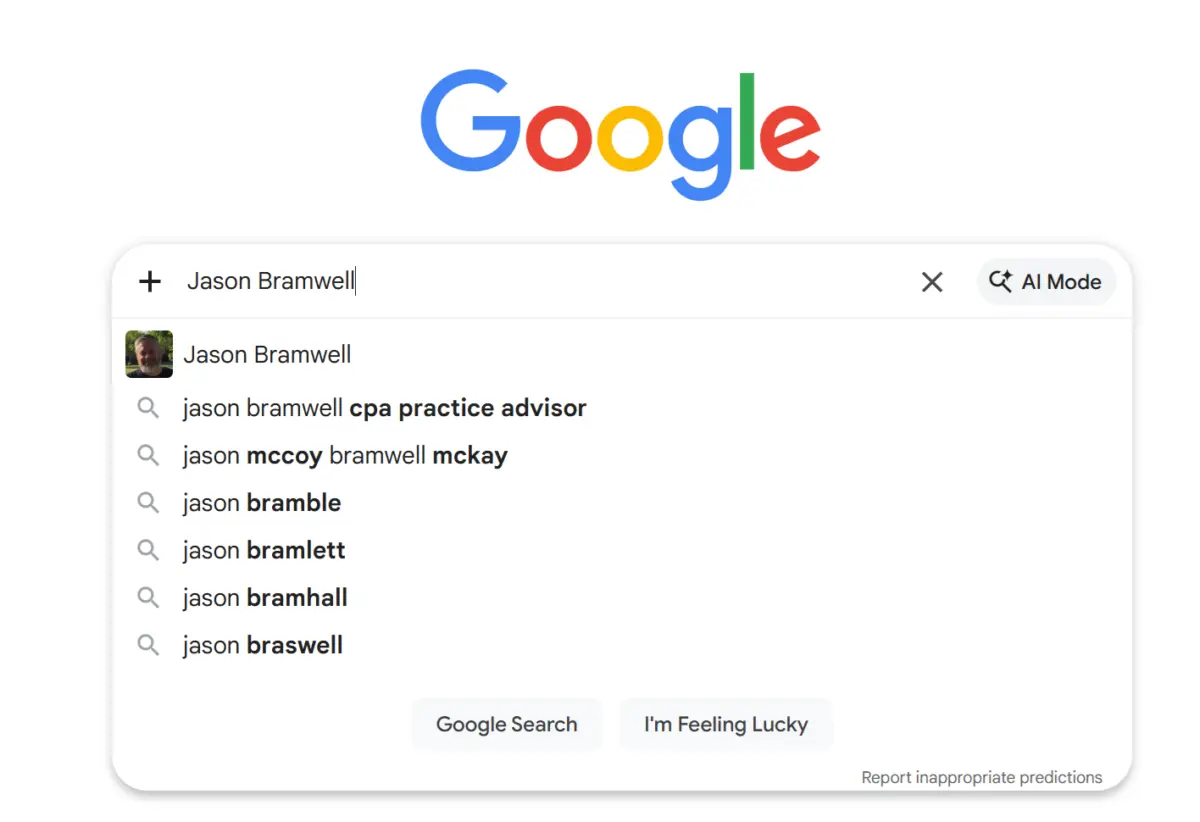
In the modern digital economy, showing up authoritatively in artificial intelligence answers and automated summaries is no longer a "nice-to-have" luxury for accounting firms—it is an existential commercial necessity. As AI search engines and large language models (LLMs) rapidly become the primary tools prospective clients use to identify, vet, and shortlist professional service providers, traditional visibility playbooks are losing their efficacy.
Unlike traditional search engines, LLMs do not offer a Google Ads–style marketplace where firms can simply rent the top of the results page. Instead, algorithmic search engines reward the accumulated, verifiable evidence of institutional authority over short-term, splashy marketing tactics.
This structural shift requires senior marketing leaders at accounting and advisory firms to approach their digital footprint through a completely new lens. Marketers must now understand and manage their firm’s AI "authority portfolio" in the exact same rigorous way a wealth manager oversees a client’s balance sheet. Managing this portfolio changes not only what firms create, but how they conceptualize, evaluate, and deploy every individual piece of content.
Traditional performance metrics—such as raw click-through rates or immediate lead generation forms—are giving way to a more holistic mandate: evaluating whether a piece of work strengthens the firm’s overall, cumulative authority in the eyes of LLMs. For the accounting profession, this demands a dramatic strategic pivot away from ad-hoc blog posts and toward disciplined, portfolio-level reputation engineering.
Detailed Chronology: The Evolution from Keywords to Algorithmic Authority
To understand the urgency of the current landscape, it is helpful to trace how prospect discovery has evolved over the past two decades, and why the rise of generative AI has fundamentally broken traditional accounting marketing models.
Phase 1: The Keyword Optimization Era (Early 2000s–2015)
For years, digital marketing for accounting firms was governed by search engine optimization (SEO) focused strictly on keywords and backlinks. Firms competed to rank for phrases like "tax accountant near me" or "corporate audit services." Success was measured by volume: more web pages, more keywords targeted, and more inbound links. Content was frequently optimized for web crawlers rather than human readers, resulting in generic, keyword-stuffed service pages that offered little genuine thought leadership.
Phase 2: The Content Marketing & Volume Boom (2015–2023)
As algorithms matured, search engines began demanding higher-quality, evergreen content. Accounting firms invested heavily in content marketing, establishing regular blogs, monthly newsletters, and downloadable tax guides. The prevailing mandate handed to marketing teams by firm partners was simple: "Keep the blog active." Content was treated as a disposable, standalone deliverable. A tax season article was written, published, measured by immediate web traffic, and quickly forgotten as the firm rushed to produce the next piece.
Phase 3: The Generative AI & LLM Disruption (2024–Present)
The rapid adoption of LLMs like OpenAI’s ChatGPT, Google Gemini, and specialized AI search tools has upended this paradigm. When a prospective CFO or business owner asks an AI tool to "recommend a mid-sized accounting firm with deep expertise in manufacturing R&D tax credits," the LLM does not scan the web for a keyword-stuffed blog post.
Instead, the AI synthesizes an answer based on accumulated evidence of authority scattered across the web—third-party industry rankings, deep research reports, peer-reviewed citations, consistent practice-area messaging, and authoritative third-party media mentions. One-offs and generic evergreen articles are completely filtered out by these systems. For accounting firms, the era of the isolated blog post is officially over.
Supporting Context & Metrics: The Dual Audience of Modern Content
At the core of this transition is a fundamental truth that most marketing executives have yet to internalize: authority assets now serve two distinct audiences simultaneously.
Historically, every article, whitepaper, or social media post had one singular job: to engage, inform, and build interpersonal credibility with a human prospective client. While that human-centric goal remains vital, modern thought leadership must now perform a second, equally demanding job: providing machine-readable signals that validate the firm’s expertise to an LLM.
+-----------------------------------------------------------------+
               THE DUAL AUDIENCE OF MODERN CONTENT
+-----------------------------------------------------------------+
|                                                                 |
|  AUDIENCE 1: THE HUMAN PROSPECT                                 |
|  • Job: Engage, inform, and build interpersonal trust.          |
|  • Metric: Read time, consultations booked, advisory retention. |
|                                                                 |
|  AUDIENCE 2: THE LLM / AI ENGINE                                |
|  • Job: Provide verifiable, structured evidence of authority.   |
|  • Metric: Inclusion in AI synthesized summaries & shortlists.  |
|                                                                 |
+-----------------------------------------------------------------+
Most accounting firms have mastered the first job. They know how to write empathetically about cash-flow management, audit readiness, or IRS compliance to reassure a nervous business owner. However, most have barely begun to think about the second job.
The crucial question for everything marketers do is no longer just: "Will this effectively draw a prospect closer to us?"
It must now be: "Does this increase the structural power of our firm’s authority portfolio?"
This does not mean marketers should pivot to robotic, "bot-first" writing designed purely to game algorithms. On the contrary, LLMs are increasingly sophisticated at detecting and devaluing low-effort, AI-generated content. Rather, it means accounting marketers must embrace the reality that research and discovery by sophisticated buyers is now entirely mediated by AI. To win visibility, firms must systematically catalog, audit, and manage their authority assets and liabilities.
Official Guidelines: Building and Managing the Accounting Authority Portfolio
To maximize the power and value of a firm’s digital presence in an AI-driven market, marketing leaders must execute a three-step operational framework.
1. Catalog Your Firm’s Authority Assets
Authority assets are tangible elements that create verifiable evidence an LLM can use to conclude: "These practitioners possess deep, proven expertise on this specific subject."
Ranked from most valuable to least valuable in the eyes of an LLM, these assets include:
- Independent Industry Rankings & Validations: Inclusion in trusted lists (e.g., Vault, IPA Top 100, specialized regional rankings).
- Peer-Reviewed & Industry Citations: References to the firm’s proprietary research or partner insights in trade publications, academic journals, or legislative testimony.
- Original, Primary Research Reports: Proprietary surveys on compensation trends, CFO sentiment, or state-specific tax changes that other media outlets link back to.
- Deep-Dive Practice-Area Case Studies: Detailed, anonymized breakdowns of complex financial turnarounds or multi-state tax restructurings.
- Evergreen Thought Leadership Articles: High-insight, heavily sourced articles that tackle niche regulatory shifts rather than broad, generic overviews.
2. Make an Unflinching Record of Authority Liabilities
Interestingly, while authority assets are concrete things (rankings, citations, deep reports), authority liabilities are behavioral and structural patterns. These patterns actively undermine AI visibility:
- High Volume, Low Depth: Pumping out dozens of short, superficial 400-word blog posts that rehash basic tax deadlines without offering unique perspective.
- Topical Dilution: Spreading marketing efforts across too many unrelated topics, preventing the firm from establishing dominance in any single niche (e.g., trying to appeal to everything from personal bookkeeping to international crypto compliance).
- Unattributed Claims: Publishing thought leadership pieces written by ghostwriters that lack named, verifiable expert authors with demonstrable credentials (such as CPAs, JDs, or CFAs).
- Stale Digital Footprints: Long periods of inactivity punctuated by sudden bursts of content, signaling to algorithms that the firm lacks active, ongoing subject-matter engagement.
3. Actively Manage the Portfolio for Maximum Outcomes
Marketing leaders must determine the specific industry verticals or complex practice areas their firm can legitimately own, and lean into them with original work, exhaustive research, and novel insights.
Concurrently, leaders must identify where their firm’s portfolio exhibits structural weaknesses. Areas of vulnerability require a deliberate reallocation of internal effort, budget, and external agency resources to dismantle existing liability patterns.
For the majority of accounting firms, this mandates a dramatic shift in operational cadence. The traditional practice of approaching a firm partner at the end of the quarter and asking, "What should we write about for the blog this month?" becomes entirely obsolete.
Future Outlook: The New Battleground for Professional Services
As generative AI search continues to displace traditional web navigation, the rules of engagement for accounting firm marketing will only tighten.
The firms that win the AI visibility war in the coming years will not necessarily be the ones that produce the highest volume of content or check the most digital marketing boxes. Success will not belong to the firm with the biggest publishing budget or the most aggressive keyword stuffing.
Instead, victory will go to the firms that methodically assemble, strengthen, and manage the most robust authority portfolios in the profession. By treating thought leadership as an interconnected balance sheet of institutional credibility rather than a series of disconnected marketing tasks, forward-thinking accounting firms can secure their position as the definitive, AI-recommended experts of tomorrow.