
Executive Overview
Under the stewardship of Chief Executive Officer James Conroy—who assumed the helm early last year—Ross has orchestrated a comprehensive corporate overhaul. The company has successfully elevated its visual merchandising, secured higher-tier brand-name inventory, completely revamped its marketing strategies, and modernized its physical store footprint. These operational shifts are no longer just yielding incremental improvements; they are delivering historic financial results that have left industry observers scrambling to recalibrate their forecasts.
The magnitude of Ross’s recent performance was laid bare in its second-quarter financial report. Total sales surged 13% to reach $6.3 billion, propelled by a consumer base desperately seeking refuge from persistent inflation across groceries, fuel, and discretionary goods. Net earnings ballooned by an astonishing 68%, hitting $851.3 million. Even when adjusting for a substantial $253 million tariff refund, the retailer’s underlying operating margins expanded significantly, shattering internal projections and pushing quarterly operating income past the historic $1 billion milestone.
Yet, beyond the headline-grabbing numbers lies a deeper, more compelling narrative of market share acquisition. For decades, off-price retailers have feasted on the carcass of traditional department store retail, absorbing market share surrendered by legacy brick-and-mortar institutions. More recently, however, a new battlefront has emerged: off-price giants cannibalizing one another. Analysts point to a distinct divergence in pricing strategies between Ross and its chief rival, TJX Companies, as the catalyst for Ross’s recent dominance. While TJX leaned into price increases to protect its margins over the past year and a half, Ross maintained a fiercely conservative pricing model. The result? An irresistible value proposition that has allowed Ross to capture incremental market share—inevitably at the expense of its primary competitors.
Buoyed by this operational momentum, Ross has raised its physical expansion targets, signaling profound institutional confidence in its long-term trajectory. As traditional retail continues to fracture under economic pressures, Ross’s strategic playbook offers a masterclass in how to capture consumer loyalty when every dollar counts.
Detailed Chronology of a Turnaround
To understand how Ross reached this commanding position, one must trace the timeline of strategic decisions implemented since James Conroy took over as CEO. When Conroy stepped into the role early last year, Ross was already a formidable player in the off-price ecosystem, but it faced mounting pressure to modernize its customer experience and refine its value proposition in an increasingly volatile macroeconomic environment.
Conroy’s early tenure was defined by a two-pronged attack on the brand’s positioning: internal elevation and external visibility. Recognizing that modern discount shoppers expect more than just deep markdowns—they demand an engaging treasure-hunt experience—Conroy initiated a sweeping overhaul of Ross’s merchandising strategy. The company aggressively pursued higher-tier brand-name merchandise, upgrading the quality and desirability of goods lining its shelves. This was paired with a comprehensive store renovation program aimed at brightening interiors, optimizing sightlines, and streamlining the checkout experience.
Simultaneously, Ross revamped its marketing apparatus. Out went legacy, scattershot promotional campaigns; in came targeted, high-impact messaging designed to remind cost-conscious consumers that Ross offered uncompromised quality at unbeatable prices. These marketing efforts were carefully timed to align with broader economic anxieties. As inflation persistently squeezed household budgets, driving up the costs of everyday essentials like groceries and gasoline, Ross’s newly elevated stores stood ready to capture discretionary spending dollars that previously might have gone to department stores or specialty apparel chains.
The inflection point of this turnaround crystallised in the second quarter of the fiscal year. Reporting a staggering 13% jump in total sales to $6.3 billion, Ross demonstrated that Conroy’s strategy was not merely cosmetic, but structurally transformative. The quarter also featured a massive $253 million tariff refund, which provided a significant tailwind. However, even when stripping away this financial windfall, Ross’s core operating margins expanded by 205 basis points. Combined, the tariff refunds and operational efficiencies drove a 610 basis-point surge in operating margin, pushing total operating income past the $1 billion threshold for the quarter.
Net earnings mirrored this operational excellence, skyrocketing 68% to $851.3 million. These figures caught Wall Street completely off guard, prompting a flurry of research notes that formally heralded Ross’s ascension to the top tier of the retail hierarchy.
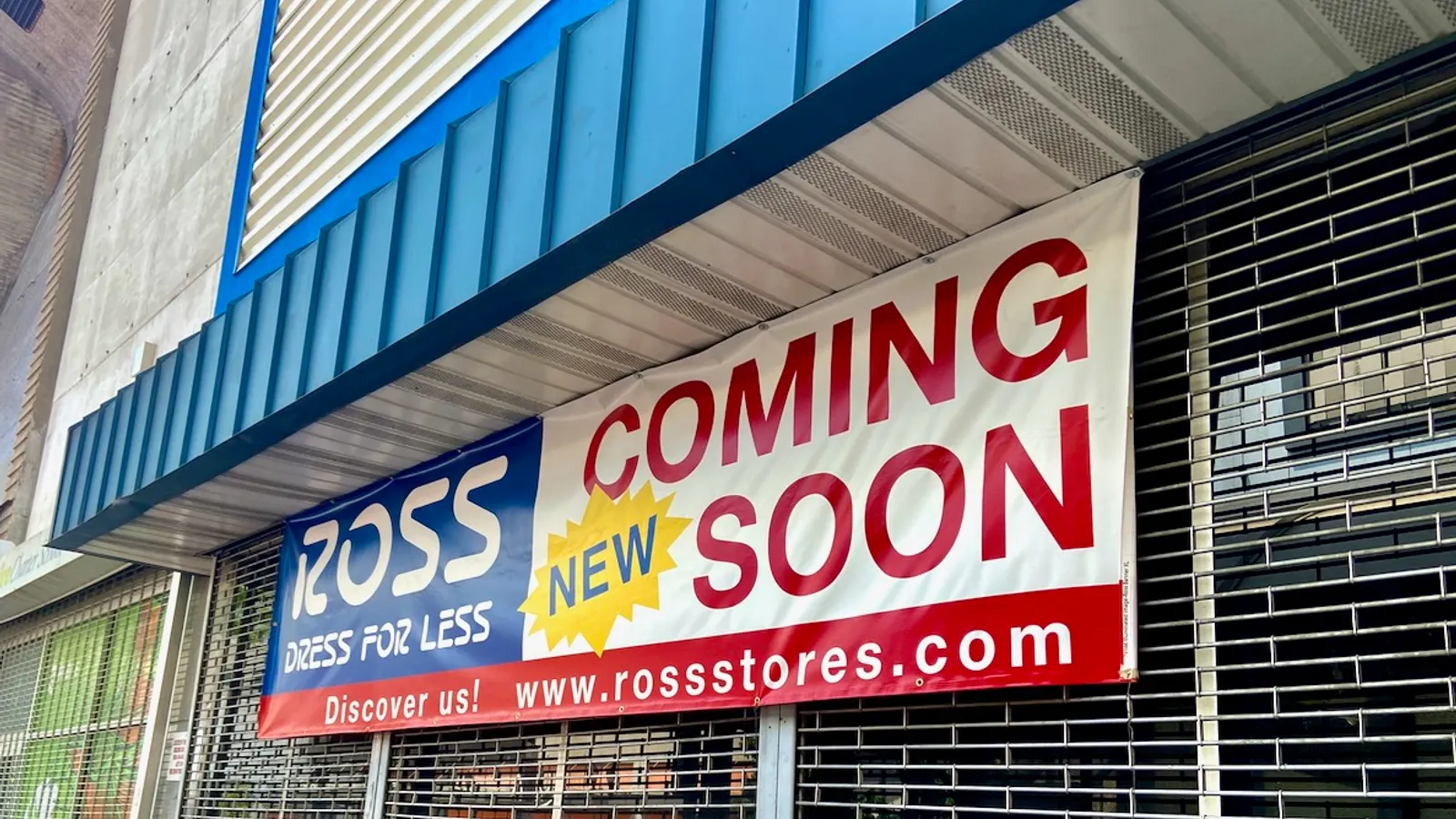
Capitalizing on this momentum, Ross management moved swiftly to adjust its real estate strategy. During the second quarter alone, the company opened 35 new Ross stores and 12 DD’s Discounts locations, expanding its footprint into underserved markets. Spurred by these strong openings and sustained customer demand, executive leadership officially revised its store expansion targets upward for 2026, increasing its projected new store pipeline from approximately 110 locations to 115.
Supporting Context & Metrics: Unpacking the Financial Engine
A granular examination of Ross’s second-quarter financials reveals an economic engine operating at peak efficiency. To fully appreciate the scale of Ross’s achievement, one must dissect the composition of its margin expansion and sales growth.
+------------------------------------------------------------------------+
|                      Q2 FINANCIAL METRICS AT A GLANCE                  |
+----------------------------------+-------------------------------------+
| Metric                           | Performance / Value                 |
+----------------------------------+-------------------------------------+
| Total Q2 Sales                   | $6.3 Billion (+13% YoY)             |
| Net Earnings                     | $851.3 Million (+68% YoY)           |
| Operating Margin Increase        | +610 Basis Points (Total)           |
| Operating Margin (Core)          | +205 Basis Points (Excl. Refunds)   |
| Tariff Refund Contribution       | $253 Million (405 Basis Points)     |
| Projected Q3 Comp Sales Growth   | 6% to 7%                            |
| Projected Q4 Comp Sales Growth   | 4% to 5%                            |
| Revised 2026 Store Openings      | ~115 Locations                      |
+----------------------------------+-------------------------------------+
As detailed in the financial breakdown, total sales reached $6.3 billion, representing a robust 13% year-over-year increase. The cornerstone of this revenue growth was exceptional comparable-store sales strength, driven by higher customer conversion rates and increased average basket sizes.
The mechanics of Ross’s margin expansion are particularly noteworthy. Operating margins expanded by a combined 610 basis points during the quarter. Of that total, 405 basis points were directly attributable to the $253 million tariff refund. Yet, even when completely isolating this one-time financial event, Ross’s organic operating margin still expanded by an impressive 205 basis points. This proves that the margin growth was not merely an artifact of government refunds, but the direct result of superior supply chain execution, reduced freight costs, and disciplined inventory management.
Net earnings reached $851.3 million, a phenomenal 68% leap compared to the same period in the previous fiscal year. This dramatic bottom-line expansion blew past consensus Wall Street estimates and provided the liquidity necessary for Ross to self-fund its accelerated brick-and-mortar expansion without relying heavily on debt instruments.
Looking forward, Chief Financial Officer William Sheehan articulated a highly optimistic outlook for the remainder of the fiscal year. Sheehan projected that comparable-store sales strength would persist into the second half, guiding for a robust 6% to 7% increase in the third quarter, followed by a solid 4% to 5% growth rate in the fourth quarter. These forward-looking metrics indicate that Ross’s executive team does not view Q2 as an isolated anomaly, but rather as the new baseline for operational performance.
Official Statements & Industry Analysis: The Battle for Off-Price Supremacy
The remarkable performance of Ross has ignited intense debate among retail analysts regarding market share dynamics within the off-price sector. For years, the narrative surrounding off-price retailers—comprising giants like TJX Companies, Ross Stores, and Burlington Stores—has been one of collective conquest against traditional department stores. However, recent data suggests a secondary, intra-sector war is underway, with off-price titans actively stealing share from one another.
Wells Fargo analysts, led by Ike Boruchow, captured the mood of the financial district in a glowing Thursday research note, boldly declaring: "Ross is now retail’s boss."
This sentiment was echoed and expanded upon by William Blair analysts led by Dylan Carden in a subsequent Friday note. Carden zeroed in on a critical strategic divergence between Ross and its primary rival, TJX, which owns TJ Maxx, Marshalls, and HomeGoods. According to Carden, TJX has relied on outsized price increases over the last year and a half to protect its margins in an inflationary environment. Ross, by contrast, has maintained a deliberately conservative pricing posture, absorbing some cost pressures to preserve an unmatched value proposition for the consumer.
"In the current environment, we think a better value proposition clearly is winning Ross incremental share, and it is nearly impossible to think some of that is not at the expense of TJX," Carden noted, highlighting the stark contrast in their recent comparable-store sales statistics.
When pressed by analysts during the earnings call regarding this alleged capture of market share from specific rivals, CEO James Conroy offered a diplomatic yet unmistakably confident response. While declining to explicitly name competitors as the direct source of his company’s gains, Conroy leaned heavily on mathematical reality.
"Trying to not be immodest at all, just mathematically, over the last four quarters, we’ve grown stronger than each of the other two players," Conroy stated, alluding to TJX and Burlington. "So mathematically, we’ve captured more share. So of the off-price retail market, we’re a bigger piece than we were a year ago because we’ve outgrown them."
At the same time, Conroy took pains to express admiration for his industry peers, casting the off-price ecosystem as a collaborative rising tide rather than a zero-sum death match. He acknowledged that the other major players in the discount space are "both very formidable companies" that are "extremely well run."
"We’re all competing against each other, but we’re also capturing share from a whole bunch of other places in the retail industry," Conroy explained. "So to some degree, we want off price to win, and we just want to be a slightly bigger winner. So I couldn’t comment on whether we’re specifically impacting either of the other two players, one of which is much bigger than us and does a truly world-class job. So I’m not terribly worried about that."
This philosophy highlights a mature corporate strategy: rather than engaging in destructive price wars, Ross is focusing on operational excellence, superior inventory curation, and maintaining an unassailable value gap against traditional retail formats, secure in the knowledge that its sheer execution will naturally draw consumers away from weaker competitors.
Future Outlook: Sustaining the Momentum Through 2027
While Ross’s current growth metrics are undeniably stellar, seasoned retail analysts are naturally turning their attention to the sustainability of such lofty figures. Can a retailer consistently post double-digit sales growth and expand margins indefinitely in a shifting macroeconomic climate?
According to William Blair’s Dylan Carden, the answer is a qualified yes—at least for the medium term. In his Friday research note, Carden projected that Ross’s ongoing corporate initiatives, store revamps, and disciplined pricing strategies have the structural capacity to stoke robust growth "through at least 2027 before the company likely settles into a more normalized low-single-digit comp cadence."
This multi-year runway of outperformance is supported by several structural advantages:
- Real Estate Expansion: With the upward revision of its 2026 store opening targets to roughly 115 new locations, Ross has unlocked a reliable, predictable engine for square-footage growth. By systematically identifying and penetrating underserved geographic markets with both Ross and DD’s Discounts banners, the company ensures a steady stream of new revenue inlets.
- The Consumer Value Imperative: Macroeconomic pressures are unlikely to evaporate overnight. Even as inflation shows signs of cooling in certain sectors, consumer sensitivity to pricing across groceries, gasoline, and discretionary goods remains at an all-time high. Ross’s commitment to conservative pricing ensures it will remain a destination of choice for budget-fatigued shoppers.
- Vendor Relationships and Inventory Access: As Ross expands its market share and grows its top line, its purchasing power with premier brand-name manufacturers strengthens. This allows Ross to secure high-demand merchandise on favorable terms, reinforcing the "treasure hunt" experience that draws repeat customers into its aisles.
Ultimately, Ross Stores Inc. has transitioned from a steady discount operator into an apex predator of the retail landscape. By pairing visionary executive leadership with an unwavering dedication to consumer value, Ross has not only seized the crown of the off-price sector but has charted a course for sustained dominance that will reshape the American retail landscape for years to come.