
Executive Overview: The Pivot to the Inference Frontier
Recent reports from Bloomberg and industry insiders suggest that Nvidia is orchestrating a sophisticated strategic pivot to capture this burgeoning market. Following its landmark $20 billion acquisition of Groq in late 2025—a move that secured a non-exclusive technology license and a massive influx of engineering talent—Nvidia has now set its sights on the East. The Santa Clara giant is reportedly in high-level discussions with Rebellions, South Korea’s premier AI inference startup.
The potential engagement—which ranges from a technical partnership and strategic investment to a full-scale acquisition—underscores a critical reality: Nvidia’s current GPU dominance may not be enough to secure its future. By eyeing Rebellions, Nvidia is seeking to integrate "memory-centric" architectures and secure a tighter grip on the South Korean AI value chain, which is currently anchored by memory titans Samsung and SK Hynix. This move is not merely about expanding a product portfolio; it is an existential maneuver to fortify an "AI empire" that faces a looming reckoning as specialized silicon begins to outperform general-purpose GPUs in inference efficiency.

Detailed Chronology: The Rapid Ascent of Rebellions
To understand why Nvidia is pursuing a startup half its age, one must examine the meteoric rise of Rebellions. Founded in 2020 amidst the global pandemic by Sung-hyun Park—an MIT-educated engineer with a pedigree spanning Intel, SpaceX, and Morgan Stanley—Rebellions was built with a singular mission: to "revolt" against the inefficient status quo of AI compute.
2020–2022: The Foundation and NPU Genesis
While the world struggled with supply chain disruptions, Rebellions focused on designing Neural Processing Units (NPUs) specifically optimized for the data center. Unlike general-purpose GPUs, which are "jack-of-all-trades" chips, Rebellions’ silicon was architected from the ground up to handle the specific mathematical operations required for AI inference.
2023: Mass Production and Commercial Validation
By 2023, Rebellions achieved what many startups fail to do in a decade: moving from design to mass production. Its first-generation chips, ATOM and ATOM-Max, were immediately deployed in Korea Telecom’s (KT) NPU-as-a-service infrastructure. This provided the "proof of concept" necessary to attract global attention. The chips demonstrated an ability to power large-scale commercial services, such as SK Telecom’s proprietary AI assistant, which handles complex tasks like real-time call summarization for millions of users.

2024–2025: The Strategic Leap to Chiplets and HBM
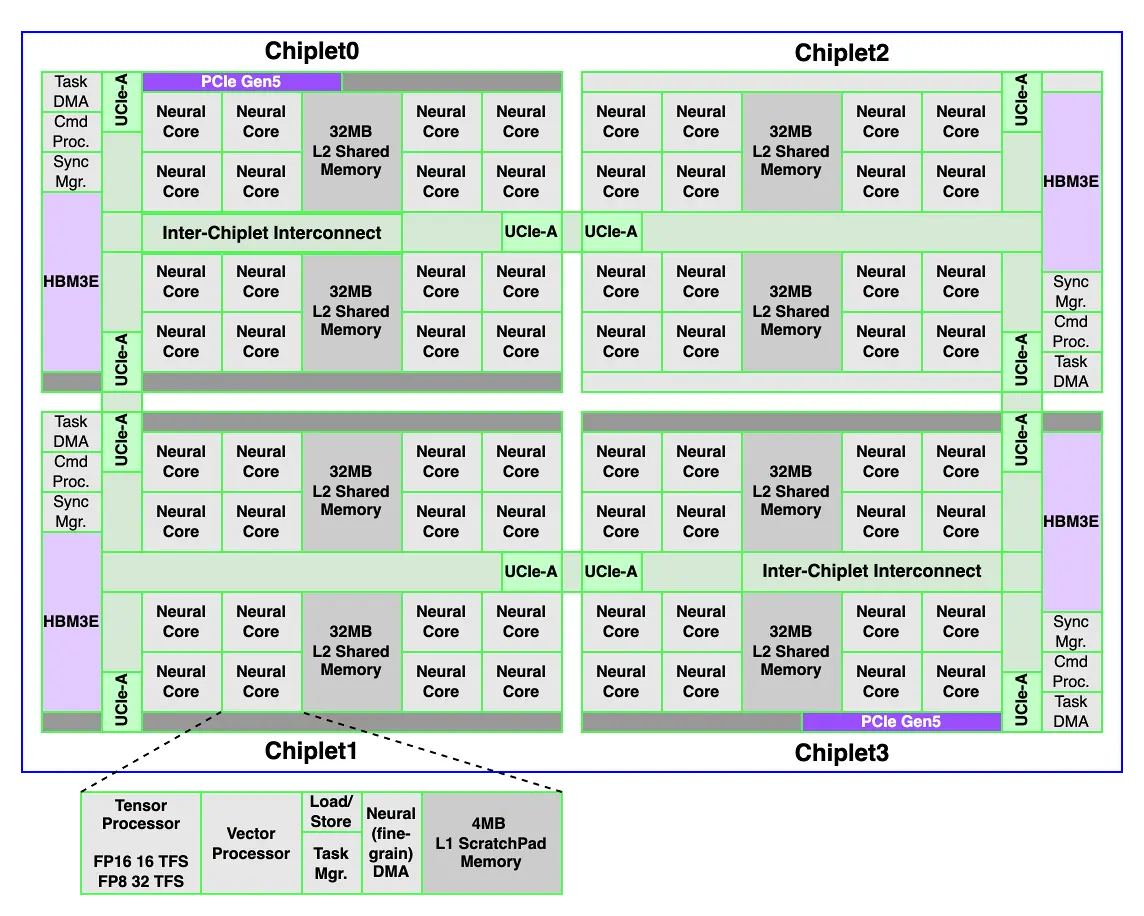
In August 2025, Rebellions unveiled its second-generation platform, the REBEL-Quad. This was a turning point. Utilizing Samsung Foundry’s cutting-edge 4-nm process and the UCIe-Advanced interconnect, Rebellions moved to a chiplet-based architecture. By integrating four compute chiplets with a staggering 144 GB of HBM3E (High Bandwidth Memory), Rebellions signaled that it was no longer just a "startup," but a legitimate rival to the high-end offerings of AMD and Nvidia.
Late 2025: The Nvidia Meeting
The narrative reached a fever pitch when Rebellions CEO Sung-hyun Park was reportedly seen at Nvidia’s headquarters in Santa Clara, meeting with Jensen Huang. This meeting followed Nvidia’s absorption of Groq, suggesting that Huang is systematically identifying and neutralizing—or absorbing—the most significant threats to Nvidia’s inference roadmap.
Supporting Context & Metrics: The Technical Moat
What makes Rebellions so attractive to Nvidia? The answer lies in the "memory wall"—the bottleneck where data transfer between memory and processor slows down AI performance.

Memory-Centric Architecture: SRAM vs. HBM
Rebellions employs a dual-threat strategy in memory architecture. Like Groq, its chips utilize significant on-chip SRAM to handle the "decode" stage of inference, which is incredibly memory-intensive. However, Rebellions goes further by forging custom co-design relationships with Samsung and SK Hynix.
| Feature | Rebellions REBEL-Quad | Standard Inference GPU |
|---|---|---|
| Process Node | Samsung 4-nm | Various (5-nm/4-nm) |
| Memory Capacity | 144 GB HBM3E | 80 GB – 141 GB |
| Compute Power | 1 POPS (FP16) | Comparable, but higher latency |
| Power Envelope | 300-W | 400-W+ |
| Interconnect | UCIe-Advanced (Chiplet) | Proprietary (NVLink) |
This "structural memory supply advantage" is a key differentiator. Because Rebellions has strategic investor relationships with the world’s two largest memory producers, they can guarantee memory allocations that other "pure-play" fabless firms (like Groq or Cerebras) cannot. In a market where HBM is frequently in short supply, this makes Rebellions’ hardware more reliable for hyperscalers.
Software: The Cloud-Native Stack
Nvidia’s success has historically been built on CUDA, its proprietary software layer. Rebellions, however, has taken a "rebellious" path by embracing a cloud-native, open-source stack. Its silicon runs on Kubernetes and is fully compatible with PyTorch, Hugging Face, and the vLLM inference engine. By avoiding proprietary "forks" of these frameworks, Rebellions offers a "plug-and-play" experience for developers who are increasingly weary of being locked into Nvidia’s ecosystem.

Official Statements and Regulatory Headwinds
While the talks remain "early stage" and both companies have officially declined to comment on the specifics of a deal, the rhetoric from leadership and government entities provides ample context.
The CEO’s Stance
Sung-hyun Park has been vocal about his company’s identity. "Even if we step into the same ring as Nvidia and get beaten to death, I want to throw a punch," Park stated in a recent interview. This combative stance makes a potential acquisition particularly intriguing; it would represent a "if you can’t beat them, join them" moment that could redefine the company’s narrative from an "Nvidia challenger" to an "Nvidia catalyst."
The "K-Nvidia" Initiative
The South Korean government has a vested interest in this outcome. Through the "Korea National Growth Fund," the government recently made a direct investment of $166 million into Rebellions. This is part of the "K-Nvidia" initiative, a state-sponsored effort to build a domestic AI ecosystem that can compete on the global stage.

An acquisition by Nvidia would likely trigger intense regulatory scrutiny from the Korea Fair Trade Commission (KFTC). The South Korean government views semiconductors as critical strategic assets and may be hesitant to see its "national champion" absorbed by a U.S. giant. Simultaneously, the U.S. Federal Trade Commission (FTC) and Department of Justice (DOJ) are already monitoring Nvidia’s dominant market share. A second major inference acquisition following the Groq deal could spark a significant antitrust investigation into whether Nvidia is "buying up the competition" to maintain a monopoly.
Future Outlook: The 2026-2027 Reckoning
The potential deal between Nvidia and Rebellions is a microcosm of the broader shifts in the AI industry. As we move toward 2026 and 2027, several factors will determine the success of this strategic pivot.
- The IPO vs. Acquisition Tug-of-War: Rebellions is currently valued at approximately $2.3 billion and is preparing for a Korean IPO in the first half of 2027. If Nvidia’s offer is not high enough to outweigh the potential of a public listing, Rebellions may choose to remain independent, continuing to serve as a high-performance alternative for firms looking to diversify away from Nvidia.
- Inference Efficiency as the New Gold Standard: As AI moves to "the edge" and into sovereign infrastructures (like Saudi Arabia’s AI projects, where Rebellions is already deployed), energy efficiency becomes more important than raw compute power. Rebellions’ Rebel100 NPU, with its superior energy-to-inference ratio, could become the blueprint for future AI hardware.
- Nvidia’s Structural Evolution: If Nvidia successfully integrates Rebellions’ technology and its HBM supply chain advantages, it will transition from a GPU company to a holistic "AI Systems" company. This would allow Nvidia to dominate the entire lifecycle of an AI model—from the first training run on a Blackwell cluster to the trillionth inference request on a Rebellions-powered NPU.
Conclusion
The "inference war" is just beginning. Nvidia’s foray into the South Korean ecosystem via Rebellions is a clear admission that the next phase of the AI revolution will not be won with training alone. It will be won in the trenches of memory-centric architectures, energy efficiency, and strategic supply chain alliances. Whether through a partnership or a multi-billion dollar acquisition, Nvidia’s pursuit of Rebellions proves that even the king of the mountain knows he must evolve or risk being toppled by the very "rebellion" he helped create.