
Executive Overview
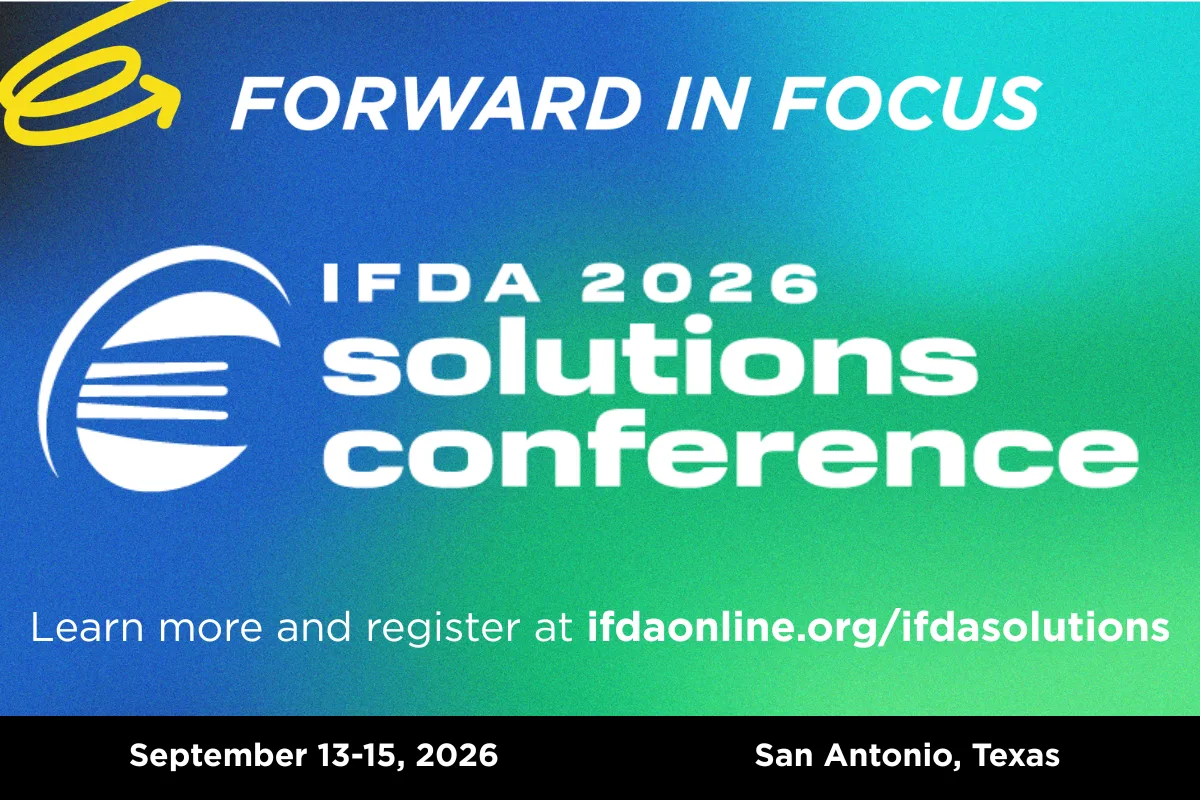
Enter the 2026 IFDA Solutions Conference, hosted by the International Foodservice Distributors Association (IFDA). Scheduled for September 13–15, 2026, at the Henry B. González Convention Center in San Antonio, Texas, this premier industry gathering is poised to serve as the definitive crucible for modern supply chain strategy. Bringing together top-tier distribution executives, pioneering suppliers, and cutting-edge solution providers, the three-day event is engineered to tackle the industry’s most persistent bottlenecks head-on.
This year’s conference arrives at a critical juncture. As distributors grapple with persistent labor shortages, fluctuating transportation expenses, and the integration of artificial intelligence into daily workflows, the educational and networking frameworks of the event have expanded significantly. Most notably, the integration of the IFDA SMart Conference into the main Solutions event brings commercial strategy—specifically sales and marketing—directly into alignment with operational execution.
This comprehensive report examines the structural shifts shaping the foodservice distribution sector, details the core offerings of the upcoming San Antonio conference, and provides an authoritative forward-looking analysis of how industry leaders plan to future-proof their operations against tomorrow’s disruptions.
Detailed Chronology & Event Architecture
The 2026 IFDA Solutions Conference has been meticulously structured to maximize educational value, cross-functional collaboration, and strategic networking. Spanning three dynamic days in the heart of San Antonio, the conference schedule moves deliberately from macro-level industry trends down to granular, role-specific execution strategies.
Day One: Setting the Macro Stage and Opening the Expo
The conference opens on Sunday, September 13, with registration, welcome events, and the grand opening of the exhibition floor. Day One is designed to break the ice and establish the overarching themes of the conference: resilience, integration, and technological acceleration.
- Morning & Early Afternoon: Attendees filter into the Henry B. González Convention Center for early badge pickup and initial networking roundtables.
- The Expo Floor Unveiling: The exhibition hall officially opens, giving attendees their first look at next-generation warehouse robotics, telematics platforms, and cold-chain innovations. Suppliers and solution providers showcase emerging capabilities, allowing early arrivals to preview hardware and software designed to optimize routing, inventory tracking, and energy management.
- Evening Welcome Reception: The opening night reception offers an informal environment for C-suite executives, mid-level managers, and vendor partners to exchange initial impressions of the operating climate and establish connections that will anchor their conference experience.
Day Two: Deep-Dive Educational Tracks and Cross-Functional Labs
Monday, September 14, represents the core intellectual engine of the conference. The day is dedicated to comprehensive educational programming, broken down into specialized learning tracks designed to address every facet of a modern distribution enterprise.
- Morning Keynote Plenaries: Industry thought leaders and IFDA leadership take the main stage to address the macro-economic forces impacting the foodservice supply chain, focusing on labor retention, regulatory compliance, and digital transformation.
- Concurrent Learning Tracks Begin: Attendees disperse into targeted sessions spanning the conference’s seven core pillars:
- Warehouse & Innovation
- Operations & Supply Chain
- Talent Development
- Transportation
- Compliance
- Technology & Data
- Sales & Marketing (New for 2026)
- Afternoon Collaboration Labs: Recognizing that modern distribution challenges cannot be solved in departmental silos, Day Two features cross-functional panel discussions. These sessions compel warehouse managers, Chief Technology Officers (CTOs), Chief Financial Officers (CFOs), and the newly integrated sales and marketing leaders to sit at the same table and build unified operational strategies.
Day Three: Future-Proofing and Actionable Takeaways
The final day of the conference, Tuesday, September 15, shifts from theoretical frameworks to practical execution, ensuring that attendees leave San Antonio with actionable blueprints they can implement immediately upon returning to their home operations.
- Final Track Sessions & Peer Roundtables: Concluding workshops focus on peer-to-peer learning, allowing operators of varying company sizes to compare notes on localized supply chain hiccups, labor agreements, and software implementation timelines.
- Expo Floor Finale: A final opportunity for attendees to finalize vendor demonstrations, negotiate software contracts, and inspect physical logistics hardware.
- Closing Ceremonies: The conference concludes with a synthesis of key takeaways, highlighting the metrics and methodologies that will define successful distributors for the remainder of the decade and beyond.
Supporting Context & Operational Metrics
To fully understand the weight of the discussions that will take place at the 2026 IFDA Solutions Conference, one must examine the broader economic and operational landscape of the North American foodservice distribution sector.
The Triad of Operational Pressure: Labor, Tech, and Logistics
Foodservice distributors operate in a high-velocity, low-margin environment. Recent industry data underscores three primary friction points:
- Workforce Dynamics: Attracting and retaining qualified warehouse selectors and commercial drivers remains one of the industry’s most expensive challenges. Turnover rates in warehousing and transportation continue to necessitate heavy investments in recruitment, competitive compensation packages, and ergonomic workplace technologies designed to reduce physical strain and injury rates.
- Transportation Volatility: Fuel price fluctuations, evolving federal and state emissions mandates, and driver hours-of-service regulations make fleet management a daily high-wire act. Distributors are increasingly turning to advanced route-optimization software and exploring alternative-fuel vehicles to protect their bottom lines.
- Data & Technology Silos: While data collection has exploded—driven by IoT-enabled refrigeration units, automated inventory scanners, and ERP upgrades—many mid-sized distributors struggle to transform raw data into actionable business intelligence. The gap between possessing data and utilizing it effectively is widening, making technology education paramount.
The Evolution of the Educational Tracks
The curriculum at the 2026 conference directly reflects these operational pressures. By dividing the educational program into distinct yet interconnected tracks, IFDA ensures that every stakeholder finds targeted solutions:
- Warehouse & Innovation: Focuses on automation, goods-to-person systems, voice-picking technology, and inventory accuracy algorithms.
- Operations & Supply Chain: Examines network design, inventory velocity, supplier relationship management, and disruption mitigation.
- Talent Development: Addresses modern recruitment strategies, leadership pipeline creation, ongoing employee training, and retention programs.
- Transportation: Covers fleet safety, telematics integration, maintenance scheduling, and fuel efficiency metrics.
- Compliance: Navigates food safety modernizations, OSHA standards, environmental regulations, and state-by-state compliance hurdles.
- Technology & Data: Dives into cloud-native ERP migrations, cybersecurity protocols, and business intelligence dashboards.
- Sales & Marketing (Debut Track): Integrates the former SMart Conference curriculum, focusing on distributor-operator collaboration, margin management, menu trends, and digital ordering platforms.
Official Statements and Industry Perspectives
The structural expansion of the 2026 conference, particularly the incorporation of the sales and marketing track, highlights a profound shift in how the IFDA views the role of the modern distributor. Industry leaders and association executives have emphasized that survival in today’s marketplace requires a holistic approach that bridges the gap between the warehouse floor and the corporate boardroom.
"Foodservice distribution is undergoing a fundamental transformation," notes an IFDA program advisor. "Distributors can no longer afford to view logistics, warehousing, technology, and commercial strategy as separate entities. The challenges we face today—whether it’s integrating predictive analytics into our inventory forecasting or aligning our sales targets with our warehouse fulfillment capacity—require an all-hands-on-deck approach. The 2026 Solutions Conference is designed precisely to tear down those functional silos."
Industry analysts have likewise praised the decision to merge the SMart Conference framework into the broader Solutions event. By bringing commercial leaders into direct dialogue with supply chain engineers, distributors are better positioned to manage customer expectations. When sales teams understand the operational realities of warehouse throughput and transportation constraints, they can guide restaurant and institutional clients toward ordering patterns that maximize operational efficiency for both parties.
Furthermore, suppliers and solution providers have voiced immense enthusiasm for the expanded format.
"For software developers and equipment manufacturers, this conference is the ultimate testing ground," explains a veteran logistics tech vendor. "We aren’t just showing off shiny new tools anymore; we are engaging in deep, cross-functional conversations with the very people who have to live with these systems every day. When a warehouse director, a CFO, and a VP of Sales walk up to our booth together with a unified problem to solve, that’s where true innovation happens."
Future Outlook: The Next Decade of Foodservice Distribution
As the industry looks past 2026 and toward the end of the decade, the insights generated in San Antonio will serve as foundational building blocks for the future of food distribution. Several macro trends are poised to accelerate in the wake of the conference:
1. The Hyper-Connected Distribution Center
The traditional, paper-heavy warehouse is officially a relic of the past. Over the next five to ten years, distribution centers will see an acceleration in autonomous mobile robotics (AMRs), automated guided vehicles (AGVs), and artificial intelligence-driven slotting optimization. These technologies will not replace human workers; rather, they will augment human capabilities, transforming selectors from manual laborers into systems supervisors and equipment operators.
2. Predictive Supply Chain Resilience
Unforeseen disruptions—ranging from extreme weather events to geopolitical shifts affecting food production—will continue to test global supply chains. Forward-thinking distributors are investing heavily in predictive analytics platforms that use machine learning to forecast demand shifts weeks in advance. This allows distributors to preposition inventory, optimize routing dynamically, and insulate their restaurant and institutional customers from crippling out-of-stocks.
3. Sustainability as an Operational Mandate
Environmental, Social, and Governance (ESG) criteria are no longer optional marketing talking points for foodservice distributors; they are financial and regulatory imperatives. From fleet electrification and optimized routing that minimizes carbon footprints to cold-chain refrigeration units powered by renewable energy, sustainability initiatives will be tightly woven into every operational track at future IFDA gatherings.
4. The Unified Commercial-Operational Loop
The permanent integration of sales and marketing into the operational fold—catalyzed by the 2026 conference structure—signals the death of the isolated sales team. Future distributors will rely on integrated digital ecosystems where a menu trend noticed by a sales rep instantly updates demand forecasting models in the warehouse, which in turn optimizes inbound purchasing schedules from food manufacturers.
Conclusion
The 2026 IFDA Solutions Conference, taking place September 13–15 at the Henry B. González Convention Center in San Antonio, is much more than an annual trade show. It is a vital strategic forum designed to equip foodservice distribution professionals with the tools, technologies, and collaborative insights needed to master a rapidly changing operating environment.
By uniting warehouse managers, logistics coordinators, compliance officers, technologists, and commercial leaders under one roof, the conference provides a comprehensive roadmap for overcoming the industry’s most complex hurdles. For any distribution business serious about scaling efficiency, developing talent, and driving profitability through the remainder of the decade, participation in this event is not merely recommended—it is essential.
To learn more about the event schedule, explore sponsorship opportunities, or secure your registration, visit the official IFDA Solutions Conference Information Page.