Executive Overview
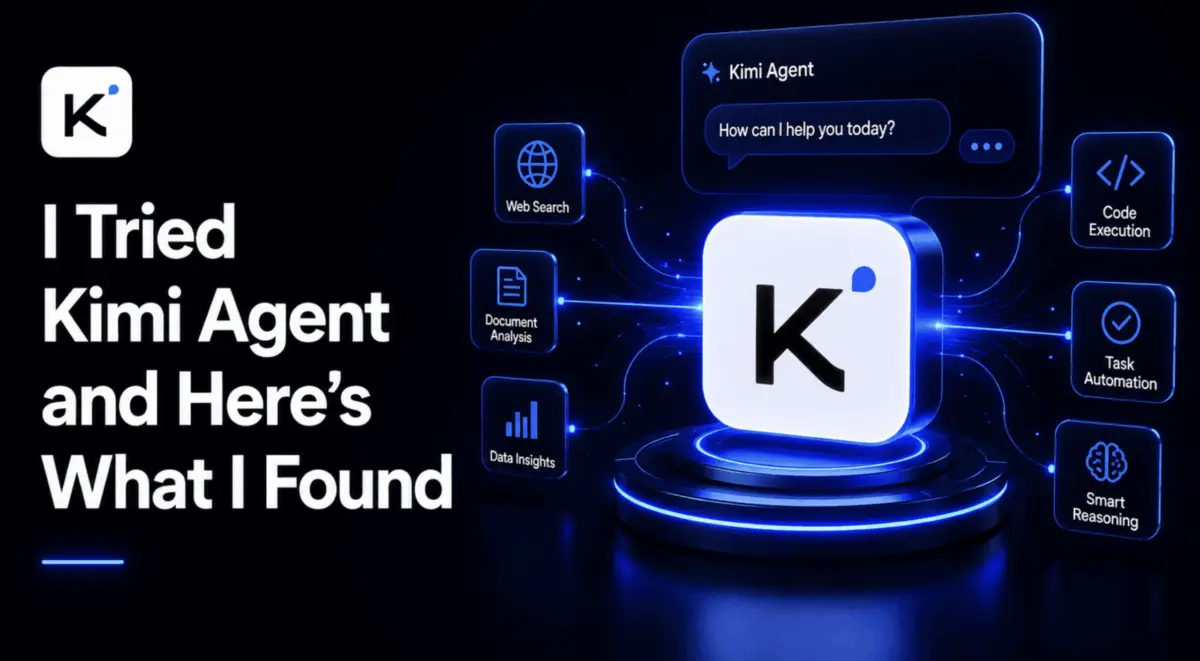
However, evaluating Kimi requires looking past the surface-level marketing to understand its distinct components: Agent Swarm for parallelized sub-agent execution, Kimi Work for direct desktop automation via browser-control extensions, Kimi Claw for persistent cloud tasks, Kimi Code for command-line development, and the newly released Kimi K3 API.
While Moonshot AI has positioned its offerings as cost-effective, high-capacity alternatives to Western frontier models like OpenAI’s GPT series and Anthropic’s Claude, a balanced examination reveals both groundbreaking engineering achievements and notable operational bottlenecks. From impressive long-context document synthesis to capacity constraints and server hosting considerations, this report offers a comprehensive, hands-on analysis of what the Kimi ecosystem genuinely delivers.
Detailed Chronology and Ecosystem Anatomy
To understand the current state of Kimi, it is crucial to trace its rapid development timeline and map out how its disparate tools fit together.
The Evolution of the Kimi Product Suite
- January 27, 2026: Moonshot AI officially ships Agent Swarm alongside the Kimi K2.5 release, introducing a scale-out architecture capable of coordinating sub-agent collaboration without predefined roles.
- April 20, 2026: The release of K2.6 provides a massive performance jump, scaling capacity up to 300 simultaneous sub-agent instances and executing over 4,000 tool calls in a single task.
- June 10, 2026: Moonshot launches Kimi Work, a dedicated desktop application for macOS (Apple Silicon) and Windows that interacts directly with user operating systems through a browser-control extension called WebBridge.
- July 20, 2026: Amid a massive surge in global demand, Moonshot AI temporarily pauses new K3 subscriptions entirely after hitting strict GPU capacity limits, highlighting early scaling pains.
- July 27, 2026: The full K3 model weights are made publicly available under a bespoke Kimi K3 License—an open-weight format, though distinct from an OSI-recognized open-source license.
Dissecting the Kimi Architecture
The Kimi ecosystem is built around several interlocking modules designed for different operational environments:
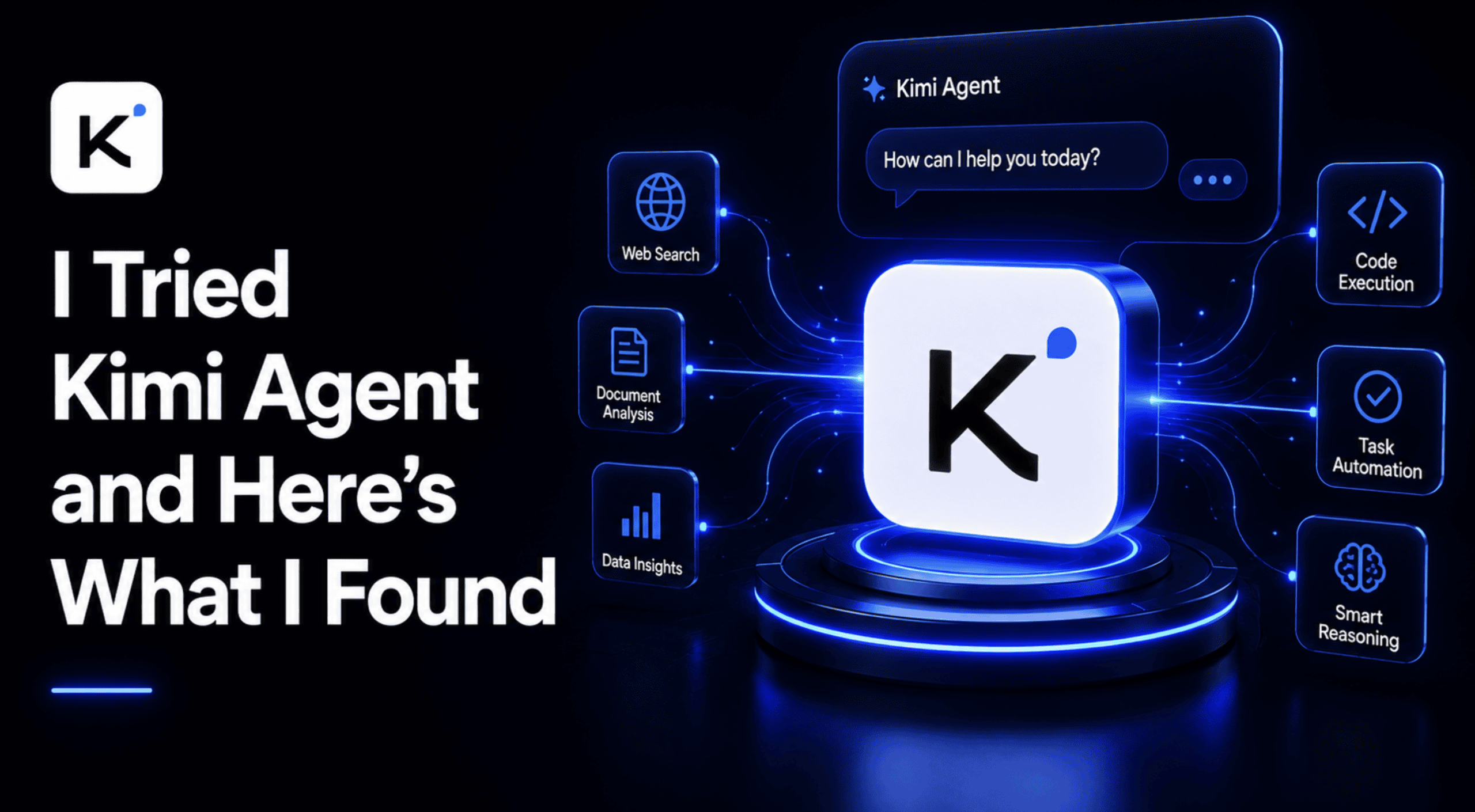
- Kimi K3 (The Foundation Model): A 2.8-trillion-parameter MoE architecture activating 16 of 896 experts per token, paired with a native 1-million-token context window.
- Agent Swarm: The orchestration layer that spins up dozens or hundreds of coordinated sub-agents to tackle complex, multi-step objectives in parallel rather than sequentially.
- Goal: The feature governing autonomous multi-step objectives, allowing users to input plain-language targets which the system then plans and executes independently.
- OK Computer: The native agent mode embedded within Kimi’s chat interface, capable of generating multi-page web applications and comprehensive slide decks from a single prompt.
- Kimi Work & Kimi Claw: Kimi Work acts locally on user machines via WebBridge to search, scroll, and fill out forms like a human user. Because local tasks halt when a laptop lid closes, Kimi Claw serves as its cloud-based counterpart to maintain uninterrupted execution.
- Kimi Code: A dedicated command-line interface (CLI) tailored for software engineering tasks.
Supporting Context, Architecture, and API Integration
The Architecture Claim: Agent Swarm
Agent Swarm remains Kimi’s headline feature. Unlike traditional frameworks requiring rigid, manually designed workflows, Moonshot’s scale-out architecture coordinates sub-agent collaboration dynamically. By the K2.6 and K3 iterations, the system achieved a capacity of up to 300 simultaneous sub-agent instances and over 4,000 tool calls in a single session—yielding a claimed 4.5x speed advantage over single-agent sequential execution.
Unusually for a commercial AI vendor, Moonshot openly documents the primary failure modes of its swarm architecture:
- Serial Collapse: A phenomenon where the orchestrator fans work out, but sub-agents inevitably block each other, neutralizing parallel gains.
- Fake Parallelism: Instances where work appears distributed across nodes but lacks the independence required to benefit from distributed execution.
Publishing this transparent failure taxonomy provides developers with a realistic decision framework for determining when a task truly warrants multi-agent fan-out.
Hands-On With the Kimi API
Moonshot’s API adheres to the standard OpenAI chat-completions contract, allowing developers to integrate Kimi K3 using the standard Python SDK by simply updating the base URL and model identifier.
import os
import json
from openai import OpenAI

# Initialize the OpenAI client pointing to Moonshot's endpoints
client = OpenAI(
    api_key=os.environ.get("MOONSHOT_API_KEY"),
    base_url="https://api.moonshot.ai/v1",
)

MODEL = "kimi-k3"

TOOLS = [
    "type": "function",
    "function":
        "name": "count_words",
        "description": "Counts the number of words in a block of text.",
        "parameters":
            "type": "object",
            "properties": "text": "type": "string",
            "required": ["text"],
        ,
    ,
]

def count_words(text: str) -> int:
    return len(text.split())

def run_task(task: str, max_turns: int = 6) -> dict:
    messages = ["role": "user", "content": task]
    total_prompt_tokens = 0
    total_completion_tokens = 0
    turns_used = 0

    for turn in range(max_turns):
        turns_used = turn + 1
        response = client.chat.completions.create(
            model=MODEL,
            max_tokens=1024,
            tools=TOOLS,
            messages=messages,
            reasoning_effort="max",  # K3 replaces older thinking parameters with reasoning_effort
        )

        usage = response.usage
        total_prompt_tokens += usage.prompt_tokens
        total_completion_tokens += usage.completion_tokens

        message = response.choices[0].message
        if response.choices[0].finish_reason != "tool_calls":
            return
                "answer": message.content,
                "turns_used": turns_used,
                "prompt_tokens": total_prompt_tokens,
                "completion_tokens": total_completion_tokens,


        messages.append(message.model_dump(exclude_none=True))
        for tool_call in message.tool_calls:
            if tool_call.function.name == "count_words":
                args = json.loads(tool_call.function.arguments)
                result = count_words(args["text"])
                messages.append(
                    "role": "tool",
                    "tool_call_id": tool_call.id,
                    "content": str(result),
                )

    return "answer": None, "turns_used": turns_used, "error": "Hit max_turns without finishing"

if __name__ == "__main__":
    task = (
        "Write a two-sentence description of what a mixture-of-experts "
        "model is, then use the count_words tool to tell me exactly how "
        "many words your description contains."
    )
    report = run_task(task)
    print(json.dumps(report, indent=2))
Pricing Economics and Token Efficiency
Kimi K3 operates on a flat pricing structure across its entire 1-million-token context window: $3 per million input tokens and $15 per million output tokens. While this represents an approximate fivefold price increase compared to the ultra-cheap K2 line, it remains highly competitive. Furthermore, automatic prefix caching reduces the cached-input rate to $0.30 per million tokens, significantly optimizing cost structures for long-context, multi-turn application workflows.

Comparative Analysis: Kimi K3 vs. Western Frontier Models
| Metric | Kimi K3 / Agent Swarm | Claude (Opus/Sonnet class) | GPT-Class Agents |
|---|---|---|---|
| Context Window | 1,000,000 tokens | Varies by model (generally smaller than 1M) | Varies by model |
| Pricing (per million tokens) | $3 input / $15 output (Cached input: $0.30) | Higher list price than K3 | Higher list price than K3 |
| Parallel Agent Architecture | Native, up to 300 sub-agents, 4,000+ tool calls | Sub-agent orchestration via Claude Code Teams | Handoff-based orchestration via Agents SDK |
| Independent Hard-Task Benchmark | 68/100 on independent FlowGraph test (gap in coordination) | 91/100 on identical tests | Not directly evaluated in comparative cohort |
| Vendor Positioning | Trails Claude Fable 5 and GPT-5.6 Sol internally | N/A | N/A |
| Model Weights | Open-weight under bespoke non-OSI license | Closed | Closed |
| Data Hosting Infrastructure | China-based servers | US-based servers | US-based servers |
Official Statements and Independent Testing Insights
Third-party evaluations and vendor disclosures highlight a nuanced performance profile. Independent testing confirms that Kimi excels at long-document analysis; users can drop multiple extensive PDF files into a single session and query specific, cross-referenced sections with high accuracy. Similarly, Kimi Code delivers clean refactoring output and sound architectural reasoning, making it an attractive, cost-efficient option for software engineering teams.
However, independent benchmarks—such as the FlowGraph evaluation suite—reveal a score of 68/100, indicating a distinct performance gap in complex multi-agent coordination compared to top-tier Western counterparts scoring above 90. Notably, Moonshot AI’s own internal documentation mirrors this candor, admitting that K3 trails leading proprietary architectures like Claude Fable 5 and GPT-5.6 Sol on rigorous frontier tasks.
Additionally, users must navigate certain operational rough edges:
- Excessive Proactiveness: K3 has been observed making unprompted decisions when encountering ambiguity mid-task rather than pausing for user clarification—a byproduct of training designed to handle lengthy, complex workflows.
- Harness Compatibility: Because K3 relies on preserved reasoning history across sessions, output quality degrades if agent harnesses fail to pass history back correctly, or if sessions are transferred between differing foundational models mid-conversation.
- Data Jurisdiction: Because Kimi’s hosted API routes through servers based in China, organizations operating in highly regulated industries must factor data sovereignty and compliance requirements into their architectural decisions.
Future Outlook and Strategic Recommendations
The Kimi ecosystem defies simple characterization. On one hand, Moonshot AI has delivered an exceptionally disruptive pricing model, robust long-context processing capabilities, and a transparent, well-documented agent orchestration framework. On the other hand, empirical testing demonstrates that it continues to trail market leaders on the most demanding multi-agent coordination tasks.
Strategic Recommendations for Enterprise Adoption
- For Document Analysis and Cost-Sensitive Code Generation: Kimi K3 and its associated desktop/CLI tools represent an immediate, high-value alternative to more expensive proprietary options.
- For High-Stakes Multi-Agent Automation: Organizations should exercise caution. Teams relying on flawless multi-agent coordination should conduct rigorous internal evaluations on bespoke workloads before deploying Agent Swarm at scale.
- For Regulated Sectors: Compliance officers must carefully review data routing and hosting protocols to ensure alignment with local data residency regulations.
Ultimately, Kimi represents a vital stepping stone in the democratization of massive-scale agentic AI. By balancing aggressive pricing with admirable transparency regarding its engineering hurdles, Moonshot AI has established Kimi not merely as a regional contender, but as a global disruptor worthy of serious consideration in modern AI deployment pipelines.