Executive Overview
This diplomatic and economic showdown erupted after the United States sanctioned dozens of Chinese entities and issued a stern warning targeting an unspecified "major financial institution" over its ongoing financial dealings with Tehran. Beijing’s response was swift and uncompromising. Through Foreign Ministry spokesperson Lin Jian, the Chinese government declared that its bilateral relationship with Iran "should not be disrupted or undermined," warning that Beijing is fully prepared to take "all necessary measures" to safeguard its national and economic interests.
This high-stakes collision underscores the immense risks of an impending superpowers’ clash as Donald Trump revives an aggressive economic onslaught against Iran. The primary objective of Washington’s pressure campaign is to force the Islamic Republic back to the negotiating table. However, China continues to act as Tehran’s primary economic savior, serving as the largest single buyer of Iranian crude oil.
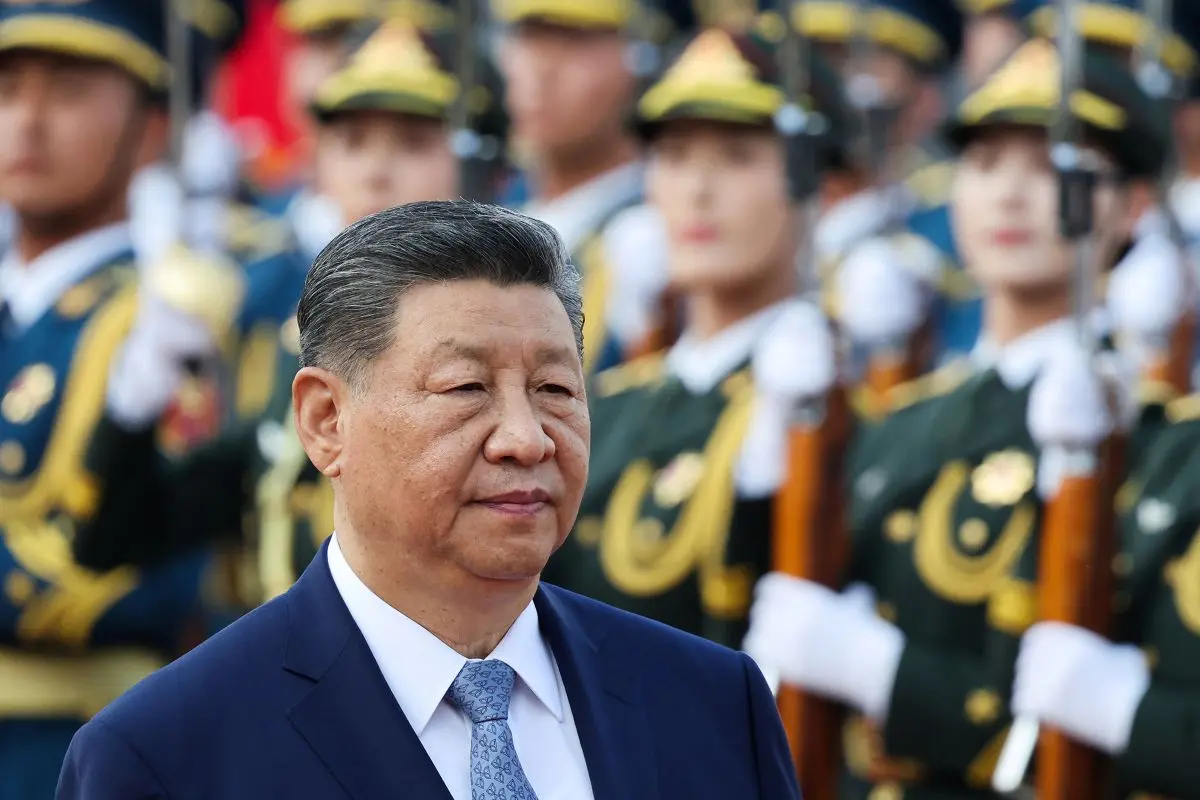
For Xi Jinping, there is little tactical incentive to assist Trump in swiftly wrapping up a Middle Eastern conflict that diverts critical U.S. military resources away from the Indo-Pacific theater. Furthermore, the standoff provides Beijing with substantial leverage ahead of a high-stakes leaders’ summit scheduled for September 24 in Washington. While both sides are navigating a delicate economic balancing act, the underlying tensions reveal the limits of American financial statecraft in an era where global supply chains and financial architectures are increasingly fragmented.
Detailed Chronology of the Escalation
The latest spiral of tensions between Washington and Beijing did not materialize overnight; it is the culmination of shifting military deployments, sudden financial sanctions, and calculated diplomatic maneuvers.
Early August: The Military Redirection
The geopolitical chessboard shifted significantly earlier this month when the United States redeployed its lone Asia-based aircraft carrier to the Middle East. This strategic pivot—designed to project power and backstop Trump’s anti-Iran campaign—immediately disrupted American regional defense commitments in the Pacific. Shortly after the redeployment, U.S. forces announced they were scrapping a joint military exercise with South Korea. The cancellation was directly attributed to military resource shortages caused by the heavy naval and operational deployments directed toward the Middle East.
For Beijing, this American pivot was viewed as a strategic windfall. With U.S. military assets pulled away from its primary theater of competition, China gained a significantly freer hand to assert its sweeping territorial claims in the South China Sea and increase pressure around self-ruled Taiwan.
Mid-August: Washington’s Financial Salvo
Capitalizing on the pressure campaign, the U.S. Treasury and State departments escalated economic penalties. Washington slapped sweeping sanctions on dozens of Chinese entities accused of facilitating the illicit trade of Iranian petroleum and supporting the country’s wartime economy. To drive the point home, U.S. officials dangled the explicit threat of targeting a "major Chinese financial institution" if it continued to process transactions for Tehran.
Concurrently, U.S. financial officials sought to manage domestic fallout. On August 24, U.S. Treasury leadership signaled an acute awareness of global financial fragility. Addressing reporters, officials noted an unwillingness to "blow up the global financial system," comments that coincided with U.S. long-term borrowing costs surging to decade highs amid mounting domestic debt concerns.
The Immediate Beijing Response
Within hours of the U.S. sanctions announcement, Beijing mobilized its diplomatic apparatus. Foreign Ministry spokesperson Lin Jian rejected Washington’s extraterritorial enforcement, framing the China-Iran partnership as legitimate, sovereign, and entirely immune to foreign coercion.
Despite the fiery rhetoric, analysts note that pragmatic calculations are already underway behind closed doors. Ahead of the upcoming bilateral summit, China has quietly begun throttling back some of its purchases of heavily discounted Iranian crude. This subtle cooling is partly driven by the tightening impact of U.S. naval enforcement and partly by Beijing’s desire to manage the temperature of the relationship before the September 24 meeting in Washington, which is designed to preserve the fragile trade truce between the world’s two largest economic superpowers.
Supporting Context & Metrics
To fully understand why this standoff is uniquely balanced, one must examine the web of economic interdependencies, strategic leverage points, and regional calculations that bind Washington and Beijing.
The Rare Earths Chokepoint and Economic Leverage
While the United States holds the financial sword of global banking sanctions and dollar hegemony, China wields an equally potent economic shield: dominance over the critical mineral supply chain.
Beijing holds a virtual monopoly over the extraction and processing of rare earth elements, which are indispensable for manufacturing everything from advanced consumer electronics and electric vehicles to high-precision missiles and fighter jets. Last year, Xi Jinping effectively utilized this chokepoint to halt Donald Trump’s sweeping tariff escalations. This leverage continues to act as an effective guardrail, preventing Washington from following through on its most radical threats—such as cutting off a major Chinese bank from the SWIFT system, a move that could trigger catastrophic blowback for the global economy.
Furthermore, economic pragmatism dictates restraint on both sides. Chinese policymakers are acutely aware that runaway commodity and energy prices could suffocate global demand, choking off the export-driven manufacturing growth that underpins China’s domestic economic stability.
The Taiwan Flashpoint and Strategic Red Lines
Any substantive compromise on Iran requested by Washington will inevitably carry a steep price tag. For Beijing, Taiwan remains the ultimate, non-negotiable red line in bilateral relations.
Chinese officials have repeatedly demanded that the United States immediately cease all military arms sales to the self-governed island, which the Chinese Communist Party claims as its sovereign territory despite never having ruled it. Looming large over current diplomatic exchanges is a stalled $14 billion U.S. arms package destined for Taiwan. Without a major U.S. concession on the Taiwan issue—of equal magnitude to any concession Beijing might make regarding Iran—Xi Jinping has zero domestic or geopolitical incentive to abandon Tehran.
The Iran Equation: Unyielding Resilience
From the perspective of Chinese strategic planners, Washington’s hopes of bringing Iran to its knees via economic asphyxiation are historically unfounded.
"Iran has been subject to sanctions for so long and the country never buckled. Why would it be different this time?"
— John Gong, Professor at the University of International Business and Economics in Beijing and former Commerce Ministry consultant.
For decades, the Islamic Republic has operated under severe international isolation. China has served as its primary economic oxygen tank, purchasing the vast majority of its exported oil. While Beijing may adjust the volume of its imports or alter the financial plumbing—such as keeping transaction revenues locked inside domestic Chinese banks to shield them from Western oversight—it has no intention of severing the relationship.
Official Statements & Expert Analysis
The diplomatic posturing has elicited sharp commentary from geopolitical analysts, former policy advisors, and economic experts worldwide.
-
Jesse Marks, founder of Rihla Research & Advisory and former Middle East policy adviser in the U.S. government:
"China wants the conflict contained, but it has little reason to help Trump end it without receiving something in return. For Xi, there are clear benefits to Trump being distracted by Iran. While Xi won’t cut ties with Tehran, Beijing could decide to further reduce purchases of Iranian oil, keep income locked in Chinese banks, or pledge tighter controls on dual-use components reaching Iranian weapons programs ahead of the summit." -
Derek Scissors, resident scholar at the American Enterprise Institute:
Pointing to the hesitation of U.S. officials to deploy maximum financial force, Scissors argues that Washington’s perceived domestic vulnerabilities embolden Beijing.
"Bessent’s failure to take stronger action encourages China to see the U.S. as overstretched by bond market turbulence, domestic political concerns over affordability, and a new trade dispute with Canada. Beijing certainly won’t move early. The U.S. will have to show commitment to the new policy, which it hasn’t yet—and that is something Trump rarely does." -
John Gong, University of International Business and Economics:
"Washington likely knows China won’t comply with America’s requests on Iran, but is hoping it can push Beijing into making some smaller concessions. However, without addressing core sovereignty issues like Taiwan, major concessions from Beijing are completely off the table."
Future Outlook: The Road to September 24
As the clock ticks down to the pivotal September 24 leaders’ summit in Washington, both superpowers find themselves locked in a complex dance of deterrence, negotiation, and risk management.
Diplomatic Multilateralism as an Alternative
Rather than yielding to unilateral American demands, Xi Jinping is positioning China as an alternative diplomatic broker in the Middle East. Beijing has actively engaged in high-level talks with regional heavyweights, including leaders from Jordan and Kuwait. Furthermore, China is slated to host a major summit with Arab nations later this year, alongside regional security dialogues like the upcoming Shanghai Cooperation Organization meeting in Kyrgyzstan. These platforms give Xi ample opportunity to coordinate with Iranian representatives outside the Western-dominated diplomatic framework, projecting global leadership while frustrating Washington’s isolation strategy.
The Calculus of Restraint
Ultimately, the impending summit is intended to preserve the fragile economic truce between the world’s two largest economies. The U.S. is reportedly planning to cap its pending overcapacity tariffs on Chinese goods at a threshold previously tacitly approved by Beijing, signaling a mutual desire to prevent financial ties from fraying beyond repair.
Yet, the fundamental structural conflict remains unresolved. Washington’s "maximum pressure" campaign against Iran collides directly with Beijing’s grand strategy of checking American global hegemony, utilizing Middle Eastern energy security, and diverting U.S. military bandwidth away from the Indo-Pacific.
Until the United States demonstrates a sustained, ironclad commitment to its new Middle Eastern policies—and is willing to offer reciprocal concessions on core territorial interests like Taiwan—Xi Jinping’s government will continue to throw Tehran its economic lifeline, proving that Beijing is entirely willing to call Washington’s bluff on the global stage.