

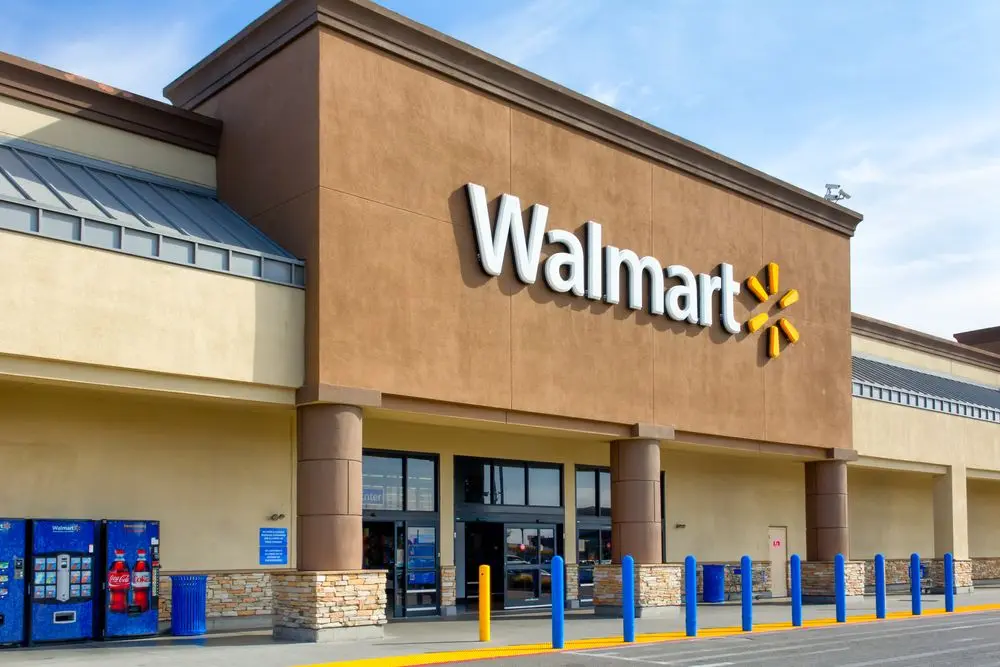
Executive Overview
The policy shift applies not only to Walmart’s flagship supercenters but also to its warehouse club subsidiary, Sam’s Club. According to the company, select locations will receive the "Tap to Pay" capability immediately, with a nationwide deployment slated for completion across all stores and clubs by the end of 2026. Furthermore, the company expects to complete the integration of contactless payment terminals at all its fuel stations by the middle of 2027.
For industry analysts and consumers alike, this decision represents a major strategic capitulation. For over twelve years, Walmart sought to leverage its unrivaled market dominance to force consumers into its proprietary digital ecosystem—most notably through its closed-loop payment system, Walmart Pay. By refusing to activate the NFC capabilities built into its point-of-sale (POS) terminals, Walmart attempted to bypass the transaction fees associated with premium mobile wallets while retaining exclusive control over valuable consumer purchase data.
Ultimately, however, consumer behavior proved too stubborn to bend to corporate mandate. As contactless payment became the default standard across the vast majority of American retail, Walmart’s stubborn holdout increasingly transformed from a strategic defense mechanism into a glaring point of friction for its shoppers.
Detailed Chronology: The Great Mobile Payment Wars
To understand the magnitude of Walmart’s surrender, one must trace the history of the "mobile wallet wars" back to the early 2010s, when major retailers and technology giants first realized that the smartphone would eventually replace the physical wallet.
[2012] MCX Consortium Formed (Walmart, Target, Best Buy, etc.)
   │
[2014] Apple Pay Launches ──> Walmart & MCX Block NFC Payments
   │
[2015] Walmart Pay Launches (Proprietary QR-Code System)
   │
[2016] CurrentC (MCX) Fails & Shuts Down
   │
[2017-2025] Retail Competitors Capitulate; Walmart Remains Sole Major Holdout
   │
[2026] Walmart Announces Nationwide Integration of Apple Pay & Google Pay
The Genesis of the Resistance: The MCX Era (2012–2014)
In 2012, before Apple Pay or Google Pay had even launched, a consortium of the nation’s largest retailers—led by Walmart, Target, Best Buy, and 7-Eleven—formed the Merchant Customer Exchange (MCX). The goal of MCX was simple yet highly ambitious: develop a merchant-owned mobile payment network that would eliminate the interchange fees (often called "swipe fees") charged by major credit card processors like Visa and Mastercard.
When Apple officially introduced Apple Pay in the autumn of 2014, utilizing secure, tokenized NFC technology, the MCX consortium went on the defensive. Members of the alliance, including Walmart, actively disabled or refused to activate the NFC readers on their payment terminals. Instead, they placed their bets on a proprietary MCX application known as CurrentC.
The Rise and Fall of CurrentC (2014–2016)
Unlike Apple Pay, which relied on hardware-based security and simple tap-and-go mechanics, CurrentC was designed to benefit merchants rather than consumers. It utilized clunky QR codes that had to be scanned at the register, and it required users to link the app directly to their personal checking accounts via Automated Clearing House (ACH) transfers. This design allowed retailers to bypass credit card interchange fees entirely.
However, CurrentC was plagued by security breaches before it even fully launched, suffered from a highly unintuitive user experience, and lacked the consumer trust that established tech brands commanded. Realizing the platform was a sinking ship, several consortium members began breaking ranks. By mid-2016, MCX officially postponed its national rollout, laid off dozens of employees, and quietly shut down the CurrentC platform.
The Walled Garden of Walmart Pay (2015–2026)
Following the collapse of CurrentC, most major retailers gradually accepted reality. Target, Best Buy, and Costco eventually activated NFC terminals, embracing Apple Pay and Google Pay to satisfy customer demand. Walmart, however, refused to back down.
In late 2015, the company launched Walmart Pay, a proprietary mobile payment feature embedded directly within the Walmart mobile app. Like CurrentC, Walmart Pay relied on scanning a QR code displayed on the register screen.
For the next decade, Walmart Pay served as a key pillar of the retailer’s digital strategy. By forcing mobile-centric shoppers to use the Walmart app to pay, the company achieved several corporate objectives:
- App Adoption: It drove millions of downloads of the Walmart app, which the company later leveraged to promote its Walmart+ subscription service.
- Data Retention: It allowed Walmart to track individual shopping habits, purchase histories, and search queries directly, bypassing the privacy-centric "tokenization" of Apple Pay, which hides the consumer’s real card details from the merchant.
- Fee Avoidance: It facilitated direct integrations with store-branded credit cards and encouraged payment methods that minimized transaction costs for the retailer.
Despite massive marketing campaigns and integration with Walmart’s "Scan & Go" feature for Walmart+ members, Walmart Pay never achieved the universal popularity of platform-native wallets. For ten years, customers continued to express frustration at being forced to open a specific store app just to complete a transaction.
Supporting Context & Metrics: The Friction of Holdout Economics
Walmart’s decision to abandon its unilateral stance is rooted in cold, hard consumer metrics. Over the last decade, the landscape of consumer finance has shifted dramatically, turning Walmart’s holdout from a minor inconvenience into a competitive disadvantage.
The Ubiquity of Contactless Payments
According to industry data, Apple Pay is now accepted at more than 85% of all retail locations in the United States. This includes major competitors such as Target, Costco, Walgreens, CVS, and almost every major grocery chain, from Kroger to Whole Foods.
| Retailer | NFC Mobile Pay Support (Apple/Google Pay) | Year of Adoption |
|---|---|---|
| Best Buy | Yes | 2015 |
| Costco | Yes | 2018 |
| Target | Yes | 2019 |
| Kroger | Yes | 2023 |
| Walmart | Yes | 2026 |
For the average American consumer, "tapping" a phone or smartwatch at checkout has transitioned from a high-tech novelty to a basic utility. By remaining the sole major holdout, Walmart created unnecessary friction at its registers.
The Demographic Imperative
The demographic shift in consumer purchasing power has also worked against Walmart’s proprietary strategy. Millennial and Gen Z shoppers, who now represent a massive share of retail spending, increasingly carry no physical wallet at all.
- Industry surveys indicate that over 60% of consumers under the age of 35 prefer using digital wallets over physical plastic cards.
- A significant percentage of these shoppers report actively abandoning a purchase or choosing a competitor if they realize a store does not support contactless payments.
For Walmart, which has spent years trying to attract higher-income, suburban demographics to compete more directly with Amazon and Target, the lack of NFC support was a self-inflicted wound. The friction of requiring shoppers to download an app, log in, link a card, and scan a QR code—especially in fast-paced environments like Sam’s Club or fuel stations—ultimately cost the company checkout speed and customer satisfaction.
Official Statements: The Public Relations Pivot
When a corporate giant reverses a decade-long, highly public strategic position, the public relations challenge is significant. Walmart has chosen not to frame this decision as a retreat, but rather as an expansion of customer-centric flexibility.
In an official corporate announcement, Walmart sought to position the integration of Apple Pay and Google Pay as part of its ongoing commitment to checkout innovation:
"Tap to Pay is a great addition to the other payment options already offered like cash, credit card, or Walmart Pay. Giving customers and members more choice at checkout is part of a broader effort to make managing and using their money easier."
Behind the diplomatic phrasing, industry observers see a clear acknowledgment of market realities. By presenting the change as an "addition" rather than a replacement, Walmart hopes to keep its most loyal app users engaged with Walmart Pay while quietly removing a major pain point for the millions of casual shoppers who prefer native device wallets.
Future Outlook: The New Battleground of Retail Tech
The integration of Apple Pay and Google Pay across Walmart’s massive footprint will have immediate and far-reaching implications for the retail and fintech sectors.
                  [Walmart's Point-of-Sale Ecosystem]
                                  │
         ┌────────────────────────┼────────────────────────┐
         ▼                        ▼                        ▼
  [Apple / Google Pay]      [Walmart Pay]           [Scan & Go]
  - Native Tap-to-Pay       - QR Code-Based         - Exclusive to Walmart+
  - High-Speed Checkout     - Loyalty Integration   - Self-Checkout Bypass
  - Mass Market Appeal      - Direct Data Capture   - Premium Member Benefit
1. The Impact on Walmart Pay and Walmart+
The primary question for retail analysts is what becomes of the Walmart app ecosystem. Walmart Pay is unlikely to be discontinued immediately. Instead, Walmart will likely transition the feature into a dedicated loyalty and rewards tool.
To maintain app engagement, Walmart will likely offer exclusive discounts, fuel savings, and cash-back incentives that are only accessible when paying through Walmart Pay or using the "Scan & Go" feature, which remains a key selling point for the $98-a-year Walmart+ subscription.
2. The Battle for Data Control
By accepting Apple Pay and Google Pay, Walmart is conceding a portion of its data-harvesting capabilities at the point of sale. Because Apple Pay utilizes tokenization to mask the customer’s actual credit card number, Walmart will no longer be able to easily link guest transactions to a single, persistent customer profile unless the customer explicitly scans a Walmart loyalty card or uses the Walmart app.
How Walmart intends to offset this loss of data remains to be seen, but it is highly probable that the company will introduce new, frictionless digital loyalty programs to encourage shoppers to identify themselves voluntarily at checkout.
3. Pressure on Remaining Holdouts
With Walmart finally falling into line, the list of major U.S. retailers resisting universal mobile payments has shrunk to near zero. This move will place immense pressure on any remaining regional grocery chains, specialty retailers, or municipal services that have resisted upgrading their POS systems to support NFC technology.
Ultimately, Walmart’s surrender proves that even the largest retailer in the world cannot single-handedly dictate consumer technology habits. In the battle between corporate data control and consumer convenience, convenience has once again claimed a decisive victory.