
Executive Overview
A stray forklift wedged temporarily across a main picking artery, a receiving dock suddenly overwhelmed by an unannounced rush of inbound pallets, or a sudden, unexplained spike in order velocity can instantly destabilize operations. On an individual basis, these operational hiccups might look like minor annoyances. Multiplied across shifts, days, and sprawling square footage, however, they combine to form the constant, high-stakes volatility that defines contemporary warehouse logistics.
To combat this relentless uncertainty, the logistics sector is witnessing the emergence of a transformative technology: Physical AI. Representing a generational leap beyond traditional fixed automation and rigid programming, Physical AI converges artificial intelligence, advanced robotics, computer vision, multi-modal sensing, and real-time orchestration. Rather than forcing dynamic environments into static workflows, Physical AI empowers automated systems to perceive, interpret, decide, and act fluidly within constantly changing physical spaces.
This in-depth feature explores how industry leaders—drawing on insights from automation pioneers like Locus Robotics—are leveraging Physical AI to revolutionize fulfillment operations. We will examine the operational shifts moving the industry away from deterministic programming toward autonomous systems that learn, adapt, and intelligently orchestrate both machinery and human labor in real time.
Detailed Chronology: The Evolution of Warehouse Automation
To truly understand the disruptive nature of Physical AI, one must chart the evolutionary milestones that brought the material handling industry to this precise juncture.
Phase 1: The Era of Mechanical Fixed Automation
For decades, warehouse automation was defined by heavy, deterministic infrastructure. Conveyor belts, automated storage and retrieval systems (AS/RS), and sorters dominated large distribution centers. While these systems achieved incredible throughput speeds, they came with a fatal flaw: rigidity. If a single mechanical component failed, or if product dimensions changed unexpectedly, the entire line ground to a halt. Capital expenditures were massive, and systems were built to last decades—making them ill-suited for modern, fast-moving omnichannel retail environments.
Phase 2: The First Generation of Autonomous Mobile Robots (AMRs)
The introduction of early-generation Autonomous Mobile Robots marked a major step forward, liberating automated material handling from fixed tracks. These early AMRs utilized simple 2D mapping, magnetic tape, or basic LIDAR to navigate warehouse floors. However, their intelligence was fundamentally limited. If an AMR encountered an unexpected obstacle—such as a stationary pallet or a stray cart—it lacked the contextual awareness to interpret the situation intelligently. Typically, the robot would simply stop and wait, or require human intervention to clear its path, creating localized bottlenecks.
Phase 3: The Dawn of Physical AI and Intelligent Orchestration
Today, we are witnessing the maturation of the third phase: Physical AI. By integrating deep learning, advanced neural networks, and sophisticated computer vision into mobile platforms, modern systems no longer rely on rigid, pre-programmed scripts. Instead, they interpret noisy real-world data, differentiate between permanent barriers and temporary hurdles, learn from historical facility patterns, and coordinate seamlessly with human co-workers. This evolution moves the warehouse from reactive automation to proactive, intelligent operations.
Supporting Context & Metrics: The Drivers of Volatility
The push toward Physical AI is not driven by technological novelty alone; it is a direct response to compounding economic, labor, and consumer pressures reshaping the global supply chain.
The Multi-Dimensional Burden of Uncertainty
Volatility in the modern warehouse manifests across multiple distinct vectors:
- The 3PL Turnover Factor: Third-party logistics (3PL) providers constantly onboard new clients, retire old accounts, and manage wildly divergent SKU profiles. A facility handling apparel one month might pivot to handling heavy industrial hardware or temperature-sensitive goods the next, completely upending operational requirements.
- Omnichannel Retail Pressures: E-commerce has trained consumers to expect hyper-fast delivery and frictionless returns. Consumer preferences shift overnight, forcing sudden inventory restructuring. Building fixed automation to handle these peaks requires massive capital expenditures for infrastructure that sits idle or underutilized during slower periods.
- The Labor Conundrum: Finding enough warehouse labor remains a persistent hurdle, but deploying labor effectively is an even greater challenge. Associates constantly shift tasks—moving from inventory replenishment to picking as order waves roll through. During peak seasonal rushes, facilities must rapidly onboard waves of temporary workers, leading to productivity dips and training bottlenecks.
Physical AI acts as a stabilizing force across these variables. By autonomously balancing workflows, predicting localized congestion, and dynamically routing both robots and people, these systems absorb operational shocks that would otherwise stall traditional facilities.
Official Perspectives: Insights from Industry Leaders
To understand how Physical AI functions on the warehouse floor, industry experts offer crucial windows into the architectural philosophy driving these systems.
Coping with Variability
"The main challenge there is fluctuation and uncertainty," explains Oscar Mendez Maldonado, Director of AI and Data Science at Locus Robotics. "There’s a huge amount of variability in the volumes that go through a warehouse, the kind of operation you need to run, and the kind of different tasks and throughput that you see."
Mendez Maldonado points out that traditional software architectures rely heavily on deterministic, baked-in code. If conditions deviate even slightly from what engineers anticipated during programming, legacy systems fail or require manual intervention. Physical AI, by contrast, is specifically engineered to ingest noisy sensory inputs and synthesize reliable operational behaviors.
Navigating High-Volatility Environments
Echoing this sentiment, Neil Bently, Vice President of Product Management at Locus Robotics, emphasizes the sheer unpredictability of daily operations. "Warehouse operators live in a very dynamic world," Bently notes. "Day to day, week to week, month to month, year to year, volatility can be super high."
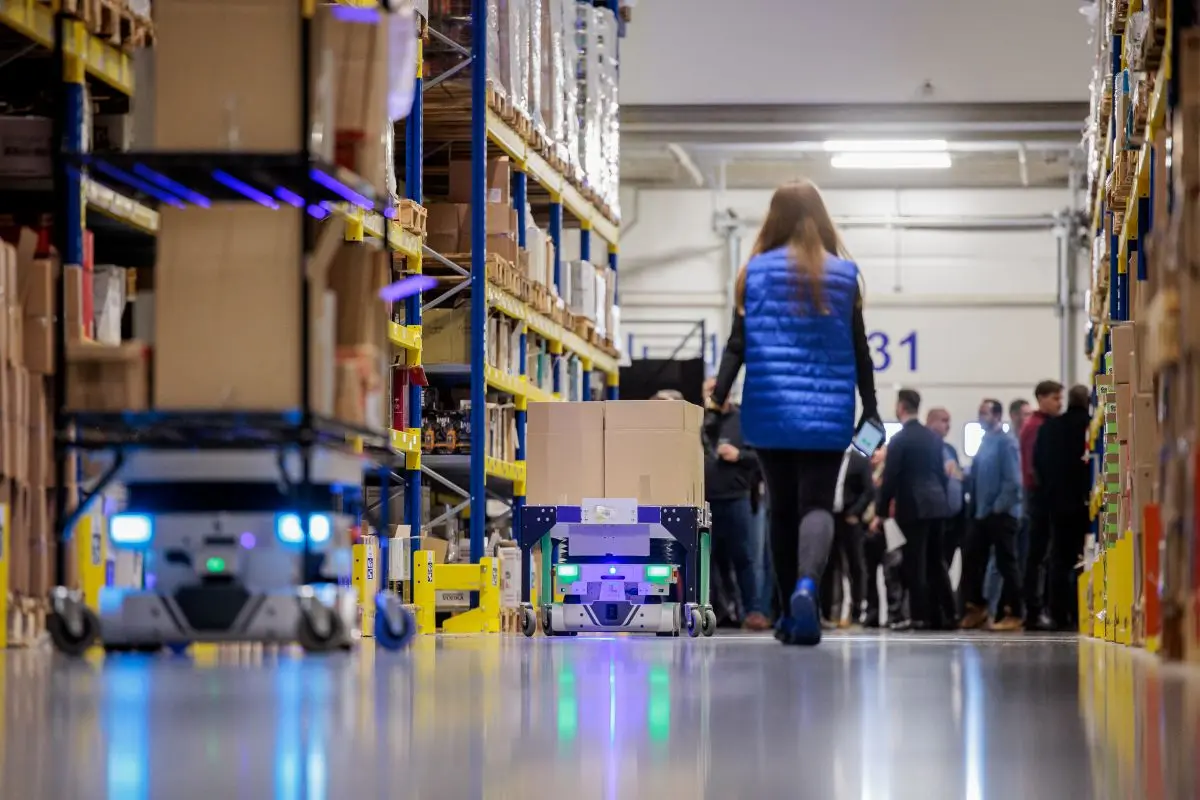
Bently highlights how physical intelligence fundamentally changes how machines interact with their environment. Consider a common scenario: a forklift is actively replenishing stock in a narrow aisle. A legacy autonomous robot might halt indefinitely behind the forklift, waiting for the aisle to clear. A system powered by Physical AI, however, possesses the contextual awareness to recognize that the blockage is temporary. Rather than waiting idly, the robot evaluates the situation, reroutes to complete another productive task elsewhere in the facility, and returns when the aisle is clear.
Learning from Experience
Beyond real-time pathfinding, Physical AI enables systemic learning. Bently shares a real-world case study from a client facility where autonomous robots routinely experienced navigation stutters in a specific zone during late afternoons. Engineering teams eventually discovered that the issue was not mechanical or algorithmic, but environmental: blinding sunlight streaming through high warehouse windows was interfering with optical sensors.
Once the AI recognized the recurring temporal pattern, the system proactively adjusted robot routes around that zone during specific sunlit hours. This ability to transform raw, noisy environmental data into actionable, facility-wide learning represents a watershed moment for warehouse automation.
The Core Components of Physical AI Systems
To appreciate how these platforms operate, it is essential to break down the technical convergence that makes Physical AI possible:
- Advanced Perception: Utilizing high-resolution cameras, depth sensors, and lidar, autonomous robots capture rich 3D representations of their surroundings, identifying objects, humans, and structural elements with high fidelity.
- Contextual Interpretation: Rather than treating every object as an impassable barrier, AI algorithms assign meaning to detected objects—distinguishing between a stationary structural pillar, a moving human associate, a temporary trash bin, or a momentarily parked pallet jack.
- Decentralized Decision-Making: Localized processing units empower individual robots to make split-second navigational adjustments without needing to query a distant central server, ensuring zero-latency responsiveness.
- Fleet-Wide Orchestration: Individual insights are instantly shared across the entire robotic fleet via cloud-based orchestration layers. If one robot discovers an obstruction, every other robot in the facility is instantly updated.
Future Outlook: The Next Frontier in Orchestration
As individual autonomous mobile robots grow increasingly capable, the true frontier of Physical AI lies not in the sophistication of single machines, but in holistic orchestration.
Unifying Robots, Equipment, and Human Labor
"If one robot solves the problem, it’s more efficient if we share that among all the robots, versus having each one try to solve that individual problem," Bently explains.
This philosophy extends far beyond robotic fleets. The next generation of orchestration layers is designed to coordinate robots, automated conveyor lines, fixed scanners, and human workers within a unified, adaptive ecosystem.
"We actually use the robots to tell people where to go," Bently notes. "Now we’re getting into a place where there’s an AI layer that is controlling the people, and is controlling the robots in the warehouse, and it can get the most out of an operation because we are controlling both sides of the equation."
By directing human associates toward high-impact tasks while simultaneously routing autonomous units to handle heavy transport, the entire warehouse operates as a synchronized organism.
Redefining the Role of Robotics
Ultimately, industry pioneers stress a vital mental shift for enterprise operators: hardware is merely an instrument. As Mendez Maldonado succinctly puts it, "A robot is not a solution—a robot is a tool."
As global supply chains face escalating labor constraints, volatile consumer demand, and relentless fulfillment complexity, the competitive edge will belong to organizations that embrace adaptive intelligence. By deploying Physical AI to harmonize people, autonomous machinery, and dynamic workflows, forward-thinking enterprises are building fulfillment networks that are not only resilient against today’s disruptions, but fully prepared for whatever challenges tomorrow brings.