

Executive Overview

An IVR system is a foundational communication technology designed to answer incoming calls, interpret keypad selections or voice prompts, and automate workflows to guide callers to the correct department or self-service resource. While once reserved for large enterprises with dedicated IT infrastructures, modern cloud-native business phone systems and specialized contact center platforms have democratized IVR technology. Today, organizations of all sizes—from local brick-and-mortar storefronts to multinational enterprises—can deploy feature-rich, native IVR capabilities without deploying expensive on-premises hardware.

This report evaluates the top six IVR platforms on the market, analyzing their core feature sets, pricing models, ideal use cases, and underlying strengths and weaknesses. By examining market leaders such as RingCentral, Nextiva, Ooma, KrispCall, GoTo Connect, and Aircall, business leaders can make informed, strategic decisions to optimize their inbound routing, slash customer hold times, and elevate overall brand perception.
Detailed Chronology and Comparative Market Landscape
The evolution of IVR technology mirrors the broader digital transformation of the workplace. Early telephony solutions required rigid script-writing, hardware-heavy PBX integrations, and specialized telecom engineers to modify simple routing menus. The emergence of cloud communications (UCaaS) and Contact Center as a Service (CCaaS) paradigms completely altered this dynamic.

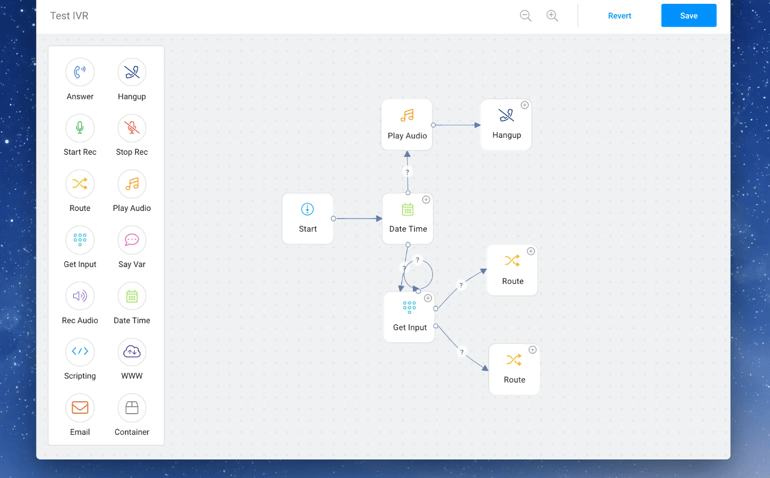
By embedding native IVR capabilities directly into cloud-based phone platforms, software vendors eliminated the friction of third-party integrations. Deploying a multi-level call tree became as simple as manipulating a drag-and-drop visual call flow builder within a web-based dashboard.
To help procurement teams navigate this crowded landscape, the market features distinct offerings tailored to specific business profiles. The table below provides a side-by-side comparison of the leading platforms, highlighting trial availability, starting costs, and foundational strengths.
Best IVR Systems Compared
| Provider | Free Trial / Guarantee | Starting Price | Primary Use Case |
|---|---|---|---|
| RingCentral | 14 days | $20 / user / month (billed annually) | Best IVR System Overall (Scalable UCaaS) |
| Nextiva | Not publicly listed | $15 / user / month (billed annually) | Best for Omni-channel Customer Engagement |
| Ooma | 30-day money-back guarantee | $19.95 / user / month | Easiest DIY Setup for Small Businesses |
| KrispCall | Demo/guarantee varies | $12 / user / month (billed annually) | Best Budget Option for Small Teams |
| GoTo Connect | Demo/trial availability varies | Custom quote-based pricing | Best for CRM and Business Tool Integrations |
| Aircall | 7 days | $30 / license / month (billed annually) | Best Modern User Interface and Agent Experience |
Deep Dive: Evaluating the Top 6 IVR Platforms
1. RingCentral: Best IVR System Overall
- Why it was chosen: RingCentral earns the top spot overall because it delivers advanced multi-level IVR routing, robust call queuing, call recording, comprehensive analytics, and an unmatched ecosystem of over 500 integrations without forcing businesses to purchase a standalone contact center product.
- Platform Capabilities: Included natively within RingEX plans, RingCentral’s IVR designer allows administrators to construct complex, multi-tiered call flows, establish strict business-hours rules, and route callers efficiently. For organizations requiring deeper operational depth, RingCentral combines voice, video, team messaging, and digital fax into a unified platform. Furthermore, their dedicated contact center solution, RingCX, starts at $65 per agent per month and introduces specialized tools like skills-based routing and queue callbacks.
- Pricing Model: Entry-level plans start at $20 per user per month when billed annually, with volume discounts unlocked past 100 users. Month-to-month plans carry a slight premium.
- Pros: Exceptionally scalable; deep ecosystem of enterprise integrations; advanced multi-level routing out-of-the-box.
- Cons: Configuration complexity can be slightly steeper for non-technical administrators compared to basic virtual receptionist tools.
2. Nextiva: Best for Customer Engagement
- Why it was chosen: Nextiva bridges the gap between traditional voice routing and modern digital communication channels, making it the premier choice for organizations seeking unified customer engagement.
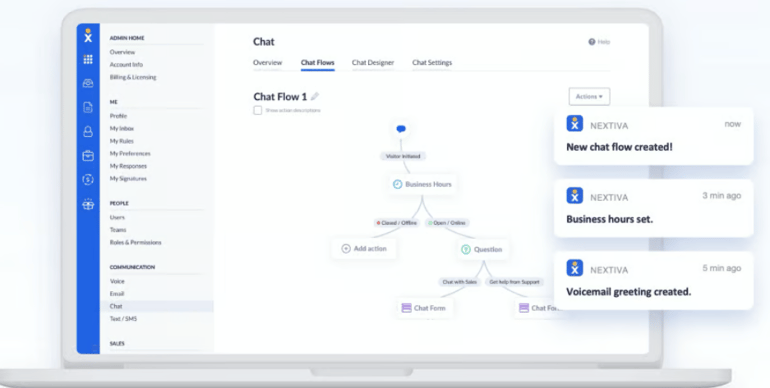
- Platform Capabilities: Nextiva’s architecture allows businesses to connect IVR phone trees with live chat, SMS, digital messaging, and online customer reviews. Small businesses can easily deploy auto-attendants to manage basic call flows, while larger, scaling teams can seamlessly transition into advanced packages incorporating Automatic Call Distribution (ACD), historical reporting, and deep analytics.
- Pricing Model: Competitive tiering starting at $15 per user per month (annual billing), positioning it as an accessible mid-market solution.
- Pros: Excellent multi-channel support; unifies voice and digital conversations; highly scalable across business growth stages.
- Cons: Advanced features and custom reporting require stepping up to higher-tier subscription plans.
3. Ooma: Easiest DIY Setup
- Why it was chosen: For small businesses, local retail shops, and professional offices lacking dedicated IT or telecom departments, Ooma offers the most frictionless deployment experience on the market.
- Platform Capabilities: Ooma’s virtual receptionist is intuitive, easy to configure, and included across all Ooma Office plans. Administrators can quickly record custom audio greetings, establish call menus, and dictate routing rules without external technical assistance. While it lacks the hyper-advanced AI routing found in enterprise-grade platforms, its straightforward design guarantees reliability for standard operational needs.
- Pricing Model: Starts at $19.95 per user per month with a 30-day money-back guarantee. Higher tiers introduce video meetings, CRM integrations, and advanced voicemail transcription.
- Pros: Extremely fast, user-friendly deployment; reliable core performance; virtual receptionist included on base tiers.
- Cons: Growing businesses with complex contact center workflows or intricate data analytics requirements may eventually outgrow the platform.
4. KrispCall: Best for Small Businesses
- Why it was chosen: KrispCall delivers essential cloud telephony and IVR functionality at an aggressively low starting price point, making it ideal for budget-conscious small teams and startups.
- Platform Capabilities: The platform supports core business calling, multi-level routing, shared team visibility, and international virtual phone numbers. It is exceptionally well-suited for distributed teams managing lighter or fluctuating call volumes who wish to bypass the financial overhead of traditional UCaaS platforms.
- Pricing Model: Highly competitive entry point starting at $12 per user per month on annual plans. (Note: Calling, SMS, and virtual number acquisitions may feature regional usage-based costs).
- Pros: Highly economical price point; simple management interface; great for acquiring global or regional numbers quickly.
- Cons: Feature depth and support models are tailored primarily to smaller operations, meaning enterprise-level customization is limited.
5. GoTo Connect: Best Integrations
- Why it was chosen: GoTo Connect excels by fusing enterprise-grade cloud telephony with collaboration tools, highly customizable dial plans, and deep Customer Relationship Management (CRM) connectivity.
- Platform Capabilities: Rather than treating the IVR menu as an isolated phone routing tree, GoTo Connect integrates inbound call flows directly into the daily workflows of sales and support teams. Custom dial plans, detailed call recording, internal messaging, and reliable uptime make it a favorite for organizations reliant on synchronized software ecosystems.
- Pricing Model: Custom quote-based pricing that scales based on user seat count, contract length, and specific add-on requirements.
- Pros: Exceptional ecosystem integrations; flexible routing rules; robust collaboration utility built-in.
- Cons: Pricing transparency is lower due to the quote-based model, requiring direct consultation with sales representatives.
6. Aircall: Best User Interface
- Why it was chosen: Aircall prioritizes agent and administrator experience above all else, delivering a sleek, modern, and intuitive interface designed specifically for high-velocity sales and customer support teams.
- Platform Capabilities: Powered by its "SmartFlow" visual IVR designer, Aircall makes constructing complex call distribution logic effortless. The softphone application minimizes administrative friction, allowing agents to manage customer interactions without getting bogged down by complicated backend menus. Furthermore, it natively connects with leading helpdesk and CRM platforms.
- Pricing Model: Starts at $30 per license per month (billed annually), positioning it at a slightly higher price point that is justified by its robust usability and unthrottled US/Canada calling packages.
- Pros: Outstanding, modern UI/UX; rapid agent onboarding; powerful helpdesk and CRM integrations.
- Cons: Carries a higher base cost per license compared to basic entry-level small business phone systems.
Supporting Context & Methodology
When evaluating and selecting the top IVR systems in this report, the research methodology prioritized a holistic blend of empirical user feedback, documented enterprise case studies, verified third-party software reviews, and hands-on testing of administration panels.
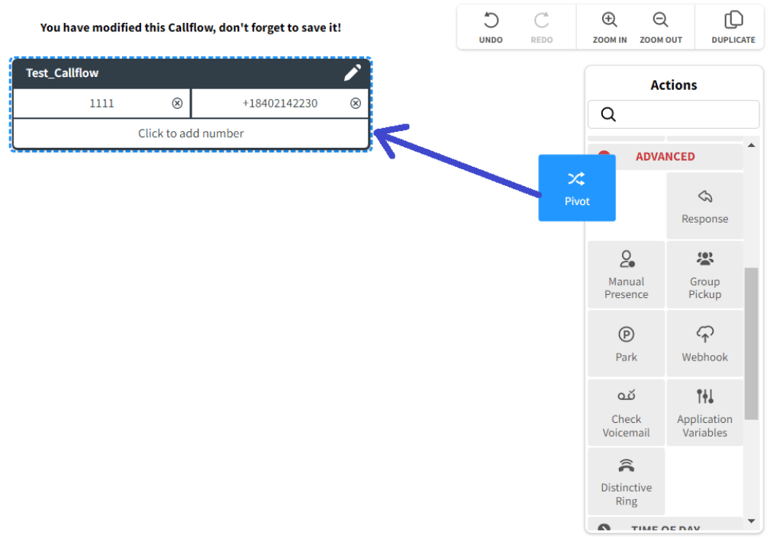
Special emphasis was placed on four core evaluation pillars:

- Ease of Deployment & Configuration: Can an administrator build a functional call flow without writing code or hiring consultants?
- Feature Depth vs. Scalability: Does the platform accommodate basic auto-attendants as well as advanced, AI-driven conversational routing?
- Integration Ecosystem: How effectively does the IVR sync data with external CRMs, helpdesks, and enterprise productivity suites?
- Total Cost of Ownership (TCO): Beyond the baseline per-user monthly fee, what are the hidden costs regarding SMS, international numbers, add-on analytics, and tiered feature gates?
Future Outlook: The Next Generation of IVR
As artificial intelligence and Natural Language Processing (NLP) continue to mature, the definition of an IVR system is undergoing a fundamental paradigm shift. Traditional dual-tone multi-frequency (DTMF) "press 1" phone trees are rapidly being eclipsed by conversational AI agents capable of understanding natural human speech, processing complex intent, and executing backend actions autonomously.
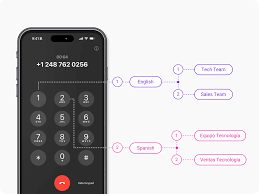
By 2026 and beyond, market leaders will increasingly incorporate predictive routing, automated sentiment analysis, and real-time agent assist tools directly within their IVR workflows. Organizations that invest in flexible, cloud-native platforms today will be uniquely positioned to adopt these emergent AI enhancements seamlessly, minimizing customer friction, optimizing operational expenditure, and future-proofing their customer communication infrastructure for decades to come.