
Executive Overview
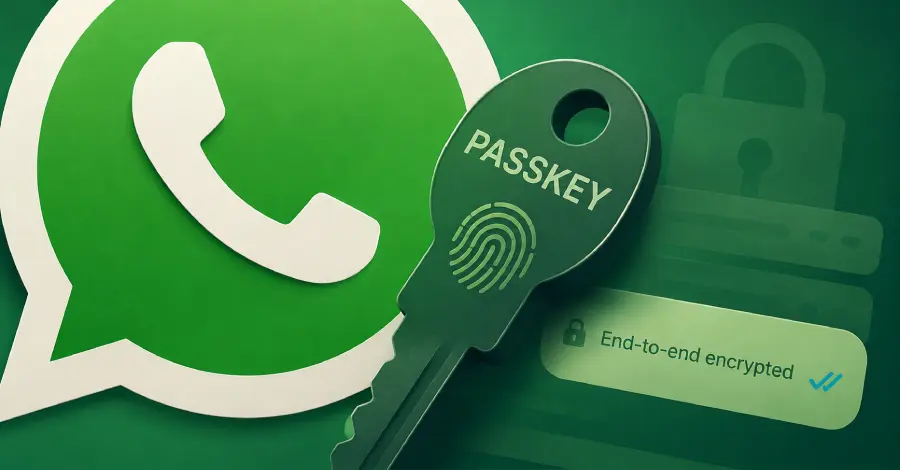
In an aggressive push to combat escalating digital fraud, account takeovers, and sophisticated phishing campaigns, Meta has announced a comprehensive overhaul of its security architecture for WhatsApp. Announced on Tuesday, the update introduces critical features designed to safeguard more than a billion users worldwide. Most notably, the platform is rolling out support for multiple passkeys per account, enabling seamless, phishing-resistant authentication across mixed-device ecosystems, such as users operating both iOS and Android hardware.
Alongside the broader integration of passkeys—which Meta reports are now utilized by over one billion individuals globally—the messaging giant is deprecating the traditional six-digit PIN in favor of fully customized, alphanumeric alphanumeric passwords for two-step verification (2SV). Additionally, Android users will benefit from a newly deployed contextual awareness feature for incoming calls from unknown numbers, providing critical intelligence to neutralize social engineering tactics.
This multi-pronged security update marks a pivotal milestone in Meta’s ongoing crusade to phase out legacy, vulnerable authentication methods like SMS-based one-time passwords (OTPs) and short PINs. By combining hardware-backed cryptographic credentials with granular call-screening diagnostics, WhatsApp is effectively setting a new benchmark for consumer-grade communication security.
Detailed Chronology: The Evolution of WhatsApp Authentication
The journey toward a passwordless, highly secure ecosystem on WhatsApp has been iterative, spanning several years of engineering milestones, regulatory pressures, and shifting consumer expectations.
The Genesis of Passkeys (2023–2024)
The foundation for Meta’s current security architecture was laid in October 2023, when WhatsApp first introduced passkey login support for Android devices. Passkeys—which leverage public-key cryptography and are tied to biometric sensors (such as fingerprint or facial recognition) or device PINs—represented a massive leap forward from traditional passwords. Because passkeys cannot be guessed, reused, or intercepted via traditional phishing pages, they fundamentally disrupt the economics of credential-harvesting cyberattacks.
Following a successful Android rollout, Meta expanded passkey compatibility to iOS devices in early 2024, ensuring cross-platform equity for its massive global user base. Recognizing the success of this deployment, Meta integrated passkeys into Facebook logins by June 2025, solidifying its commitment to building a unified, passwordless identity infrastructure across its family of apps.
Reaching the Billion-User Milestone (August 2026)
Fast-forward to August 2026, and Meta has confirmed a staggering milestone: over one billion people now routinely rely on passkeys to access WhatsApp. Capitalizing on this widespread adoption, Tuesday’s announcement removes a persistent friction point for power users and multi-device owners: the limitation of a single passkey per account.

Under the newly deployed update, users can register and manage multiple passkeys simultaneously across their ecosystem. Whether an individual alternates between an iPhone, an iPad, and an Android smartphone, they can now authenticate natively on every device without compromising security or resorting to insecure fallback methods. Users can review, add, or revoke their passkeys at any time by navigating to Settings > Account > Passkeys within the application.
Supporting Context & Metrics: Upgrading Two-Step Verification and Call Safety
While passkeys protect against credential theft at the login gate, account defense in depth requires robust mechanisms for administrative changes and recovery. To address this, Meta is overhauling WhatsApp’s long-standing two-step verification (2SV) framework.
From Six-Digit PINs to Complex Alphanumeric Passwords
Historically, WhatsApp’s 2SV feature relied on a static six-digit PIN requested periodically by the app or during re-installation. While effective against casual unauthorized access, security researchers have long noted that six-digit numeric PINs are susceptible to brute-force attacks if an attacker manages to intercept an SMS-based verification code. Furthermore, millions of users historically opted for predictable sequences, such as "123456" or birth years.
To eliminate this vulnerability, WhatsApp is officially upgrading the 2SV system to support full passwords. These new security credentials can be significantly longer, incorporate alphanumeric characters, and include special symbols (!@#$%^&*).
"Two-step verification is an extra protection layer that helps prevent someone from taking over your account, even if they get hold of your one-time passcode," WhatsApp emphasized in an official briefing shared with security researchers. "Until now it was a six-digit PIN, we’ve now upgraded it to a full password: longer, alphanumeric, and even with special ch@racters to make it harder to guess. If you’ve been using ‘123456,’ this is your sign to upgrade."
Combating Social Engineering: Contextual Call Insights
Beyond account authentication, Meta is tackling the surging wave of voice-phishing (vishing) and fraudulent calls targeting messaging app users. Scammers frequently leverage urgency, impersonating authority figures, bank representatives, or tech support agents to manipulate victims into revealing sensitive information or executing unauthorized actions.
To counter this, Android users are receiving a dedicated feature that injects crucial metadata into incoming calls from unsaved numbers. Before deciding whether to answer, recipients will now be presented with clear, actionable context, including:
- Geographic Origin: Identifying where the call is originating from (country or region).
- Contact Status: Explicitly noting whether the caller exists within the user’s broader contact graph.
- Shared Connections: Highlighting whether the recipient and the caller share any common group chats.
By providing these foundational trust indicators, WhatsApp is giving users the critical pause needed to assess risk. As the company succinctly noted: "Scammers rely on urgency—now you can take a beat with some more info before answering."

Official Statements and Industry Impact
The cybersecurity community has largely lauded Meta’s aggressive transition toward cryptographic authentication and context-aware defenses. As global cybercrime syndicates industrialize phishing-as-a-service (PhaaS) kits capable of bypassing standard multi-factor authentication (MFA) via real-time adversary-in-the-middle (AiTM) proxies, tech giants are under immense pressure to adopt phishing-resistant standards defined by the FIDO Alliance.
Security analysts point out that passkeys fundamentally break the phishing chain because they rely on origin binding. A passkey generated for whatsapp.com will only ever respond to a challenge issued by whatsapp.com, rendering spoofed domains and fraudulent login portals entirely useless.
By scaling this technology to over a billion active users—and coupling it with enterprise-grade password requirements for 2SV and proactive call telemetry—Meta is demonstrating that consumer applications can maintain radical ease-of-use while simultaneously implementing rigorous, defense-in-depth security architectures.
Future Outlook: The Road Ahead for Digital Identity
As WhatsApp rolls out these features globally throughout the week, the broader implications for digital identity management are profound. The deprecation of SMS-based verification codes and short numeric PINs marks the beginning of the end for legacy, highly vulnerable telecommunication-reliant authentication vectors.
Looking forward, industry experts anticipate that Meta will continue to expand passkey interoperability across desktop clients, web interfaces, and emerging hardware form factors. Furthermore, the integration of contextual metadata into communication layers—exemplified by WhatsApp’s new incoming call indicators—will likely serve as a blueprint for other social and messaging platforms seeking to protect users from sophisticated social engineering campaigns.
For everyday users, the directive is clear: migrating to multi-device passkeys and replacing predictable 2SV PINs with complex alphanumeric passwords is no longer optional digital hygiene—it is an absolute necessity in an era defined by automated, AI-driven cyber threats.
Stay informed on the latest developments in cybersecurity, encryption, and digital privacy by following our coverage across verified channels, including Google News, Twitter, and LinkedIn.