
Executive Overview
No longer can companies treat trade compliance as a back-office administrative function. Driven by a synchronized, aggressive strategy between U.S. Customs and Border Protection (CBP) and the U.S. Department of Justice (DOJ), the federal government is wielding an unprecedented arsenal of legal, financial, and technological mechanisms. From the False Claims Act (FCA) and steep civil monetary penalties to high-stakes criminal prosecutions and cutting-edge artificial intelligence, the message from Washington is unequivocal: American borders and supply chains are under intense, unyielding scrutiny.
Looking ahead to 2027, the financial, operational, and reputational costs of maintaining a reactive trade compliance posture have never been steeper. With long statutes of limitations hanging over corporate heads like the sword of Damocles, organizations can no longer afford to wait for a subpoena, a red flag, or a port-of-entry seizure before taking action. Corporate leadership must urgently transition toward a proactive defense strategy. This requires refining internal investigation protocols, streamlining voluntary disclosure frameworks, and fortifying overall trade posture defenses to withstand aggressive government enforcement actions.
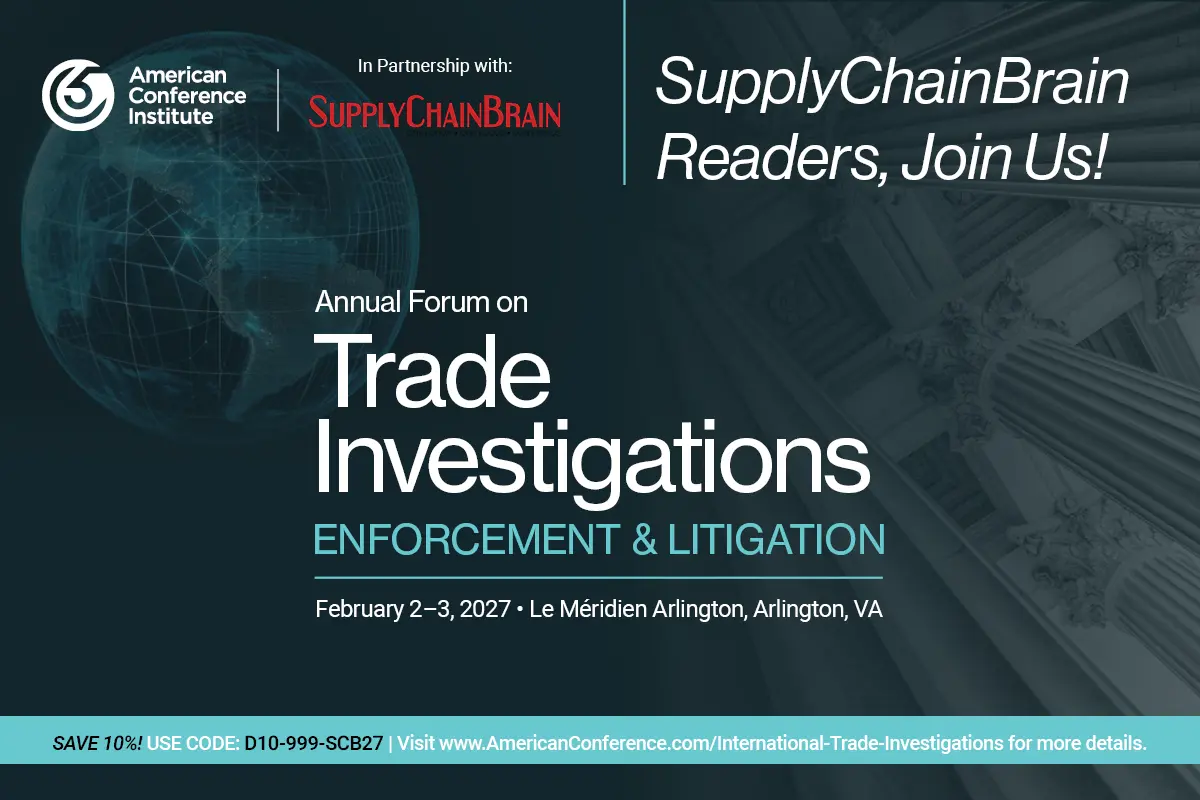
To address these complex legal and operational challenges, industry leaders, legal experts, and top-tier compliance executives are convening at the American Conference Institute’s (ACI) 2nd Annual Trade Investigations, Enforcement & Litigation conference. Taking place from February 2–3, 2027, at Le Méridien in Arlington, VA, this pivotal two-day event has been substantially expanded to unpack the legal intricacies, investigatory hurdles, and high-stakes litigation defining today’s ramped-up regulatory environment.
Detailed Chronology: The Escalation of Federal Oversight
To fully grasp the gravity of the 2026–2027 enforcement landscape, one must examine the systematic escalation of federal trade policing over the past several years. The transformation from a traditional, audit-based customs environment to a hostile, enforcement-first paradigm did not happen overnight.
The Foundation: Post-Pandemic Supply Chain Disruptions (2021–2023)
In the wake of global pandemic recovery, U.S. authorities faced unprecedented logistical bottlenecks coupled with a surge in illicit, counterfeit, and non-compliant goods entering the domestic market. During this window, legislative actions—most notably the Uyghur Forced Labor Prevention Act (UFLPA)—handed CBP formidable new statutory powers. CBP transformed from a revenue-collection agency into a frontline human rights and national security enforcer, detaining billions of dollars worth of goods suspected of forced labor connections.
The Technological Leap and Inter-Agency Synergy (2024–2025)
Recognizing that traditional manpower could not keep pace with millions of daily container shipments, federal agencies invested heavily in technology and inter-agency collaboration. The integration of big-data analytics, machine learning, and predictive modeling allowed CBP and the DOJ to connect the dots across disparate datasets—matching bills of lading with corporate financial filings, tax records, and shipping manifests.
Concurrently, the DOJ sharpened its focus on corporate malfeasance related to international trade. By weaponizing the False Claims Act (FCA), whistleblowers and government prosecutors began targeting customs fraud—such as systematic undervaluation, country-of-origin misclassification, and evasion of Section 301 tariffs—treating these infractions not merely as regulatory mishaps, but as systemic frauds against the U.S. Treasury.
The Zenith: The 2026 Enforcement Crucible
By 2026, all these disparate enforcement streams converged into a unified, highly coordinated apparatus. Armed with AI-enhanced targeting tools that operate in real-time, CBP flags anomalies long before cargo vessels even dock at U.S. ports. Simultaneously, the DOJ’s civil and criminal divisions actively prosecute corporate actors who fail to heed compliance warnings.
The convergence of criminal investigations, civil monetary penalties, and FCA whistleblower lawsuits has created an environment where a single oversight in supply chain due diligence can trigger catastrophic financial and legal fallout. As the calendar turns toward 2027, the enforcement mechanisms deployed in 2026 will serve as the baseline for ongoing audits, retroactive investigations, and high-profile courtroom battles.
Supporting Context & Metrics: The Anatomy of Modern Trade Risk
Navigating this hyper-enforced environment requires a granular understanding of the specific tools federal authorities are leveraging, alongside the quantifiable risks corporations face.
The Weapons in the Federal Arsenal
- The False Claims Act (FCA): Originally designed to combat defense contractor fraud, the FCA has become the crown jewel of trade enforcement. Whistleblowers (qui tam relators), including disgruntled former employees, foreign competitors, and logistics partners, can file suits on behalf of the government alleging that a company systematically evaded customs duties. Because FCA violations carry treble damages (triple the actual damages) plus severe per-claim penalties, potential liabilities routinely reach tens or hundreds of millions of dollars.
- AI-Enhanced Targeting Systems: CBP’s technological upgrades have largely removed human error and delay from the risk-assessment equation. Advanced algorithms analyze historical trade data, ownership structures, and transaction patterns to flag high-risk shipments instantly. This means supply chain manipulation—such as illegal transshipment designed to skirt country-of-origin duties—is detected with unprecedented speed.
- Civil Penalties & Seizures: Under 19 U.S.C. § 1592, CBP possesses broad authority to levy civil penalties for fraud, gross negligence, and negligence in entering merchandise. Coupled with administrative seizure and forfeiture powers, these penalties can cripple cash flow and disrupt enterprise operations overnight.
- Criminal Prosecution: For repeat offenders, willful blindness, or egregious violations involving national security or forced labor, the DOJ’s Criminal Division is stepping in with indictments. Executives face personal criminal liability, corporate monitorships, and substantial prison sentences.
The Long Shadow of Statutes of Limitations
One of the most dangerous miscalculations a corporation can make is assuming that older transactions are safe. With civil fraud claims under the FCA carrying a statute of limitations of up to six years (and potentially longer when factoring in tolling agreements or fraudulent concealment doctrines), enforcement actions launched in 2027 can—and will—reach back into the supply chain practices of 2021 and 2022.
Furthermore, customs liquidation timelines and subsequent post-summary corrections mean that corporate exposure lingers long after goods have cleared customs and been sold to retail consumers.
Official Statements and Industry Consensus
As legal and regulatory pressures mount, the consensus among legal scholars, compliance officers, and former government officials is unanimous: the old ways of doing business are entirely obsolete.
Legal experts stress that a reactive compliance posture—waiting for a CBP Form 28 (Request for Information) or a DOJ subpoena before examining internal supply chain records—is a recipe for disaster. In the words of leading international trade litigators: "In today’s enforcement climate, an unexamined supply chain is an existential corporate threat."
Industry roundtables consistently highlight that corporate boards are beginning to demand direct visibility into trade compliance metrics. In-house counsel can no longer operate in isolation; they must collaborate closely with procurement, logistics, finance, and executive leadership to map out tier-one, tier-two, and deep-tier suppliers.
Moreover, regulatory bodies have repeatedly signaled that robust, proactive compliance programs—featuring comprehensive internal investigations, timely voluntary disclosures, and transparent remediation—will serve as the primary shield against catastrophic penalties. Companies that voluntarily step forward to correct historical compliance failures routinely secure significantly more favorable resolutions than those caught flat-footed by federal investigators.
Future Outlook: Preparing for the 2027 Landscape
As corporations look past the immediate hurdles of 2026 and prepare for the realities of 2027, strategic planning must focus on resilience, adaptability, and deep legal preparedness.
Key Imperatives for Importers and Trade Professionals
- Comprehensive Supply Chain Mapping: Organizations must achieve end-to-end visibility of their vendor ecosystems. Knowing the immediate vendor is no longer enough; companies must understand the ultimate origin of raw materials, components, and finished goods to fend off UFLPA detentions and forced labor allegations.
- Revamping Internal Investigation Protocols: When red flags emerge, legal teams must act decisively. Conducting internal audits under attorney-client privilege allows companies to uncover vulnerabilities, calculate potential exposures, and rectify compliance gaps before federal authorities come knocking.
- Mastering the Art of Voluntary Disclosures: Knowing when and how to file a prior disclosure with CBP or cooperate with the DOJ under corporate enforcement policies can mean the difference between minor administrative adjustments and corporate ruin.
- Engaging with Thought Leadership and Legal Peers: Navigating these complex waters requires continuous education and strategic networking with top legal minds.
The ACI 2nd Annual Trade Investigations, Enforcement & Litigation Conference
To assist legal executives, in-house counsel, and international trade professionals in mastering these challenges, the American Conference Institute (ACI) has designed the definitive gathering for the trade community.
Scheduled for February 2–3, 2027, at Le Méridien in Arlington, VA, this expanded two-day event dives deep into the legal, investigative, and litigation strategies required to survive and thrive in this unprecedented enforcement environment. Attendees will gain critical insights from an esteemed faculty of private practice litigators, senior government officials, and in-house compliance leaders.
Registration and Special Savings
Industry professionals planning to attend are encouraged to secure their seats early.
- Exclusive Discount: Save an additional 10% on registration by using promo code: D10-999-SCB27.
- Event Website: Full program details, speaker lists, and registration portals can be accessed directly at https://bit.ly/3UdG5mc.
In an era where federal enforcement is relentless, data-driven, and unforgiving, investing in proactive legal defense and strategic compliance is not merely an option—it is the ultimate safeguard for the modern multinational enterprise.