Siti Muinah is a reporter for Tech Ledgers covering CIO & IT Leadership. She/He is based in Indonesia.
25 August 2026 • 10 min read
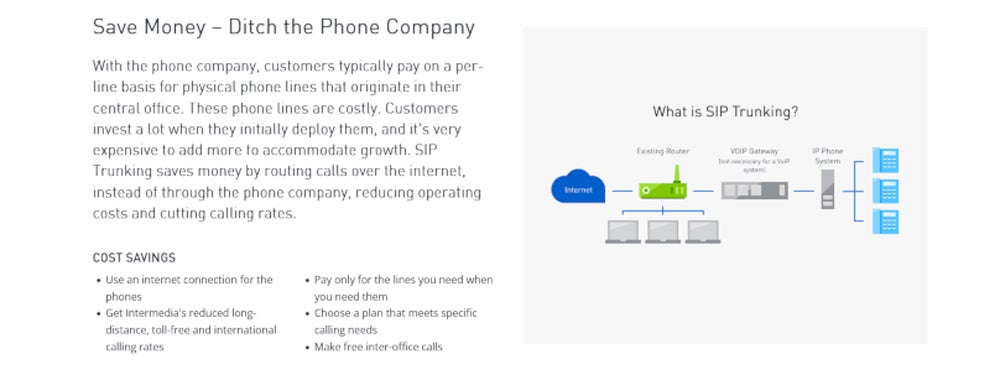
As organizations globally accelerate their digital transformation initiatives, telecommunications infrastructure remains a foundational cornerstone of daily enterprise operations. In 2026, the mandate to modernize enterprise communications without incurring catastrophic capital expenditure has driven widespread adoption of Session Initiation Protocol (SIP) trunking. SIP trunking serves as the digital bridge between legacy on-premises private branch exchange (PBX) hardware and the cloud, leveraging Voice over Internet Protocol (VoIP) to route calls over the internet rather than traditional Public Switched Telephone Networks (PSTN).
Executive Overview
For business leaders, IT directors, and chief technology officers, choosing the correct SIP trunking provider is no longer merely an exercise in cutting telephony costs. It is a strategic decision impacting enterprise resilience, global scalability, unified communications (UCaaS) integration, and business continuity. By maintaining legacy on-premises equipment while incrementally migrating workflows to the cloud, organizations can future-proof their operations at their own pace.
This comprehensive evaluation analyzes the top SIP trunking providers on the market in 2026. Based on rigorous assessment criteria—including pricing transparency, speed of deployment, feature parity, global coverage, and technical integrations—we highlight the leading platforms that empower businesses to step smoothly into a cloud-enabled future.
Detailed Chronology: The Evolution and Implementation of SIP Trunking
The telecommunications landscape has experienced a profound structural evolution over the past decade. Understanding how SIP trunking reached its current state clarifies why it remains an essential transitional technology in 2026.
Phase 1: The Transition from Analog to Digital (Early 2010s)
Historically, enterprises relied on Primary Rate Interface (PRI) lines and analog copper networks to handle inbound and outbound voice traffic. These physical lines carried steep monthly fees, required dedicated physical infrastructure, and offered limited scalability—adding a new phone line often meant waiting days or weeks for a physical technician visit.
As broadband internet matured, businesses began experimenting with early VoIP technologies. However, connecting disparate office locations and legacy PBX units to the internet was complex, brittle, and plagued by latency and jitter issues.
Phase 2: The Rise of Hybrid Cloud Deployment (Late 2010s to Early 2020s)
As cloud communications proved their reliability, the industry recognized that a "rip-and-replace" strategy—discarding functional, expensive on-premises PBX hardware overnight—was financially irresponsible for most mid-market and enterprise businesses.
SIP trunking emerged as the ideal compromise. By virtualizing the phone lines over internet protocols, businesses could connect their existing PBX hardware directly to cloud-based service providers. This era established the foundational architecture for hybrid-PBX systems, where some employees utilized legacy desktop handsets while remote or mobile workers connected via softphones and cloud endpoints.
Phase 3: The Enterprise Standard (Mid-2020s to 2026)
Today, SIP trunking is mature, highly standardized, and deeply integrated with artificial intelligence, robust analytics, and multi-channel customer engagement platforms. Modern providers no longer simply pass voice packets; they offer dynamic bandwidth allocation, sophisticated call-routing redundancy, automated failovers, and deep CRM integrations.
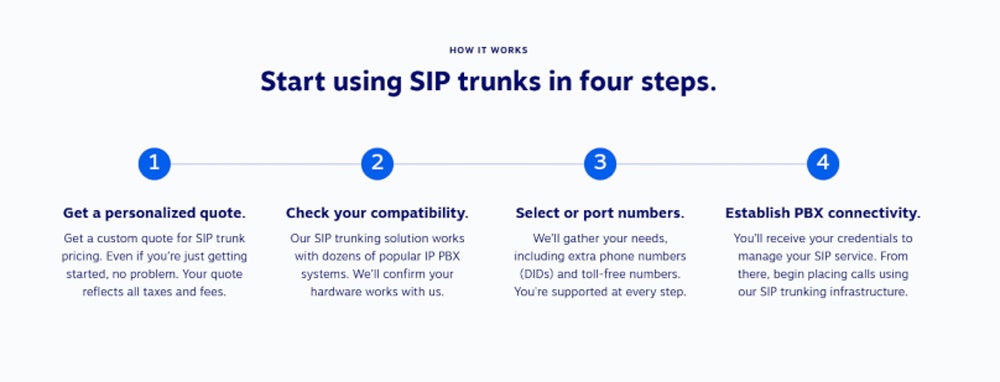
Deployments that once took weeks can now be completed in a matter of hours, backed by guided onboarding wizards and automated provisioning tools.
Multinational corporations requiring localized routing and massive global reach.
Detailed Provider Profiles
1. RingCentral: Best SIP Trunk Provider Overall
While globally recognized as a premier cloud-based phone system provider, RingCentral delivers exceptional enterprise-grade SIP trunking through its Cloud Connector solution. Designed for organizations executing a measured, phased migration to the cloud, RingCentral provides low-latency voice connectivity and unmatched hybrid architecture support.
Why Choose RingCentral?
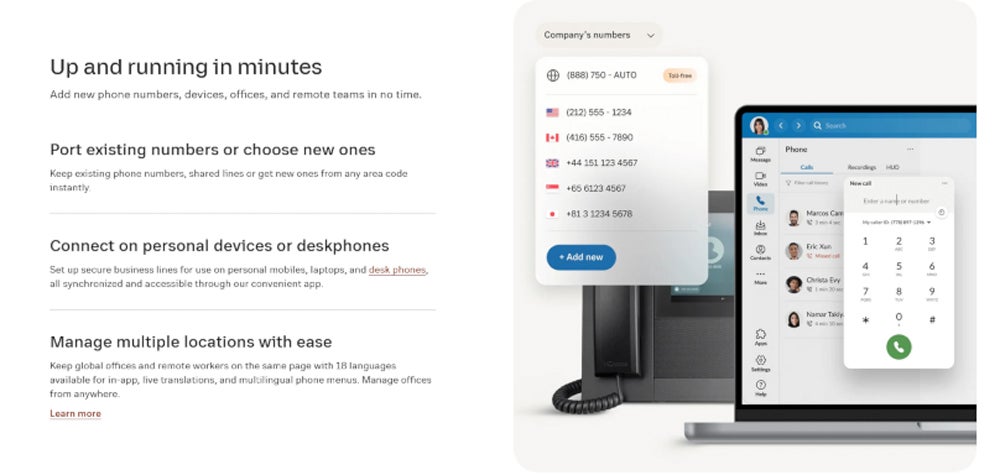
RingCentral excels at bridging the gap between legacy and modern environments. Through its hybrid-PBX deployment framework, internal dialing functions seamlessly between employees stationed at on-premises hardware and remote staff logged into RingCentral’s cloud PBX solution, RingEx.
Furthermore, RingCentral boasts a massive library of over 300 pre-built integrations, ensuring that modernized communications sync effortlessly with enterprise software stacks. Organizations can also dictate data residency requirements, choosing to host data in the U.S., Canada, the U.K., or Germany to meet strict regional compliance mandates.
Pricing: Available via custom quote through enterprise sales specialists.
Standout Feature: Comprehensive hybrid-PBX synchronization and data residency controls across 50+ countries.
2. Nextiva: Best for Fast Deployment
For organizations seeking to bypass complex onboarding cycles, Nextiva provides an efficient, streamlined implementation process. Built with simplicity and performance in mind, Nextiva eliminates traditional deployment hurdles, allowing businesses to transition phone lines to the cloud rapidly.
Why Choose Nextiva?
Nextiva offers an affordable, fluff-free framework that integrates smoothly with most popular PBX systems. Whether an organization requires metered plans for light callers or unmetered packages for high-volume call center agents, Nextiva scales effortlessly. Combined with transparent pricing models and top-tier customer support, it represents an ideal solution for small-to-medium businesses (SMBs) looking for a reliable, rapid upgrade.
Pricing: Plans start at an accessible $14.95 per month.
While widely celebrated for user-friendly residential and small office plug-and-play phone systems, Ooma Enterprise delivers sophisticated SIP and IP trunking capabilities designed for complex organizational requirements.
Why Choose Ooma?
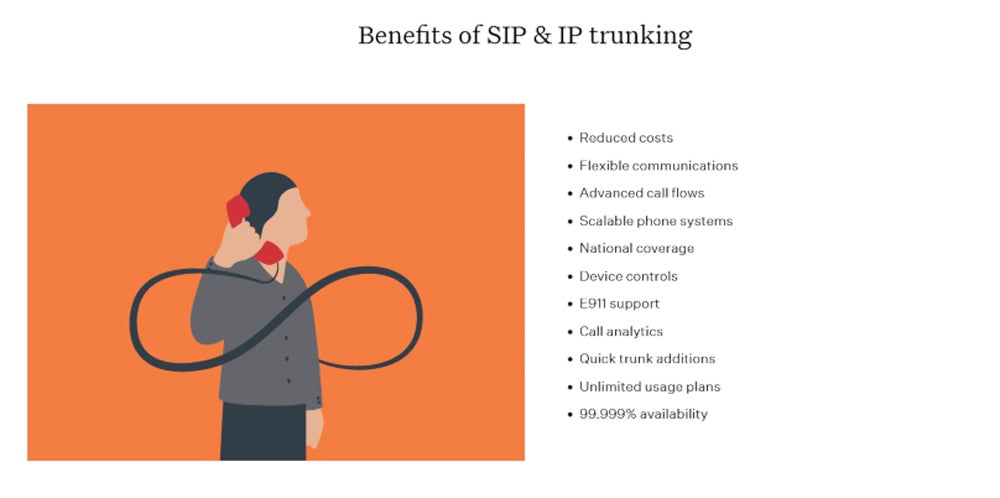
Unlike providers that focus exclusively on voice traffic, Ooma supports analog PBX systems alongside IP-enabled hardware, unlocking IP trunking for broader data communications, video conferencing, and multi-channel messaging. Additionally, Ooma includes centralized device management, customizable call flows, and comprehensive analytics tools that are often absent from basic SIP trunking packages.
Pricing: Custom enterprise quotes; standard business telephony services start at $19.99 per user per month.
Coverage: Operations spanning over 25 countries.
Standout Feature: Dual support for legacy analog PBX infrastructure and modern IP-enabled data environments.
4. GoTo Connect: Best for Integrations
GoTo Connect merges robust SIP trunking services with a feature-rich VoIP and call center platform, distinguishing itself through exceptional, deep-level application integrations.
Why Choose GoTo Connect?
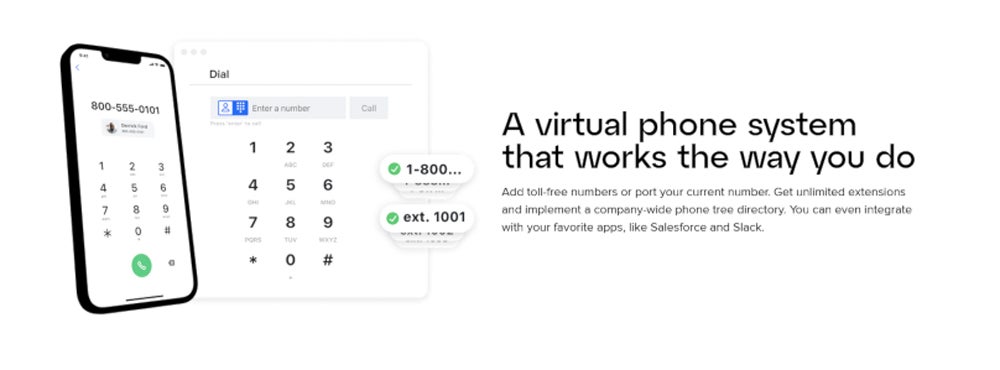
GoTo Connect is engineered for teams that rely heavily on third-party software. It establishes native links with popular Customer Relationship Management (CRM) platforms, helpdesk solutions, and marketing automation software. Features like automatic call logging, click-to-dial functionality, interaction tracking, and dynamic bandwidth allocation ensure that communication channels work in lockstep with day-to-day business operations.
Pricing: Tailored custom quotes based on user count, required capabilities, and contract length.
Coverage: United States.
Standout Feature: Granular bandwidth adjustments per trunk and profound CRM synchronization.
5. Intermedia Unite: Best for Transparent Pricing
For organizations fatigued by hidden fees, complex variable billing, and opaque carrier contracts, Intermedia Unite offers a breath of fresh air with reliable service and clear, straightforward pricing structures.
Why Choose Intermedia Unite?
Intermedia Unite provides flexible metered and unlimited trunking options designed to accommodate diverse call volumes without financial surprises. Its enterprise-grade reliability, straightforward administrative portal, and predictable cost model make budgeting simple for IT and finance departments alike.
Pricing: Entry-level pricing starts at $16.95 per month.
Coverage: United States.
Standout Feature: Transparent billing architecture coupled with robust uptime guarantees.
6. 8×8: Best Global Coverage
When multinational corporations require uncompromised worldwide connectivity, 8×8 stands out as the definitive market leader.
Why Choose 8×8?
8×8 operates a massive, resilient global infrastructure featuring points of presence spanning five continents. It provides full PSTN replacement in over 55 countries, virtual number support in more than 100 nations, and crystal-clear call quality driven by localized routing. Designed with an architecture that ensures no single point of failure, 8×8 minimizes packet loss and latency for distributed global enterprises.
Pricing: Custom enterprise quotes tailored to geographic footprint and user scale.
Coverage: Full PSTN replacement in 55+ countries; virtual presence in 100+ nations.
Standout Feature: Unmatched international reach and carrier-grade global redundancy.
Supporting Context, Metrics, and Technical Architecture
To fully appreciate the value proposition of SIP trunking in 2026, organizations must examine the underlying mechanics and economic realities of legacy maintenance versus cloud migration.
The Technical Mechanics of SIP Trunking
SIP trunking replaces physical copper circuits with virtual "trunks" over an internet connection. The protocol establishes, modifies, and terminates multimedia sessions—such as voice and video calls—between a local PBX and the provider’s network (or the ITSP, Internet Telephony Service Provider).
When evaluating providers, IT leaders must verify compatibility across several technical vectors:
VoIP Codecs: Ensuring the provider supports codecs like G.711, G.729, or Opus for optimal bandwidth utilization and audio fidelity.
Network Security & Encryption: Requiring TLS (Transport Layer Security) and SRTP (Secure Real-time Transport Protocol) to prevent eavesdropping and toll fraud.
Quality of Service (QoS): Configuring local network routers to prioritize voice packets over standard data traffic, mitigating jitter and packet loss.
The Total Cost of Ownership (TCO) Equation
While keeping an on-premises PBX active via SIP trunking appears cost-effective on the surface—allowing businesses to sweat legacy hardware assets—decision-makers must perform a holistic TCO analysis.
Industry data indicates that maintaining physical PBX maintenance contracts, specialized hardware replacement parts, and dedicated on-site telecom expertise often eclipses the ongoing subscription costs of modern, fully cloud-hosted VoIP and UCaaS platforms.
Official Industry Statements and Expert Insights
As enterprise telecommunications continue to centralize around cloud-native architectures, industry analysts emphasize the shifting role of infrastructure providers:
"The modern enterprise cannot afford communication silos. SIP trunking remains a vital bridge for risk-averse organizations, but the ultimate destination is a unified cloud ecosystem where voice, video, data, and AI-driven analytics operate on a single, cohesive fabric."
— Enterprise Communications Research Group, 2026 Outlook.
Furthermore, networking specialists note that security and redundancy are non-negotiable prerequisites:
"When migrating voice traffic to the public internet via SIP trunks, session border controllers (SBCs) and robust encryption standards are just as critical as bandwidth capacity. Protecting the voice path from malicious intrusion is paramount to maintaining institutional trust."
Future Outlook: What Lies Ahead for Business Telephony
Looking beyond 2026, several emerging trends will shape the trajectory of SIP trunking and enterprise communications:
AI-Powered Voice Analytics: SIP trunking streams are increasingly feeding real-time speech-to-text engines, sentiment analysis tools, and automated compliance monitoring agents directly at the carrier level.
5G and Edge Networking: The proliferation of enterprise 5G wireless WANs is providing reliable, high-speed primary and secondary internet connections for SIP trunks, reducing reliance on traditional wired broadband.
The Eventual Sunset of Legacy Hardware: While hybrid models remain popular, hardware manufacturers are winding down support for legacy analog PBX units. Providers featured in this guide—such as RingCentral, 8×8, and Nextiva—are well-positioned to guide organizations through their eventual, complete migration to cloud-native unified communications.
Conclusion: How to Choose the Right Provider for Your Organization
Selecting the optimal SIP trunking provider requires a methodical evaluation of your organization’s technical reality and strategic goals:
Audit Your Current Infrastructure: Verify your existing PBX system’s compatibility, supported protocols, and networking requirements.
Define Your Geographic Footprint: If your operations are localized to North America, providers like Nextiva, Intermedia Unite, or GoTo Connect offer rapid deployment and transparent pricing. For multinational operations, 8×8 or RingCentral provide unmatched global reach.
Assess Future Ambitions: Choose a provider that not only supports your immediate need to maintain legacy hardware via SIP trunks but also offers a clear pathway to full cloud migration when your organization is ready.