
Executive Overview
Statistically, only a microscopic percentage of enterprise generative AI pilots successfully transition from experimental sandboxes to live production environments. Interestingly, the bottleneck is rarely the underlying foundational model. Instead, failures typically stem from the foundational layers beneath the model—infrastructure elements that development teams frequently overlook until a catastrophic failure occurs in production.
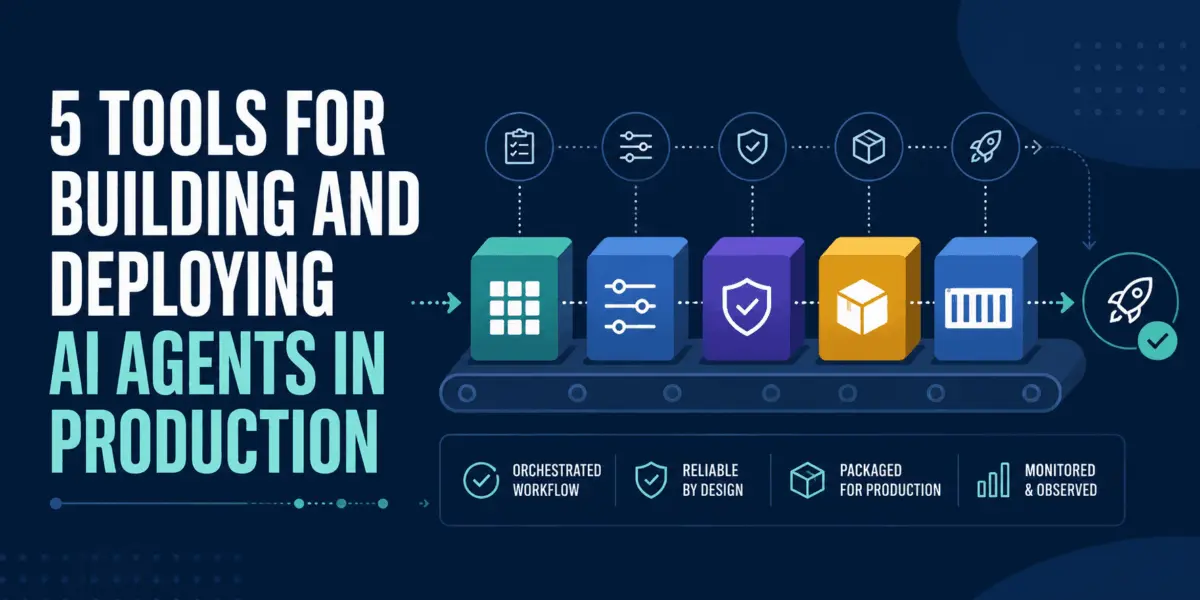
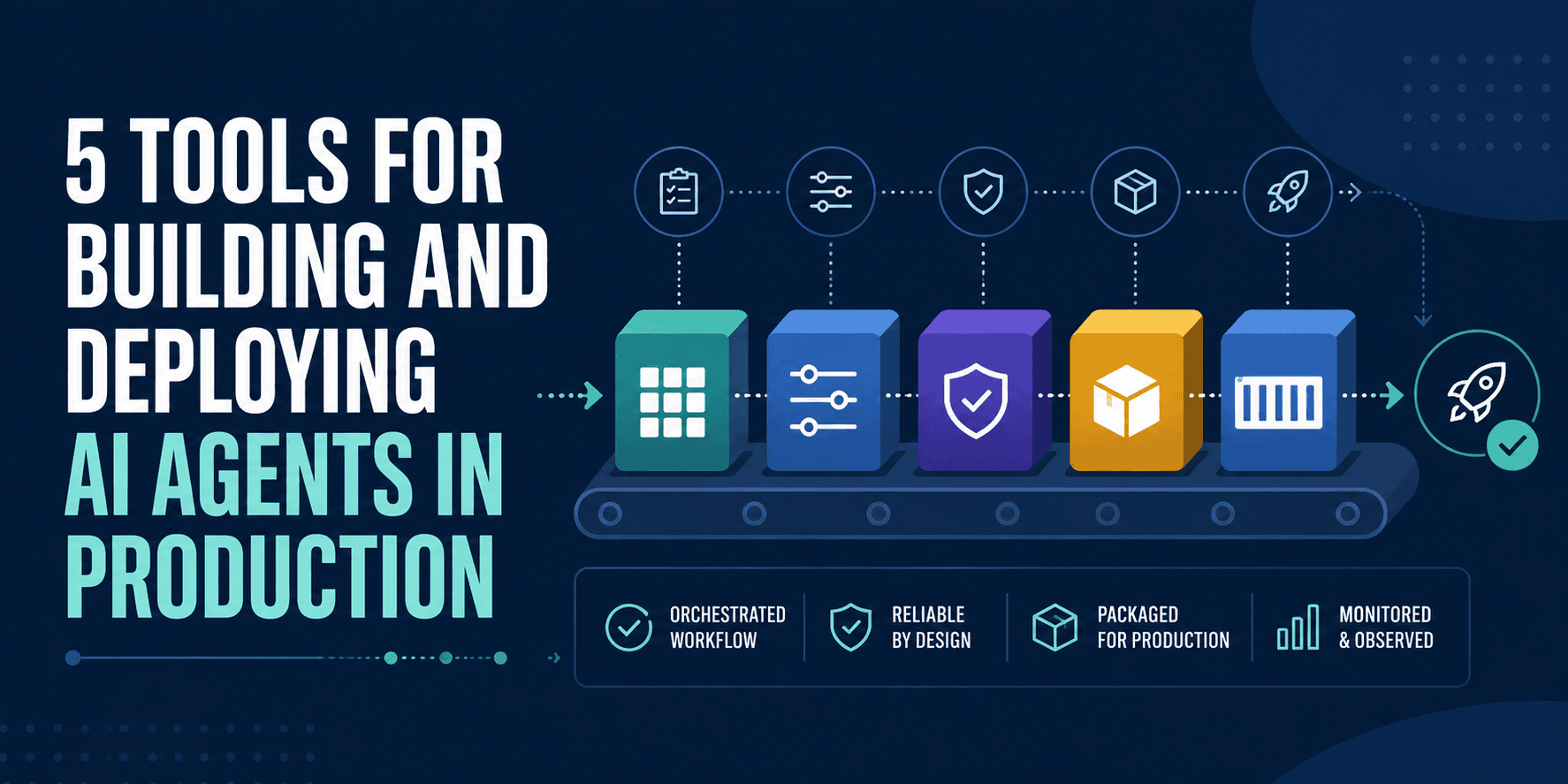
Surviving production requires a robust, multi-layered architecture. Industry standards indicate that successful enterprise-grade agents rely on a cohesive stack of five specialized tools, each addressing a distinct operational layer: managing complex state logic, securely executing autonomous code, maintaining persistent multi-session memory, providing granular observability, and scaling serverless compute dynamically. As artificial intelligence integration matures across global enterprises, understanding and implementing this five-layer stack has become the definitive separating factor between abandoned AI pilots and resilient, revenue-generating autonomous systems.
Detailed Chronology: The Evolution of Agentic Infrastructure
To understand why specialized tools are now mandatory for AI agents, one must trace the rapid evolution of autonomous systems over the past several years.
Phase 1: The Monolithic Script Era (2022–2023)
In the early days following the release of foundational LLMs, developers approached agent architecture like standard software scripts. An agent was predominantly built as a basic Python while loop that continually pinged an LLM endpoint, parsed the response, and executed system commands or API calls.
This approach worked adequately for simple, stateless tasks. However, developers quickly hit architectural walls. If an API call timed out, the loop broke. If a server restarted midway through a multi-step database migration, all intermediate data vanished. The underlying process state was fleeting, stored entirely within ephemeral variables destined to disappear the moment the runtime process terminated.
Phase 2: Framework Fragmentation and Stateful Graphs (2024)
As developers demanded more reliability, the ecosystem fractured into frameworks trying to solve execution flow. The realization that agents are not linear chains, but rather complex, non-deterministic directed graphs, sparked a paradigm shift. Systems like LangGraph emerged to treat agent state as a persistent, database-backed entity. This period marked the transition from treating agents as simple API wrappers to orchestrating them as distributed state machines capable of human-in-the-loop approvals and checkpoint recovery.
Phase 3: The Security and Persistence Imperative (2025–2026)
As agents grew increasingly autonomous—gaining the ability to write, compile, and execute their own code—security vulnerabilities became glaringly apparent. Running unverified, model-generated code on bare-metal servers or basic Docker containers introduced unacceptable attack surfaces. Concurrently, users demanded persistent cross-session memory so agents could recall user preferences over weeks and months.
This maturity curve forced the ecosystem to specialize. Today, the market has standardized around distinct, interoperable layers. Modern production agents do not rely on monolithic libraries; instead, they orchestrate modular tools designed explicitly for state routing (LangGraph), micro-virtualized code execution (E2B), persistent semantic memory (Mem0), deep execution tracing (LangSmith), and burstable serverless compute (Modal).
Supporting Context & Metrics: The 5-Layer Production Stack
Successful deployment in 2026 relies on a meticulously constructed stack where each tool serves a precise, non-overlapping function.
+-------------------------------------------------------+
| 5. SCALING & COMPUTE LAYER: Modal                     |
|    Dynamic serverless scaling & cold-start reduction  |
+-------------------------------------------------------+
| 4. OBSERVABILITY LAYER: LangSmith                     |
|    Deep tracing, debugging & evaluation               |
+-------------------------------------------------------+
| 3. MEMORY LAYER: Mem0                                 |
|    Cross-session facts, entity & semantic retrieval   |
+-------------------------------------------------------+
| 2. SECURITY & EXECUTION LAYER: E2B                    |
|    Firecracker microVM isolation for generated code   |
+-------------------------------------------------------+
| 1. LOGIC & STATE LAYER: LangGraph                     |
|    Directed graphs, state persistence & checkpointing |
+-------------------------------------------------------+
1. LangGraph: Solving Agent Logic and State Persistence
A foundational agent loop is essentially a Python script calling an LLM until a condition is met. However, production environments require branching logic, automated retries for failed tool calls, pause mechanisms for human oversight, and seamless crash recovery.
LangGraph redefines agent architecture by structuring workflows as directed graphs instead of linear chains. Individual tasks are represented as Nodes, connected via Edges with conditional routing capabilities. Crucially, every state transition is automatically checkpointed. This architecture enables advanced capabilities like time-travel debugging, pause-and-resume workflows, and human-in-the-loop validation without requiring custom infrastructure.

- Industry Adoption: Major enterprises including Klarna, LinkedIn, Uber, and Replit utilize LangGraph for critical workflows, driving its GitHub repository past 30,000 stars.
- Production Caveat: While LangGraph’s default in-memory checkpointer is sufficient for local development, it instantly wipes state upon process restarts. Transitioning to a Postgres-backed checkpointer is the mandatory rite of passage that transforms a LangGraph project from a script into enterprise infrastructure.
2. E2B: Secure Execution and Sandboxing
When an AI agent is granted the autonomy to write and execute code, it introduces massive security vulnerabilities. Model-generated Python cannot safely run on the same server hosting user data, as malicious or hallucinated code can easily compromise host systems.
E2B addresses this by providing secure, ephemeral sandboxes specifically designed for AI agents. Utilizing Firecracker microVM isolation, E2B ensures that every execution environment runs within its own dedicated virtual machine and independent kernel—offering a substantially stronger security boundary than standard containerization.
- Industry Adoption: E2B reports utilization by 88% of Fortune 100 companies, including prominent platforms like Perplexity, Hugging Face, Manus, and Groq.
- Tradeoffs: E2B imposes tier-based runtime limits (capping at one hour for Hobby plans and 24 hours for Pro tiers). Consequently, it is engineered for short-lived, ephemeral tasks (such as script execution and automated testing) rather than long-running, multi-day stateful processes.
3. Mem0: Durable Cross-Session Memory
Standard LLM interactions are inherently stateless; every new API call begins with a clean slate unless the application manually passes historical context. While single-turn queries tolerate this, sophisticated agents designed to remember user preferences across multiple sessions require dedicated memory architectures.
Mem0 provides a plug-and-play memory layer that automatically extracts salient facts during conversations. It stores these facts in a vector database tagged by user, session, and agent ID. Before generating a response, Mem0 executes a targeted retrieval step combining semantic similarity, keyword matching, and entity matching.

- Synergy with LangGraph: While LangGraph checkpointers handle short-term, thread-scoped conversation continuity and fault tolerance, they are not designed for cross-thread durability. Mem0 fills this precise gap by managing persistent user facts and long-term preferences that must outlive individual conversation threads.
4. LangSmith: Observability and Tracing
Silent failures in production are far more dangerous than loud ones, as they obscure the root causes of unexpected agent behavior. Debugging production LLM applications requires comprehensive tracing—a detailed, chronological ledger of every tool call, decision point, and intermediate observation.
LangSmith is a commercial agent engineering platform built to solve this exact problem. It offers comprehensive tracing, debugging, evaluation, and deployment monitoring, giving developers a complete run-by-run visualization of agent behavior.
- Value Proposition: Beyond basic logging, LangSmith allows engineers to replay specific execution runs to pinpoint precisely where an agent’s logic diverged from expectations. This capability transforms multi-day debugging investigations into minutes of targeted code review.
- Pricing Structure: The platform offers a free tier supporting 5,000 traces per month (with 14-day retention), alongside a Plus tier priced at $39 per seat monthly for 10,000 traces.
5. Modal: Serverless Compute and Elastic Scaling
Even with flawless logic, robust sandboxing, persistent memory, and deep observability, enterprise agents require scalable hosting. Agent workloads are notoriously bursty—experiencing hours of low utilization followed by massive, unpredictable traffic spikes.
Modal provides a serverless compute platform tailored specifically for AI workloads. It dynamically scales from interactive coding sessions to intensive batch processing, automatically provisioning isolated hardware resources and scaling down to zero when idle.

- Financial and Market Growth: Driven by surging demand for AI infrastructure, Modal has experienced hyper-growth. Market analysis by Sacra estimated Modal’s annualized revenue run-rate reached approximately $300 million by April 2026, up from roughly $119 million at the close of 2025. Major customers include DoorDash, Anthropic, Meta, and Ramp.
- Technical Edge: For agentic workloads, minimizing cold-start latency is critical. Modal leverages GPU memory snapshots to reduce cold-start times by up to 10x, eliminating the latency penalty across thousands of daily agent sessions.
Official Statements and Industry Perspective
Engineering leaders across the software ecosystem have increasingly emphasized that the bottleneck in artificial intelligence is no longer algorithmic capability, but systems engineering.
In recent technical briefings, infrastructure architects from major AI platforms noted:
"The industry spent the last three years obsessing over model weights and context windows. The next three years will be defined entirely by infrastructure resilience, state management, and secure execution boundaries. An agent is only as smart as its ability to survive a server reboot."
Furthermore, systems reliability engineers highlight that treating AI agents as standard microservices is a fundamental design error. Because LLMs are inherently non-deterministic, traditional monitoring tools fail to capture semantic drift and logical divergence. The widespread adoption of platforms like LangSmith and Modal reflects an industry-wide recognition that autonomous agents demand an entirely new category of operational tooling.

Future Outlook: The Path to Autonomous Enterprise Systems
As the artificial intelligence ecosystem marches toward 2027, the trajectory of agentic deployment is becoming increasingly clear. The era of the monolithic, experimental AI script is officially over.
- Standardization of the Agentic Stack: Just as modern web development converged around standard stacks (e.g., LAMP or MERN), enterprise AI engineering is standardizing around modular, decoupled infrastructure layers. Developers will increasingly plug pre-configured state engines (LangGraph) into secure execution microVMs (E2B) and persistent memory layers (Mem0) as a default boilerplate.
- Autonomous Self-Healing Systems: Future iterations of observability platforms like LangSmith will move beyond passive tracing to active remediation. By combining deep telemetry with automated graph state management, next-generation agents will detect logical dead-ends in real-time and self-correct without human intervention.
- Edge and Hybrid Deployment: While serverless platforms like Modal currently dominate heavy compute tasks, the push for ultra-low-latency enterprise applications will drive the integration of secure micro-sandboxes closer to the network edge.
Ultimately, organizations successfully scaling artificial intelligence into production are those abandoning the illusion that a single framework can handle every operational requirement. By treating logic, security, memory, observability, and compute as distinct, solvable engineering problems, enterprise teams can finally bridge the chasm between experimental notebooks and mission-critical production environments.