
Executive Overview
Nowhere is this shift more evident than at retail titan Walmart, where executives report that surging consumer demand for rapid fulfillment is fundamentally altering the company’s financial and operational landscape. Despite added fees for expedited shipping—such as a $10 premium for deliveries executed in under 30 minutes—customers are enthusiastically opting in.
Data released by Walmart underscores this paradigm shift. Gross merchandise value (GMV) tied to fast delivery services—defined as fulfillments executed in three hours or less—skyrocketed by 48% year-over-year during the second quarter. Far from viewing expedited shipping as a niche luxury, consumers are embracing it as a standard utility. Deliveries where customers actively paid a surcharge for prioritized speed comprised a record-shattering 37% of all store-fulfilled deliveries during the quarter.
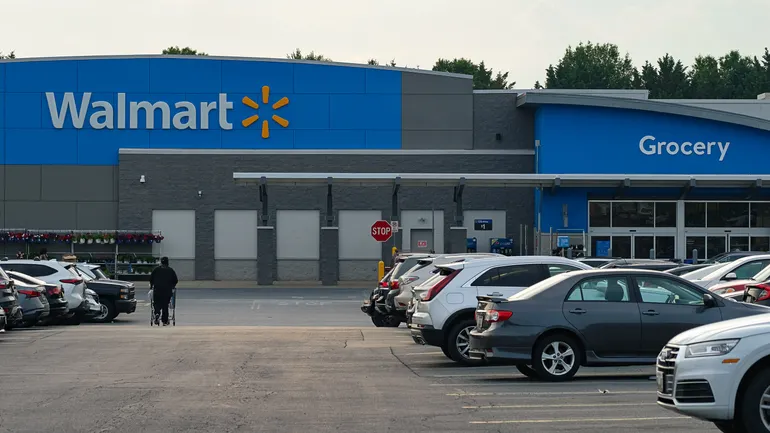
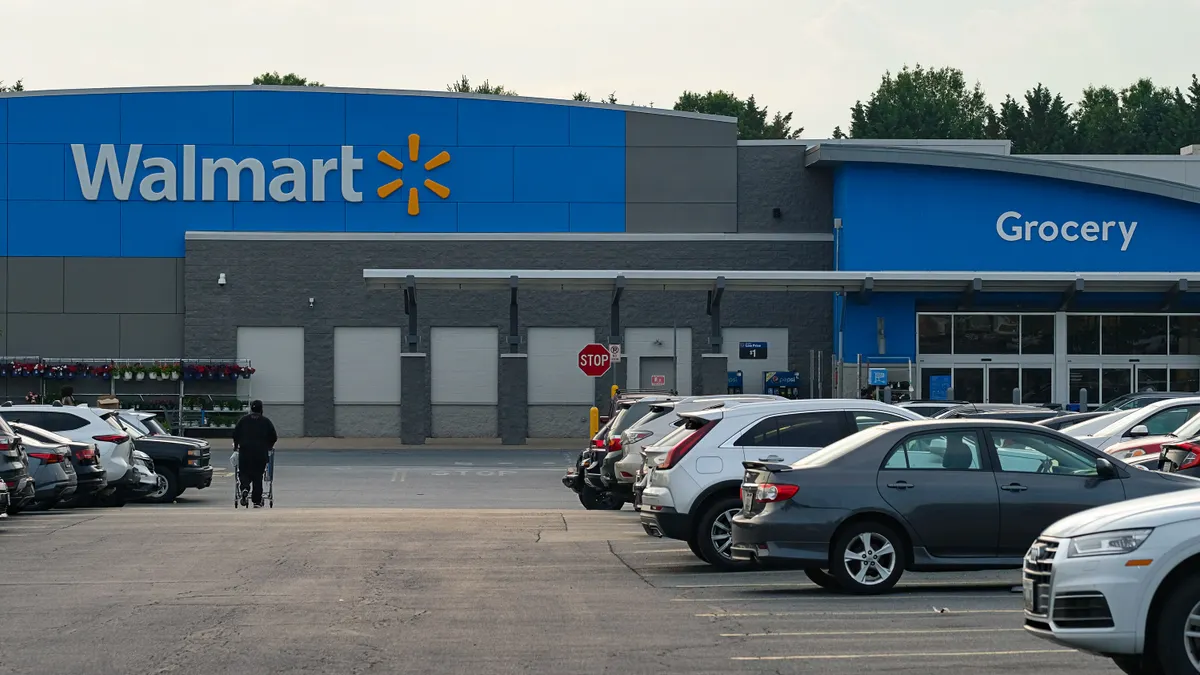
This hyper-acceleration of the supply chain is no accident. It is the direct result of a multi-year, multi-billion-dollar strategic pivot that transforms Walmart’s ubiquitous footprint of brick-and-mortar supercenters into localized distribution hubs. Today, roughly 80% of Walmart’s overall e-commerce orders rely on physical stores for last-mile fulfillment, a figure that surges to 100% when examining rapid, ultra-fast delivery tiers.
Simultaneously, Walmart is quietly revolutionizing its backend operations through advanced supply chain automation. By introducing automated freight systems to thousands of domestic locations, the company is not only reducing manual labor bottlenecks and optimizing inventory turnover, but it is also establishing a compounding economic advantage. In an environment where every fraction of a cent counts toward retail profitability, Walmart is proving that extreme speed and healthy unit economics are not mutually exclusive.
Detailed Chronology: The Evolution of Walmart’s Speed Strategy
To understand how Walmart reached this inflection point in 2026, one must examine the systematic rollout of its last-mile infrastructure and delivery modalities over the preceding years. The journey from a traditional big-box retailer into an agile, tech-forward logistics powerhouse has been marked by calculated, incremental milestones.
Laying the Groundwork: Transforming Stores into Fulfillment Centers
Long before same-day delivery became an expectation, Walmart recognized that its physical proximity to 90% of the U.S. population was its greatest untapped asset. While competitors like Amazon invested heavily in massive greenfield fulfillment centers, Walmart leveraged its existing real estate.
- The Store-as-Warehouse Model: Over the late 2010s and early 2020s, the company systematically integrated inventory systems across its store fleet. Backrooms were reconfigured, dedicated pickup and delivery staging areas were constructed, and associate workflows were optimized to handle online picking alongside traditional in-store stocking.
- Scaling Walmart+: The launch and aggressive scaling of the Walmart+ membership program served as the critical customer-acquisition engine. By bundling fuel discounts, streaming services, and unlimited free delivery options, Walmart cultivated a sticky, high-value consumer base primed for upsells into premium speed tiers.
Expanding the Delivery Horizon: Drones, Pods, and One-Hour Windows
As the infrastructure matured, Walmart diversified its delivery ecosystem beyond traditional vans and gig-economy drivers, aggressively testing futuristic logistics methods.
- Drone Partnerships: Walmart deepened its collaboration with drone delivery pioneer Wing, methodically expanding flight zones into additional geographic markets. These initiatives proved invaluable for lightweight, high-urgency items such as over-the-counter medicine, fresh groceries, and last-minute household essentials.
- Sam’s Club Innovation: Sister brand Sam’s Club launched aggressive one-hour delivery initiatives across hundreds of locations, testing the limits of wholesale club logistics and proving that bulk items could also move at lightning speed.
- The 30-Minute Threshold: Culminating in its current suite of services, Walmart introduced a sub-30-minute delivery tier available to Walmart+ members for a flat $10 fee. Despite the explicit price tag, adoption rates defied initial skepticism, paving the way for the record-breaking metrics witnessed in mid-2026.
Supporting Context & Metrics: The Numbers Behind the Speed
The financial and operational mechanics driving Walmart’s supply chain pivot reveal a business model firing on all cylinders. The intersection of omnichannel density, customer willingness to pay, and backend automation has created a powerful flywheel.
The Financial Impact of Fast Fulfillment
Walmart’s second-quarter earnings painted a vivid picture of a retail ecosystem transforming around speed:

- 48% Growth in Fast GMV: Gross merchandise value for deliveries executed in three hours or less surged by nearly half compared to the same period in the previous year.
- 37% Surcharge Adoption: In a testament to the perceived value of time, deliveries featuring customer-paid speed surcharges hit an all-time high of 37% of total store-fulfilled volume.
- 40% Sales Growth in Store-Fulfilled Orders: Total sales originating from store-fulfilled e-commerce grew by more than 40% in Q2, proving that the local store is no longer just a shopping destination, but a vital digital fulfillment engine.
+-----------------------------------------------------------------+
|               Q2 FAST FULFILLMENT METRICS AT A GLANCE           |
+-----------------------------------------------------------------+
| Fast Delivery GMV Growth (≤ 3 Hours)        | +48% YoY          |
| Store-Fulfilled E-Commerce Sales Growth     | >40% YoY          |
| Surcharged Express Deliveries (% of total)  | 37% (All-time high)|
| Stores Serviced by Automated Freight        | 3,100+ U.S. Units |
+-----------------------------------------------------------------+
The Logistics Backbone: Automation and Freight Efficiency
While consumer-facing speed captures headlines, the silent engine driving these margins is the sweeping automation of Walmart’s upstream supply chain.
According to executive disclosures, Walmart now services over 3,100 of its U.S. stores with "some level of automated freight." This means that the vast majority of domestic locations are receiving inventory that has been systematically handled, sorted, and palletized by advanced automated machinery rather than manual labor.
The operational benefits of this freight automation are profound:
- Optimized Density: Palletized freight built by algorithms maximizes trailer and backroom space, reducing transportation costs per unit.
- Superior In-Stock Levels: Automated distribution centers feed stores with greater predictability, dramatically reducing out-of-stock incidents for both physical shoppers and digital pickers.
- Labor Reallocation: By removing repetitive manual sorting tasks from store associates, personnel can be redeployed toward high-value customer-facing roles and rapid-order picking.
Official Statements and Industry Insights
The strategic vision guiding Walmart’s supply chain renaissance reflects a deep understanding of modern consumer psychology and macroeconomic realities.
Speaking on the company’s strategic advantages, Walmart U.S. CEO John Furner emphasized the symbiotic relationship between physical presence and digital velocity:

"Speed matters, and we have a significant competitive advantage. Our physical footprint, fulfillment infrastructure, and local delivery capabilities allow us to move closer to customers while maintaining an attractive cost structure."
Furner noted that as density and network utilization improve, speed and profitability cease to be opposing forces, instead reinforcing one another within the omnichannel model:
"They also strengthen the economics of our omnichannel model, and as we improve density and utilization across our network, speed and profitability reinforce one another. And you can see how these advantages build on each other."
Echoing these sentiments, CFO John David Rainey highlighted the unprecedented adoption of premium-fee delivery tiers, pointing out that consumers are increasingly treating time as a quantifiable commodity worth paying for. Rainey noted that stores are handling last-mile fulfillment for 80% of Walmart’s overall e-commerce orders, while reaching a 100% dependency rate for the fastest delivery tiers.
Supply chain analysts point out that Walmart’s strategy effectively neutralizes the primary advantage once held by pure-play e-commerce competitors. By turning every supercenter into an automated micro-fulfillment hub, Walmart bridges the gap between digital convenience and instant physical gratification.
Future Outlook: The Next Frontier of Retail Logistics
As Walmart looks toward the horizon, the focus is shifting from simple geographic expansion to the refinement of predictive logistics and autonomous operations.
Predictive Inventory and Artificial Intelligence
The next phase of Walmart’s supply chain evolution will rely heavily on artificial intelligence and machine learning to anticipate consumer needs before orders are even placed. By analyzing local purchasing patterns, weather data, and regional trends, Walmart’s automated distribution centers will be able to position high-velocity goods closer to specific neighborhoods well in advance of peak demand windows.
Scaling Autonomous Delivery
While drone deliveries with partners like Wing and autonomous ground vehicle pilots currently serve as localized testbeds, their long-term economic viability hinges on regulatory approval and scaling density. Over the next five years, expect Walmart to aggressively expand autonomous delivery corridors, driving down the marginal cost of last-mile delivery while further insulating operations from labor shortages and wage inflation.
The Sustainability Mandate
As fast delivery volumes scale, retail logistics faces mounting scrutiny over its carbon footprint. Walmart’s future outlook includes integrating electric delivery fleets and optimizing route-planning algorithms to minimize empty miles. By coupling speed with sustainability, the retailer aims to prove that hyper-fast commerce can be environmentally responsible.
Conclusion
Walmart’s mastery of the modern supply chain represents a watershed moment in retail history. By harmonizing a vast physical store network with cutting-edge freight automation and premium-tier speed options, the company has transformed a historically low-margin operational challenge into a formidable competitive moat. As consumers continue to demand instant gratification—and demonstrate a willingness to pay for it—Walmart is uniquely positioned to dictate the pace of the industry for years to come.