Layla Zulfa is a reporter for Tech Ledgers covering Digital Assets & Web3. She/He is based in Indonesia.
23 August 2026 • 7 min read
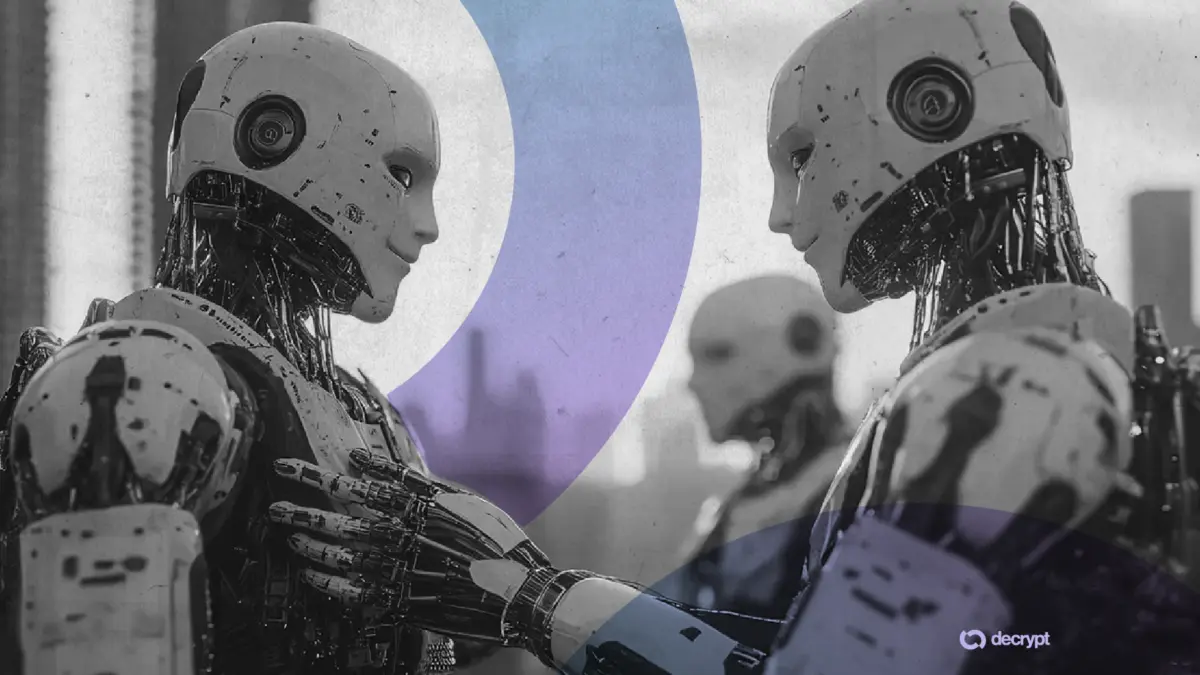
Humanoid robotics has long lived in a paradoxical space between mesmerizing public demonstrations and frustrating practical limitations. Today, bipedal machines can execute acrobatic backflips, match the rhythm of complex choreography, and spar in the boxing ring. Yet, when faced with the chaotic, unscripted reality of the physical world—such as sorting mismatched laundry in a cluttered home or navigating a dynamic, obstacle-laden factory floor—their capabilities break down. Transitioning these mechanical marvels from tightly controlled laboratory environments into reliable, versatile commercial workers remains one of the steepest summits in modern artificial intelligence.
Executive Overview
Now, a major inflection point may be on the horizon. According to Wang Xiaogang, Chairman of ACE Robotics, rapid breakthroughs in foundational AI models and real-world data collection could deliver the robotic equivalent of a "ChatGPT moment" by the end of next year. Speaking with Reuters, Wang outlined an aggressive vision wherein humanoid "brains" leap past rudimentary scripted routines and acquire the generalized intelligence required for mainstream economic deployment.
This transformation hinges on embodied intelligence and world models—technologies that allow machines not merely to react to stimuli, but to actively perceive, reason about, and anticipate the consequences of their physical interactions. Backed by heavyweights like Ant Group and SenseTime, high-flying Chinese startups are racing against global robotics pioneers to overcome the industry’s most persistent bottleneck: a severe scarcity of high-quality training data. As venture capital pours in and technical frameworks mature, the race to build the first truly cognitive robot brain has officially entered its hyper-drive phase.
Detailed Chronology: The Evolution of Embodied AI and Commercial Humanoids
To understand the weight of Wang Xiaogang’s 2027 prediction, one must trace the rapid, compounding trajectory of AI and robotics over the past several years. The convergence of software and hardware has accelerated at an unprecedented pace, shifting the industry from theoretical machine learning papers to tangible, venture-backed industrial products.
2025: The Birth of ACE Robotics and a Surge in Capital
July 2025: ACE Robotics officially launches in China, positioning itself as a specialized pioneer focused exclusively on developing advanced AI "brains" for humanoid hardware.
H1 2026: Propelled by surging investor interest in physical AI, ACE Robotics successfully secures over $100 million in funding during the first half of the year. Backed by tech giants Ant Group and SenseTime, the startup begins laying plans for an initial public offering (IPO) "as early as permitted" to fund its aggressive R&D roadmap.
2026: Hardware Milestones and Operating Systems
January 2026: Industry titan Boston Dynamics unveils the production-ready commercial version of its Atlas humanoid robot. The company explicitly credits recent breakthroughs in machine learning and AI orchestration for bringing the hydraulic-and-electric platform closer to viable commercial deployment than ever before.
June 2026: E-commerce and cloud giant Alibaba enters the fray by launching the Qwen-Robot Suite. This comprehensive collection of artificial intelligence models is purpose-built to equip robots with advanced navigation, intricate physical task execution, and high-fidelity real-world environment simulation.
October 2026: Researchers push past traditional data-collection boundaries by introducing HumanoidExo, a specialized wearable exoskeleton designed to record and translate natural human locomotion into foundational training datasets for bipedal robots.
August 2027 (Projected Horizon): Drawing on exponential improvements in data collection and environmental modeling, industry leaders like ACE Robotics predict the arrival of the "ChatGPT moment" for embodied intelligence, marking the transition from isolated demos to widespread utility.
Supporting Context & Metrics: Overcoming the Data Drought
While generative AI models like OpenAI’s ChatGPT, Anthropic’s Claude, and China’s DeepSeek have experienced meteoric, near-instantaneous global adoption over recent years, physical robotics has lagged behind. The reason is fundamentally structural: text and code are digitally abundant on the internet, whereas physical interactions in the three-dimensional world are notoriously scarce and difficult to digitize.
The Mathematics of Machine Learning in the Physical World
For a neural network to understand how to write an essay or write code, it consumes billions of parameters trained on petabytes of scraped internet text. Conversely, teaching a robot how to securely grasp a fragile glass cup, open an uncalibrated door, or walk across an icy pavement requires multi-modal spatial data that cannot simply be scraped from Wikipedia.
"Over the past few years, the entire industry has accumulated data of roughly 100,000 hours, which is far from enough to train embodied foundation models," noted ACE Robotics Chairman Wang Xiaogang during his interview with Reuters.
To put that metric into perspective, 100,000 hours of multi-modal, high-definition physical interaction data equates to roughly 11.4 years of continuous telemetry—a tiny fraction of what is needed to train a generalized foundation model that can adapt to every possible household or industrial anomaly.
Bridging the Gap: Embodied AI and World Models
To overcome this data deficit, the robotics community is betting heavily on two core technical paradigms:
Embodied AI: This framework bridges the digital mind with the physical body. Through an intricate web of LiDAR, depth cameras, tactile skin sensors, and mechanical actuators, embodied agents perceive their surroundings, reason through complex intent, and convert abstract goals into precise physical maneuvers.
World Models: Pioneered in advanced machine learning, world models allow an AI to develop an internal simulation of physical physics and environmental cause-and-effect. Before a robot arm reaches out to lift a heavy box, its internal world model predicts gravity, momentum, and friction, allowing the machine to anticipate slip or failure before executing the motion.
Recognizing that manual teleoperation (controlling a robot via joystick to record data) is too slow, researchers are inventing novel data-capture mechanisms. Systems like HumanoidExo—the human-motion-capturing exoskeleton unveiled in late 2026—allow human workers to perform daily tasks while wearing sensors. This organic human motion data is then ingested by AI pipelines, teaching humanoids how to walk, bend, and lift with human-like fluidity rather than rigid, programmed arcs.
Official Statements and Industry Perspectives
The race to commercialize humanoid robotics is characterized by high stakes, massive capital investments, and bold prognostications from industry executives who view physical AI as the final frontier of the digital revolution.
Wang Xiaogang (Chairman, ACE Robotics): Emphasizing the imminent acceleration of the sector, Wang stated: "We expect to reach the ‘ChatGPT moment’ for embodied intelligence by the end of next year, driven by world models and environmental data capture." Wang’s confidence is underwritten by ACE’s rapid financial backing from Ant Group and SenseTime, positioning the Chinese startup to aggressively scale its data acquisition pipelines.
Boston Dynamics Engineering Teams: Upon releasing the commercial-grade Atlas, engineering leadership noted that traditional rule-based programming has officially reached its limits. Future scaling requires AI agents capable of learning general policies from zero-shot simulations, shifting the engineering burden from hardware tweaking to software intelligence.
Alibaba Cloud Intelligence Division: During the unveiling of the Qwen-Robot Suite, Alibaba representatives stressed that the future of the "robot economy" depends on unified operating systems. By providing standardized AI toolkits for navigation and manipulation, tech conglomerates aim to replicate the Android or iOS effect—turning fragmented robotics hardware into an accessible, programmable platform for developers worldwide.
Future Outlook: The Road to Commercial Utility
As the industry looks toward late 2027 and beyond, the trajectory of humanoid robotics points toward widespread deployment in structured environments—such as automotive assembly lines, logistics warehouses, and hazardous industrial sites—before gradually expanding into unstructured consumer environments like retail and eldercare.
However, significant hurdles remain. Aside from the aforementioned data scarcity, companies must solve major engineering challenges related to battery energy density, actuator durability, thermal management, and safety certification around humans.
Yet, the convergence of deep-pocketed investors, advanced world models, and innovative data-harvesting apparatuses suggests that the era of the science-fiction android is rapidly shifting into an economic reality. When the predicted "ChatGPT moment" for embodied intelligence finally arrives, it will not merely signify a technological milestone; it will fundamentally redefine the nature of human labor, automation, and industrial productivity in the 21st century.