Executive Overview
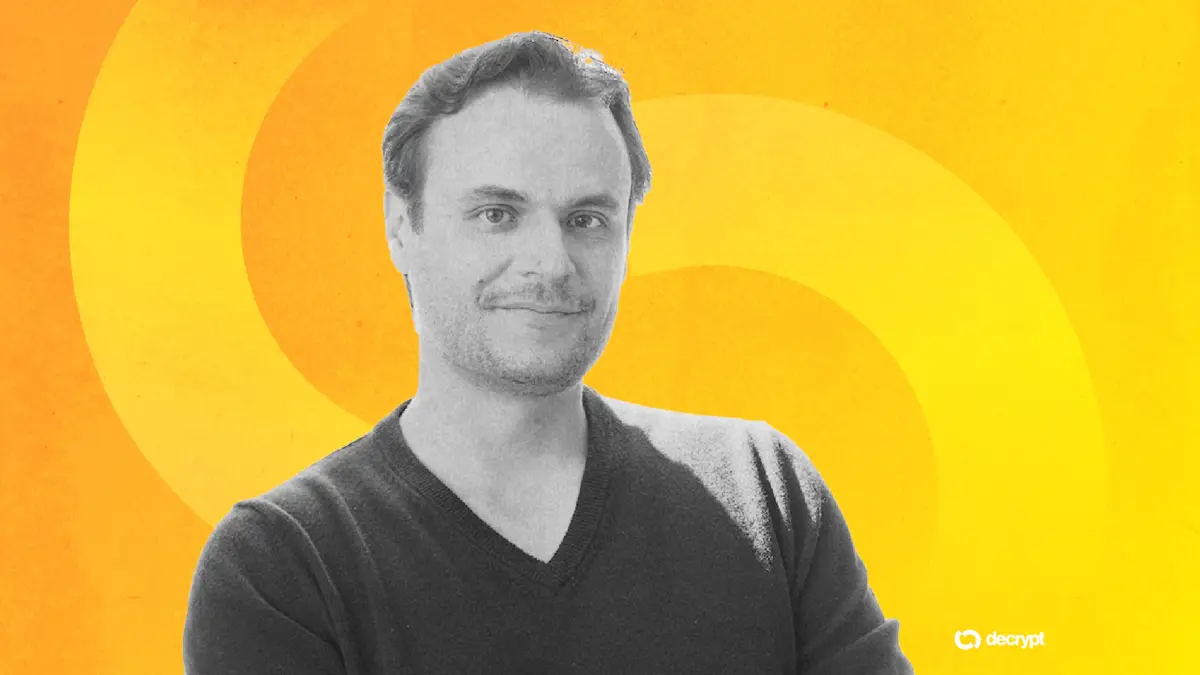
The philosophical anchor of this ambitious project was neatly summarized by Robinhood CEO Vlad Tenev in a now-famous "two wolves" post on X (formerly Twitter). According to Johann Kerbrat, Robinhood’s Head of Crypto and International Businesses, that imagery serves as the blueprint for the company’s dual mandate: to build a serious, institutional-grade financial hub capable of handling tokenized equities and complex derivatives contracts, while simultaneously preserving space for the chaotic, community-driven fun of meme coins.
Rather than alienating either demographic, Robinhood is attempting an unprecedented balancing act. It wants to appeal equally to the buttoned-down Wall Street "suit" seeking 24/7 equity exposure and risk management, and the crypto-native "degen" chasing the liquidity and adrenaline of viral token launches. In an exclusive interview with Decrypt’s FOMO Hour, Kerbrat detailed how this hybrid strategy has allowed Robinhood Chain to explode out of the gate, prioritizing user utility, developer engagement, and an unyielding commitment to bringing the masses onto the blockchain for the very first time.
Detailed Chronology: From Concept to Layer-2 Dominance
To understand the velocity of Robinhood Chain’s ascent, one must examine the systematic rollout of Robinhood’s crypto strategy over the past several years. What began as a crypto-trading add-on for retail stock investors has steadily metastasized into a fully realized blockchain ecosystem designed to internalize trading volume, reduce settlement times, and unlock asset classes previously restricted by traditional market hours.
The Genesis of a Brokerage Blockchain
For years, Robinhood’s crypto offerings were largely custodial. Users could buy and hold Bitcoin, Ethereum, and a rotating cast of altcoins within the Robinhood app, but they were siloed within the company’s proprietary database. The launch of self-custody wallets marked the first major step toward true Web3 integration, but the ultimate endgame—migrating core brokerage infrastructure directly on-chain—required a dedicated infrastructural backbone.
Rather than building an expensive, high-risk Layer-1 blockchain from scratch, Robinhood’s engineering and product teams made a calculated pivot. They opted to construct an Ethereum Layer-2 network. This architectural decision allowed Robinhood to inherit Ethereum’s battle-tested security, decentralization, and vast developer ecosystem, freeing the company’s internal resources to focus entirely on user experience, compliance, and product development.
The Launch and Immediate Milestones
When Robinhood Chain officially deployed, expectations were cautiously optimistic. Launching a new L2 in a crowded market saturated by Arbitrum, Optimism, Base, and zkSync is no small feat. Yet, the network caught fire almost instantaneously.
Within its first week, the chain recorded tens of millions of dollars in deposits. By the end of its first month online, that figure had skyrocketed to nearly $800 million in TVL, placing Robinhood Chain on the radar of DeFi protocols and institutional liquidity providers alike. More impressively, the network rapidly scaled to process over 200 million transactions, a metric that highlights not just passive capital sitting in smart contracts, but high-frequency, active user engagement.
+-------------------------------------------------------------------+
|                     ROBINHOOD CHAIN AT A GLANCE                   |
+-------------------------------------------------------------------+
| Network Architecture : Ethereum Layer-2 (L2 Rollup)               |
| Total Value Locked   : ~$800 Million (Achieved in ~30 Days)       |
| Transactions Processed: 200M+                                     |
| Core Asset Offerings : ~200 Tokenized Stocks, RWAs, Stablecoins   |
| Key Trading Features : Perpetual Futures, 24/7 Equity Access      |
+-------------------------------------------------------------------+
Supporting Context & Metrics: Decoding the "Two Wolves" Strategy
The core thesis behind Robinhood Chain is rooted in a pragmatic understanding of human psychology and modern market behavior. Financial institutions often fail in Web3 because they attempt to sanitize the experience, stripping away the cultural elements that make crypto communities vibrant. Conversely, purely crypto-native projects often lack the regulatory compliance, institutional backing, and user-friendly UX required to onboard everyday consumers.
Bridging the Suit and the Degen
Johann Kerbrat elaborated on Vlad Tenev’s "two wolves" metaphor during his discussion with Decrypt, emphasizing that Robinhood’s approach is fundamentally customer-centric.
"We want to show customers that we care about what they care about," Kerbrat noted. "We want to make sure the chain works for what people care about."
This philosophy manifests in a product suite that defies traditional categorization. On one side of the ledger, Robinhood Chain offers roughly 200 tokenized stocks, real-world asset (RWA) integrations, stablecoin lending yields, and perpetual futures contracts. These are serious, financial-grade instruments tailored for portfolio diversification, hedging, and capital efficiency.
On the other side of the ledger, Robinhood has explicitly chosen to embrace meme coins. While traditional financial institutions view volatile community tokens as a reputational risk, Kerbrat argues that they are an indispensable economic engine for a growing network.
"We think memes are an important part of crypto. We think that for a new chain, like Robinhood Chain, these tokens have value," Kerbrat explained. "They bring liquidity, they bring interest from customers, especially the DeFi-type of customer that are pretty hard to move. If meme coins are something that they are extremely interested in, we want to make sure that the chain is supported for that."
Developer Activity as the Ultimate Metric
While TVL and transaction counts capture media headlines, Kerbrat pointed out that sustainable blockchain growth hinges on developer adoption. Robinhood Chain was not built solely as an internal ledger for Robinhood’s proprietary app; it was designed as an open, permissionless network where third-party builders can deploy smart contracts, build decentralized applications (dApps), and compose new financial primitives.
- Ecosystem Interoperability: Developers can build applications that interact natively with Robinhood’s tokenized equities, creating composite financial products previously impossible in traditional financial silos.
- Open Access: By encouraging external developers to build on the L2, Robinhood is positioning its chain as a neutral platform for the broader Web3 economy, rather than a walled garden.
Official Statements & Industry Insights
The rollout of Robinhood Chain comes at a pivotal juncture for retail investing. For decades, retail market participants have been constrained by the artificial limitations of traditional market hours—operating strictly from 9:30 AM to 4:00 PM EST, Monday through Friday, with weekends and holidays bringing all trading to a dead halt.
Unlocking 24/7 Risk Management
Kerbrat emphasized that the modern geopolitical and macroeconomic landscape does not pause for the weekend. Major news events, earnings leaks, geopolitical escalations, and macroeconomic data releases frequently occur on Friday evenings or over the weekend, leaving retail investors completely exposed and defenseless until Monday morning’s opening bell.
"The world doesn’t stop on weekends," Kerbrat stated during his interview. "News is happening on Fridays after market close, and people want to be able to hedge their position, which was something that was not really available to retail until recently."
By moving brokerage products on-chain via Robinhood Chain, users gain the unprecedented ability to adjust positions, trade tokenized equities, and manage risk around the clock. This levels the playing field, giving retail traders tools that were previously reserved for hedge funds and institutional desks operating over-the-counter (OTC) desks during off-hours.
Why Layer-2 Over Layer-1?
Addressing the technical architecture of the network, Kerbrat shed light on why Robinhood bypassed building an independent Layer-1 blockchain. Developing a secure, decentralized L1 requires staggering capital outlays, validator decentralization campaigns, and constant vulnerability monitoring.
By launching as an Ethereum Layer-2 rollup, Robinhood effectively outsourced its security layer to the world’s most robust smart-contract platform. This strategic delegation allowed the company’s engineering teams to remain laser-focused on what they do best: building intuitive financial interfaces, ensuring regulatory compliance, and scaling user acquisition.
Future Outlook: Onboarding the Next Ten Millions
As Robinhood Chain settles past its initial honeymoon phase, the overarching objective shifts from explosive customer acquisition to long-term utility and retention. The primary metric of success for Robinhood executives is not stealing market share from competing L1s or L2s like Solana or Base, but rather converting individuals who have never touched cryptocurrency into active, educated Web3 participants.
The Mass-Market Conversion Funnel
Traditional crypto platforms often suffer from an insurmountable learning curve—requiring users to navigate seed phrases, gas fees, bridge contracts, and confusing wallet extensions. Robinhood, by contrast, possesses a pre-existing demographic of tens of millions of verified, funded brokerage users.
By abstracting away the complex cryptographic plumbing beneath a familiar, streamlined user interface, Robinhood is uniquely positioned to execute the largest consumer-to-Web3 onboarding migration in history.
"If we see tens of millions of customers trying to use a chain, I think that will be a good win for us," Kerbrat concluded. "We want to bring more customers on-chain and show them the benefit of the technology."
Regulatory and Scalability Horizons
Of course, this path is not without its hurdles. Integrating tokenized equities and real-world assets onto a public blockchain places Robinhood at the bleeding edge of regulatory scrutiny. Ensuring compliance with global securities laws while maintaining the permissionless, trustless ethos of DeFi will require constant navigation and proactive dialogue with regulators across jurisdictions.
Furthermore, as transaction volumes scale past the initial 200 million milestone, maintaining network performance, low gas fees, and seamless fiat-to-crypto off-ramps will be vital to retaining user trust.
Conclusion
Robinhood Chain’s explosive first month—featuring nearly $800 million in TVL and over 200 million transactions—signals a fundamental maturation in how traditional fintech giants view blockchain technology. By successfully marrying the institutional rigor of tokenized stocks and 24/7 derivatives with the cultural liquidity of meme coins, Robinhood has crafted a compelling blueprint for the future of finance. If Johann Kerbrat and the Robinhood team can successfully bridge the gap between traditional Wall Street suits and crypto-native degens at scale, Robinhood Chain may very well become the definitive gateway that brings the next wave of humanity on-chain.