

Executive Overview
This week’s developments offer a cross-section of an industry in transition. From Canada Goose’s strategic divestiture of performance footwear brand Baffin to optimize its year-round lifestyle positioning, to Warby Parker’s impending debut of AI-powered smart frames developed alongside Google Gemini, heritage and modern brands alike are betting big on focused execution and technological innovation. Meanwhile, in the beauty sector, E.l.f. Beauty’s recently acquired powerhouse, Rhode, continues to shatter internal benchmarks, posting staggering single-day sales figures that underscore the potency of modern direct-to-consumer (DTC) and omnichannel strategies.
However, the path forward is not without friction. Traditional players are facing intense scrutiny from activist investors demanding operational overhauls, as evidenced by a high-stakes proxy battle brewing at heritage furniture titan Ethan Allen. Concurrently, seasonal retail preparations are already in motion, proving that while boardrooms debate high-level strategy, the core mechanics of consumer retail remain anchored in timely product execution and nostalgic appeal—as highlighted by Little Debbie’s early fall rollout.
This comprehensive report breaks down the critical retail milestones of the week, analyzing the financial metrics, corporate motivations, and long-term implications shaping the future of commerce.
Detailed Chronology: Key Industry Movements
Canada Goose Streamlines Operations with Baffin Divestiture
In a significant strategic pivot, outerwear heavyweight Canada Goose has entered into a definitive agreement to sell its performance footwear brand, Baffin Limited, to L.P. Royer. While financial terms of the transaction were kept confidential, the deal is slated to close within the month, pending customary closing conditions.
Baffin, renowned for its technical cold-weather and industrial footwear, was acquired by Canada Goose years ago as part of an earlier expansion strategy. However, under the leadership of CEO Dani Reiss, Canada Goose has methodically recalibrated its corporate vision toward evolving into a cohesive, year-round global lifestyle brand.
According to corporate communications, shedding Baffin allows Canada Goose to drastically simplify its operating model. By divesting non-core assets, the company aims to redeploy capital and internal resources toward its highest-priority growth vectors. Despite the divestiture, Canada Goose leadership was quick to reaffirm the brand’s long-term commitment to the broader footwear category. The transaction with Royer—a recognized leader in work and military footwear—is framed as a mutually beneficial arrangement that ensures Baffin’s continued development under specialized industrial stewardship while freeing Canada Goose to focus its investment power on core apparel categories, seasonal diversification, and key international markets.
Warby Parker Prepares for the AI Era
Direct-to-consumer optical disruptor Warby Parker is on the cusp of a major technological leap, confirming that it is just weeks away from dropping its inaugural Intelligent Eyewear collection. Engineered in strategic collaboration with tech giant Google Gemini, the upcoming smart-frame lineup represents a fundamental expansion of the company’s product ecosystem.
Co-founder and co-CEO Dave Gilboa characterized the impending launch as a defining moment for the company. Over the past sixteen years, Warby Parker has fundamentally disrupted the traditional eyewear market by democratizing access to stylish, prescription-grade glasses. Now, the brand is attempting to bridge the gap between classic fashion aesthetics and ambient computing by embedding transformative AI technology directly into everyday frames.
This forward-looking product strategy coincides with a robust financial recovery for the company. Warby Parker reported second-quarter revenue of $235.5 million, representing a robust year-over-year growth rate of nearly 10%. Active customer counts climbed by over 4% to reach 2.71 million. Crucially, the company swung into profitability, posting a net income of $4.6 million—a figure bolstered by an $11.8 million IEEPA tariff refund benefit. Furthermore, Warby Parker maintained its aggressive physical retail expansion strategy during the quarter, opening 15 net new stores to push its total brick-and-mortar footprint to 352 locations nationwide.
Ethan Allen Faces an Activist Uprising
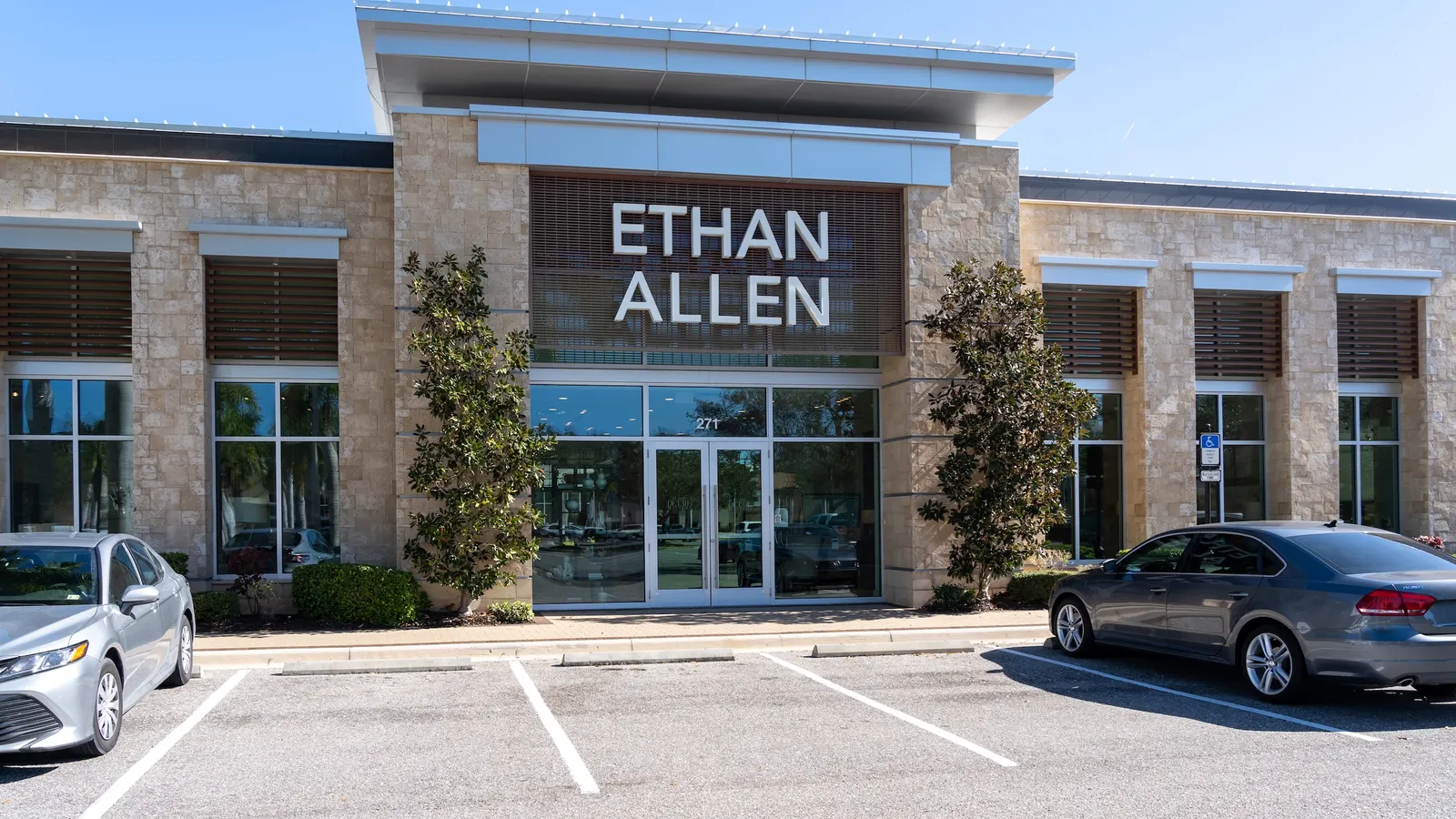
While some heritage brands are successfully modernizing, legacy furniture icon Ethan Allen is facing an existential challenge from within. A prominent investor holding a 5% stake in the company launched a scathing critique of current management, formally nominating six alternative candidates to completely replace the existing board of directors—including longtime CEO and board chair Farooq Kathwari.
Financier Doug Bergeron, whose historical activist campaigns at companies like VeriFone Systems and Cantaloupe reportedly engineered successful turnarounds, outlined his aggressive thesis in a public letter to shareholders. Bergeron argued that with optimized board governance, modernized leadership, and disciplined execution, Ethan Allen has the latent potential to triple its shareholder value over a three-year horizon.
The activist campaign was catalyzed by what Bergeron termed "deeply disappointing" fourth-quarter and full-year financial results. He specifically targeted the company’s laggard status in digital marketing and e-commerce penetration, noting pointedly that competitor Bassett Furniture—despite operating at roughly half the scale of Ethan Allen—manages to pull in significantly higher web traffic.
Ethan Allen leadership confirmed receipt of the director nominations but offered minimal immediate public commentary. The company’s recent earnings reports confirmed declines in both wholesale and retail sales across the quarter and full fiscal year, alongside contracting order volumes. While CEO Farooq Kathwari defended the company’s performance by emphasizing robust operating margins and a resilient balance sheet in the face of a volatile macroeconomic climate, critics like Bergeron warn that treating the business as usual is akin to watching a melting ice cube—one that will eventually disappear entirely.
Supporting Context & Metrics: The Numbers That Matter
To fully appreciate the current trajectory of the retail sector, one must examine the hard metrics driving corporate valuations and quarterly performances. Several key data points from the past week illustrate the immense financial stakes involved in modern retail execution:
- $27 Million: The staggering single-day web sales volume generated by Rhode during its latest summer product launch. Acquired by E.l.f. Beauty last year for $1 billion, the Hailey Bieber-founded skincare brand continues to defy expectations. The single-day event brought in 90,000 new customers, while robust brand loyalty was demonstrated by the fact that 70% of sales originated from existing customers.
- $160 Million: Rhode’s net sales contribution to E.l.f. Beauty during the first fiscal quarter. Fueled by this acquisition and strong core brand momentum, E.l.f. Beauty reported overall net sales growth of 36% year-over-year, reaching $479.4 million. Net income surged from $33.3 million to $66.6 million over the same period.
- 352 Stores: Warby Parker’s total brick-and-mortar footprint following the addition of 15 net new retail locations in the second quarter. This steady physical expansion underscores the continued viability and consumer demand for omnichannel optical retail.
- $235.5 Million: Warby Parker’s second-quarter revenue, marking a 10% year-over-year increase, driven by a growing active customer base of 2.71 million and successful cost management that pushed the company into net profitability ($4.6 million).
- 5% Stake: The ownership threshold held by activist investor Doug Bergeron, who is utilizing his equity position to mount a proxy fight and board overhaul at Ethan Allen, citing lagging digital metrics and declining wholesale and retail sales.
Official Statements and Corporate Perspectives
The motivations behind this week’s major retail developments are best understood through the direct words of the executives and stakeholders steering these corporate ships:
- Dani Reiss, CEO of Canada Goose, on the Baffin divestiture:
"We’ve made meaningful progress evolving Canada Goose into a year-round lifestyle brand, and this gives us the opportunity to continue that momentum by simplifying our operating model, focusing resources on our highest-priority opportunities and drive long-term profitable growth."
- Dave Gilboa, Co-founder and Co-CEO of Warby Parker, on the Google Gemini partnership:
"This marks the beginning of an exciting new chapter for Warby Parker. For the past 16 years, we’ve helped millions of people see more clearly, and now we’re seamlessly integrating transformative technology into the frames people already love to wear every day."
- Scott Brownlow, Director of Brands at Little Debbie, on the early fall product rollout:
"Autumn is all about creating warm memories with family and friends. We’re thrilled to bring back the warm, nostalgic flavors our fans look for every year, especially the return of our Pumpkin Spice Mini Muffins!"
- Doug Bergeron, Activist Investor, on the state of Ethan Allen:
"With the right Board, leadership, strategy and execution, the company could triple its shareholder value over the next three years… Ethan Allen is operating like a melting ice cube, and melting ice cubes eventually disappear."
Future Outlook: What We Are Watching Next
As the retail industry transitions from the dog days of summer into the critical back-to-school and pre-holiday planning periods, several key storylines demand close observation from analysts, investors, and industry participants alike:
1. The Real-World Adoption of AI Eyewear
Warby Parker’s upcoming launch of its Intelligent Eyewear collection in partnership with Google Gemini will serve as a vital stress test for consumer appetite regarding AI-integrated fashion. While tech-adjacent smart glasses have historically struggled to achieve mainstream aesthetic appeal, Warby Parker’s distinct design language and massive loyal customer base could finally crack the code. Industry watchers will be monitoring consumer pricing, battery life, functional utility, and whether traditional optical consumers are willing to embrace ambient computing on their faces.
2. E.l.f. Beauty’s International Scaling of Rhode
Following its blockbuster $1 billion acquisition, Rhode is proving to be an unprecedented growth engine for E.l.f. Beauty. With successful multi-market rollouts already established across North America, the U.K., and New Zealand, all eyes are on the brand’s aggressive September expansion into 19 European countries via Sephora. If Rhode can replicate its domestic and U.K. digital conversion rates across continental Europe, it will cement E.l.f. Beauty’s status as one of the most agile and dominant multi-brand conglomerates in the modern cosmetics space.
3. The Proxy Battle at Ethan Allen
The escalating feud between Ethan Allen’s entrenched leadership and activist investor Doug Bergeron is shaping up to be one of the most closely watched corporate governance battles in the retail furniture sector. As shareholders weigh the traditional, high-margin, asset-heavy approach championed by CEO Farooq Kathwari against Bergeron’s demands for an aggressive digital overhaul and complete board replacement, the outcome will likely send shockwaves through the legacy home furnishings market. The core question remains: Can heritage furniture brands successfully pivot to digital-first acquisition models fast enough to offset structural retail declines?
4. Seasonal Retail Acceleration
On the consumer-facing front, the sudden appearance of Little Debbie’s 2026 fall product lineup—featuring Pumpkin Spice Mini Muffins, Brownie Pumpkins, and Gingerbread Cookies—signals that the retail calendar continues to shift earlier into the year. As brands compete fiercely for share of wallet amid cautious consumer spending, early seasonal merchandising will remain a critical lever for driving impulse purchases and maintaining topline velocity through the remainder of the third quarter.