

Executive Overview
Yet, beneath the glossy veneer of convenience lies a complex web of consumer anxiety, regulatory hurdles, and deep-seated skepticism.
Recent comprehensive research published by payments orchestration pioneer Aevi reveals a striking paradox at the heart of modern consumer behavior. While the technology itself is increasingly sophisticated, more than half of UK consumers remain explicitly cautious about embracing biometric payments. The primary catalyst for this hesitation is not a lack of interest, but rather profound concerns regarding data privacy, corporate data handling, and the looming shadow of surveillance capitalism.
Surveying 3,000 adults across the United Kingdom and the United States, the Aevi study cuts through industry hype to expose critical fault lines. Chief among these are stark generational divides in trust and technological familiarity, divergent trans-Atlantic perspectives on government access, and a clear mandate from the public: consumers are open to biometric innovations, but only if robust, transparent, and legally binding data protection guarantees are established first.
This report provides an in-depth examination of the Aevi findings, dissecting the psychological, demographic, and systemic barriers confronting the biometric payments sector. By analyzing the interplay between corporate data stewardship, government oversight, and shifting generational attitudes, we explore what financial institutions, RegTech providers, and merchants must do to bridge the trust gap and secure the future of biometric commerce.
Detailed Chronology: The Evolution of Biometrics and the Current Trust Crisis
To fully understand the weight of Aevi’s findings, it is necessary to contextualize the historical trajectory of biometric authentication within the financial sector.
Phase One: The Novelty and Mobile Integration (Early 2010s)
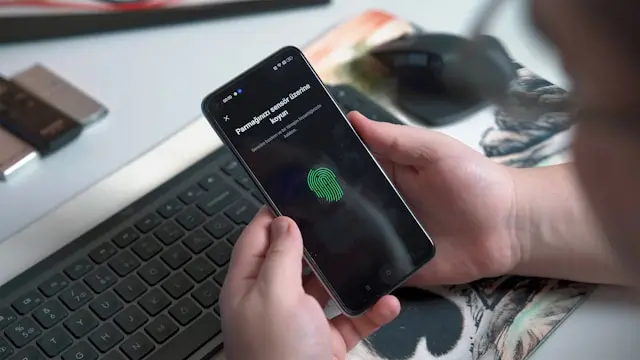
Biometrics in consumer technology effectively entered the mainstream consciousness with the advent of fingerprint sensors integrated into smartphones—most notably popularized by Apple’s Touch ID in 2013. Initially, these applications were siloed within device security (unlocking screens and authenticating local app purchases). Consumers grew accustomed to trading a physical passcode for a quick thumbprint scan, establishing an early baseline of comfort with localized biometric storage.
Phase Two: Expansion into Financial Services and Open Banking (Late 2010s – Early 2020s)
As smartphone capabilities expanded, financial institutions began leveraging native device biometrics to secure mobile banking applications. Facial recognition (such as Face ID) soon followed, largely replacing passwords for mobile log-ins and transaction approvals. During this phase, biometrics remained predominantly device-bound—meaning the biometric template (the mathematical representation of a face or fingerprint) stayed encrypted on the user’s hardware rather than being transmitted to a central corporate database.
Phase Three: The Push Toward Omnichannel Biometric Payments (Mid-2020s)
The current era is characterized by an ambitious push to move biometrics beyond personal devices and into physical retail environments—spanning point-of-sale (POS) terminals, unattended kiosks, and biometric-enabled wearables. Companies began experimenting with palm-scining, in-store facial recognition payments, and voice authentication.
However, this transition from device-level authentication to network-level or merchant-level data collection triggered an immediate backlash in consumer confidence. As payments orchestration platforms like Aevi began mapping consumer sentiment, it became apparent that the public draws a sharp, protective line between unlocking their own smartphone and handing their biometric data over to commercial entities or cloud servers.
The Aevi study acts as a critical snapshot of this friction point, capturing a populace standing at the crossroads of convenience and caution.
Supporting Context & Metrics: Unpacking the Aevi Research
The data gathered from the 3,000-adult cohort across the UK and the US paints a vivid, albeit sobering, picture of the contemporary payments ecosystem. The findings can be categorized into four core analytical pillars: privacy apprehensions, trans-Atlantic regulatory anxieties, generational trust divides, and perceived utility gaps.
1. Privacy and the Fear of Corporate Misuse
According to the research, 52% of UK respondents explicitly stated that privacy concerns and the potential misuse of data by private companies would make them hesitant to adopt biometric payments. Unlike traditional debit card data—which can theoretically be re-issued if compromised via a stolen card number or a database breach—biometric markers (such as facial geometry, iris patterns, or palm prints) are immutable. Once compromised, they cannot be changed. This existential permanence elevates the stakes of a data leak from an administrative annoyance to a permanent identity compromise.
2. The Trans-Atlantic Divide: Government Surveillance Anxieties
While corporate data harvesting is a major deterrent in the UK, the study uncovered a distinct cultural divergence when examining fears surrounding state surveillance.
- In the UK, 32% of respondents cited worries about government access or surveillance as a barrier to biometric adoption.
- In the United States, however, that figure spiked dramatically to 44%.
This heightened American sensitivity reflects broader cultural skepticism toward federal data collection, law enforcement database integration, and historical precedents regarding digital surveillance. For payment orchestration platforms operating globally, this divergence underscores the impossibility of a monolithic compliance or marketing strategy; localization of both data infrastructure and narrative messaging is paramount.
3. The Generational Fault Line in Trust
Perhaps the most striking insight yielded by the Aevi research is the profound generational chasm separating young digital natives from older demographics regarding institutional trust:
- Ages 25–34: A resounding 80% of respondents in this bracket expressed trust in companies to safeguard their biometric data.
- Ages 35–44: Trust drops steeply to 56%.
- Ages 45–54: Confidence plummets further to just 32%.
- Ages 65 and older: Trust plateaus at a low 29%.
This data challenges the assumption that digital trust naturally scales with technological literacy. Instead, it suggests that younger demographics, having grown up surrounded by algorithmic curation and digital sharing, may possess a higher risk tolerance—or conversely, a greater degree of fatalism—regarding data privacy. Conversely, older demographics demonstrate a much stricter threshold of skepticism, demanding absolute empirical proof of security before extending goodwill to corporate entities.
4. Familiarity and the Utility Dilemma
Generational divides are equally visible when examining technological awareness and perceived value:
- Awareness: 97% of UK adults aged 25 to 34 are aware of biometric payment technologies, compared to a mere 51% of those aged 65 and older.
- Perceived Advantage: When questioned about the actual utility of biometrics, 50% of over-65s asserted that biometric payments offer no clear advantage over existing payment methods (such as contactless cards or mobile wallets). In sharp contrast, only 8% of 25- to 34-year-olds shared this dismissive view.
For older consumers, the friction of learning a new payment modality vastly outweighs the marginal time-savings of skipping a PIN or card tap. Unless merchants and RegTech providers can articulate a compelling, tangible benefit—such as enhanced fraud protection for vulnerable populations—this demographic resistance will remain a formidable ceiling on market penetration.
Official Statements and Industry Perspectives
The release of the Aevi research has sparked widespread debate across the financial technology and regulatory compliance sectors. Industry leaders are increasingly recognizing that the future of payments relies less on hardware innovation and more on psychological reassurance.
Mike Camerling, CEO of Aevi, offered deep insight into the structural roots of consumer hesitation:
"As we’ve seen across our more recent consumer research, whether it’s about agentic commerce to digital currencies in in-person payments, control and trust remain consistent pressure points. Biometrics lands firmly within that same pattern. The technology itself might not be the barrier, but how it’s understood clearly is… how transparently it operates, and how much control people feel they retain."
Camerling’s analysis highlights a critical realization: the failure to adopt biometrics is not an indictment of facial recognition algorithms or fingerprint scanners. Rather, it is a failure of communication and system architecture. When consumers feel disempowered—stripped of agency over where their biological data travels and how long it persists—they default to defensive habits.
This sentiment is mirrored directly by the everyday consumers surveyed in the study. The human voice behind the statistics reveals a pragmatic, conditional openness rather than blind opposition.
As one UK respondent noted:
"I think it would have to be regulated and proven to be trustworthy before I use it."
Another consumer articulated a technical roadmap for gaining their trust:
"If the data is guaranteed to be stored locally and in an encrypted format and not uploaded to servers, I would be more reassured."
These testimonials point toward a clear technological compromise: decentralization. Consumers are infinitely more receptive to biometric authentication if the underlying architecture adheres to a "privacy-by-design" framework—where biometric templates remain strictly on the user’s personal device (such as a smartphone or a secure hardware token) rather than being centralized in corporate cloud repositories vulnerable to systemic breaches.
Future Outlook: Rebuilding the Trust Architecture
As the financial ecosystem hurtles toward an increasingly automated future, the insights provided by Aevi serve as both a warning sign and a strategic roadmap for the payments industry. Biometric technology holds immense potential to eliminate fraud, streamline checkout lines, and drive financial inclusion for individuals who struggle to remember complex passwords or carry physical cards. However, realizing this potential requires a concerted, multi-stakeholder pivot.
1. Embracing Localized, Client-Side Architecture
To win over the 52% of hesitant UK consumers—and the 44% of Americans worried about surveillance—payment providers must aggressively abandon centralized biometric honey-pots. Moving forward, RegTech solutions must mandate that biometric verification occurs on a peer-to-peer, device-local level. If a merchant or payments network never actually sees, collects, or stores the raw biometric data, the threat of corporate misuse or catastrophic data leaks is fundamentally neutralized.
2. Radical Transparency and Plain-Language Compliance
Regulatory bodies, including the UK’s Information Commissioner’s Office (ICO) and European data protection authorities, must enforce stringent transparency standards. Consumers should not be forced to navigate dense, jargon-laden terms of service to understand where their facial geometry is being processed. Payment providers must adopt radical transparency, offering clear, accessible disclosures that explicitly answer consumer anxieties: Is this stored locally? Is it shared with third parties? Can I opt out without losing access to the service?
3. Bridging the Generational Education Gap
With 49% of older consumers remaining entirely unfamiliar with biometric payment mechanics, the fintech sector must invest heavily in consumer education tailored to demographics over the age of 55. This education cannot rely solely on digital marketing campaigns; it requires community outreach, intuitive user interface design that accommodates varying levels of tech-savvy, and clear demonstrations of tangible security advantages.
4. Regulatory Harmonization
As consumer concerns straddle the line between corporate overreach and government surveillance, regulatory frameworks must evolve to provide absolute legal certainty. Consumers need to know that robust statutory protections exist to prevent the scope creep of biometric payment data into law enforcement or unvetted commercial databases.
Conclusion
Aevi’s research underscores a fundamental truth of the modern digital economy: technological capability does not automatically equate to market adoption. Biometric payments possess the architectural brilliance to revolutionize commerce, but they currently suffer from a crisis of confidence.
By listening to consumer demands for localized storage, uncompromised privacy, and rigorous regulatory oversight, the payments industry can transform biometric verification from an anxiety-inducing hurdle into the cornerstone of secure, trusted, and consumer-centric financial transactions. Until those guarantees are universally established and effectively communicated, the wallet and the card will remain the trusted companions of a cautious public.