
The unfolding controversy, which has exposed sharp ideological and procedural divisions among top federal bank regulators, highlights mounting concerns over regulatory arbitrage, the integrity of anti-money laundering (AML) protocols, and the expanding intersection of traditional banking with virtual currency markets.
Executive Overview
At the heart of the dispute is United Texas Bank’s successful transition from state-level regulation to oversight by a federal national agency. In May, the OCC approved the bank’s bid to convert its charter, a move accompanied by a "nonobjection" signal from the Federal Reserve and the Texas Department of Banking. The conversion was officially finalized in June.
However, the timing and legal foundation of the approval have drawn fierce criticism. When the charter conversion was processed, United Texas Bank was subject to a September 2024 consent order issued jointly by the Texas Department of Banking and the Federal Reserve Bank of Dallas. That enforcement action laid bare deep-seated operational failures, including critical deficiencies in foreign correspondent banking, virtual currency customer oversight, risk management, and overall corporate governance.
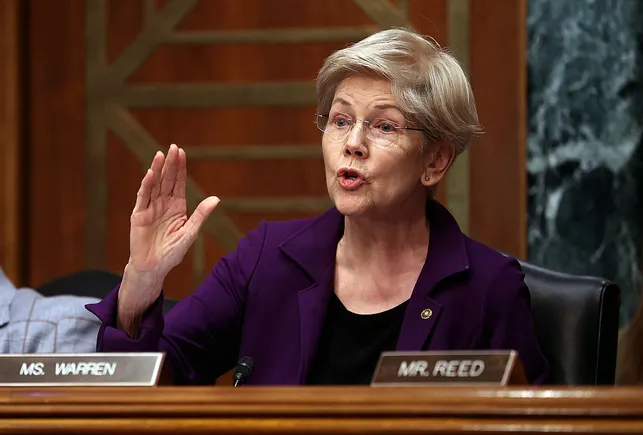
While the OCC attempted to bypass statutory roadblocks by conditioning its approval on the bank’s agreement to a new enforcement action, Senator Warren contends this workaround is legally invalid. In a sharply worded letter dispatched to OCC chief Jonathan Gould and Federal Reserve Vice Chair for Supervision Michelle Bowman, Warren warned that the approval sets a dangerous national precedent. She asserted that the decision invites troubled institutions to shop for the "lowest common denominator regulator" rather than remediate systemic vulnerabilities that threaten the stability of the broader U.S. financial ecosystem.
Detailed Chronology: From State Oversight to Federal Controversy
To understand the gravity of Senator Warren’s intervention, it is necessary to trace the precise timeline of regulatory actions, supervisory warnings, and institutional maneuvers that brought United Texas Bank to the national stage.
The 2024 Supervisory Crackdown
The seeds of the current crisis were planted long before the ink dried on the 2026 charter conversion. In September 2024, state and federal examiners lowered the boom on United Texas Bank. Following comprehensive examinations, the Texas Department of Banking and the Federal Reserve Bank of Dallas uncovered what they characterized as "significant deficiencies" spanning multiple operational units.
The primary areas of concern centered on the bank’s handling of foreign correspondent banking accounts and its burgeoning portfolio of virtual currency customers. Regulators found that the institution’s risk management frameworks were wholly inadequate to handle the complex, high-velocity transactions associated with digital assets. Furthermore, investigators identified severe weaknesses in the bank’s Anti-Money Laundering (AML) and Bank Secrecy Act (BSA) compliance regimes, alongside acute lapses in oversight by the bank’s board of directors and senior management team. These findings culminated in a formal consent order designed to force structural remediation.
The Spring 2026 Charter Conversion Bid
Despite operating under this cloud of regulatory remediation, United Texas Bank pursued an institutional pivot: converting its charter from state oversight to a national bank charter overseen by the OCC.
In May, the OCC formally approved the application, accompanied by concurring nonobjections from the Federal Reserve and the Texas Department of Banking. Recognizing the legal hurdle posed by the existing 2024 consent order, the OCC sought to thread a procedural needle. The agency conditioned its charter approval on the bank’s simultaneous agreement to a new, OCC-administered enforcement action designed to replace or absorb the previous state-federal constraints.
The June Finalization and Federal Dissent
The conversion was completed in June, but not without internal resistance from within the regulatory apparatus itself. Federal Reserve Governor Michael Barr issued a rare public dissent against the central bank’s nonobjection decision. Barr’s statement directly targeted the statutory prohibitions outlined in Section 612 of the Dodd-Frank Act, signaling that the central bank’s leadership was deeply fractured over the appropriateness of accommodating a troubled institution.
Warren’s July Intervention
Following exclusive reporting by American Banker and subsequent coverage by Banking Dive, Senator Warren entered the fray. In her July letter to Gould and Bowman, Warren demanded a complete accounting of the legal and supervisory rationales utilized to justify the conversion. She established an August 20 deadline for the OCC and the Federal Reserve to produce exhaustive documentation, including any empirical evidence demonstrating that United Texas Bank had made measurable progress toward resolving its foundational deficiencies.
Supporting Context and Metrics: The Dodd-Frank Statutory Firewall
At the core of the legal debate is Section 612 of the Dodd-Frank Act, a post-financial crisis safeguard specifically engineered to prevent troubled banks from engaging in regulatory arbitrage—the practice of switching supervisors to evade stringent enforcement.
Decoding Section 612
Section 612 explicitly bars federal regulators from facilitating charter conversions under specific circumstances. The statute states that the OCC:
"may not approve the conversion of a State bank or State savings association to a national banking association or Federal savings association during any period in which the State bank or State savings association is subject to a cease and desist order (or other formal enforcement order) issued by, or a memorandum of understanding entered into with, a State bank supervisor or the appropriate Federal banking agency with respect to a significant supervisory matter or a final enforcement action by a State Attorney General."
Federal Reserve Governor Michael Barr seized upon this exact language in his May dissent. Barr underscored that while the statute provides narrow, theoretical exceptions for certain bank conversions, the applicants in this case failed to meet the high burden of proof required.
"The issues raised by the public enforcement action include quite serious problems regarding the bank’s anti-money laundering and terrorist financing practices," Barr wrote, emphasizing that the public interest demanded strict adherence to statutory boundaries rather than administrative flexibility.
The Vanishing Corporate Governance Mandate
Adding fuel to the fire, Senator Warren’s letter pointed out a curious discrepancy in the regulatory handoff. When the Dallas Fed and the Texas state regulator originally penalized United Texas Bank in 2024, their mandates explicitly ordered the institution to rectify significant deficiencies in corporate governance and board-level oversight.
However, when the OCC issued its follow-up consent order in June to facilitate the charter switch, the explicit corporate governance remediation requirements were notably absent. Warren’s inquiry asks federal regulators to explain why these critical governance safeguards were seemingly dropped or sidelined during the transition to national oversight.
Official Statements and Perspectives
The clash over United Texas Bank’s charter has drawn sharp commentary from lawmakers, regulators, and industry observers, reflecting broader anxieties about the safety and soundness of the modern financial architecture.
Senator Elizabeth Warren’s Position
In her correspondence with financial regulators, Warren framed the OCC’s decision not merely as a localized misstep, but as a systemic threat to the integrity of U.S. banking supervision.
"Granting United Texas Bank a national bank charter sets a dangerous precedent that gives other banks the green-light to convert their charters to the lowest common denominator regulator rather than fix the serious issues that may put the U.S. financial system at risk," Warren wrote.
Furthermore, Warren tied the United Texas Bank decision to a broader pattern of regulatory leniency toward the digital asset sector. She argued that the OCC’s actions "highlight the deficiencies in the OCC’s process for reviewing charter applications as it has already improperly granted a slew of national trust charters to seemingly ineligible cryptocurrency companies."
Warren’s critique emphasizes the unique money-laundering vulnerabilities inherent in digital finance: "Considering that crypto technologies make legal enforcement against money laundering more different, allowing a bank that is already facing BSA/AML compliance issues to grow this business model poses significant risk to the financial system."
Federal Reserve Governor Michael Barr’s Dissent
Governor Barr’s public dissent represents a notable internal check on supervisory overreach. By publicly breaking with the consensus, Barr underscored that statutory guardrails designed in the wake of the 2008 financial crisis must be treated as absolute mandates rather than flexible guidelines. His emphasis on the severity of the bank’s AML and terrorist financing shortcomings directly challenges the risk appetite of prudential regulators who favor institutional growth and charter flexibility over strict compliance enforcement.
Future Outlook: Implications for Regulatory Policy and Crypto-Banking
As the August 20 deadline imposed by Senator Warren approaches, the OCC and the Federal Reserve face mounting pressure to defend their supervisory decisions in public view. The fallout from this case is expected to reverberate across several key areas of financial regulation:
1. Heightened Scrutiny on Charter Conversions
The United Texas Bank controversy will likely chill future attempts by state-chartered institutions operating under enforcement actions to seek refuge under federal charters. Public interest groups and progressive lawmakers are expected to monitor charter applications with unprecedented vigilance, potentially forcing federal regulators to adopt a more conservative, transparent posture when evaluating institutional migrations.
2. The Crypto-Banking Nexus
The case underscores the persistent regulatory anxiety surrounding traditional financial institutions that service virtual currency clients. As digital assets continue to integrate with legacy banking rails, federal regulators face intense scrutiny over their ability—and willingness—to police illicit finance risks. Warren’s letter serves as a warning shot that institutions with unresolved BSA/AML deficiencies will face severe legislative pushback if they attempt to scale crypto-related business models under federal oversight.
3. Accountability for Regulators
The demand for detailed legal and supervisory justifications by August 20 puts OCC chief Jonathan Gould and Fed Vice Chair Michelle Bowman on the defensive. Should their responses fail to satisfy congressional overseers, the matter could precipitate formal congressional hearings, legislative proposals to tighten Dodd-Frank enforcement loopholes, or increased oversight of the OCC’s chartering authority.
Ultimately, the United Texas Bank saga transcends a single institutional transition. It has crystallized a fundamental ideological battle over the future of American banking regulation: whether federal agencies should act as steadfast guardians against systemic risk and financial crime, or flexible facilitators of institutional evolution in an increasingly complex financial landscape.