Executive Overview
According to industry data from Boston Consulting Group (BCG), more than half of all M&A deals ultimately destroy value rather than create it. While financial analysts frequently blame overpaid acquisition premiums, macroeconomic shifts, or regulatory hurdles, industry veterans and customer experience strategists point to a much more immediate, preventable culprit: operational chaos that cascades directly onto the end consumer.
When two corporate entities merge, the human and technological plumbing must be re-routed. Without a deliberate, upfront CX strategy, customers are left to navigate the fallout of mismatched databases, clashing tech stacks, conflicting service models, and communication blackouts. Far too often, brands assume that if the underlying balance sheets reconcile, customer loyalty will naturally follow. In reality, customer trust is fragile, and the friction of integration provides the exact catalyst disillusioned clients need to defect to competitors.
To reverse this systemic failure, corporate leaders are increasingly being urged to adopt an "experience-first" framework. By embedding CX considerations into the earliest stages of deal evaluation—long before the ink dries on the acquisition contract—companies can safeguard their hard-earned brand equity, protect their bottom lines, and ensure that mergers yield growth rather than churn.
Detailed Chronology: The Lifecycle of an M&A Customer Disruption
Understanding how customer experience disintegrates during an acquisition requires tracing the typical lifecycle of a corporate merger. From the initial whispered negotiations in executive suites to the eventual post-merger integration, the customer journey undergoes distinct phases of vulnerability.
Phase 1: Pre-Deal Planning (The Blind Spot)
During the due diligence phase, acquisition targets are thoroughly scrutinized for financial liabilities, tax footprints, and intellectual property portfolios. However, customer sentiment, brand equity mapping, and frontline operational readiness are rarely given a seat at the table. Deal-makers treat integration as an operational checklist to be tackled after the transaction closes.
Experts warn that this is the cardinal sin of M&A execution. Because early-stage decisions dictate every downstream operational outcome, delaying CX strategy until day one of the transition guarantees a reactive scramble. When companies fail to model how back-office combinations will affect the customer interface, they inadvertently design workflows that maximize internal efficiency while maximizing external frustration.
Phase 2: Day One and the Post-Close Shock
When the deal officially closes, internal teams race against aggressive timelines to consolidate departments, trim redundancies, and merge IT infrastructure. At this exact moment, companies frequently commit another strategic blunder: they freeze their Voice-of-the-Customer (VoC) programs. In an attempt to streamline operations, organizations pull back on surveys, feedback loops, and proactive listening mechanisms, blinding themselves precisely when customer risk is at its absolute peak.
With communication channels muffled and internal teams consumed by corporate restructuring, customers begin hitting roadblocks. Service plans change without warning; billing discrepancies multiply; and support lines are flooded. Contact center wait times skyrocket as agents—who are grappling with their own employment uncertainties and unfamiliar new software—struggle to answer basic user questions.
Phase 3: The Loyalty Minefield
As the dust settles, the true test of post-merger integration reveals itself in loyalty programs and customer accounts. Loyalty ecosystems represent the most complex integration hurdle in modern M&A. Combining distinct customer databases, point systems, tier structures, and corporate policies is a treacherous undertaking.
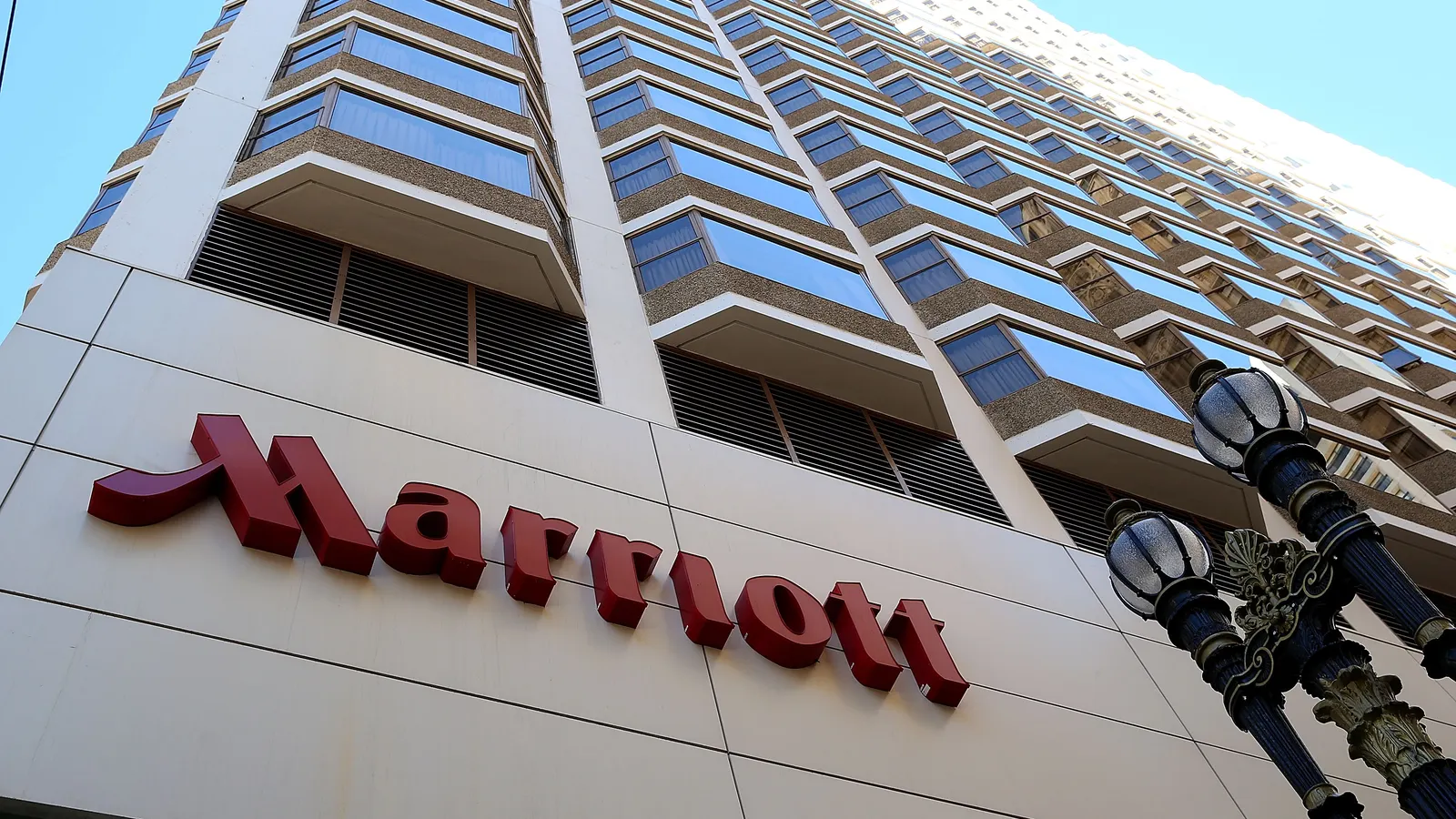
A textbook historical illustration of loyalty integration gone awry is Marriott International’s acquisition of Starwood Hotels & Resorts Worldwide in 2016. Following the closure of the multi-billion-dollar deal, the hospitality giant forced its millions of members to navigate two separate loyalty programs and track point balances across parallel ecosystems for nearly two years. Consumers frequently found themselves bewildered, unsure of which brand rules applied to which properties or how their elite statuses would be honored.
Described by customer experience investigators as an operational nightmare, the protracted separation eroded consumer trust and created unnecessary administrative overhead. Conversely, when large hospitality players execute similar deals with a customer-first lens—such as Hilton’s acquisition of Graduate Hotels—they rapidly incorporate new properties into existing reward ecosystems while preserving the unique operational character that attracted consumers in the first place. This allows customers to immediately experience an expanded value proposition without suffering through a transitionary identity crisis.
Phase 4: Long-Term Value Destruction or Recovery
By month six post-close, the trajectory of the merger is typically cemented. Companies that failed to plan for customer journeys find themselves fighting fires: customer churn spikes, acquisition costs balloon to replace lost accounts, and brand reputation suffers persistent damage. Conversely, organizations that deployed a phased, transparent integration strategy begin realizing the true economies of scale promised in the initial deck, having brought their customer base along for the journey with minimal disruption.
Supporting Context & Metrics: The True Cost of Neglecting CX
The financial ramifications of ignoring customer experience during corporate integration are well-documented yet chronically underestimated by deal-makers.
- Value Destruction Statistics: According to extensive research compiled by Boston Consulting Group (BCG), more than 50% of all mergers and acquisitions fail to create the projected shareholder value. A significant driver of this failure is not merely financial overvaluation, but the silent bleed of customer attrition and the compounding costs of repairing damaged brand trust.
- Service Cost Inflation: When customer accounts, billing systems, and service plans are altered haphazardly, contact centers bear the brunt of the chaos. Inbound support volume spikes dramatically. Companies must frequently invest heavily in emergency outsourced labor, overtime pay, and retention incentives to manage the wave of cancellations and complaints—eating directly into the projected operational savings of the merger.
- Employee Burnout and Churn: The friction of M&A is rarely confined to the customer base; it flows directly through the frontline workforce. When customer support agents, retail staff, and account managers are thrust into newly combined organizations with inadequate training, clunky multi-system workflows, and mounting customer abuse, employee turnover spikes. Because frontline employees serve as the human bridge between the brand and the buyer, losing experienced talent accelerates the degradation of customer satisfaction.
Official Industry Perspectives
Navigating the complexities of post-merger customer experience requires seasoned strategic vision. Industry leaders at the forefront of global transactions emphasize that organizational culture and customer empathy must be institutionalized into every stage of the deal lifecycle.
"They don’t consider customer experience until the customer is already feeling it. They just forget about it because CX doesn’t have a seat at the table. So, customers are left with all this chaos."
— Jeannie Walters, Founder and Chief Experience Investigator at Experience Investigators
Walters underscores a cultural blind spot in corporate boardrooms: the assumption that operational efficiency automatically translates to customer satisfaction. When CX professionals are excluded from merger planning sessions, the customer journey is treated as an afterthought rather than a core business asset.
"Brands should avoid assuming that what worked for one business will automatically work for the other. Even when products or services look similar, customer expectations, service norms and emotional connections to the brand can be very different."
— J. Neely, Global Lead for Accenture’s Mergers and Acquisitions Practice
Neely advocates for an "experience-first approach," warning against the temptation to deploy cookie-cutter integration templates. Because emotional brand affinity varies wildly even within identical market sectors, integration decisions must be rigorously anchored against the actual priorities of the customer base rather than corporate convenience.
"The strongest acquirers think about integration while they’re still evaluating the deal because early decisions shape everything that follows… M&A leaders have a tremendous amount to manage. They have to integrate operations, systems, finances, customers, and talent—often on an aggressive timeline. As a result, the people side of the integration can receive less attention than it needs, even though it’s one of the biggest drivers of long-term success."
— Daniel Friedman, Managing Director of the Transactions and Integrations Sector at BCG
Friedman highlights the overwhelming cognitive load placed on deal execution teams. With compressed timelines and immense pressure from investors to realize cost synergies quickly, internal cultural integration and customer impact are frequently deprioritized—a strategic miscalculation that undermines the longevity of the combined enterprise.
Future Outlook: The Evolution of Experience-First M&A
As market competition intensifies and consumer switching costs drop to near zero, the tolerance for merger-related friction is evaporating. Modern consumers expect seamless continuity, hyper-personalized service, and absolute transparency when the brands they patronize undergo corporate shifts. Consequently, the playbook for M&A is undergoing a fundamental evolution.
Moving forward, leading-edge corporations are expected to institutionalize CX due diligence as a mandatory component of pre-deal evaluation. Just as financial auditors comb through tax ledgers and legal teams review intellectual property filings, customer experience strategists will map out sentiment risks, churn vulnerabilities, and loyalty program compatibility before a term sheet is signed.
Furthermore, the integration of advanced data analytics and artificial intelligence will allow modern acquirers to simulate customer journey impacts prior to rolling out system changes. By predicting how operational adjustments will resonate with specific customer segments, companies can test structural updates in controlled sandbox environments rather than subjecting their entire customer base to live operational experiments.
Ultimately, successful mergers in the decades to come will be defined by a holistic philosophy: that the ultimate metric of a deal’s success is not merely cost reduction, but the elevation of the unified customer experience. Organizations that embrace this truth will turn M&A from a risky gamble into a powerful engine for sustainable brand growth, while those that cling to traditional, inwardly focused integration models will continue to watch their hard-won corporate value vanish into the post-merger chaos.