
Executive Overview
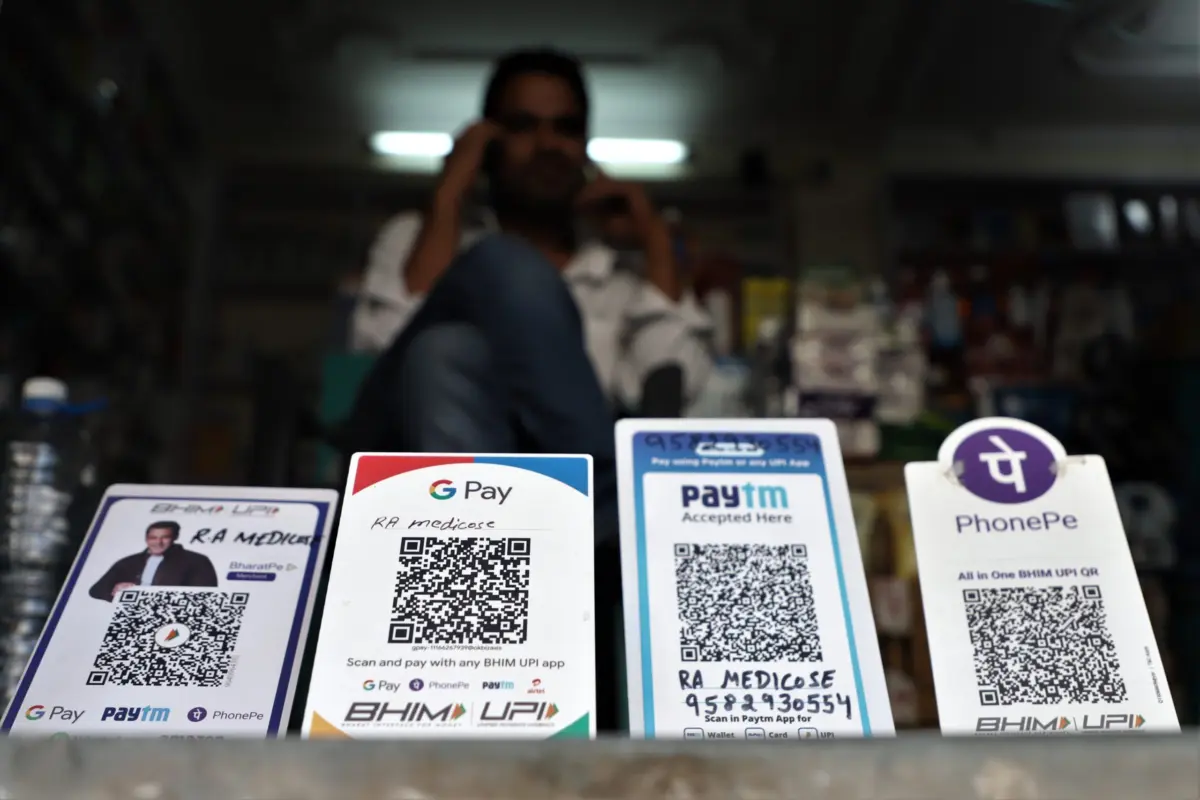
The proposed policy shift arrives at a moments of unprecedented scale for the network. Operated by the National Payments Corporation of India (NPCI), UPI has evolved from a novel convenience into the undisputed backbone of the Indian economy. In July alone, the platform processed a record-breaking 23.66 billion transactions valued at approximately ₹29.88 trillion (around $313.4 billion).
However, this exponential growth has strained the underlying technological and financial infrastructure. For years, a quiet battle has raged between the Ministry of Finance, the Reserve Bank of India (RBI), commercial banks, and third-party fintech companies over the long-term sustainability of a free network.
While the new legislation does not immediately levy fees or delineate specific transaction thresholds, it establishes the statutory authority required to do so. Market analysts and industry leaders view the bill as a critical step toward unlocking a massive revenue stream for India’s digital payments sector.
By targeting higher-value transactions while preserving free services for micro-merchants and peer-to-peer (P2P) transfers, the government aims to strike a delicate balance: securing the financial viability of its fintech sector without disrupting the digital adoption that has transformed Indian commerce.
Detailed Chronology: The Journey to Zero-MDR and the Push for Reform
[2016] UPI Launched by NPCI -> [Jan 2020] Zero-MDR Mandated to Boost Adoption -> [2020-2024] Exponential Volume Growth & Rising Infrastructure Strain -> [Present] New Legislation Introduced to Reintroduce Merchant FeesThe Genesis and the Zero-MDR Mandate (2016–2020)
Launched in 2016 by the NPCI, UPI was designed as an open-loop, real-time payment system built on top of India’s existing banking rails. Its growth was accelerated by the demonetization drive of late 2016 and subsequent government initiatives to formalize the cash-reliant economy.
To eliminate all friction to merchant adoption, the Indian government made a decisive move in January 2020: it legally mandated a zero-MDR policy for UPI and RuPay debit card transactions. Under this rule, merchants were charged nothing to accept digital payments, contrasting sharply with traditional credit and debit card networks (like Visa and Mastercard) that typically charge merchants 1% to 3% per transaction.
The Cost of Hyper-Growth (2020–2024)
While zero-MDR successfully democratized digital payments—turning street vendors and multi-national retail chains alike into active participants—it stripped commercial banks and payment service providers (PSPs) of a direct revenue model. To keep the system running, the government introduced annual budgetary allocations to subsidize UPI and RuPay operations. For instance, the Union Budget recently raised these incentives to ₹2,000 crore (approximately $240 million).
However, the industry repeatedly warned that these state subsidies were insufficient. As transaction volumes grew from millions to billions per month, the cost of maintaining high-speed servers, processing transactions, preventing cyber fraud, and managing customer service grew exponentially.
Commercial banks faced rising capital expenditures to upgrade their core banking systems to handle the surge in concurrent queries, while fintech startups struggled to monetize their core payment offerings, forcing them to pivot to alternative business models like digital lending and insurance distribution.
The Policy Confrontation
The pushback against zero-MDR has been building for years. The Reserve Bank of India (RBI) published a discussion paper in 2022 highlighting that payment systems are productive economic activities that require capital investment and operational funding, hinting at the necessity of introducing reasonable charges.
In contrast, the Ministry of Finance remained protective of the zero-fee model, fearing that any cost imposed on merchants could trigger a regression to cash transactions.
The introduction of the new bill in Parliament marks the resolution of this long-standing policy deadlock, providing a legal mechanism to selectively reintroduce transaction fees.
Supporting Context & Metrics: Calculating the Economic Impact
The scale of UPI’s transaction volume makes even minor adjustments to its pricing structure highly consequential.
| Metric | Figure (July Data) |
|---|---|
| Total Monthly Transaction Volume | 23.66 Billion |
| Total Monthly Transaction Value | ₹29.88 Trillion (~$313.4 Billion) |
| Projected Annual Revenue Generation (by FY28) | ₹50 Billion to ₹100 Billion ($525M – $1.05B) |
| Assumed Fee Rate (Basis Points) | 15 to 30 bps (on select transactions) |
The Revenue Opportunity
According to a financial analysis published by global brokerage firm Jefferies, the reintroduction of merchant fees on high-value UPI transactions could generate an estimated ₹50 billion to ₹100 billion ($525 million to $1.05 billion) in annual revenue for the payments industry by fiscal year 2028. This projection assumes a modest MDR of 15 to 30 basis points (0.15% to 0.30%) applied selectively.
       [ UPI Transaction Breakdown ]

     Volume (%)                 Value (%)
  =================         =================
  [█] Free (< ₹2k)          [█] Free (< ₹2k)
      96%                       30%
  [▓] Feeable (> ₹2k)       [▓] Feeable (> ₹2k)
      4%                        70%
To prevent a backlash from micro-merchants, policymakers are exploring a tiered structure. A report by brokerage firm Bernstein notes that transactions valued above ₹2,000 (approximately $21) represent just 4% of total UPI transaction volumes, yet they command nearly 70% of the total transaction value.
By applying MDR exclusively to these higher-value transactions—and limiting the fees to mid-to-large-scale merchants—the government can protect the small, everyday transactions that drive public adoption while tapping into a highly lucrative pool of enterprise commerce.
Market Share Dynamics
The redistribution of these potential fees will be a critical battleground. Currently, the UPI ecosystem is dominated by a duopoly of third-party application providers (TPAPs):
- PhonePe (backed by Walmart)
- Google Pay (backed by Alphabet)
Together, these two entities process nearly 80% of all UPI transaction volumes.
[Consumer App (PhonePe/Google Pay)] ──(initiates)──> [PSP Bank] ──> [NPCI Switch] ──> [Acquiring Merchant Bank]Under a re-monetized system, the division of the MDR pool among the payer’s bank, the payee’s bank, the payment gateway, and the consumer-facing app (TPAP) will dictate the financial future of these tech giants in the Indian market.
Official Statements & Industry Reactions
The legislative proposal has been met with widespread optimism across India’s technology and financial services sectors, which have long argued that the zero-fee regime was an artificial constraint on innovation.
Amrish Rau, Chief Executive Officer of prominent merchant commerce platform Pine Labs, publicly championed the legislative direction:
"For us to get to 90% penetration, and to take UPI global, startups, fintechs and banks will need to fund this expansion through continued investments in IT, innovation and cyber security. Allowing the industry to recover part of those investments from merchants while keeping consumer and peer-to-peer payments free will put UPI on a more sustainable footing."
For years, payment aggregators and merchant acquirers have operated on razor-thin margins. The prospect of a regulated, sustainable fee structure is seen as a vital step toward stabilizing their balance sheets.
Behind the scenes, banking executives have echoed these sentiments, noting that the sheer volume of daily micro-transactions has forced institutions to allocate massive budgets to upgrade their database architectures simply to avoid transaction failures. A dedicated revenue stream from UPI would allow banks to treat the payments network as a profit center rather than a regulatory compliance cost.
Future Outlook: The Global and Domestic Ramifications
As the bill progresses through the legislative pipeline, its implementation details will be watched by market participants, consumer advocacy groups, and foreign governments.
                  [ Legislative Enactment ]
                             │
            ┌────────────────┴────────────────┐
            ▼                                 ▼
   [Domestic Market]                 [Global Expansion]
   • Tiered fee structure            • Replicable business model
   • Sustained fintech R&D           • Increased foreign trust
   • Enterprise merchant adoption     • Cross-border integrations
Navigating Merchant Resistance
The primary domestic challenge will be managing merchant pushback. When debit card fees were first introduced in India years ago, many small merchants began surcharging customers or insisting on cash.
To prevent a similar regression, the government and the NPCI must design a fee structure that merchants perceive as fair and value-additive. It is highly anticipated that the final guidelines will exempt critical sectors such as government services, utility payments, and small-scale retail.
Fueling Global Ambitions
The financial stabilization of UPI is also deeply linked to its international ambitions. The Indian government has actively exported the UPI architecture to foreign markets, establishing linkages and partnerships in countries such as Singapore, the United Arab Emirates, France, Nepal, and Mauritius.
For these international deployments to succeed, foreign central banks and financial partners need to see a robust, commercially viable business model. A self-sustaining domestic UPI network serves as a more convincing blueprint for global adoption than one permanently dependent on state subsidies.
Conclusion
By transitioning UPI from a state-supported public utility to a market-driven infrastructure, India is charting a new course for how nations build, scale, and fund digital public goods. If successful, this legislative overhaul will not only secure the financial future of India’s fintech ecosystem but also provide a global case study on the balanced monetization of public technology assets.