

Executive Overview
"There are ribbon-cutting ceremonies almost every week. Everywhere you look, something is being built. This trend will continue for the next 20 to 30 years," proclaimed Steve Hsu, head of the Arizona Commerce Authority’s (ACA) Taiwan office.
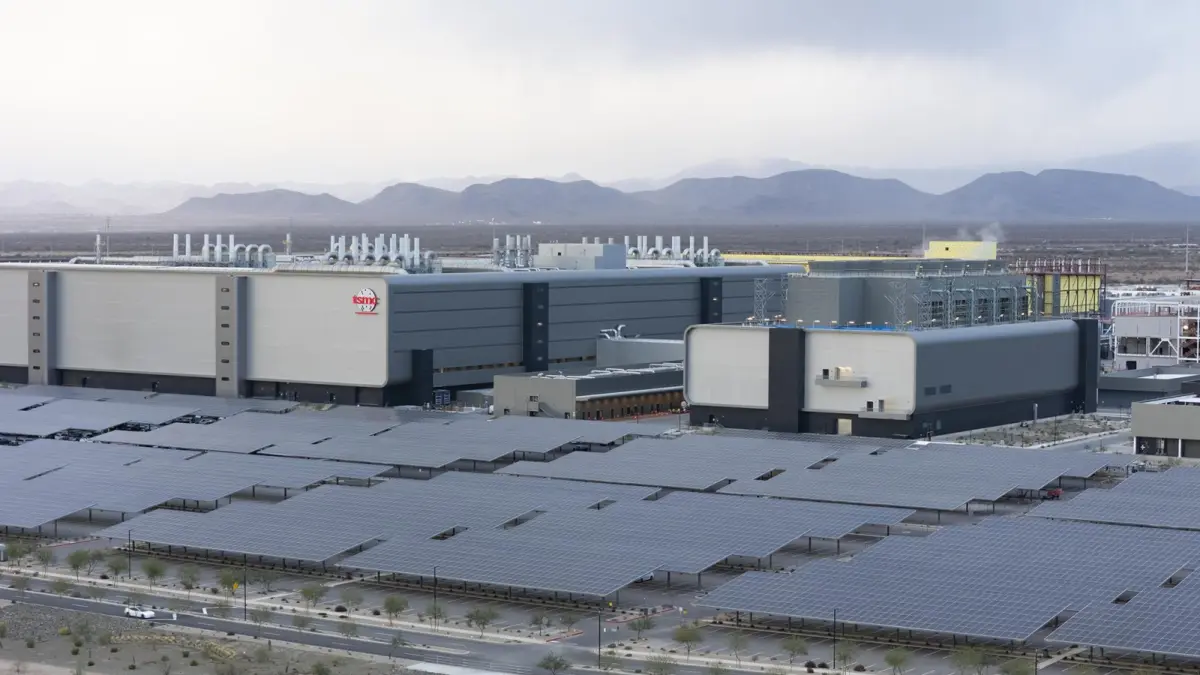
Hsu’s pitch was centered on a phenomenon now globally recognized as the "TSMC effect." Driven by the massive expansion of the Taiwan Semiconductor Manufacturing Company (TSMC)—the world’s leading contract chipmaker—Arizona is undergoing a tectonic economic transformation. What began as a strategic bet on American soil to secure the semiconductor supply chain has evolved into the largest single foreign investment project in U.S. history.
Yet, as the desert landscape blooms with towering fabrication plants (fabs) and high-tech cleanrooms, the focus of economic development officials has broadened. While tech giants grab headlines, a secondary gold rush is quietly taking shape. Arizona is aggressively courting Taiwanese real estate developers, family offices, and non-tech investors to build out the foundational support ecosystem—warehouses, logistics hubs, hotels, commercial office space, and science parks—required to sustain a burgeoning semiconductor metropolis.
This article explores the profound geopolitical, economic, and human dimensions of the Arizona-Taiwan corridor. Through a detailed chronology of the TSMC expansion, macroeconomic metrics, on-the-ground perspectives from Taipei conference attendees, and future projections, we examine how a desert state is remaking itself as the epicenter of twenty-first-century hardware manufacturing.
Detailed Chronology: From Blueprint to the Desert Super-Cluster
The convergence of Taiwanese manufacturing might and American industrial policy did not happen overnight. It is the result of years of strategic maneuvering, geopolitical pressures, and unprecedented financial commitments.
2020: The Seed is Planted
The foundational stone of Arizona’s modern high-tech economy was laid in May 2020, when TSMC announced its initial intention to build an advanced semiconductor fabrication facility in Phoenix. Amid growing geopolitical tensions between the United States and China, and mounting concerns over vulnerabilities in the global technology supply chain, TSMC pledged an initial $12 billion investment. The move was welcomed by U.S. officials eager to reshore critical manufacturing capabilities, particularly for the chips that power everything from consumer electronics to advanced military hardware.
2021–2023: Breaking Ground and Scaling Ambitions
As bulldozers moved into the northern desert tracts of Phoenix, the scale of the operation quickly expanded. The original blueprint for a single fab evolved into a multi-phase campus. Supply chain ripple effects began to manifest almost immediately. Recognizing that a fab cannot operate in a vacuum, Tier-1 and Tier-2 Taiwanese suppliers—specializing in everything from specialty gases and chemical delivery systems to precision engineering and cleanroom maintenance—began evaluating U.S. expansion plans.
By late 2023, the federal CHIPS and Science Act provided additional tailwinds, injecting billions in government subsidies to accelerate domestic semiconductor production and assure international investors of long-term U.S. commitment to the sector.
2024–2025: The Acceleration and Trade Explosion
The partnership matured at a breathtaking pace. Trade data underscores the seismic shift in economic gravity: bilateral trade between Arizona and Taiwan skyrocketed from $4.9 billion in 2024 to an astonishing $21.2 billion in 2025.
By the close of last year, Taiwan officially bypassed Canada and China to become Arizona’s second-largest trading partner by volume (trailing only Mexico) and its undisputed top trading partner by total economic value. According to reports from the Taiwanese newspaper Economic Daily News, at least 25 major Taiwanese suppliers had successfully established operational footprints in the U.S. by mid-2025, directly following their primary customer into the American market.
July 2025: The $100 Billion Mega-Commitment
The trajectory shifted into hyperdrive in July 2025. TSMC announced a staggering additional investment of $100 billion, pushing its cumulative planned U.S. capital expenditure to $265 billion spread across 12 state-of-the-art facilities. It was against this backdrop of colossal capital deployment that Steve Hsu took the stage in Taipei, shifting the narrative from high-tech manufacturing to the broader real estate and infrastructure boom required to support an incoming diaspora of engineers, executives, and logistics personnel.
Supporting Context & Metrics: The Anatomy of an Economic Boom
To understand the magnitude of the Arizona Commerce Authority’s pitch in Taipei, one must examine the hard economic indicators driving the region. The transformation of Phoenix is not merely a corporate relocation story; it is a fundamental restructuring of regional demographics, land use, and international trade.
The Numbers That Define the TSMC Effect
| Metric / Indicator | Historical Baseline | Current Status (2025–2026) |
|---|---|---|
| Total Planned TSMC Investment | $12 Billion (2020) | $265 Billion across 12 facilities (July 2025) |
| Bilateral Trade (Arizona-Taiwan) | $4.9 Billion (2024) | $21.2 Billion (2025) |
| Taiwan’s Trade Ranking in Arizona | Lower tier / Outside top 5 | #2 by volume, #1 by value (surpassing Canada & China) |
| Relocated Taiwanese Suppliers | Minimal / Experimental | At least 25 operational firms (with dozens more in pipeline) |
| Infrastructure Demand | Standard desert municipal growth | High-density logistics, industrial parks, commercial hospitality |
Beyond the Cleanroom: The Real Estate Imperative
While the multi-billion-dollar fabs dominate public discourse, the physical footprint of a semiconductor ecosystem requires vast amounts of supporting infrastructure. Advanced manufacturing demands specialized warehousing for hazardous materials, secure logistics networks to transport fragile silicon wafers, corporate office spaces for administrative and R&D teams, and high-end hospitality options for visiting international executives and engineers on extended rotations.
This realization formed the core of the ACA’s presentation in Taipei. Real estate in North Phoenix and surrounding municipalities has experienced unprecedented appreciation. Land values that slumbered for decades as vacant desert tracts are now commanding premium rates as industrial parks sprout along major transportation corridors.
For international investors, the entry point is no longer restricted to venture capital stakes in silicon design startups. The frontier has widened to include brick-and-mortar assets: industrial warehouses, commercial plazas, and mixed-use developments tailored to an incoming cosmopolitan workforce.
Official Statements and Perspectives from the Ground
The conference room in Taipei was a microcosm of modern global economics—a mix of high-stakes ambition, pragmatic hesitation, and personal calculation.
The Visionary Pitch
Steve Hsu’s message to the assembled investors was clear: the window of optimal opportunity is open, but it will not remain open indefinitely. He emphasized that the influx of tech manufacturing creates a rising tide that must lift all industrial sectors.
"The investment opportunity in Arizona is not just available for tech companies — it’s an opportunity for everyone, including investors in hospitality, family offices, and other industries," Hsu told the audience during his keynote. "If only tech companies are building there while we ignore the appreciation in land values, we’ll be missing a once-in-a-lifetime opportunity."
Hsu’s urgency is shared by state and local leaders in Arizona, who have streamlined regulatory pathways, enhanced workforce training programs in local community colleges and universities, and developed specialized tax incentive packages to smooth the transition for foreign capital.
Investor Enthusiasm vs. Regulatory Realities
During the networking coffee break following the presentations, conversations among attendees revealed a complex psychological landscape. For many venture capitalists and family office representatives managing generational wealth, the numbers were compelling. Several attendees openly discussed plans to organize or join upcoming business delegation trips to Phoenix to inspect industrial sites and negotiate land acquisitions directly with developers.
However, entering the U.S. market is not without friction. International investors face a labyrinth of federal, state, and local regulations, tax compliance hurdles, labor laws, and municipal zoning restrictions. Navigating the American bureaucratic ecosystem requires local legal and financial partnerships that many mid-sized Taiwanese firms are still learning to forge.
The Human Element: Beyond the Balance Sheet
Not every attendee was evaluating the seminar through the lens of a corporate balance sheet. In a corner of the conference hall, a Chief Financial Officer for a prominent Taiwanese real estate firm reflected on the proceedings with a more personal perspective.
When asked if her company intended to deploy capital into Arizona real estate on a multi-million-dollar scale, she shook her head, noting that her firm’s current asset size made such a move premature. Yet, her presence in the room was driven by a powerful catalyst.
"My son studies in Arizona now," she shared quietly, watching the crowd mill around the exhibition booths. "I want to understand what the future for a Taiwanese person might look like over there if he decides to stay."
Her sentiment captures the deeper human narrative underlying the macroeconomic headlines. The Arizona-Taiwan corridor is not just a pipeline for silicon wafers, capital flows, and logistics supply chains; it is a bridge connecting families, cultures, and futures across the Pacific Ocean.
Future Outlook: The Next Decades of the Desert Silicon Valley
As we look toward the horizon, the trajectory of Arizona’s economic integration with Taiwan points toward permanent structural change. The transformation of Phoenix from a regional desert hub into an internationally vital node in the global technology architecture is irreversible in the medium term.
Challenges on the Horizon
Despite the undeniable momentum, significant hurdles remain.
- Water and Resource Management: Semiconductor manufacturing is water-intensive. While Arizona has made strides in water conservation and recycling technology, long-term environmental sustainability in an arid climate remains a critical focal point for local planners and corporate stakeholders.
- Talent Pipeline: Training thousands of technicians, engineers, and administrative personnel to meet the exacting standards of advanced fabs requires sustained cooperation between educational institutions in Arizona and Taiwan.
- Cultural Integration: As thousands of Taiwanese engineers and their families relocate to the American Southwest, adapting to new cultural, social, and educational environments will present ongoing challenges and opportunities for community cohesion.
A New Paradigm for Global Manufacturing
The events in Taipei this July signal a broader shift in how global supply chains operate. The era of hyper-concentrated manufacturing in single geographic zones is giving way to resilient, localized clusters backed by international capital networks.
For Arizona, the "TSMC effect" has redefined its global identity. No longer defined solely by tourism, agriculture, and retirement communities, the state stands firmly at the vanguard of the advanced hardware revolution. And for Taiwanese investors—whether they are managing multi-billion-dollar family portfolios or simply hoping to secure a stable, prosperous future for the next generation—the desert oasis 7,000 miles away has become impossible to ignore.
As Steve Hsu aptly noted, the construction cranes dotting the Phoenix skyline are slated to keep turning for the next twenty to thirty years. The foundation has been poured in silicon; now, the rest of the world is rushing to build around it.