Iffa Jayyana is a reporter for Tech Ledgers covering Tech Economy & Markets. She/He is based in Indonesia.
9 August 2026 • 7 min read
As the international community accelerates toward a net-zero carbon economy, an insatiable global appetite for renewable energy technologies—ranging from high-efficiency wind turbines to electric vehicles (EVs)—has inadvertently birthed one of the world’s most destructive environmental and humanitarian crises. At the epicenter of this hidden toll is Myanmar, a Southeast Asian nation fractured by civil war, where unregulated rare earth mining has transformed fragile ecosystems into sprawling, toxic sacrifice zones.
Executive Overview
Driven by rising geopolitical rivalries and stringent environmental regulations within China, foreign-backed operations have flooded Myanmar’s autonomous, militarized borderlands. Here, beyond the reach of any central government accountability, millions of tons of heavy rare earth elements—vital for permanent magnets used in both cutting-edge consumer goods and advanced weaponry—are extracted using primitive, hazardous, and environmentally devastating methods.
This deep dive uncovers the human cost of the global energy transition. Through the testimonies of vulnerable laborers, frontline communities, and international researchers, it exposes how a convergence of military juntas, ethnic armed organizations, and transnational syndicates are laundering toxic minerals across borders, turning a blind eye to fatal workplace accidents, radioactive pollution, and modern slavery—all while global superpowers scramble for control over the supply chains of the future.
Detailed Chronology: From Peaceful Borderlands to Extractive Quagmire
To understand how Myanmar’s border regions became the world’s leading supplier of heavy rare earths, one must trace a decades-long history of fractured governance, armed conflict, and shifting economic opportunism.
1948–Present: The Roots of Perpetual Conflict
Following independence from British rule, Myanmar’s ethnic minority groups—such as the Kachins, who enjoyed relative autonomy under colonial administration—rose up against centralized rule by the Burman majority. The military junta’s brutal "four cuts" strategy, aimed at starving insurgents of food, funds, intelligence, and recruits, ignited the world’s longest-running civil war. Over decades, border regions fractured into a patchwork of special administrative zones controlled by powerful ethnic armed groups.
The 1980s–1990s: Ceasefire Capitalism
Warlords like Zahkung Ting Ying of the New Democratic Army–Kachin struck ceasefire deals with the central military. In exchange for halting open warfare, these leaders were granted sweeping autonomy to commercialize their territories. This paved the way for a model termed "ceasefire capitalism," where natural resources—initially timber, jade, and gold, and later opium and bananas—were harvested with absolute impunity.
2011–2020: The Industrial Shift and Civilian Reform
As Myanmar initiated a fragile, halting democratic transition under civilian leaders like Aung San Suu Kyi, global demand for rare earths surged. In China, severe environmental devastation in domestic hubs like Inner Mongolia and southeastern provinces forced Beijing to clean up its industry. Seeking laxer regulations, Chinese investors turned their attention southward. By 2017, satellite imagery and Chinese customs data confirmed that rare earth extraction in northern Kachin State had reached an industrial scale.
February 1, 2021: The Military Coup and Economic Collapse
The military’s overthrow of the democratically elected government devastated Myanmar’s formal economy and sparked a nationwide armed uprising. With civil war escalating into what ACLED ranks as the second most extreme conflict globally, armed actors faced an urgent need for independent revenue. In Kachin State and later Shan State, rare earth mining skyrocketed. China imported roughly $3.6 billion in rare earths from Myanmar between 2021 and 2024 alone, cementing Myanmar as the world’s top supplier of heavy rare earths such as dysprosium and terbium.
2024–Present: Territorial Shifts and Southern Expansion
The balance of power shifted when the Kachin Independence Army (KIA) defeated Ting Ying’s forces and seized control of key mining hubs in northern Kachin. Faced with pressure from Beijing—which sought to protect its commercial interests and pressured ethnic rebels to curb fighting—rare earth mining in Kachin slowed. In response, Chinese operators and local ethnic militias expanded operations southward into Shan State, establishing new mining enclaves in territories controlled by groups like the United Wa State Army.
Supporting Context & Metrics: The Human and Environmental Toll
The global race for critical minerals is underpinned by stark economic realities and devastating environmental data. According to the U.S. Department of Energy, consumer electronics and industrial motors accounted for nearly 60% of global demand for neodymium-iron-boron (NdFeB) permanent magnets as of 2020, with EVs and offshore wind turbines making up the remaining 20%. Under high-growth green energy scenarios, renewable energy infrastructure is projected to consume nearly two-thirds of global NdFeB demand by 2030.
However, the extraction process for heavy rare earths—known as in-situ leaching—carries profound hazards:
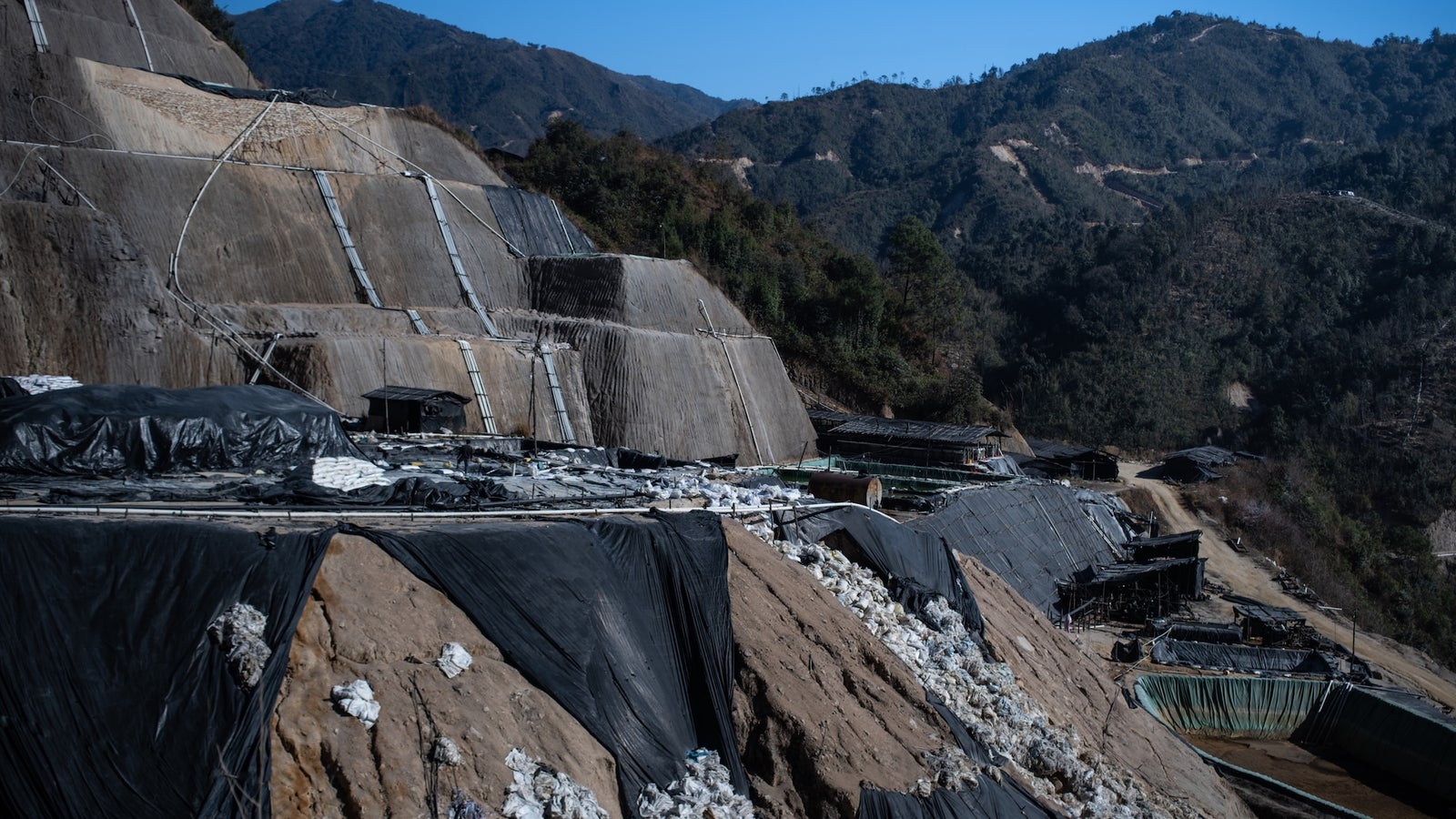
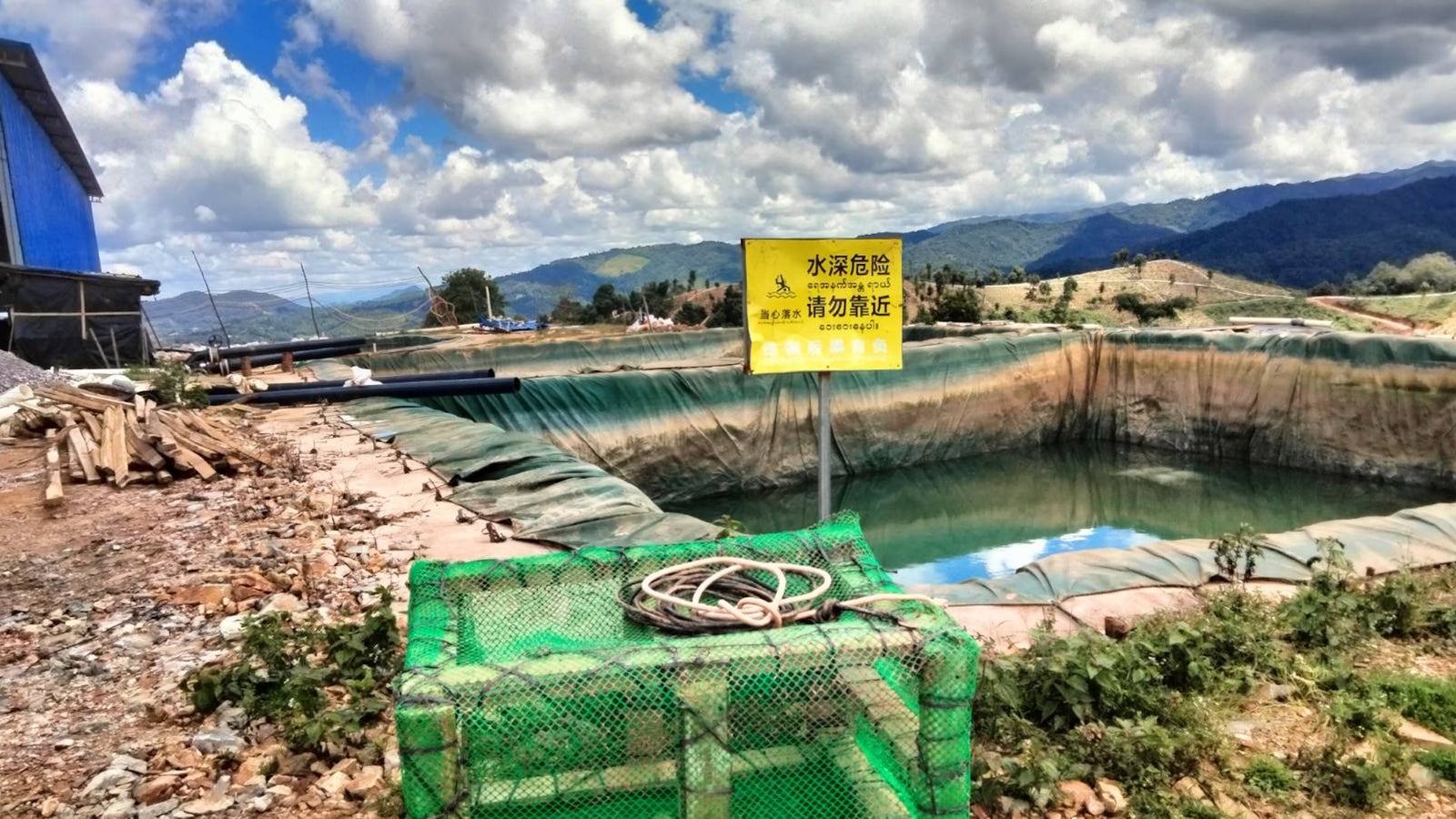
Toxic Legacies: Operators drill boreholes into mountain slopes and pump liquid acid and chemical solvents directly into the earth to dissolve rare earth clays, collecting the toxic runoff in unlined pools. Research from Naresuan University revealed that water sources in Kachin State are severely contaminated with radioactive elements and toxic heavy metals, far exceeding safety thresholds.
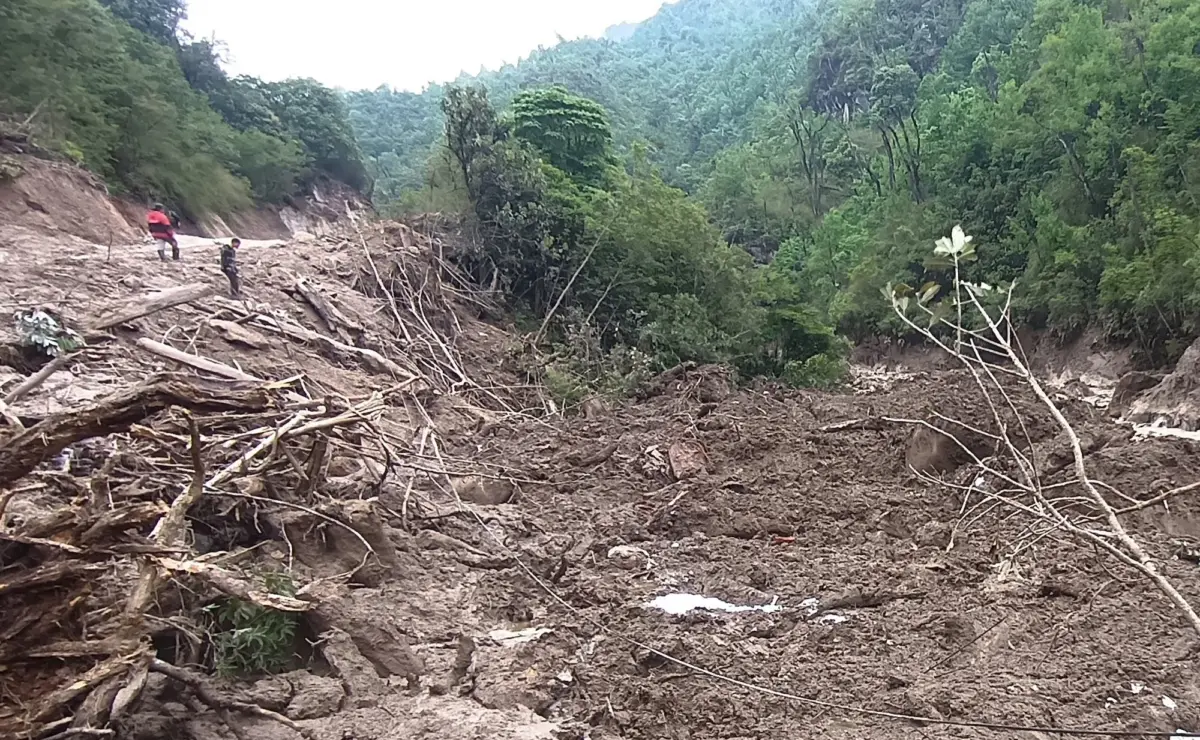
Human Suffering: Laborers—often fleeing violence or economic destitution—work 10-hour days under informal arrangements without written contracts. Chemical burns, chronic exposure leading to organ damage, and fatal landslides are recurring realities. Local human rights groups have even documented instances of forced labor, with prisoners and trafficking victims deployed in Shan State mines.
The Traceability Blind Spot: Once mined, raw materials are trucked across the border into China, where processing facilities operate like a "coffee grinder," thoroughly blending minerals from diverse origins. According to Adamas Intelligence, this effectively launders the supply chain, meaning that virtually any global consumer buying magnets containing heavy rare earths is inadvertently purchasing materials originating from Myanmar’s conflict zones.
Official Statements & Stakeholder Perspectives
The disconnect between corporate sustainability commitments and realities on the ground has drawn sharp rebukes from human rights defenders, political ecologists, and researchers:
"External influence, such as global demand and China, play a major role in Myanmar’s rare earth extraction. Armed groups and lawlessness allow this to happen while the international community turns a blind eye… Ideas like responsible sourcing or a just energy transition do not reflect the reality on the ground."
— Thaw Htoo, Anonymous Political Ecologist from Myanmar
"I think companies are consistently using Myanmar as a sacrifice zone. It’s not acceptable for companies to say, ‘We are going to keep sourcing magnets that include these heavy rare earths, but we can’t do anything about it because it’s complex.’"
— Ben Hardman, Legal Director, EarthRights International
"There are currently no measures in place to track, much less ensure, that mines opened ostensibly to meet the growing demand for renewable energy technologies actually serve that purpose. In the context of global rearmament, it is reasonable to guess that an even smaller share of global rare earth output is actually going toward technologies that might be used in an energy transition."
— Julie Michelle Klinger, Geographer and Associate Professor, University of Wisconsin-Madison
Future Outlook
As geopolitical competition deepens, the plight of Myanmar’s mining communities threatens to spread. With the United States actively forging critical mineral partnerships with nations like India—and the Myanmar military junta attempting to court Western lobbyists and foreign investment—the pressure for rapid, unchecked resource extraction will only intensify.
Experts warn that unless consuming nations implement stringent, mandatory supply chain transparency laws that trace critical minerals back to their exact points of origin, the global energy transition risks repeating historical patterns of exploitation. Rather than breaking free from ecological destruction, the rush to save the planet from climate change may end up permanently sacrificing some of its most vulnerable populations and ecosystems.