

Executive Overview
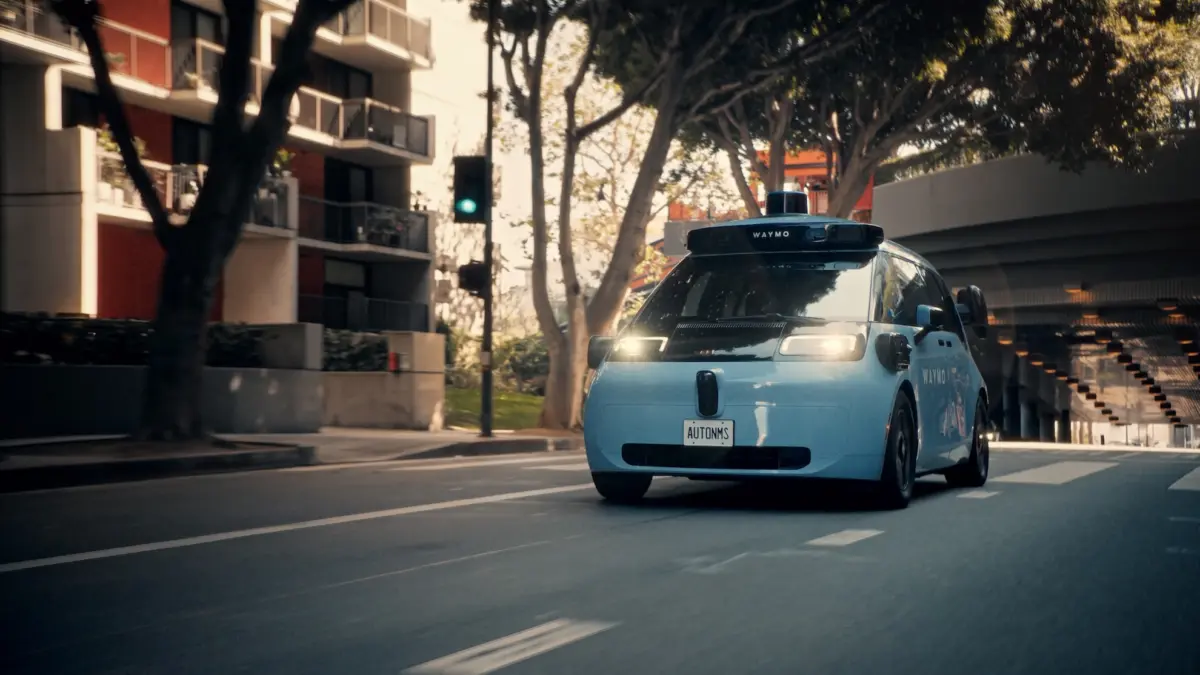
At the center of this transformation is Alphabet’s Waymo, which continues to redefine the boundaries of autonomous commercialization. By officially opening its sixth-generation self-driving system—housed within its next-generation Ojai robotaxi—to the general public across Los Angeles, Phoenix, and San Francisco, Waymo is proving that scalable, driverless deployment is no longer an experimental luxury. Instead, it is becoming a foundational urban utility.
Yet, Waymo’s aggressive expansion is only one piece of a much larger, highly competitive mosaic. Across the globe, institutional funding rounds are fueling the ambitions of autonomous delivery and micro-mobility startups like Also and Vessev. Meanwhile, heavyweight tech and ride-hailing conglomerates—most notably Uber—are aggressively diversifying their logistics frameworks, forging deep partnerships with drone delivery pioneers like Zipline and autonomous fleet operators while navigating structural wind-downs in other sectors. Simultaneously, unprecedented regulatory interventions—from a mysterious national lab probe into Chinese lidar technology to massive European Union data protection fines levied against Uber—highlight the complex legal, security, and geopolitical hurdles facing the modern transportation sector.
This report offers a comprehensive deep-dive into the latest developments shaping the future of autonomous mobility, examining hardware breakthroughs, strategic pivots, venture capital flows, and the evolving regulatory battlefield.
Detailed Chronology & Industry Developments
The past week has witnessed a cascade of high-stakes announcements, regulatory inquiries, and major capital deployments across the automotive and autonomous systems sectors.

Waymo’s Vertical Integration and Custom Silicon Breakthrough
For years, the Achilles’ heel of the autonomous vehicle industry has been the prohibitive cost of hardware procurement, operation, and maintenance. While Waymo has consistently commanded headlines for its rapid geographic footprint expansion, its long-term viability has always hinged on unit economics.
The debut of the company’s sixth-generation autonomous driving system—integrated into the next-generation Ojai robotaxi platform—marks a definitive turning point. Beyond structural cost reductions in manufacturing, Waymo revealed that it has aggressively pursued vertical integration by developing a proprietary custom silicon chip. The newly detailed 5nm Application-Specific Integrated Circuit (ASIC) is engineered specifically to process the staggering influx of raw sensor data before it ever reaches the core computational "brain" of the vehicle.
Consider the sheer scale of the data pipeline: a single Waymo Ojai vehicle relies on 13 high-fidelity cameras, alongside a suite of lidar and radar sensors. According to company disclosures, the custom 5nm ASIC delivers over 1,000 TOPS (trillions of operations per second) of computing performance. This positions Waymo’s internal hardware on par with market-leading automotive processors like Nvidia’s latest DRIVE AGX Thor.
Crucially, Waymo’s hardware achievements are not isolated; they are supported by a formidable coalition of semiconductor and manufacturing giants, including AMD, Micron, Nvidia, Samsung, Sandisk, Socionext, and TSMC. By pairing these partnerships with custom-engineered silicon, Waymo aims to achieve the unmatched efficiency and ultra-low latency required to navigate dense, unpredictable urban environments safely.
Geopolitical Undercurrents: The Idaho National Laboratory Probe
While Waymo focuses on silicon-level optimization, other corners of the autonomous vehicle industry are grappling with acute geopolitical scrutiny. Investigative reporting revealed this week that the Idaho National Laboratory (INL) is conducting a quiet evaluation to determine whether Chinese-manufactured lidar sensors present a national security vulnerability if deployed at scale on American roadways.

What makes this investigation particularly noteworthy is its backing: the research is being directly funded by a coalition of private companies operating within the electric and autonomous vehicle sectors. When contacted by journalists, major domestic and international players—including Rivian, General Motors, Ford, Kodiak, Lucid Motors, Nuro, and Uber—stated they were entirely unaware of the review. Other prominent industry entities, such as Aurora, Nvidia, and Zoox, declined to comment. As the U.S. government increasingly views connected hardware through a national security lens, this clandestine probe could signal impending regulatory headwinds for supply chains reliant on overseas sensor components.
Venture Capital Resurgence: Also and Vessev Secure Major Funding
Capital markets remain remarkably bullish on specialized autonomous and electric vehicle platforms, provided companies can demonstrate strategic evolution. Also, the startup originally incubated within Rivian, successfully closed a $150 million Series D funding round led by Prysm Capital, with participation from existing backers Eclipse, Greenoaks, and MVP Ventures. This brings Also’s total capital raised to an impressive $455 million since its spinout in March 2025.
Also’s trajectory offers a masterclass in strategic pivot. Launched initially as a micromobility company focused on pedal-assist electric bikes and commercial cargo quads, the Palo Alto-based firm has rapidly matured into a developer of autonomous small electric vehicles. This transformation was cemented earlier this year when the company secured a $200 million round alongside a high-profile multiyear commercial agreement with DoorDash to deploy autonomous delivery vehicles.
Meanwhile, in the maritime sector, New Zealand-based startup Vessev announced a $19 million Series A funding round led by Blackbird Ventures. Vessev is pioneering electric hydrofoil boats—a nascent segment of sustainable water transit—and is leveraging the fresh capital to launch a multi-city U.S. showcase and introduce its technology to the American market.
Delivery Ecosystem Shifts: Serve Robotics, Grubhub, and Uber’s Diversification
The sidewalk delivery and autonomous logistics sector continues to experience rapid consolidation and strategic realignment. Serve Robotics, a prominent sidewalk delivery robot developer, found itself navigating a major partnership disruption after Uber announced it would phase out its use of Serve robots on its app and subsequently liquidated its entire equity stake in the company.

Rather than faltering, Serve leveraged its ongoing commercial diversification efforts to secure its long-term viability. The company officially launched a major integration with Grubhub, deploying its sidewalk robots across Chicago, Los Angeles, and Alexandria, Virginia. Simultaneously, Serve expanded its existing partnership with DoorDash into San Jose, California, and Washington, D.C. This episode serves as a vital strategic lesson for the broader autonomous ecosystem: reliance on a single enterprise partner is an existential risk, and multi-platform diversification is mandatory for survival.
Heavy Trucking and Air Mobility Deals
The commercial transport sector also witnessed significant consolidation:
- Einride, the Swedish electric and autonomous trucking company, struck a major fleet agreement with Tesla to acquire 500 Tesla Semis. These heavy-duty electric trucks will be integrated into Einride’s commercial client network—including retail giant Amazon—in phases over the next 24 months.
- Grounded, a Detroit-based startup specializing in the customization of electric and gas-powered commercial vans, secured a $5 million seed round featuring investments from repeat backers Also Capital and The 81 Collection, alongside Animal Capital, the Michigan Outdoor Innovation Fund, and former SpaceX engineers.
- Uber doubled down on aerial logistics by forming a strategic investment and partnership with drone delivery provider Zipline. The two companies have established an ambitious joint target: achieving 1 million drone deliveries per day via the Uber Eats network by the end of 2029.
Supporting Context & Metrics
To fully contextualize the speed at which the autonomous and electric transportation sectors are maturing, several critical metrics and regulatory milestones deserve close examination:
- 1,000+ TOPS: The computational throughput delivered by Waymo’s new proprietary 5nm ASIC chip, placing its onboard processing power on par with the industry’s most advanced automotive supercomputers.
- 13 High-Fidelity Cameras: The visual sensor load managed by the Waymo Ojai robotaxi platform, necessitating advanced custom silicon to process raw edge data in real-time.
- $455 Million: The total cumulative funding raised by Rivian spinout Also since March 2025, reflecting soaring investor confidence in autonomous delivery micro-vehicles.
- 500 U.S. Cities: The aggressive expansion target set by Amazon’s Prime Air drone delivery service, which aims to scale its operational footprint sixfold by the end of 2026.
- 8,000 Robotaxis: The maximum capacity authorized under newly issued commercial permits granted by Nevada regulators in Clark County (Las Vegas) to Tesla, Uber, and Waymo for deployment over the next 12 months.
- €825 Million ($966 Million): The historic antitrust and data protection fine levied against Uber by the Dutch Data Protection Authority for deploying automated driver suspension systems without adequate transparency, violating EU GDPR regulations.
Official Statements & Industry Perspectives
The convergence of aggressive technological scaling and heightened regulatory oversight has prompted a wave of official commentary from industry leaders, startup founders, and regulatory bodies:
- On Waymo’s Hardware Integration: Waymo engineering representatives emphasized that developing a custom 5nm ASIC was non-negotiable for achieving the next generation of cost-effective autonomy. "By engineering our own silicon to handle the massive influx of raw sensor data before it reaches the core neural architecture, we have unlocked unmatched efficiency, thermal performance, and safety margins required for high-density urban deployment."
- On Serve Robotics’ Strategic Resilience: Following the abrupt withdrawal of Uber as an investor and platform partner, Serve executives underscored the necessity of ecosystem agnosticism. Industry analysts noted, "The hasty exit of a major platform stakeholder underscores the cardinal rule of hardware-as-a-service business models: diversification across competing marketplaces like Grubhub and DoorDash is the ultimate firewall against enterprise volatility."
- On International Regulatory Friction: Commenting on the Dutch DPA’s record-shattering €825 million fine against Uber over automated driver deactivations, privacy advocates and European regulators reiterated that algorithmic management cannot supersede labor transparency laws. "Automated decision-making systems that directly impact workers’ livelihoods must adhere to strict standards of explicability and due process. Automation is no excuse for legal opacity."
Future Outlook & Strategic Horizon
As the industry looks past the horizon toward the remainder of the decade, several defining trajectories will dictate the winners and losers in the global mobility race:
- The Economics of Scale and Silicon Customization: Waymo’s pivot toward proprietary silicon sets a new benchmark for autonomous vehicle architecture. Expect competing autonomous systems developers—including pure-play software firms and traditional OEMs—to accelerate their own custom semiconductor development to bypass supply chain bottlenecks and reduce per-vehicle compute costs.
- Geopolitical Supply Chain Realignment: The Idaho National Laboratory’s investigation into Chinese lidar sensors is likely the vanguard of a broader protectionist and national security-driven auditing process in Western markets. Autonomous vehicle manufacturers will face mounting pressure to dual-source or entirely onshore critical perception hardware to insulate themselves from regulatory bans.
- Multi-Modal Delivery Dominance: The integration of sidewalk robots (Serve), middle-mile electric trucks (Einride/Tesla), urban vans (Grounded), and long-range aerial drones (Zipline/Amazon) into unified logistics platforms like Uber Eats and DoorDash signals the arrival of the hyper-diversified delivery ecosystem. Human labor will increasingly be augmented—and in some sectors replaced—by autonomous multi-modal swarms.
- Regulatory Convergence and Accountability: As evidenced by Nevada’s massive 8,000-vehicle robotaxi permitting framework in Las Vegas and the EU’s unyielding enforcement of automated labor rights against Uber, governments are simultaneously opening the floodgates to commercial autonomy while tightening the legal noose around algorithmic accountability. Navigating this duality will remain the ultimate test for mobility executives through 2030 and beyond.