
Executive Overview
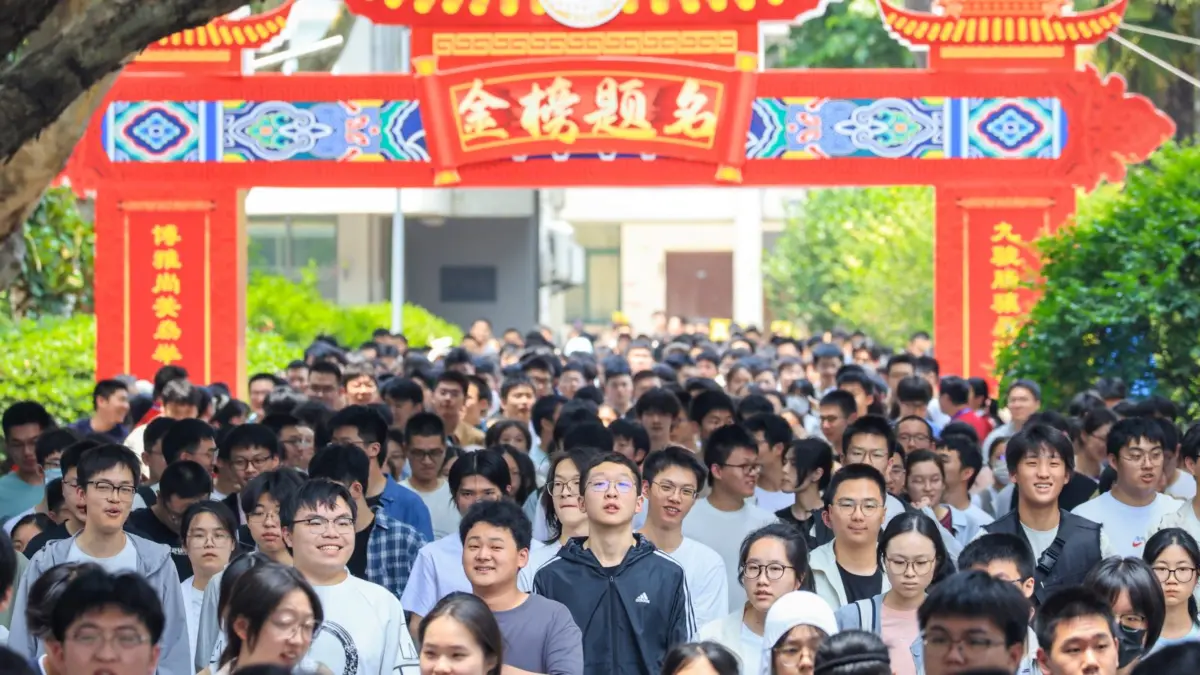
Traditionally, this critical juncture was fraught with expensive human consultants, generational guesswork, and deeply entrenched socioeconomic disparities. Today, however, a digital revolution is quietly sweeping through China’s households. Major technology conglomerates—including Alibaba, ByteDance, Tencent, and Baidu—have flooded the market with free, agentic artificial intelligence tools designed to act as virtual college admissions counselors. In tandem, grassroots developers have resurrected the ethos of legendary, late internet influencers through code, creating specialized software that advises students with brutal, pragmatic clarity.
While these generative AI tools democratize access to sophisticated data analytics, they also introduce unprecedented systemic risks. By centralizing career planning into algorithmic black boxes, these technologies are reshaping how an entire generation approaches higher education, forcing a harsh reckoning between economic survival and personal passion in an increasingly volatile job market.
Detailed Chronology: The Evolution of the Gaokao Advisory Crisis
To understand the sudden, mass migration of Chinese families toward AI-driven counseling, one must examine the compressed timeline of systemic pressures that have defined the post-gaokao landscape over the past decade.
Phase One: The Rise of the Human "Consultancy Industrial Complex" (Pre-2025)
For generations, Chinese families navigated the post-score application process largely blind. High schools in China focus almost exclusively on exam preparation, traditionally offering little to no dedicated career counseling. As the Chinese economy matured and white-collar job markets grew fiercely competitive, the stakes of major selection skyrocketed.
This vacuum birthed a lucrative private consulting industry. Independent coaches and online influencers charged vulnerable, anxious parents thousands of dollars for personalized preference-filling sessions. Chief among them was Zhang Xuefeng, a charismatic internet personality who amassed over 27 million followers on Douyin (China’s TikTok). Zhang became a cultural phenomenon by preaching ruthless pragmatism to working-class families: he openly disparaged low-employability majors like journalism, philosophy, and the arts, while aggressively steering students toward hard sciences, mathematics, computer engineering, and stable government-track careers. His boutique counseling firm charged upward of $2,700 per student, cementing a lucrative commercial ecosystem that market research firm iiMedia estimated had ballooned into a $160 million industry.
Phase Two: Big Tech Enters the Arena (2025–Early 2026)
Recognizing both a profound societal pain point and a prime consumer acquisition channel, China’s Big Tech titans pivoted aggressively. Beginning in 2025, companies like Alibaba, ByteDance, Tencent, and Baidu began deploying specialized AI capabilities within their flagship chatbot ecosystems—such as Alibaba’s Qwen, ByteDance’s Doubao, and Tencent’s Yuanbao.
Unlike general-purpose conversational models, these tools were engineered as sophisticated agentic systems. They were fed historical admission cutoff scores, provincial ranking brackets, geographic preferences, tuition budgets, and psychological profiles derived from metrics like the Myers-Briggs Type Indicator (MBTI). Crucially, these corporations offered the services completely free of charge, undercutting human consultants and rapidly onboarding millions of users into their respective generative AI ecosystems.

Phase Three: The Algorithmic Afterlife and Grassroots Innovation (Spring–Summer 2026)
The landscape shifted dramatically in March 2026 following the sudden passing of Zhang Xuefeng due to cardiac arrest. The loss of China’s most prominent voice in college counseling left a massive void in the national consciousness. Within weeks, the tech community responded through decentralization. Developers on platforms like GitHub engineered the "Zhang Xuefeng skill"—a modular bundle of prompts, scripts, and literary excerpts drawn from Zhang’s published works and public broadcasts.
By integrating these specialized skills into open-source agentic frameworks like OpenAI’s Codex or local developer tools, tech-savvy family members began building bespoke AI counselors. Users could instantly summon digital avatars programmed to mirror Zhang’s signature utilitarian cynicism, warning impoverished families against pursuing abstract artistic dreams in favor of immediate financial security. By July 2026, the adoption of these platforms reached astronomical proportions, processing tens of millions of queries in a matter of weeks.
Supporting Context & Metrics: The Scale of Algorithmic Adoption
The integration of artificial intelligence into the gaokao application process is not merely a niche trend; it represents one of the largest deployments of consumer-facing agentic AI in human history. The sheer volume of traffic handled by these systems underscores the desperate need for scalable guidance among Chinese families:
- Alibaba’s Qwen: By July 8, 2026, Alibaba reported that its Qwen chatbot had generated an astonishing 23 million individual college program recommendation reports for that year’s gaokao cohort. To maintain accuracy, Qwen reportedly recruited 300 specialized college search experts to continuously refine the AI’s logical reasoning models, while also deploying physical tutorials directly to rural high schools.
- Tencent’s Yuanbao: On July 10, 2026, Tencent announced that its Yuanbao bot had successfully answered 200 million queries related directly to university admissions and major selection.
- Baidu: In late June 2026, Baidu revealed that 15 million users had actively engaged with its dedicated AI college advisory features, backed by a pledge to have human experts manually review AI-generated recommendations.
Despite these staggering figures, severe demographic and technological divides persist. Economist and visiting professor Ye Xiaoyang, working with rural students, points out a critical paradox: while chatbots are universally free, digital literacy is not. Many students from impoverished rural backgrounds lack the foundational computer skills required to construct effective prompts, preventing them from fully leveraging the technology’s analytical depth.
Official Statements and Expert Perspectives
As the society-wide experiment with AI-driven academic counseling unfolds, educators, economists, and industry leaders are grappling with its profound implications.
"Everyone can open a chat box, but it doesn’t mean everyone has the same ability to make choices. A good AI system should be able to guide students to think for themselves."
— Ye Xiaoyang, Seattle-based economist and visiting professor at East China Normal University
Ye emphasizes that while algorithms excel at processing colossal datasets—such as cross-referencing decades of provincial cutoff scores against thousands of institutional offerings—they fundamentally lack the capacity to help a young person discover their intrinsic life purpose.
Furthermore, industry watchdogs and media outlets have raised valid concerns regarding algorithmic hallucinations and data latency. Controlled tests conducted by domestic Chinese media outlets revealed instances where AI tools cited outdated admission guidelines or completely omitted highly competitive regional programs.

Compounding the risk is the phenomenon of algorithmic herding. Because millions of students with identical scores input similar parameters into the same foundational models (such as Alibaba’s Qwen or Baidu’s search-integrated bots), the AI frequently funnels massive cohorts toward identical clusters of recommended majors. In the unforgiving mechanics of the Chinese university admissions system, missing out on a targeted tier due to over-concentration can mean dropping down an entire institutional bracket, effectively altering a student’s lifelong earnings potential.
Future Outlook: The Intersection of AI, Youth Employment, and Human Agency
The headlong rush into AI college counseling is symptomatic of a broader societal anxiety. China’s ongoing youth employment pressures, combined with widespread existential dread regarding the displacement of human labor by generative intelligence, have created an intensely utilitarian educational climate.
Universities across the country are rapidly adapting to this new economic paradigm, systematically phasing out traditional humanities disciplines in favor of hyper-technical, forward-looking majors such as "embodied intelligence," "brain-computer science," and advanced robotics. In this environment, choosing a college major is no longer viewed as an intellectual journey of self-discovery, but rather as an actuarial calculation for survival.
Yet, despite the dazzling efficiency of algorithms trained on the digital ghosts of human influencers like Zhang Xuefeng, students continue to seek out human touchpoints. For all her reliance on Alibaba’s Qwen to generate initial feasibility reports, Shandong graduate Guo Xinyan ultimately turned to peer-to-peer social networks like RedNote (Xiaohongshu) and official printed guidance books. She cross-referenced the chatbot’s cold statistical suggestions with real-world student testimonials regarding dormitory conditions, campus food quality, and social atmosphere.
"I still find real people’s experiences more trustworthy," Guo noted.
Ultimately, the advent of AI in the gaokao admissions process highlights a permanent shift in how humanity navigates major life crossroads. Artificial intelligence has successfully democratized access to institutional data that was once locked behind expensive human consultancies. However, as these digital agents grow more persuasive—and more ubiquitous—the ultimate challenge for China’s next generation will not be finding an algorithm smart enough to choose their future, but retaining the independent human agency to define it.