Executive Overview
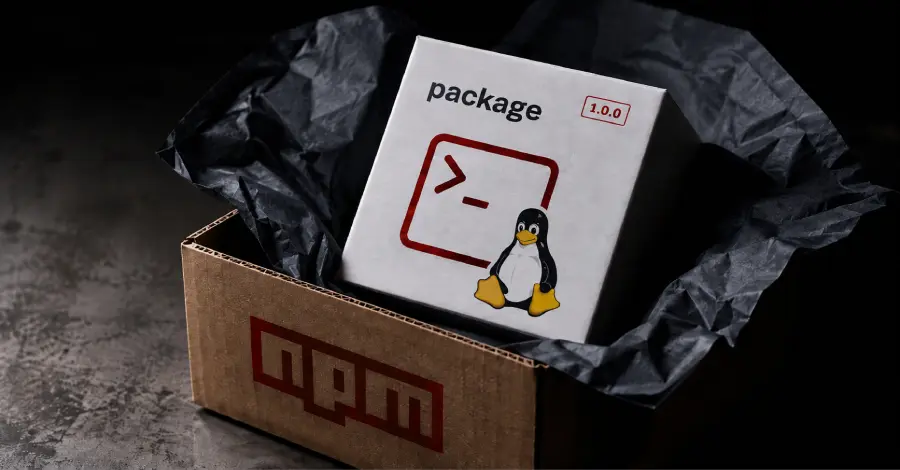
Disguised as innocuous, fully functional calendar utilities and streak-tracking modules, these trojanized packages exploit the trust inherent in open-source software ecosystems. Upon installation, the modules bypass the need for traditional install hooks, leveraging transitive dependencies to silently extract and execute a heavily disguised payload—the RedShell Linux beacon.
Marketed openly on cybercrime forums and a clearnet front under the brand "Red Offsec," the RedC2 4.0 framework represents a significant evolution in offensive tooling. Priced at a modest $99.99 and heavily emphasizing evasion, the cross-platform framework features an integrated large language model (LLM) assistant called Red Agent. This AI-driven component allows threat actors of varying technical proficiencies to execute complex, multi-stage intrusions using simple natural-language commands.
This campaign highlights an alarming convergence of software supply chain compromise and generative AI utility in cybercrime, drastically lowering the barrier of entry for launching sophisticated, automated attacks against Linux environments.
Detailed Chronology & Mechanics of the Attack
The Trojanized npm Ecosystem
The attack vector relies on poisoning widely used utility modules within the Node Package Manager (npm) ecosystem. Trend Micro’s enterprise cybersecurity division, TrendAI, detailed how threat actors upload packages that masquerade as standard time management and date helper libraries.
Unlike typical malicious packages that fail or break functionality, these utilities perform their advertised tasks effectively, lowering the victim’s suspicion. However, hidden within the package directory structure—typically under dist/ or dist/internal/—lies a malicious binary cloaked as a native math accelerator. The file names vary across the compromised packages, utilizing benign-sounding designations such as:

math-core.binmath-calc.bincalc-math.datcalc-cache.bincalc.bincalc-mapping.bin
Execution Flow and Persistence
According to security researcher Aliakbar Zahravi, the delivery mechanism is orchestrated directly through the package’s entry file, dist/index.mjs, which acts as a trojan loader.
[npm Package Imported]
       │
       ▼
[dist/index.mjs Loader] ──(Re-exports Date Helpers)
       │
       ▼
[Finds Bundled Binary (e.g., math-core.bin)]
       │
       ▼
[Marks Binary Executable & Launches Detached Process]
       │
       ▼
[Deploys RedShell Linux Beacon] ──(Establishes C2 Communication)
"When the module loads, it locates the bundled binary, marks it executable, and launches it as a detached background process," TrendAI explained in a technical advisory. "No install hook function call is needed; a single import anywhere in the dependency graph, even a transitive one, is enough to execute the payload."
Once the RedShell beacon is active on the compromised host, it establishes communication with a remote command-and-control (C2) server. It begins by registering the infected system through a "check-in message" containing basic telemetry and system enumeration data. Following registration, the beacon enters an active command-processing loop, leveraging an interactive shell via /bin/sh to execute incoming instructions, gather sensitive data (including SSH keys and browser credentials), and facilitate network pivoting or SOCKS5 proxying.
Supporting Context & Metrics: The Evolution of RedC2
The RedC2 framework is not an isolated piece of amateur malware; it is a commercialized, continuously updated offensive security product. Threat intelligence tracking reveals a steady developmental pipeline:
- August 2025 (Version 2.0): Initial formalized release focusing on basic cross-platform coordination.
- January 2026 (Version 3.0): Expanded payload deployment capabilities and refined evasion techniques.
- June 2026 (Version 4.0): Marketed heavily on Hack Forums by a threat actor operating under the handle "MarlboroMan." This iteration introduced the RedShell Linux beacon alongside advanced in-memory execution mechanisms for Beacon Object Files (BOFs), .NET assemblies, and raw shellcode.
Platform Capabilities Comparison
| Capability | Windows Beacon | Linux Beacon (RedShell) | macOS Beacon |
|---|---|---|---|
| Interactive Shell Access | Yes (cmd/powershell) |
Yes (/bin/sh) |
Yes |
| File Operations & Reconnaissance | Yes | Yes | Yes |
| Credential & Key Harvesting | Yes | Yes | Yes |
| In-Memory ELF/PE Execution | Yes | Yes (ELF) | Yes |
| UAC Bypass / Privilege Escalation | Yes | No | No |
| Antivirus Tampering / Evasion | Yes | No | No |
| Lateral Movement & Tunneling | Yes | Yes | Yes |
The Integration of Generative AI: Red Agent
What fundamentally separates RedC2 4.0 from traditional C2 frameworks is its deep integration with artificial intelligence. The framework includes a command-line extension (RedC2 EXT) and an LLM-driven assistant dubbed Red Agent.
By interfacing directly with a model fine-tuned for offensive operations, operators can bypass the need to memorize complex syntax or manual scripting chains. An attacker inputs natural-language prompts—such as "Scan the local subnet for active SSH endpoints and dump cached credentials"—and the framework automatically translates those intents into actionable, multi-stage beacon command sequences.

TrendAI researchers emphasized the implications of this development: "By interacting with a model tuned for red-team operations, an operator inputs natural-language prompts, and the framework translates them into actionable command sequences. This abstraction lets operators of varying skill levels execute complex, multi-stage intrusions efficiently."
Official Statements and Industry Response
The vendors and creators behind RedC2 operate under a thin veil of legitimacy, marketing their infrastructure through a clearnet website branded as Red Offsec. The framework is retailed for $99.99, accompanied by strict Terms of Service designed to legally insulate the developers.
The Red Offsec terms explicitly prohibit unauthorized computer access, hacking without explicit permission, and the exploitation of systems not owned or legally authorized for testing:
"Red Offsec provides tools intended for red team professionals and users who understand external offensive security tooling within legal and ethical boundaries."
Despite these disclaimers, the weaponization of the framework in automated supply chain attacks—such as the npm poisoning campaign—demonstrates that the tools are actively being leveraged by malicious actors for unauthorized intrusions in the wild.
Cybersecurity authorities and registry maintainers have mobilized to purge the compromised packages from public repositories. However, security analysts warn that the reliance on transitive dependencies means organizations may be running vulnerable or malicious code embedded deep within their application trees without direct awareness.

Broader Software Supply Chain Vulnerabilities
This npm incident does not occur in a vacuum. It follows a worrying string of recent supply chain compromises across multiple programming language ecosystems.
Just weeks prior to the RedC2 discovery, researchers flagged a coordinated supply chain attack targeting legitimate Rust crates ([email protected], [email protected], and [email protected]). Those packages were injected with a malicious proc-macro1 dependency designed to execute cross-platform malware automatically during standard Cargo builds. The payload profiled infected machines, cataloged Chromium-based browsers, and established persistence via remote beacons.
Intelligence attribution models suggest clear operational overlaps between these recent crate compromises and prior high-profile supply chain attacks targeting the Mastra and Axios npm packages. Investigators have increasingly tied these multi-ecosystem campaigns to sophisticated state-sponsored threat groups, notably entities operating out of North Korea, who view software repositories as high-yield entry points into enterprise environments.
Future Outlook & Mitigation Strategies
As threat actors continue to weaponize package managers and integrate generative artificial intelligence into command-and-control operations, traditional perimeter defenses and reactive signature scanning will prove insufficient.
Recommendations for Development and Security Teams
- Strict Dependency Auditing: Organizations must implement rigorous Software Bill of Materials (SBOM) tracking and automated dependency analysis. Tools should scan not only direct dependencies but also transitive trees for anomalous files (such as unexpected binary blobs like
.binor.datfiles withindist/folders). - Behavioral Endpoint Protection: Because RedC2 implants execute as detached background processes and operate out-of-memory for secondary payloads (BOFs and shellcode), security teams must deploy endpoint detection and response (EDR) agents configured to monitor for anomalous shell spawning (
/bin/sh) initiated by runtime package managers. - Network Micro-segmentation: Limiting lateral movement and egress traffic from development and build servers can prevent beacons like RedShell from successfully communicating with remote C2 infrastructure or establishing SOCKS5 tunnels.
- AI-Assisted Threat Hunting: Security operations centers (SOCs) should adopt AI-driven analytics capable of detecting abnormal command-line execution patterns that mirror automated LLM-generated script sequences.
The fusion of automated open-source supply chain poisoning and AI-orchestrated post-exploitation frameworks marks a new frontier in cyber threats. Safeguarding modern software architecture will require unprecedented vigilance from developers, maintainers, and security professionals alike.