

Executive Overview
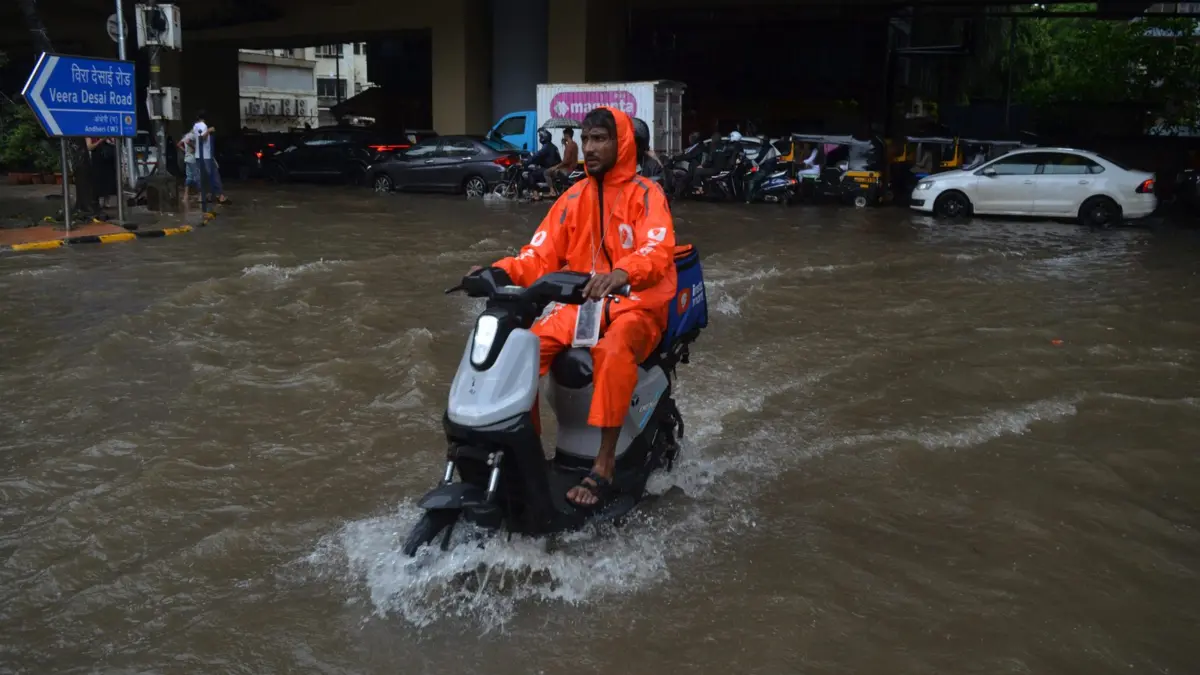
As the ferocious July monsoon rains submerge the streets of Mumbai in knee-deep water, a parallel digital economy hums beneath the downpour. Inside air-conditioned corporate offices and through hyper-optimized data centers, quick-commerce platforms are deploying advanced predictive weather algorithms to capture—and capitalize on—surging consumer demand. While tech companies leverage meteorological forecasting to drive sales, the gig workers navigating flooded thoroughfares, electrical hazards, and treacherous winds are left to face a stark ultimatum: risk their lives for today’s wages, or stay home and forfeit their livelihoods.
This friction between automated efficiency and human survival is no longer an isolated phenomenon. As global climate change accelerates, extreme weather events—ranging from torrential monsoons in South Asia and punishing heatwaves across North America and Southern Europe to crippling snowstorms—have become the new operational normal. Yet, the gig economy’s underlying infrastructure remains fundamentally mismatched with planetary realities.
While platforms like Zomato in India, DoorDash in the United States, and Glovo in Europe increasingly rely on sophisticated AI-driven tools to anticipate weather patterns, optimize surge pricing, and capture shifting consumer behavior, these same data systems rarely translate into meaningful safeguards or workload reductions for the people on the ground. Instead, a dangerous collision course is emerging between intensifying climate volatility and the physical limits of gig worker endurance, laying bare the urgent need for robust regulatory intervention.
Detailed Chronology: The Evolution of Weather-Integrated Gig Work
To understand how hyper-local weather tracking became central to gig economy logistics, it is necessary to examine the rapid convergence of meteorological technology and platform capitalism over recent years.
The Rise of Hyper-Local Meteorological AI (2024–2026)
The integration of climate data into delivery apps has evolved from rudimentary forecasts to real-time, hyper-local algorithmic management.
- 2024: Major Indian food delivery players began aggressively expanding their weather-monitoring capabilities. Zomato launched "Weather Union," a crowdsourced weather data network designed to feed micro-climate information directly into its logistics engines, pairing it with real-time route feedback from delivery partners logging conditions on the ground.
- 2025: Regulatory and corporate responses to extreme weather grew increasingly contested. In Italy, food delivery platform Glovo introduced a controversial 2% to 8% "heat bonus" for couriers operating during dangerous summer heatwaves. The initiative sparked immediate labor backlash, with critics arguing that financial incentives effectively coerced workers into risking heat stroke and exhaustion. The bonus scheme was ultimately suspended. Meanwhile, platforms in the U.S., such as DoorDash, institutionalized temporary "Weather Impact Fees," designed to route extra funds directly to workers alongside base pay and tips during hazardous meteorological events.
- 2026: A critical inflection point was reached as the India Meteorological Department (IMD) officially incorporated artificial intelligence into its national weather forecasting apparatus, capable of predicting rainfall within a hyper-localized 1-km radius. Quick-commerce platforms, already adept at processing micro-weather data, integrated these advanced models instantly. This allowed them to pinpoint surging demand zones down to specific neighborhoods—often just as municipal authorities were issuing severe weather warnings.
The Daily Calculus of Survival
On the ground, the implementation of these algorithms creates an illusion of choice. While corporate spokespeople routinely emphasize that safety advisories are issued and that work is entirely voluntary, structural economic pressures dismantle that autonomy.
For the typical gig worker living hand-to-mouth, earnings are tightly tethered to completion rates, algorithmic ranking scores, and performance incentives. When a torrential downpour strikes, the temptation of surge pricing or rain incentives collides with the reality of lost working days. Consequently, workers routinely push past safe physiological thresholds—braving flash floods, waterborne diseases, and zero-visibility conditions—simply to maintain their baseline standard of living.
Supporting Context & Metrics: Global Studies and the Climate-Labor Collision
The structural vulnerability of gig workers during extreme weather is heavily documented by a growing body of economic and sociological research spanning multiple continents.
Quantitative Insights on Extreme Heat and Rainfall
- The Delhi Study (April–July 2026): Researchers from the Good Business Lab tracked 730 delivery workers operating in and around India’s capital region. The study revealed that despite soaring temperatures that triggered government health advisories, the vast majority of delivery personnel continued to work through extreme heat. Their primary motivation was not greed, but the rigid structure of performance targets and algorithmic penalties tied to acceptance and completion rates.
- The Guangzhou Deluge Study: A recent study examining delivery platform operations during severe rainfall events in Guangzhou warned that growing climate change issues and the physiological limits of delivery worker endurance are on an inevitable "collision course."
- The Heatwave Earnings Paradox: A 2024 study analyzing a major Chinese delivery platform during an intense heatwave uncovered a counterintuitive economic penalty: while consumer order volumes spiked dramatically, overall worker earnings actually decreased. This drop was driven by severe delivery delays, traffic bottlenecks, and platform penalties associated with late orders, proving that extreme weather often punishes workers twice—first by endangering their health, and second by reducing their operational efficiency.
| Climate Event Type | Primary Platform Strategy | Dominant Worker Impact | Economic Outcome for Workers |
|---|---|---|---|
| Monsoons / Flooding | Rain incentives, surge pricing, automated zone alerts | Physical danger, vehicle damage, waterborne illness | Short-term earnings boost offset by long-term health and repair costs |
| Extreme Heatwaves | Heat bonuses (frequently contested/scrapped) | Exhaustion, heat stroke, dehydration | Increased operational friction; potential earnings drops due to delivery delays |
| Winter Storms / Blizzards | Weather impact fees, dynamic pricing adjustments | Slip-and-fall hazards, extreme cold exposure | Variable pay increases offset by heightened physical risk and restricted mobility |
Official Statements and Industry Perspectives
The debate surrounding algorithmic weather management has galvanized labor organizers, academic experts, and corporate representatives alike.
Corporate Perspectives
Platforms maintain that technological integration ultimately serves to protect the workforce. A spokesperson for Eternal, Zomato’s parent company, defended their operational stance to Rest of World, stating:
"As soon as we’re alerted of unsafe conditions in any zone or store, we immediately alert delivery partners for their safety."
Proponents of dynamic pricing argue that weather-adjusted pay models fairly compensate workers willing to take on additional risk, aligning market supply with high-demand consumer needs during inclement weather.
Labor Advocacy Pushback
Worker representatives argue that current corporate policies treat human safety as an afterthought rather than a core logistical parameter. Nitesh Kumar Das, organizing secretary of India’s Gig Workers Association, pointed out the systemic imbalance in how algorithms utilize meteorological data:
"During heavy rains, platforms introduce surge pricing or ‘rain incentives.’ However, the same intelligence does not appear to translate into meaningful reductions in delivery pressure or adjustments in expected timelines."
Das argued that platforms should adopt proactive shutdown protocols akin to traditional industries:
"Areas experiencing severe flooding or official weather warnings should automatically be made temporarily unserviceable, just as airlines suspend flights or municipalities halt public transport under hazardous conditions."
Academic and Regulatory Warnings
Independent academics emphasize that relying on corporate goodwill is a failing strategy in an era of rapid climate destabilization. Prakriti Dasgupta, assistant professor of human resources management at Ireland’s Maynooth University, noted:
"Platforms do typically issue weather warnings and safety advisories, but the decision to work ultimately rests with workers themselves. Economic pressures and incentive structures often compel them to continue working under conditions that may jeopardize their health, safety, and well-being."
Echoing this sentiment, Antonio Aloisi, a labor law professor at IE University Law School in Madrid, framed the crisis as a global precedent:
"Mumbai’s monsoon chaos is a window into the future of work everywhere. With climate volatility accelerating, extreme conditions will soon be the norm in Europe too. This is precisely why the regulatory conversation cannot be postponed or outsourced to the platforms’ goodwill: the systems we design now—thresholds, compensation schemes, stop mechanisms, remuneration models—will determine whether algorithmic management amplifies climate risk for workers or helps absorb it."
Future Outlook: Regulating the Algorithmic Economy in a Warming World
As climate volatility transitions from an anomaly to an enduring reality, the intersection of gig work and severe weather represents one of the defining labor battles of the mid-21st century.
If left unregulated, quick-commerce algorithms will continue to weaponize consumer urgency against worker vulnerability, using dynamic pricing and surge incentives to subtly coerce individuals into hazardous environments. The illusion of free choice—framed around the autonomy to log on or stay offline—crumbles under the weight of algorithmic surveillance, performance ratings, and systemic economic precarity.
Addressing this crisis requires a fundamental shift in how labor and technology intersect. Policymakers, labor unions, and platform operators must collaborate to establish binding regulatory frameworks that transcend corporate self-regulation. Key imperatives for the future include:
- Mandatory Service Suspensions: Codifying legal thresholds where severe weather warnings automatically trigger geo-fenced delivery suspensions, removing the economic coercion from the worker’s shoulders.
- Algorithmic Transparency and Timeline Adjustments: Requiring platforms to automatically recalibrate expected delivery times, customer penalties, and performance metrics during adverse weather events.
- Robust Safety Nets: Enforcing guaranteed baseline compensation and comprehensive medical and vehicle insurance for gig workers operating in climate-vulnerable regions, decoupled from punishing efficiency targets.
Ultimately, the systems, thresholds, and remuneration models established today will determine whether the digital platforms of tomorrow act as shock absorbers against climate risk—or whether they continue to profit from it at the direct expense of human life.