

Executive Overview
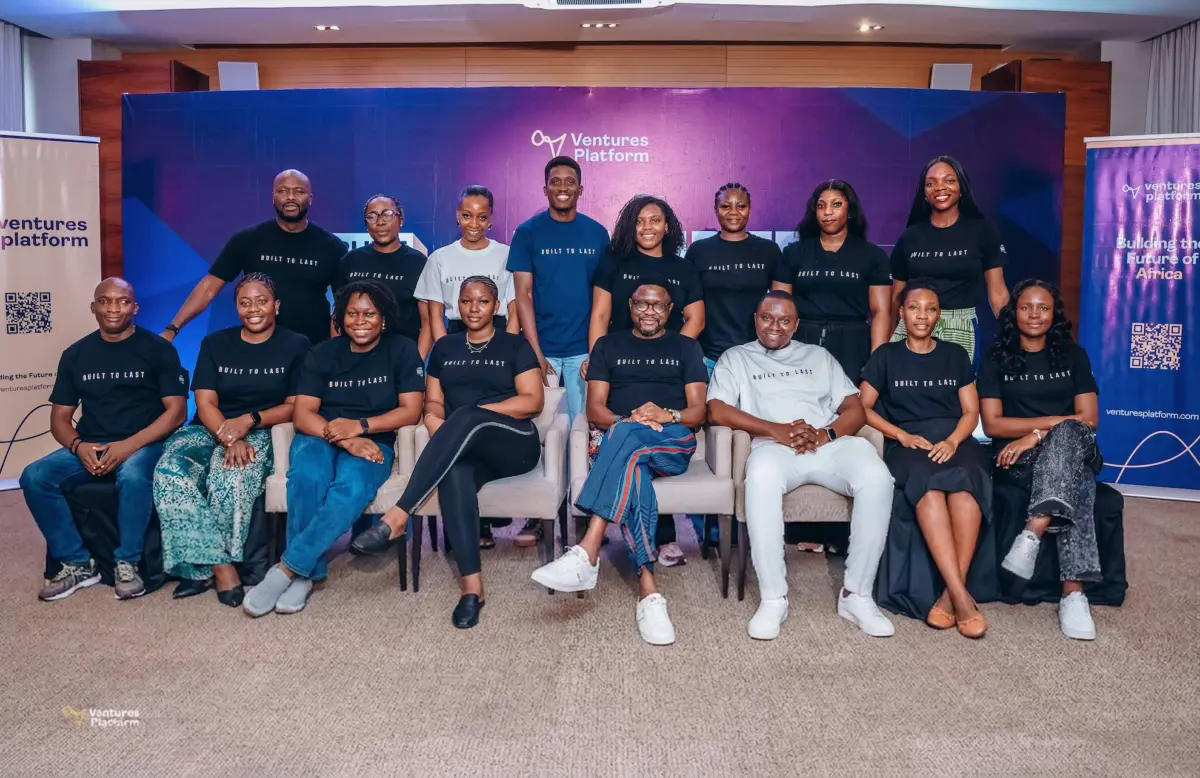
Nowhere is this maturation more vividly illustrated than in the recent milestone achieved by Ventures Platform. The prominent Nigerian-headquartered venture capital firm has officially closed an oversubscribed second fund totaling $84 million. This momentous capital raise nearly doubles the size of its predecessor—a $46 million Fund I closed in late 2022—and signals a major strategic pivot.
While Fund I concentrated heavily on pre-seed and seed rounds within Ventures Platform’s home market of Nigeria, Fund II expands both its financial firepower and its geographic horizons. Armed with check sizes of up to $3 million, the firm has already begun backing early-stage innovators across critical continental hubs, including Kenya, South Africa, and Egypt. The thesis underpinning this new fund is as pragmatic as it is ambitious: backing resilient, technology-driven enterprises across fintech, healthcare, SaaS, and AI-enabled sectors designed to solve foundational infrastructure challenges and rewrite the economic rules of serving African populations.
This comprehensive report examines the anatomy of Ventures Platform’s $84 million raise, analyzes the macroeconomic currents reshaping African venture capital, unpacks the firm’s forward-looking investment strategy regarding artificial intelligence and cross-border expansion, and explores what this pivotal checkpoint means for the future of the continent’s tech ecosystem.
Detailed Chronology: From Nigeria-Centric Beginnings to a Pan-African Footprint
To fully understand the significance of Ventures Platform’s $84 million Fund II, one must examine the chronological trajectory of the firm and the broader macroeconomic climate it has navigated over the past half-decade.
The Genesis and Validation of Fund I (2022)
In December 2022, amidst a rapidly shifting global financial climate that was beginning to cool from the hyper-inflationary tech boom of 2021, Ventures Platform successfully closed its first institutional vehicle at $46 million. Fund I was conceived with a clear and targeted mission: to act as a dependable, early-stage institutional partner for founders building transformative tech solutions primarily within Nigeria—Africa’s largest economy by population and GDP.
Operating primarily at the pre-seed and seed stages, Fund I allowed founding partner Kola Aina and his team to test, refine, and prove their investment thesis. The fund demonstrated that a rigorous, locally rooted early-stage investment framework could be scaled institutionally, generating a diverse portfolio of resilient startups that could weather early market shocks.
According to Aina, Fund I served as the foundational proof-of-concept necessary to convince institutional backers that the team possessed not only the sourcing capabilities to find top-tier talent, but also the operational discipline required to guide companies through turbulent economic cycles.
The 18-Month Fundraising Marathon for Fund II (2023–2024)
Buoyed by the performance of Fund I, Ventures Platform set out to raise a successor vehicle. However, the fundraising environment of 2023 and 2024 bore little resemblance to the capital-abundant era of 2021.
The fundraising process for Fund II spanned approximately a year and a half—a grueling test of endurance in a market where LPs had grown remarkably selective. Where previous years had been characterized by exploratory capital and broad strokes curiosity regarding the "African opportunity," the new fundraising climate required venture capitalists to present ironclad metrics. LPs deployed a fine-toothed comb to evaluate portfolio construction, realized returns, liquidity horizons, manager discipline, and fund differentiation.
Despite these stiff headwinds, Ventures Platform’s reputation for operational excellence and its strong historical performance won the day. A staggering 70% of the institutional investors who backed Fund I returned to participate in Fund II. Key development finance institutions and strategic backers—including the European Bank for Reconstruction and Development (EBRD), Norway’s development finance institution (Norfund), and Ghana’s Ashesi University Foundation—reaffirmed their commitment, alongside a new cohort of globally minded LPs.
Expanding the Mandate: Beyond Nigeria
With the $84 million war chest secured, Ventures Platform is no longer merely a Nigerian-focused early-stage fund; it has formally matured into a multi-market, Pan-African investor.
Even before the final close, the firm had already initiated deployment from Fund II, writing checks to five high-potential startups spanning Kenya, South Africa, and Egypt. By establishing a presence in these critical ecosystems alongside Nigeria, Ventures Platform is positioning itself to capture the continent’s four major tech hubs. The firm plans to deploy Fund II incrementally over the next three to four years, issuing check sizes up to $3 million per company, allowing them to lead rounds and maintain meaningful ownership stakes as these enterprises scale.
Supporting Context & Metrics: The State of African Venture Capital
To appreciate the strategic weight of Ventures Platform’s expansion, one must contextualize it within the broader macroeconomic and venture capital metrics currently defining the African continent.
The Great Market Correction: Funding Volumes and Deal Counts
The African tech ecosystem, much like its global counterparts in Silicon Valley, Europe, and Latin America, has experienced a significant valuation and funding correction.
- Venture Funding Trends: Data compiled throughout the year indicates that African startups have raised approximately $930 million across more than 200 deals. This follows a broader contraction from previous highs, contrasting with the $1.16 billion raised across 447 deals during the preceding year.
- The "Barbell" Dynamic: As observed across global venture ecosystems, the African market has settled into a "barbell" structure. Capital is increasingly concentrated at two distinct poles: a handful of established mega-funds at the top capturing late-stage rounds, and proven emerging managers with verifiable track records who are able to secure institutional commitments. Mid-tier, unproven general partners are finding it exceedingly difficult to raise capital.
The Shift from "Why Africa" to "Why You"
Kola Aina points to a fundamental psychological and strategic shift among global LPs over the past 36 months:
"Three years ago, there was still a significant amount of curiosity around the African opportunity. Today, LPs expect proof. The conversation has moved from ‘Why Africa’ to ‘Why you and how exactly are you going to generate returns.’"
This evolution has eliminated generic investment pitches. Being a Pan-African fund is no longer considered a differentiated strategy in and of itself. Instead, institutional investors are drilling down into granular operational details:
- How does a fund source top-tier engineering and business talent across multiple jurisdictions?
- How do general partners navigate complex, fragmented regulatory environments in countries like Nigeria, Kenya, Egypt, and South Africa?
- What is the specific, defensible "right to win" that grants a venture firm access to the continent’s most competitive proprietary deal flow?
The Triumph of Capital Efficiency and Fundamentals
The venture capital bust of recent years burned many institutional investors who had assumed capital would remain perpetually abundant. The hard-earned lesson across the board is that scaling a company requires far more than successive rounds of dilutive financing.
Consequently, modern African startups and their venture backers are placing unprecedented emphasis on:
- Capital Efficiency: Achieving sustainable unit economics and extending runway without relying on continuous external lifelines.
- Robust Governance: Implementing institutional-grade financial controls, board structures, and compliance frameworks early in a startup’s lifecycle.
- Regulatory Engagement: Proactively collaborating with central banks, financial regulators, and sectoral watchdogs to ensure long-term business viability in heavily regulated spaces like fintech and digital healthcare.
Official Statements & Strategic Vision
At the core of Ventures Platform’s investment philosophy is a deep commitment to backing companies that solve non-negotiable human and economic needs.
Targeting Essential Needs and Structural Deficits
Discussing the deployment sectors for Fund II, Kola Aina emphasized that the firm is actively looking for businesses where technology serves as a bridge to foundational infrastructure and economic inclusion.
"We plan to back early-stage founders across a range of sectors, including fintech, healthcare, SaaS, and other areas where technology can address essential needs and build large, enduring businesses. We are particularly interested in markets where technology can expand access to essential products and services, address critical infrastructure gaps, and create entirely new categories of consumption."
Rather than chasing transient software fads, Ventures Platform is doubling down on operational realities. Whether it is digitizing supply chains, streamlining fragmented healthcare delivery, or building enterprise software tailored to African business workflows, the firm looks for startups that create tangible utility.
The AI Thesis: Changing Unit Economics, Not Just Adding Features
Artificial intelligence occupies a prominent space in Ventures Platform’s investment thesis for Fund II, though the firm maintains a remarkably pragmatic and utilitarian view of the technology.
Aina explicitly clarified that AI must move beyond superficial integration to justify venture backing:
"We’re particularly interested in where AI changes the economics of serving African markets. For us, AI is most interesting when it is not simply a feature, but an enabler of an entirely different cost structure, business model or market."
In practice, this means Ventures Platform is hunting for AI-driven applications that drastically reduce the cost of delivering critical services—such as automated diagnostics in healthcare, intelligent credit underwriting in unbanked populations, or operational automation that helps startups overcome severe local labor shortages. By leveraging AI to fundamentally alter business cost structures, African startups can unlock massive addressable markets that were previously economically unviable to serve.
The Value Proposition of Local Depth and Global Connectivity
In a market where venture capital is increasingly competitive, Aina believes that Ventures Platform’s ultimate competitive edge lies in its nuanced understanding of local institutional realities coupled with robust regional and international networks.
The current generation of founders and fund managers across Africa has endured the whiplash of transitioning from capital abundance to extreme scarcity. This shared battle-scarred experience gives modern venture teams a unique empathy and practical capability when advising founders through turbulent macroeconomic conditions.
Future Outlook: What Fund II Portends for the African Tech Ecosystem
The successful closing of Ventures Platform’s $84 million Fund II is far more than a corporate milestone for a single venture firm; it serves as a bellwether for the maturation of the entire African startup ecosystem.
1. Increased Cross-Border Synergy
By expanding its mandate explicitly into East Africa (Kenya), North Africa (Egypt), and Southern Africa (South Africa), alongside its stronghold in West Africa (Nigeria), Ventures Platform is actively facilitating cross-border pollination. As African tech companies mature, their ultimate scale depends on their ability to expand beyond single-country borders. Venture firms with multi-regional footprints and boots-on-the-ground networks in these key nodes will play an instrumental role in easing international expansion for portfolio companies.
2. A Higher Bar for Accountability and Exit Horizons
With LPs demanding concrete evidence of realized returns, the pressure is now on venture-backed African startups to pursue sustainable growth, strategic M&A opportunities, and eventual public listings. Fund II’s deployment over the next three to four years will coincide with a critical period where many of the continent’s early-stage pioneers must transition into cash-generative, mature enterprises capable of delivering liquidity events to their institutional backers.
3. Institutionalizing the Venture Asset Class
The continued participation of heavyweight development finance institutions—such as Norfund and the EBRD—alongside university endowments like Ashesi, signals that African venture capital is steadily shedding its reputation as an ultra-high-risk frontier experiment. It is evolving into a recognized, institutionalized asset class capable of attracting sophisticated global capital.
Conclusion
Ventures Platform’s $84 million Fund II represents a masterclass in adaptation. By listening closely to the evolving demands of institutional investors, maintaining rigorous investment discipline, and refusing to compromise on the fundamental utility of technology, the firm has positioned itself at the vanguard of Africa’s next great economic chapter. As Kola Aina and his team begin deploying capital into the continent’s brightest entrepreneurial minds, the ecosystem watches with cautious optimism—ready for a future built not on speculation, but on enduring value, operational resilience, and transformative impact.