

Executive Overview
The meteoric rise of artificial intelligence has systematically dismantled that playbook. As machine learning architectures evolve at a breakneck, near-exponential pace, venture capitalists are discovering that traditional qualitative assessments are no longer enough. Investors who lack deep, firsthand technical fluency now face a perilous reality: missing category-defining breakthroughs that can materialize overnight and upend legacy industries in a matter of weeks.
This paradigm shift has birthed a new breed of investor—one who spends as much time reviewing cutting-edge research papers, experimenting with frontier models, and analyzing semiconductor supply chains as they do reviewing pitch decks and financial projections.
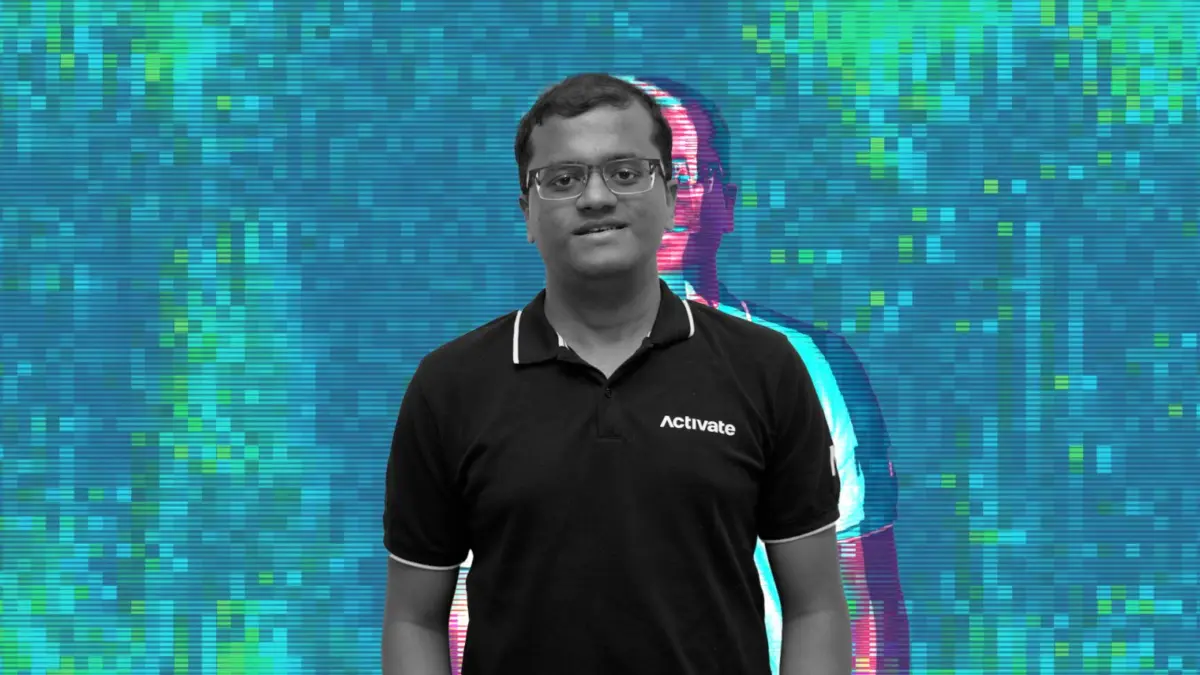
At the vanguard of this transformation is Pratyush Choudhury, co-founder of Activate AI, India’s premier venture capital fund dedicated exclusively to the artificial intelligence ecosystem. Launching a $75 million fund alongside co-founder Aakrit Vaish in December, Choudhury represents a radical departure from the stereotypical finance-first venture capitalist. Armed with an insider’s perspective from Amazon Web Services—the foundational cloud backbone of the modern AI economy—and a track record of backing high-growth winners, Choudhury and his peers are proving that technical literacy is no longer a niche hobby; it is the ultimate competitive advantage in modern tech investing.
Detailed Chronology: The Evolution of Activate AI and the Rise of the New VC
The transformation of tech investing did not happen overnight; it is the culmination of a decade-long acceleration in computational power, data availability, and algorithmic breakthroughs. To understand how funds like Activate AI secured their positions at the bleeding edge of global technology, one must trace the convergence of visionary entrepreneurship, infrastructure scaling, and geographic shifts in innovation.
Laying the Infrastructure
Long before the current generative AI boom captured global headlines, the infrastructural foundations were being laid by cloud computing giants. Pratyush Choudhury’s tenure at Amazon Web Services (AWS) provided him with a front-row seat to the heavy lifting required to power modern machine learning workloads. AWS served as the proving ground where early AI startups grappled with massive compute constraints, distributed training architectures, and the prohibitive costs of scaling large language models.
Concurrently, Aakrit Vaish was building his own legacy in the Indian tech ecosystem. As the founder of Haptik—one of India’s pioneering conversational AI chatbot firms—Vaish experienced firsthand the trials of scaling early-stage AI products in a market that was just beginning to digitize. His subsequent role as an advisor to the national IndiaAI mission positioned him at the nexus of public policy, national sovereign ambitions, and private sector innovation.
The Birth of Activate AI and Unicorn Milestones
By late 2023 and early 2024, the signals were unmistakable: artificial intelligence was transitioning from a specialized academic discipline into the foundational layer of the global software stack. Recognizing the urgent need for specialized capital, Choudhury and Vaish joined forces to establish Activate AI, a $75 million vehicle launched in December designed to back the next generation of AI-native disruptors in India and beyond.
The fund’s thesis was validated almost immediately. Activate AI participated in the landmark funding round that catapulted Sarvam—one of India’s most celebrated and recognizable AI startups—into the exclusive unicorn club, pushing its valuation past the $1-billion threshold. Sarvam’s rise signaled a broader maturation of the Indian deep-tech landscape, proving that localized linguistic models and regional foundational tech could command global attention and capital.
Before and alongside the launch of Activate AI, Choudhury’s personal investment acumen had already established a formidable track record. He backed Emergent, a vibe-coding platform that subsequently captured the industry’s imagination and achieved unicorn status following a $130 million funding round. Simultaneously, his portfolio includes high-growth bets like Rocket AI, which has reportedly entered advanced talks to raise an additional $40 to $50 million.
These milestones underscore a fundamental truth of the current market cycle: venture capitalists who understand the underlying mechanics of generative systems can identify outlier companies long before they register on the radar of traditional, generalist institutional funds.
Supporting Context & Metrics: The Economics and Mechanics of Modern AI Investing
Investing in artificial intelligence at the frontier level requires a radical re-allocation of resources, time, and intellectual capital. The metrics governing how modern tech funds operate are vastly different from those of the SaaS (Software-as-a-Service) boom of the 2010s.
The Death of "Business-Only" Founders
In the SaaS era, a charismatic founder with deep domain expertise in logistics, healthcare, or retail could outsource the technical architecture to a contract agency or a junior CTO. In the era of foundational models and autonomous agents, that strategy is a recipe for catastrophic failure.
As Choudhury notes, finding "investment alpha"—the excess returns above benchmark performance—is virtually impossible without a fundamental grasp of what the technology can and cannot do. The window for business-only founders building superficial wrappers around foundational APIs is closing. Modern venture evaluation requires assessing whether a founding team possesses the technical foresight to look around corners. Are they building products rooted in durable customer problems, or are they constructing temporary features that the next iterative model release from OpenAI, Anthropic, or Google will render obsolete overnight?
The Daily Token Burn: A New Operating Expense
To maintain this level of technical fluency, leading AI investors have transformed their daily workflows into continuous technological experiments. Choudhury’s personal workflow offers a striking look at the operational reality of a modern deep-tech VC:
- Daily Token Consumption: Choudhury consumes between 300 million and 500 million tokens per day in the execution of his professional responsibilities.
- Financial Investment in R&D: Daily experimentation with frontier models incurs costs ranging from a few hundred to several thousand dollars per day. Without heavily subsidized access provided by industry peers and tech platforms, this relentless testing regimen would quickly exhaust a standard operating budget.
- Model Stack Distribution: Approximately 90% to 95% of Choudhury’s daily usage is concentrated in frontier systems, specifically OpenAI’s Codex and Anthropic’s Claude. Additional tools integrated into his daily operations include Google Gemini, xAI’s Grok, Manus, Granola for organizational workflows, and the paid tier of Cursor.
This hands-on methodology ensures that investors do not rely on polished pitch decks or marketing hype. By actively implementing research papers from GitHub, stress-testing model limitations, and brainstorming operational workflows via code and chat interfaces, these investors develop an innate, sensory intuition for technological velocity.
Official Statements & Industry Insights
In an in-depth conversation with Rest of World, Pratyush Choudhury unpacked the philosophical and operational shifts reshaping venture capital. Below are key excerpts and thematic breakdowns from the discussion, edited for clarity and flow.
On the Necessity of Technical First Principles
"It is almost impossible to find investment alpha in AI without understanding the technology. The days when a business-only founder could build a great AI company without deep technical fluency are probably behind us, at least for the next few years."
Choudhury emphasizes that superficial knowledge of artificial intelligence is a liability. Founders and investors alike must understand the mathematical and architectural drivers behind capability gains, as well as the inherent bottlenecks that limit current systems.
"Unless you fundamentally understand what the technology can and cannot do, what is driving the gains in capability, and what might reduce its current limitations, I don’t think you can build a truly great AI company. For me, that means looking for founders who can see around the corner technically, and who are building companies around durable customer problems — not temporary capability gaps that the next model release could erase."
On Maintaining Global Informational Velocity
Keeping pace with a field that reinvents itself every fortnight requires a decentralized, highly agile information-gathering network. Choudhury details his methodology for staying ahead of the curve:
"I read research papers. I rely heavily on X to discover which papers are worth reading, and I try to engage publicly and privately with the researchers and contributors behind them."
Beyond digital forums, the information network spans continents, capturing second-order ripple effects that generalist investors routinely miss:
"I also speak regularly with researchers and applied-AI builders working at different frontiers across the U.S., Europe, and China. I try to understand the second-order effects they are seeing: How might a foundation model from China affect a legal-tech startup in the U.S.? How could a semiconductor breakthrough in India help a company in London?"
On the Geopolitics of Sovereign AI in India
The conversation also ventured into macro-level economics, specifically India’s ambitions to establish a sovereign artificial intelligence ecosystem. According to Choudhury, ambition is not the bottleneck; infrastructure is.
"The two biggest constraints on India’s sovereign-AI ambitions are compute and data. With better access to both, Indian talent could produce far more high-quality research."
Despite these hurdles, Choudhury remains an ardent proponent of national investment in foundational tech capabilities:
"Should India build frontier AI? Should we invest in it? Absolutely. The AI ecosystem, which will effectively become the broader technology ecosystem in a few years, is currently heavily dependent on an ally whose priorities can change from quarter to quarter. It is extremely risky not to have a credible alternative to fall back on. We need to reduce our dependence on, and net imports of, foundational technologies like these."
Future Outlook: The Next Frontier of Venture Capital
As we look toward the horizon of the 2030s, the implications of Choudhury’s thesis extend far beyond the offices of Activate AI. Venture capital globally is undergoing an irreversible bifurcation.
On one side are legacy funds clinging to traditional spreadsheet models, lagging behind technological cycles, and increasingly relegated to late-stage "tourist capital" rounds where they must pay top dollar for de-risked assets. On the other side are technical funds—composed of former researchers, infrastructure engineers, and hands-on practitioners who treat capital allocation as an extension of applied research.
Key Trends Shaping the Future of AI VC:
- The Rise of the Engineer-Investor: Investment committees will increasingly demand technical credentials. Partners who cannot read a research paper, audit a neural network’s architecture, or run localized open-source weights will struggle to win allocations in elite tier-one deals.
- Geographic Decentralization of Compute: As nations like India push aggressively toward sovereign AI infrastructure—bolstered by domestic silicon initiatives and localized data corridors—regional funds will capture outsized returns by backing localized enterprise solutions immune to shifting geopolitical winds.
- Hyper-Specialization Over Generalization: Generalist funds will continue to consolidate or fade as sector-specific deep-tech funds dominate early-stage deal flow. Understanding vertical-specific agentic workflows will require domain expertise fused with machine learning fluency.
- Autonomous VC Operations: Just as startups utilize AI to compress product development cycles, venture funds will increasingly deploy proprietary agents for deal sourcing, semantic contract analysis, and real-time market sentiment tracking.
Ultimately, the transformation illuminated by Activate AI’s early successes serves as a warning and an invitation. Artificial intelligence is not merely another vertical sector to be added to an investment portfolio; it is the universal solvent dissolving and rebuilding the entire digital economy. For the venture capitalists tasked with funding that future, learning to write the code—or at least understanding every line of it—is no longer optional. It is the price of admission.