
Executive Overview
The financing round was led by prominent global investment firm Greenoaks, with strategic participation from retail and delivery giant DoorDash, prominent angel investor Lachy Groom, Lightspeed Venture Partners, and Humba Ventures. This latest financial injection arrives less than a year after Airbound completed an $8.65 million seed round, signaling an aggressive acceleration of its corporate roadmap.
At the heart of Airbound’s pitch to the global logistics market is a disruptive economic thesis: moving goods through the air must match, and eventually beat, the per-mile cost of traditional diesel trucking on the ground. Despite decades of technological evolution, drone delivery has historically struggled to transcend niche deployments, constrained by payload limitations, immense energy consumption, and high operational costs. Conventional aircraft allocate the vast majority of their mechanical and electrical energy simply to lifting their own heavy structural weight, leaving precious little margin for cargo.
Airbound is dismantling this paradigm from the ground up. By reimagining aircraft engineering, the startup builds vertical-flight drones engineered to weigh significantly less than the payloads they carry. This counter-intuitive design philosophy aims to eradicate the economic barriers that have kept aerial logistics artificially expensive. With a newly established 43,000-square-foot manufacturing and research facility in Bengaluru, a rapidly expanding team of over 150 employees, and a growing catalog of real-world deployments—including critical healthcare logistics networks—Airbound is no longer merely a speculative concept. It is methodically building the aerospace architecture designed to power the next generation of global supply chains.
Detailed Chronology: From Teen-Led Startup to $50M Aerospace Innovator
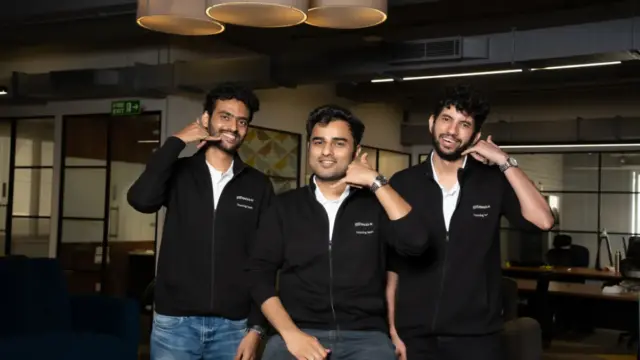
The trajectory of Airbound reads like a masterclass in modern venture-backed acceleration. The company’s origins trace back to the vision of Naman Pushp, who assumed the role of founder and CEO while just 20 years old, bringing a fresh, unconstrained perspective to an aerospace industry often bogged down by legacy methodologies and bureaucratic inertia.
The Inception and Early Validation (2023)
Founded in 2023, Airbound quickly realized that the primary roadblock to commercializing drone technology was not software navigation or autonomous flight control algorithms, but pure physics and hardware economics. While competitors focused heavily on tweaking software stacks or deploying off-the-shelf airframes, Airbound’s engineering team directed their focus toward fundamental aircraft architecture. They understood that to achieve true commercial viability, they had to solve the payload-to-weight ratio problem that has plagued aviation since its inception.
The Seed Phase and Proof of Concept (Late 2025)
By late 2025, the startup’s early prototypes and flight-testing data had matured enough to attract institutional capital. In October 2025, Airbound closed an $8.65 million seed round. This capital allowed the firm to transition from a conceptual design house into an operational engineering and flight-testing powerhouse. During this foundational period, the startup established its testing corridors in the southern Indian cities of Bengaluru and Guntur, accumulating over 13,000 autonomous flights without a major safety incident.
Crucially, this phase marked the establishment of a high-stakes commercial partnership with Narayana Health, a major Indian healthcare network. Utilizing a single active drone along a dedicated route, Airbound began transporting sensitive diagnostic blood and tissue samples between healthcare facilities. This operational deployment served as real-world proof that autonomous drones could bypass urban gridlock to deliver critical medical cargo in a fraction of the time required by traditional ground vehicles.
The Series A Acceleration (Present Day)
The closing of the $37 million Series A round in mid-2026 marks the beginning of Airbound’s industrial scaling phase. With nearly $50 million in total funding secured in under three years, the company has transitioned from localized proof-of-concept testing to regional infrastructure planning. The infusion of capital is being directed toward expanding internal manufacturing capacities at the Bengaluru facility, refining the next generation of high-capacity cargo drones, and navigating the complex regulatory frameworks required to deploy multi-city logistics networks.
Supporting Context & Mechanics: Engineering the "Anti-Weight" Paradigm
To understand Airbound’s potential market disruption, one must examine the engineering philosophy that separates its aircraft from conventional commercial drones.
Overcoming the Physics of Flight
In traditional aerospace design, aircraft structures, avionics housings, safety parachutes, and power distribution systems accumulate substantial baseline weight. When a conventional drone is designed, the vehicle itself often outweighs the cargo it transports by a factor of two or three. Consequently, a massive percentage of the battery’s energy output is consumed merely keeping the aircraft’s own structural deadweight airborne.
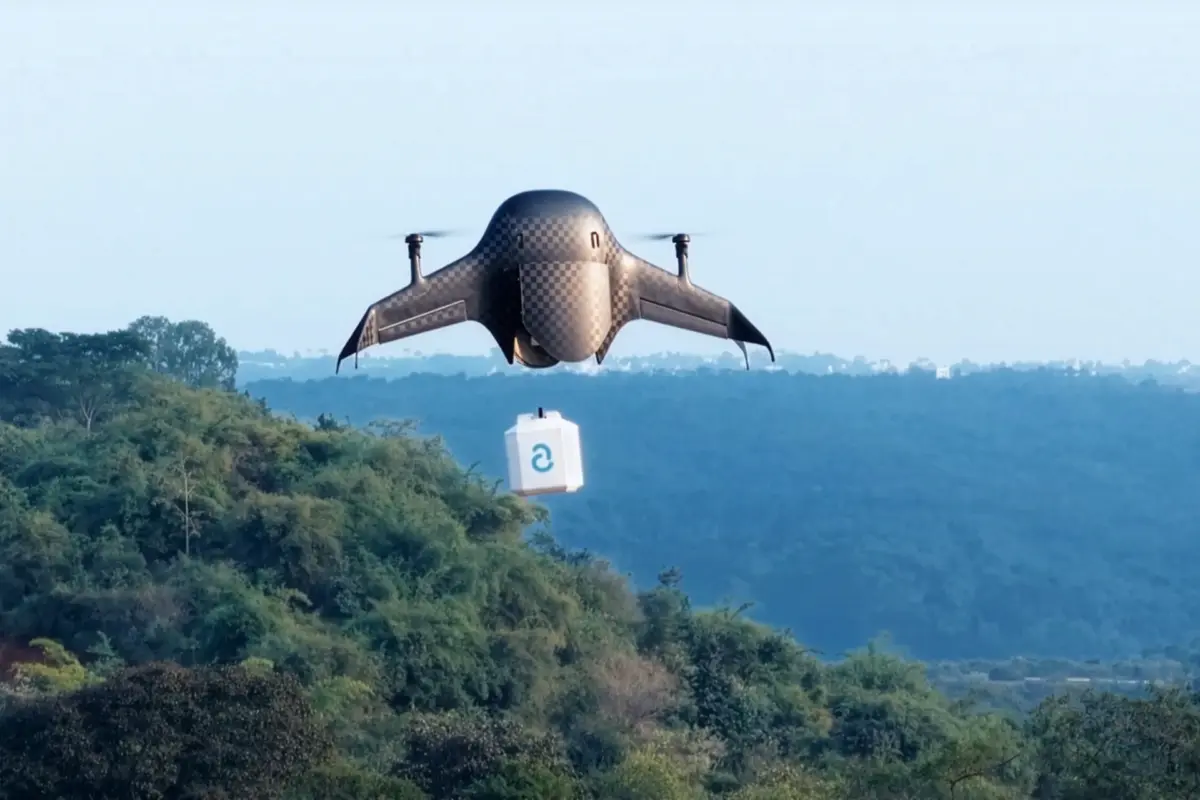
Airbound’s engineering breakthrough lies in inverting this paradigm. By utilizing advanced composite materials, minimalist structural layouts, and optimized aerodynamic profiles, the company builds vertical-flight drones engineered to weigh less than the cargo they carry.
- The TRT Generation 1: Airbound’s current operational workhorse, designated as the TRT, weighs approximately 3.3 pounds (1.5 kilograms) yet possesses the structural integrity and propulsion power to hoist a 2.2-pound (1 kilogram) payload.
- The TRT Generation 2 (Under Development): Pushing the envelope further, the company is actively prototyping its next-generation aircraft. Designed to weigh roughly 6.6 pounds (3 kilograms), this larger variant will be capable of hauling payloads up to 11 pounds (5 kilograms), vastly expanding the addressable market for retail, e-commerce, and heavy medical shipments.
The Rocket-Like Tail-Sitter Architecture
Rather than relying on clumsy multi-rotor configurations or requiring traditional runways—which are logistically impossible to implement densely across urban environments—Airbound utilizes a rocket-like, tail-sitter vertical takeoff and landing (VTOL) architecture.
The aircraft rests in an upright, vertical position on the ground. Upon initiating a mission, it launches vertically like a rocket, clearing local obstacles, power lines, and urban clutter. Once it reaches a designated altitude, the aircraft transitions smoothly into horizontal forward flight, maximizing aerodynamic efficiency and cruising speed. Upon reaching its destination, it reverses the process, transitioning back to a vertical orientation for precise, pin-point landings. This configuration allows Airbound to operate in space-constrained urban environments without needing expensive, dedicated horizontal runway infrastructure.
Real-World Efficacy: The Narayana Health Case Study
The practical benefits of Airbound’s engineering choices are best illustrated through its ongoing deployment with Narayana Health. On a standard route connecting medical facilities in Bengaluru, an Airbound drone covers a distance of 2.5 miles in roughly seven minutes.
For ground transportation, the logistical reality is starkly different. Transporting diagnostic samples by truck over the same geographic distance routinely takes between three to five hours. This massive delay is not merely a byproduct of traffic congestion; rather, it stems from the traditional trucking requirement to accumulate a critical mass of samples before dispatching a vehicle to ensure cost efficiency. By breaking this batch-processing bottleneck, Airbound’s autonomous aerial link enables continuous, just-in-time diagnostic flows, directly improving patient outcomes.
This partnership is deepening significantly with Narayana’s newly constructed Banashankari hospital in Bengaluru. Architecturally, the facility was designed entirely without an on-site diagnostic laboratory or blood bank. Instead, the hospital relies fundamentally on Airbound’s autonomous drone network to bridge the physical gap between the clinic and centralized testing laboratories, proving that aerial logistics can actively alter modern architectural and urban planning paradigms.
Official Statements & Industry Perspective
The strategic vision guiding Airbound is anchored by the philosophical clarity of its founder and CEO, Naman Pushp. In various interviews and disclosures surrounding the Series A funding announcement, Pushp has repeatedly emphasized that the company’s ultimate ambitions stretch far beyond operating a localized delivery fleet.
"We want to build towards a world where everything has cost parity with trucking," Pushp stated, outlining the core economic benchmark that dictates every engineering decision at the startup.
Furthermore, Pushp has articulated a distinct positioning for Airbound within the broader autonomous mobility ecosystem. While many drone startups attempt to capture consumer mindshare by positioning themselves as direct-to-consumer delivery services or logistics operators, Airbound envisions a fundamentally different industrial role—one akin to a foundational aerospace manufacturer.
"That’s the Boeing role — the aircraft airlines everywhere rely on, not the airline itself," Pushp explained, highlighting the company’s intent to design, manufacture, and supply the underlying aerial hardware that third-party logistics networks, retail giants, and healthcare systems can deploy globally.
Investors in the round have echoed this sentiment, recognizing that solving the hardware and cost efficiency problem unlocks a multi-billion-dollar total addressable market. Greenoaks and DoorDash, alongside veteran tech investor Lachy Groom, view Airbound’s hardware-first approach as the missing puzzle piece required to transition drone delivery from a high-cost novelty into an indispensable utility of the modern supply chain.
Future Outlook: The Three-City Network and Industrial Scaling
As Airbound transitions into its next phase of growth, the company’s ambitions are expanding from point-to-point healthcare corridors to regional, multi-city logistics infrastructure.
The Andhra Pradesh Three-City Vision
Airbound has signed a landmark framework agreement with the state government of Andhra Pradesh to establish an expansive drone delivery network connecting three distinct urban centers. The ultimate operational target for this initiative is staggering: 10,000 commercial flights per day, servicing retail, e-commerce, and healthcare logistics demands.
Achieving this scale will require an active fleet ranging between 250 and 1,000 aircraft, depending heavily on the average route distances traversed, though leadership projects an initial deployment closer to the 250-aircraft mark. Crucially, this agreement operates independently of direct government subsidies or traditional public procurement contracts. Instead, the Andhra Pradesh government is collaborating directly with Airbound to streamline and establish the forward-thinking regulatory frameworks necessary to govern high-density, autonomous aerial corridors safely. Revenue will be generated organically through enterprise customers utilizing the network for commercial transport.
Manufacturing Scalability in Bengaluru
To supply fleets of this magnitude, production capabilities must scale in tandem. Airbound anchors its manufacturing operations in a dedicated 43,000-square-foot facility in Bengaluru. By keeping the design, airframe fabrication, propulsion integration, and avionics development strictly in-house, the startup maintains tight quality control and intellectual property protection while iterating rapidly on hardware designs. While specific factory output figures remain closely guarded, leadership maintains that internal manufacturing capacity will not act as a restrictive bottleneck as commercial demand accelerates.
Navigating the Regulatory Horizon
Despite technological readiness and robust financial backing, Airbound faces a formidable external challenge: global airspace regulation.
The primary barrier to scaling autonomous drone delivery is not manufacturing output, but securing regulatory certifications for Beyond Visual Line of Sight (BVLOS) operations. Operating a drone network safely across cities requires regulatory bodies to approve automated flights where the vehicle operates completely outside the direct, visual line of sight of a ground pilot.
These regulatory realities have temporarily constrained the startup’s ability to turn its extensive flight hours into massive commercial revenue streams. Consequently, Airbound remains largely pre-revenue, a strategic reality that CEO Naman Pushp views with long-term equanimity.
"The goal is to be a giant in a few decades, not to make revenue as soon as we can," Pushp noted.
By prioritizing deep technical moats, uncompromising weight-to-payload engineering, and systemic regulatory harmonization over short-term monetization, Airbound is systematically laying the foundation to redefine global logistics. If the company succeeds in bringing the cost of aerial transport down to parity with ground-level trucking, it will not merely participate in the future of transportation—it will author it.