Basiran is a reporter for Tech Ledgers covering Tech Economy & Markets. She/He is based in Indonesia.
24 August 2026 • 11 min read
Earlier this week, a standard morning browsing session yielded an extraordinary haul: a $44,860 hand-engraved Patek Philippe timepiece, a $12,500 Hermès leather handbag, a $9,800 Tiffany diamond engagement ring, and a $7,350 Cartier Love bracelet cast in glowing yellow gold.
Executive Overview
None of these items are needed. None of them can be afforded. And, most importantly, none of them will ever arrive.
There was no credit card transaction, no checkout validation, and no anxious tracking of courier vans. Instead of navigating the predictable aisles of Amazon or scrolling through hyper-targeted social media ads, this digital window-shopping took place on a novel, quietly booming genre of web platforms known as "dopamine sites." Originating in South Korea—a market globally renowned for pioneering ultra-fast, deeply integrated digital commerce—platforms such as Dopamine Shop and FoodNeverComes meticulously replicate every single step of the modern e-commerce ritual.
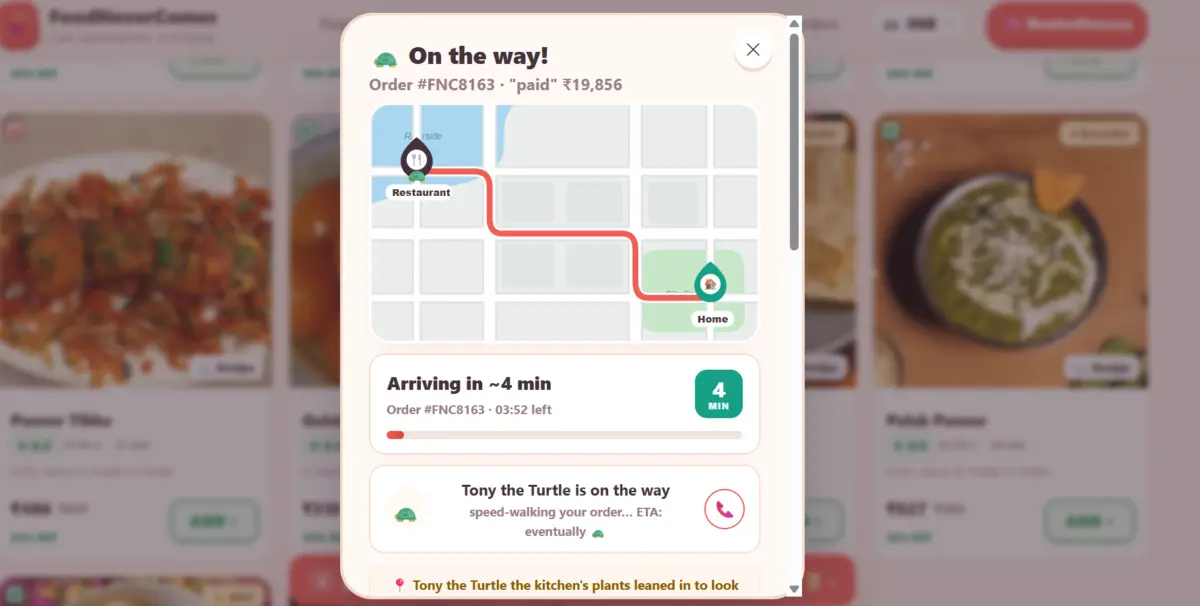
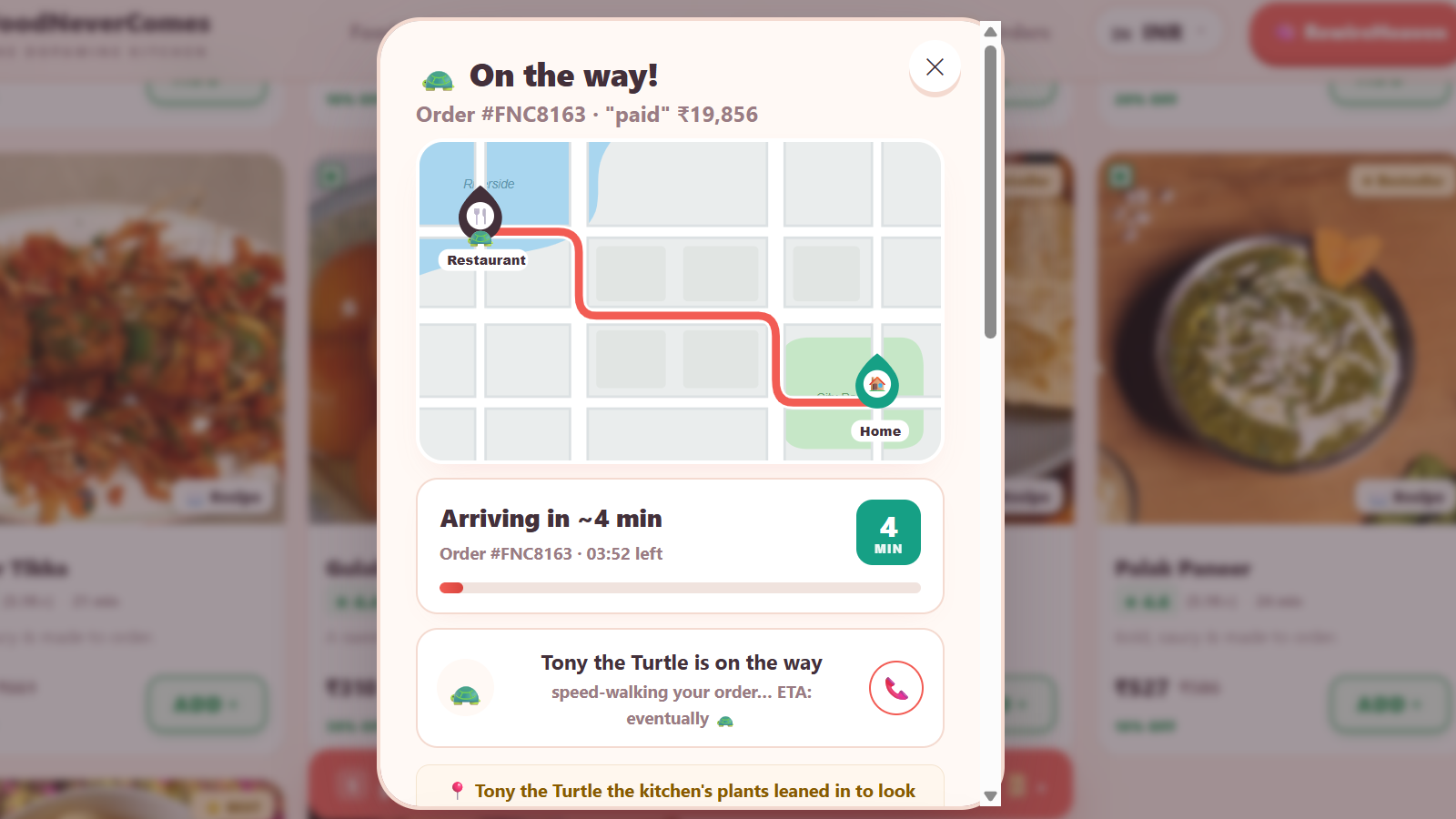
Users can browse an extensive catalog of luxury goods, pore over customer reviews, carefully curate items into an electronic shopping cart, input fictional shipping addresses, execute a simulated order placement, and even track the live, simulated progress of a delivery driver navigating a digital map. Then—silently, purposefully—nothing happens. No money changes hands. No physical box lands on the doorstep.
At first glance, this trend is easy to dismiss as another fleeting internet eccentricity, a quirky digital art project born from online fatigue. Yet, as millions of consumers wrestle with economic uncertainty, inflation, and the relentless cognitive overload of digital consumerism, these phantom storefronts expose a profound shift in human behavior. They force a critical question that consumer researchers, anthropologists, and economists are beginning to ask with mounting urgency: Has online shopping finally decoupled the act of purchasing from the psychological thrill of the hunt?
By stripping away the financial burden, debt, and accumulation of material clutter, dopamine sites reveal that the true utility of modern retail may no longer be ownership, but anticipation.
Detailed Chronology: The Life Cycle of a Phantom Transaction
To understand the magnetic pull of dopamine sites, one must experience the uncanny valley of modern consumerism that they construct. The journey begins not with a desperate need for a product, but with a deliberate suspension of reality.
Step 1: The Illusion of Choice
Upon entering a platform like Dopamine Shop, the interface mimics high-end luxury e-commerce with terrifying accuracy. Minimalist typography, high-resolution product photography, and curated category tabs greet the visitor. The catalog features items that occupy the apex of human aspiration: Swiss watches, bespoke designer wear, rare collectibles, and high-end electronics.
The psychological setup is immediate. In standard e-commerce, the friction of price tags and financial reality constantly looms in the background of the user’s mind. On a dopamine site, however, price is entirely stripped of consequence. A $50,000 watch costs precisely the same as a simulated cup of artisanal coffee: nothing. This absolute liberation from monetary constraints allows the browser to elevate their ambitions instantly. Restraint is abandoned; desires that would otherwise be suppressed by budget constraints are given free rein.
Step 2: The Ritual of the Cart and Checkout
Once the items are selected, the user enters the familiar, almost Pavlovian ritual of the checkout process. This is where the core mechanics of the psychological trap lie.
Information Architecture: Users input a shipping address—often their actual home, workplace, or a whimsical fantasy destination (such as a remote cabin or a luxury penthouse).
The Confirmation Screen: A digital receipt is generated, complete with a hyper-realistic order number, itemized tax breakdowns, and estimated delivery dates.
The Simulation Loop: On sister sites like FoodNeverComes, the experience extends into the delivery tracking phase. A simulated GPS map loads, showing a little icon representing a delivery driver winding their way through city streets. A countdown timer ticks down: 4 minutes away. 3 minutes away. Arriving soon.
Step 3: The Anticlimax of Silence
In a conventional online purchase, this is the precise moment when anticipation peaks, immediately followed by the transaction’s financial sting. Credit card notifications buzz on smartphones; bank accounts are debited.
On a dopamine site, the climax is deliberately hollow. The countdown timer hits zero, the delivery status marks the order as "complete," and the browser is left staring at an empty screen or a static notification. No doorbell rings. No cardboard box awaits on the porch.
For the uninitiated, this anticlimax might feel empty or frustrating. But for the digital native, the emotional arc is complete. The user has experienced the dopamine spike associated with the chase, the curation, and the mental projection of owning a desirable object—all without parting with a single cent of hard-earned currency. The transaction is entirely cognitive.
Supporting Context & Metrics: The Evolution of Digital Window-Shopping
The emergence of dopamine sites did not happen in a vacuum. It is the logical, albeit surreal, evolution of decades of shifting consumer habits driven by digital saturation.
South Korea: The Crucible of Digital Retail
That this trend took root in South Korea is no accident. South Korea boasts one of the most advanced, hyper-dense e-commerce ecosystems on the planet. Digital payments are frictionless, lightning-fast logistics networks ensure same-day or even morning-of-order delivery, and mobile commerce is deeply woven into the fabric of daily social life.
In a society where ordering food, hailing a ride, and buying luxury goods require nothing more than a couple of taps on a smartphone screen, the e-commerce loop has become hyper-familiar. Consequently, it has also become a source of profound fatigue. When convenience reaches 100%, the thrill of the hunt is often engineered out of the buying process, replaced by frictionless, mindless consumerism. Dopamine sites subvert this hyper-efficient machinery by reintroducing friction, delay, and imagination into a system that had otherwise automated the romance out of shopping.
The Psychology of the Abandoned Cart
Long before the advent of dedicated dopamine sites, e-commerce researchers were well aware of the "abandoned cart" phenomenon. Millions of shoppers routinely load up digital carts on traditional retail platforms with zero immediate intention of checking out.
Data from major retail analytics firms consistently shows that online cart abandonment rates hover between 70% and 80%. While retailers traditionally view this as a failure of conversion—a lost sale to be recaptured via aggressive retargeting ads and discount emails—behavioral scientists view it through a radically different lens. For the consumer, the cart is not always a staging ground for an impending purchase; it is a sandbox, a mood board, and an organizational tool.
Consumers use online shopping carts to:
Curate Aspirations: Grouping items together to visualize a future lifestyle, aesthetic, or personal reinvention.
Regulate Mood: Using the act of browsing and selecting items as a form of self-soothing during moments of stress, boredom, or loneliness.
Gather Information: Comparing specs, reading reviews, and conducting mental simulations of ownership without financial exposure.
Dopamine sites simply take this pre-existing behavioral artifact—the abandoned cart—and turn it into the main event.
Official Statements and Expert Perspectives
To grasp the true significance of these platforms, Rest of World consulted leading voices in digital culture, consumer anthropology, and economic psychology.
Shriram Venkatraman: The Formalization of Everyday Behavior
Shriram Venkatraman, an assistant professor at the Danish Institute for Advanced Study who specializes in digital consumption, culture, and commerce, emphasizes that while the service is new, the behavior is deeply human and historically ubiquitous.
"People in many places have browsed without buying, window-shopped, filled online carts, and left them there," Venkatraman told Rest of World. "They have fantasized about things they might own, compared products without any immediate intention to purchase, or just simply have enjoyed the anticipation of acquiring something… So, what may be particularly Korean at this moment is not necessarily the underlying behaviour, but the way that behaviour has been formalized into a digital service."
Venkatraman draws a direct parallel to physical retail history—specifically the tradition of historical window-shopping (léchage de vitrines in French)—where physical proximity to unattainable goods served as a form of urban entertainment. Dopamine sites, he argues, digitize and democratize this pastime for an era where physical retail has been largely replaced by the glowing screen.
Furthermore, Venkatraman points out that human consumption patterns are fluid and context-dependent rather than rigidly defined by nationality or permanent lifestyle choices:
"The same person might shop out of necessity in the morning, out of boredom at lunch, aspirationally around payday, and perhaps even out of loneliness at midnight. What changes across countries is often the context surrounding those moments: what people can afford, what counts as desirable, what friends are buying, whether purchases are made individually or as a household, and even how easy local payment systems make it to complete a purchase."
Helen Jambunathan: Prioritizing Anticipation Over Ownership
Echoing these sentiments, Helen Jambunathan, a consumer anthropologist and the director of insight at London-based consultancy Canvas8, points out that dopamine sites expose a profound emotional truth about modern retail that traditional economists frequently overlook.
"The concept of retail therapy has been around for a long time, and it persists for a reason," Jambunathan explained to Rest of World. “’Fake’ shopping sites are interesting as they reveal shopping as an emotional experience, not just a transactional one. People are prioritizing anticipation, choice, and curation over ownership, reaping the psychological rewards of shopping without the financial consequences.”
Jambunathan notes that while structural differences exist in how different cultures approach consumption—often shaped by economic realities, household dynamics, and local retail infrastructure—the underlying psychological triggers remain universal.
"Most shopping is still driven by necessity and convenience," Jambunathan concedes. "However, the psychological reward systems of the human brain have not evolved to match the hyper-speed of modern capitalism. When physical ownership becomes financially prohibitive—due to soaring housing costs, inflation, and stagnant wages—the brain seeks out alternative avenues to satisfy its innate desire for accumulation, control, and reward."
Future Outlook: What Phantom Retail Tells Us About the Future of the Consumer Economy
As dopamine sites gain traction across global internet culture, industry observers are left wondering whether this is a passing meme or a canary in the coal mine for the modern consumer economy.
1. The Decoupling of Status and Possession
For generations, conspicuous consumption was defined by physical accumulation: driving luxury cars, wearing designer labels, and filling homes with material goods. However, younger generations—particularly Gen Z and Millennials, who have come of age amidst profound economic instability, climate anxiety, and skyrocketing housing costs—are experiencing a shift in how status and identity are performed.
When homeownership is out of reach and physical space is constrained by skyrocketing urban rents, accumulating physical "stuff" transforms from a status symbol into a logistical and financial liability. Dopamine sites offer a brilliant workaround: all of the psychological benefits of curation and aspiration, with zero carbon footprint, zero debt, and zero clutter.
2. The Rise of "Synthetic" Emotional Regulation
As digital life becomes increasingly mediated by algorithms designed to monetize human attention, users are developing coping mechanisms to reclaim agency over their emotional states. Traditional retail therapy carries a heavy hangover: credit card debt, buyer’s remorse, and the guilt of overconsumption.
Phantom shopping represents a form of "synthetic" emotional regulation—a harm-reduction model for consumerism. It allows individuals to scratch the neurological itch of the retail loop without feeding the machine that exploits their financial anxieties.
3. Implications for Traditional E-Commerce
For traditional retailers and brands, the rise of dopamine sites serves as both a warning and a lesson. Brands have long understood that the digital shopping experience must be engaging, immersive, and emotionally resonant. However, as consumers grow increasingly cynical about relentless monetization and targeted advertising, the sheer transactional nature of modern e-commerce is wearing thin.
In the future, we may see mainstream e-commerce platforms intentionally incorporate elements of play, gamification, and non-transactional engagement—such as advanced wish-list sharing, virtual styling rooms, and zero-stakes curation tools—to capture the attention of consumers who are weary of the financial pressures of buying.
Conclusion
Placing an order for a $44,860 watch that will never ship is, on the surface, an absurd exercise in digital pretense. Yet, it is entirely rational in a world where the emotional rewards of consumption have been industrialized, while the financial realities of ownership have been pushed out of reach.
As long as human beings are wired to seek the thrill of the hunt, the comfort of anticipation, and the joy of curation, phantom carts will continue to fill up. In an economy where we can less and less afford to buy the world we desire, dopamine sites offer a revolutionary proposition: the freedom to shop our dreams, completely free of charge.