
Executive Overview
In a decisive regulatory intervention, the Federal Reserve and the Alabama State Banking Department have formally ordered Birmingham, Alabama-based SouthPoint Bancshares to take immediate and comprehensive steps to serve as a verifiable "source of financial and managerial strength" for its primary subsidiary, SouthPoint Bank.
The joint enforcement action, finalized mid-August 2026, requires the $1.7 billion-asset bank holding company to submit a rigorous capital plan and detailed cash-flow projections within 60 days. This directive compounds existing regulatory scrutiny for the institution, which has spent the better part of a year operating under a Federal Deposit Insurance Corporation (FDIC) consent order tied to systemic deficiencies in credit risk management and asset quality.
Compounding these regulatory hurdles are severe external pressures. Earlier in August 2026, SouthPoint was publicly identified as the largest secured creditor in the high-profile Chapter 11 bankruptcy of prominent Birmingham restaurateur Nick Pihakis. Court filings indicate that Pihakis owes roughly $23.6 million in outstanding loans to SouthPoint—a massive exposure that forms a substantial portion of the entrepreneur’s $44 million total liabilities against just $10.6 million in assets.
As regulatory walls close in, SouthPoint Bancshares faces stringent operational constraints. Effective immediately, the holding company is barred from distributing dividends, repurchasing shares, or incurring new debt without explicit prior regulatory approval. This deep-dive report examines the regulatory orders, the underlying credit quality issues, the fallout from the Pihakis bankruptcy, and what the future holds for SouthPoint Bank and its stakeholders.
Detailed Chronology of Regulatory Actions
The path leading to the August 2026 Federal Reserve and Alabama State Banking Department directive did not happen in a vacuum. It represents the escalation of a multi-tiered supervisory intervention aimed at arresting a perceived downward trajectory in asset quality and capital adequacy at SouthPoint.
November 2025: The FDIC Consent Order
The foundational warning sign for SouthPoint Bank emerged in late 2025 when federal examiners from the FDIC imposed a formal consent order upon the $1.7 billion-asset institution. While routine details of bank examinations remain confidential, public disclosures tied to the order highlighted severe vulnerabilities in:
- Credit Risk Management: Inefficiencies in underwriting standards, portfolio monitoring, and problem-loan identification.
- Asset Quality: A rising tide of classified assets and non-performing loans that threatened to erode the bank’s capital buffers.
Despite management’s efforts to remediate these issues over the winter and spring, federal and state regulators determined that the holding company—SouthPoint Bancshares—needed to step in more aggressively to support its banking subsidiary.
August 14–21, 2026: The Joint Fed and State Directive
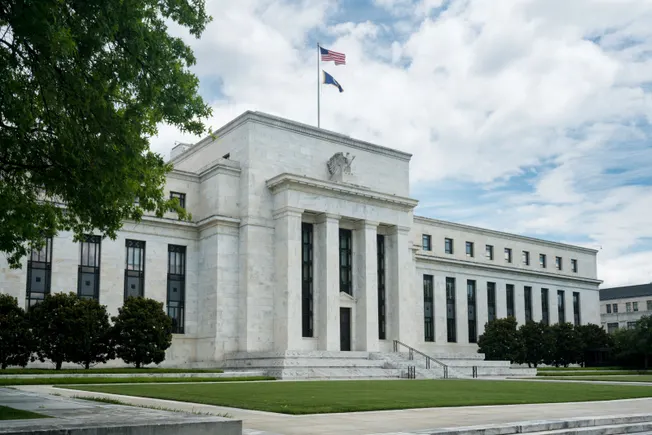
On August 14, 2026, the Federal Reserve Board and the Alabama State Banking Department issued a formal joint enforcement document. Publicly released on August 20, the order mandates that SouthPoint Bancshares utilize its full financial and managerial resources to shore up SouthPoint Bank.
Key components of the 60-day compliance timeline require the holding company to deliver:
- A Comprehensive Capital Plan: A forward-looking assessment of current and anticipated capital sources and uses, paired with a stringent analysis of capital adequacy.
- An Action Plan for Capital Raising: Concrete strategies to inject fresh capital into the institution.
- A Robust Capital Contingency Plan: Frameworks designed to address both immediate short-term liquidity and long-term capital needs for the bank and the holding company alike.
- Cash-Flow and Debt Service Projections: Detailed statements outlining planned sources and uses of cash to cover debt service, operating expenses, and general corporate purposes for the entirety of 2026.
Concurrently, the regulatory framework has stripped SouthPoint Bancshares of its financial flexibility. Without prior written approval from the Federal Reserve Bank of Atlanta and the Alabama State Banking Department, the holding company is strictly prohibited from:
- Declaring or paying cash dividends.
- Executing share repurchases or capital distributions of any kind.
- Incurring, increasing, or guaranteeing any new debt obligations.
Supporting Context, Metrics, and Asset Quality Concerns
To fully understand the gravity of the regulatory intervention, one must examine the macro-prudential environment surrounding regional and community banking institutions of SouthPoint’s size, as well as the bank’s specific balance sheet composition.
Understanding the "Source of Strength" Doctrine
In U.S. banking regulation, the "source of strength" doctrine dictates that a bank holding company must serve as a financial and managerial cushion for its subsidiary depository institutions. When a holding company is issued an order of this nature, it typically signals that regulators believe the bank’s internal capital generation is insufficient to handle current or projected credit losses.
For SouthPoint Bancshares, this means leadership cannot simply sit back and wait for organic earnings to heal the balance sheet. They are legally required to explore capital injections, asset sales, or structural balance sheet downsizing if internal metrics fail to meet regulatory thresholds.
Asset Quality and Portfolio Concentration
At $1.7 billion in assets, SouthPoint operates in a competitive sweet spot: large enough to finance major commercial real estate (CRE) and regional business projects, yet small enough that a handful of large, non-performing commercial loans can dramatically skew its financial health.
The FDIC’s November 2025 consent order pointed directly to flaws in credit risk management. In regional banks, such findings often correlate with:

- Over-concentration in specific commercial sectors (such as hospitality, retail, or local real estate development).
- Inadequate loan-loss reserves relative to actual credit risk exposure.
- Delayed recognition of troubled debt restructurings (TDRs).
When these internal weaknesses intersect with external economic headwinds—such as elevated interest rate environments impacting commercial borrowing costs—the margin for error shrinks to near zero. This brings into sharp focus SouthPoint’s exposure to Birmingham’s commercial landscape, most notably exemplified by the Pihakis bankruptcy.
The Pihakis Bankruptcy Exposure
The regulatory pressure on SouthPoint Bancshares intensified against the backdrop of local economic turbulence. Earlier in August 2026, local business journals reported that prominent Birmingham restaurateur Nick Pihakis had filed for Chapter 11 bankruptcy protection, listing liabilities of approximately $44 million against a mere $10.6 million in assets.
A Striking Concentration of Risk
According to court filings cited by the Birmingham Business Journal, SouthPoint Bank stands as the single largest creditor in the Pihakis bankruptcy, holding roughly $23.6 million in outstanding loans tied to the enterprise.
To contextualize this figure within a $1.7 billion-asset institution:
- A single borrower default totaling $23.6 million represents more than 1.3% of the bank’s entire asset base.
- More critically, when measured against the bank’s total capital tier, a multi-million-dollar impairment or write-down on a loan of this magnitude can severely deplete capital reserves, directly triggering the type of mandatory capital planning now demanded by the Federal Reserve.
The Ripple Effect on Commercial Lending
The Pihakis bankruptcy underscores the vulnerability community and regional banks face when local commercial relationships turn sour. While relationship banking is a cornerstone of regional lending—allowing banks to forge deep ties with local entrepreneurs, developers, and business owners—it carries inherent concentration risk.
When a marquee local borrower collapses under heavy liabilities, the lending institution absorbs the immediate shock wave. In SouthPoint’s case, the timing could not have been worse, coinciding precisely with the period when federal and state examiners were evaluating the bank’s credit risk controls and asset quality classification systems.
Official Statements and Industry Response
As of press time, corporate communications channels at SouthPoint Bancshares and SouthPoint Bank have remained tight-lipped. Repeated requests for comment directed to institutional spokespersons and executive leadership went unanswered.
Industry analysts note that bank executives under active enforcement actions are typically restricted by regulatory confidentiality guidelines from commenting on the specifics of supervisory agreements, beyond acknowledging their receipt and committing to compliance.

Independent banking analysts who have reviewed the public filings suggest that SouthPoint’s management faces a narrow window to regain the confidence of regulators. "When you combine an FDIC consent order on credit risk management with a Federal Reserve holding company directive, and then throw in a multi-million-dollar local bankruptcy exposure, the mandate is clear," noted one southeastern banking consultant who spoke on condition of anonymity. "Management’s sole focus for the next 60 days must be engineering a credible capital plan that satisfies federal examiners, whether that involves private equity infusion, subordinated debt issuance, or aggressive loan portfolio workouts."
Future Outlook: Navigating the 60-Day Window and Beyond
As the autumn of 2026 unfolds, SouthPoint Bancshares finds itself at a crucial historical juncture. The next two months will determine the independent trajectory of the Birmingham-based institution.
Key Milestones and Hurdles Ahead
- The October Submission Deadline: By mid-October 2026 (60 days from the August 14 order date), SouthPoint must present its comprehensive capital plan, cash-flow projections, and contingency strategies to the Federal Reserve Bank of Atlanta and the Alabama State Banking Department. Failure to deliver a satisfactory plan could trigger even harsher enforcement measures, up to and including civil money penalties or forced structural reorganization.
- Workout and Recovery on the Pihakis Portfolio: The bank’s legal and workout teams will need to navigate the bankruptcy court proceedings closely to maximize recovery on the $23.6 million exposure tied to the Pihakis restaurant group. Every dollar recovered mitigates the ultimate capital hit the bank must absorb.
- Restoration of Dividend and Capital Freedom: Until regulators are satisfied that SouthPoint Bank has achieved sustained managerial and financial stability, shareholders and investors will see zero returns in the form of dividends or share repurchases. The freeze on debt incurrence also limits strategic growth initiatives, forcing the bank into a defensive, consolidation-focused posture.
Broader Implications for Regional Banking
SouthPoint’s current travails serve as a cautionary case study for other sub-$2 billion community and regional banks navigating the post-pandemic economic cycle. As commercial real estate valuations adjust and localized business credit stresses manifest, regulatory oversight on asset quality and holding company capitalization has tightened considerably.
For SouthPoint Bancshares, the immediate objective is unambiguous: execute the regulatory mandates, stabilize asset quality, secure the necessary capital buffers, and prove to the Federal Reserve and state authorities that the holding company can indeed stand as an unshakeable source of strength for SouthPoint Bank.
Additional updates on SouthPoint Bancshares’ capital plan submission are expected following the expiration of the regulatory deadline in October 2026.