

Executive Overview
For Dakota, the pivot toward federal regulation represents an effort to streamline operations and reduce structural friction in a notoriously complex financial landscape. According to CEO Ryan Bozarth, the charter is designed to eliminate intermediary layers between the company’s product suite and underlying financial services. However, despite the expanded federal footprint, a national trust charter comes with distinct statutory limitations—most notably, the inability to take traditional retail deposits.
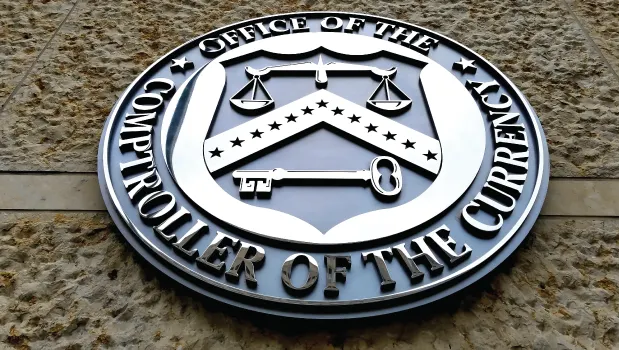
Dakota’s application lands amid a broader wave of interest in OCC trust charters spearheaded by acting leadership under Jonathan Gould. While high-profile entities like Sony and Circle have recently cleared major hurdles to secure trust charters, the regulatory environment remains highly selective. Fintech applicants face rigorous compliance scrutiny, as evidenced by recent denials and mounting pushback from traditional banking trade associations. As Dakota embarks on an 18-month build-out window should it secure conditional approval, the company’s bid highlights the high-stakes battle over the future architecture of digital asset regulation in the United States.
Detailed Chronology and Industry Momentum
The trajectory of Dakota’s charter application is best understood within the rapid evolution of its business model over the past year. Having initially launched as a registered money services business, Dakota introduced its proprietary stablecoin offering in January, signaling its intent to capture institutional market share in programmable money. Recognizing the administrative and compliance bottlenecks inherent in managing a patchwork of state-level money transmitter licenses, leadership opted to pursue a direct line to federal oversight.
This filing coincides with a pronounced surge in trust bank charter interest overseen by OCC chief Jonathan Gould. The regulatory climate has grown increasingly receptive to digital asset firms willing to submit to federal prudential standards, though approvals are far from guaranteed.
Within the past month alone, the digital asset ecosystem has witnessed starkly contrasting outcomes from the OCC:
- Sony’s Conditional Nod: Japanese entertainment and tech conglomerate Sony secured conditional approval from the OCC for its trust bank charter, signaling traditional corporate entry into regulated blockchain infrastructure.
- Circle’s Full Approval: Stablecoin issuer Circle achieved full regulatory approval after spending seven months operating under a conditional trust status, marking a milestone for major dollar-pegged token issuers.
- Wise’s Rejection: Conversely, U.K.-based international money transfer fintech Wise saw its trust charter application rejected by the OCC last month. The regulator cited significant supervisory and compliance concerns, pointing specifically to state-level enforcement actions regarding Wise’s anti-money laundering (AML) practices and a perceived deficiency in the organizers’ familiarity with federal banking laws.
Wise has since indicated plans to pivot, intending to submit a new application under the framework of the Genius Act—a sweeping piece of digital asset legislation slated to take effect by January. For Dakota, navigating this delicate regulatory tightrope will require flawless compliance execution to avoid the pitfalls that ensnared firms like Wise.
Supporting Context and Regulatory Mechanics
While a national trust bank charter grants broad powers regarding digital asset custody and institutional services, it is critical to delineate what the charter does—and does not—permit. Crucially, a national trust charter does not authorize Dakota to accept traditional retail deposits.
Because of this limitation, Dakota continues to rely on strategic banking partnerships to maintain core functions. For example, Lead Bank currently provides vital deposit insurance infrastructure for the company’s existing operations. Should Dakota secure conditional approval from the OCC, the firm will be granted an 18-month window to fully build out its operational framework, satisfy all federal safety and soundness requirements, secure final approval, and officially launch the federally regulated entity.
The mechanics of trust charters have also ignited a fierce turf war between traditional banking lobbies and the burgeoning fintech sector. Prominent trade groups—including the Bank Policy Institute (BPI) and the Independent Community Bankers of America (ICBA)—alongside advocacy organizations like the National Community Reinvestment Coalition (NCRC), have mounted vocal opposition against the influx of stablecoin and fintech trust applications.
Critics argue that granting national trust charters to stablecoin issuers fundamentally blurs the statutory boundaries of what constitutes a bank. The NCRC has pointed out that, unlike traditional insured depository institutions, trust banks are not bound by the rigorous mandates of the Community Reinvestment Act (CRA), which requires banks to help meet the credit needs of the communities in which they operate, including low- and moderate-income neighborhoods.
Furthermore, the ICBA has raised alarms regarding consumer protection. Because national trust banks do not hold federal deposit insurance directly in the manner of commercial banks, critics warn of potential consumer confusion and systemic risk. Should an unregulated or improperly structured trust encounter severe distress or insolvency, uninformed consumers could suffer catastrophic financial harm under the mistaken belief that their digital assets or stablecoins carry government-backed deposit insurance guarantees.
Official Statements and Leadership Vision
Dakota’s executive team has been transparent about the structural inefficiencies plaguing modern financial product development and why federal licensure is viewed as the ultimate remedy. In a detailed blog post announcing the filing, CEO Ryan Bozarth laid bare the motivations driving the company’s regulatory strategy.
"For you, that means fewer layers between your product and the financial services underneath it," Bozarth wrote, emphasizing the operational advantages for corporate clients. "Fewer intermediaries mean more control, more reliability, and a cleaner experience for the people you serve."
Bozarth elaborated on how the charter anchors Dakota’s long-term business strategy, framing it as an essential bridge for corporate adoption. The charter, he noted, "would position Dakota as a federally regulated provider of digital asset custody, stablecoin issuance, and related services, and a partner of choice for corporate and institutional clients building on us."
Beyond institutional partnerships, Bozarth targeted the friction points that continue to stifle innovation across the fintech and blockchain sectors. Traditional financial infrastructure, he argued, was never designed to accommodate the speed and programmability of modern digital assets.
"There are so many hurdles that make building financial products hard: distributed licensing, compliance that runs as a periodic scramble instead of as code, payment rails never built for programmable or agent-native money," Bozarth wrote. "Instead of working around that, we rebuilt from the foundation and became the layer underneath."
Concluding his remarks with a resolute nod to the road ahead, Bozarth affirmed the company’s commitment to seeing the arduous regulatory process through to the end: "The application is in. The work continues."
Future Outlook: Navigating the Road Ahead
As Dakota’s application sits before the OCC, the company’s fortunes hang in the balance of a shifting regulatory and political landscape. The outcome of this filing will serve as yet another bellwether for how federal regulators intend to treat non-depository trust applicants operating within the stablecoin and digital asset custody space.
If Dakota successfully navigates the 18-month conditional approval window, it stands to emerge as a leaner, federally anchored infrastructure provider capable of offering institutional clients a seamless stack of custody and issuance services. By cutting out intermediary layers and embedding compliance directly into its architecture, Dakota aims to prove that fintech innovation and rigorous federal supervision can coexist.
However, the path forward is fraught with external pressures. As banking trade groups intensify their lobbying efforts against non-depository charters, and as lawmakers continue to debate the boundaries of digital asset legislation like the upcoming Genius Act, the regulatory scrutiny facing Dakota and its peers will only intensify. Whether Dakota can satisfy the OCC’s stringent compliance expectations—avoiding the compliance traps that recently doomed Wise while matching the successes of Circle and Sony—will determine not only the company’s future, but also help define the regulatory perimeter of the next-generation financial system.