

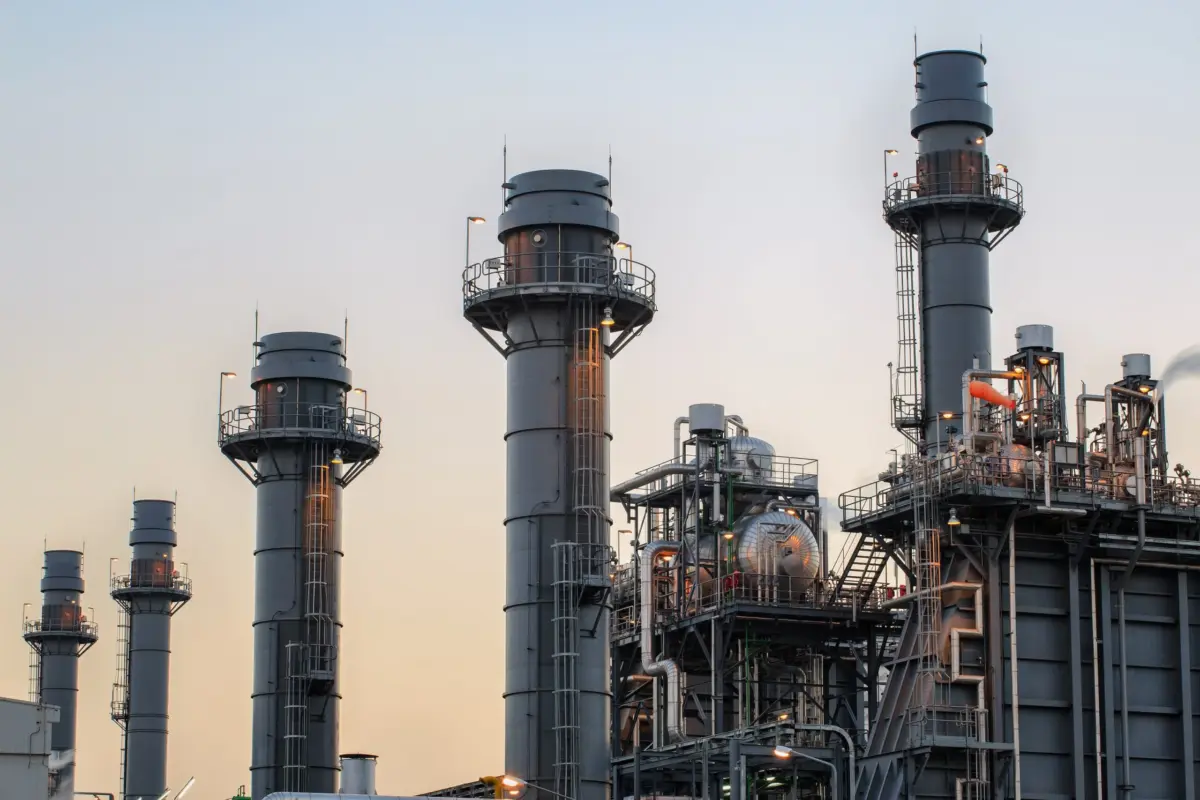
This facility, designed to feed the insatiable energy demands of next-generation artificial intelligence infrastructure, is permitted to release a staggering 33 million tons of carbon dioxide equivalent per year. If fully realized at this scale, the single power plant will instantly become the largest individual source of climate pollution in the United States, casting a long, complicated shadow over the tech industry’s stated environmental ambitions.
The project highlights an urgent, high-stakes collision between the explosive, energy-intensive growth of artificial intelligence and global corporate sustainability pledges. As tech giants race to secure the vast quantities of continuous electricity required to run advanced AI models, the traditional grid is proving inadequate. The resulting scramble is driving some of the world’s most valuable corporations away from renewable energy pipelines and directly back toward fossil fuels—raising fundamental questions about whether the AI boom can coexist with global climate targets.
Executive Overview
The intersection of artificial intelligence and power generation has transformed utility markets across the globe. Modern data centers—housing tens of thousands of specialized computer chips dedicated to training and running large language models—consume levels of electricity that rival small cities. To bypass bottlenecked public utility queues and secure uninterrupted, 24/7 power, tech companies are increasingly taking matters into their own hands.
In Pecos County, Amazon’s strategy involves building dedicated, on-site fossil fuel generation specifically tailored to its data center load. While corporate representatives emphasize that the localized energy production will prevent strain and price spikes for everyday Texas electricity consumers, environmental analysts and climate scientists are sounding alarms.
A facility permitted for 33 million tons of annual carbon dioxide emissions does not merely challenge corporate climate goals; it redefines the scale of emissions linked directly to commercial software infrastructure. The development threatens to derail Amazon’s long-standing public commitments—including its co-founding role in The Climate Pledge—and sets a troubling precedent for how the tech sector plans to power the future of artificial intelligence.
Detailed Chronology: The Road to Pecos County and the AI Energy Crisis
The Escalating Demands of Generative AI (2022–2024)
The genesis of the current energy crunch traces back to the late-2022 public rollout of generative AI applications. As enterprises and consumers rushed to adopt neural networks, large language models, and automated reasoning tools, the computational load required to train and deploy these systems skyrocketed.
Cloud providers—principally Amazon Web Services (AWS), Microsoft Azure, and Google Cloud—found themselves forced to expand their physical infrastructure at an unprecedented rate. Data centers that were once designed to handle standard cloud storage and web hosting workloads suddenly proved vastly underpowered for the intense computing demands of AI clusters.
The Grid Bottleneck and the Shift to On-Site Power (2025)
By 2025, regional power grids across North America began to show signs of severe strain. Public utilities, bound by lengthy regulatory approval processes and transmission line construction delays, struggled to connect new data centers to the grid in a timely manner.
Faced with multi-year waiting lists for grid interconnection, technology firms began exploring alternative models. Rather than waiting for public utilities to build out transmission infrastructure, companies pivoted toward decentralized, on-site energy solutions. Initially framed as a potential boon for advanced nuclear small modular reactors (SMRs) and localized green hydrogen projects, the reality of speed-to-market quickly steered tech giants back toward the most reliable, rapidly deployable baseline power source available: natural gas.
The Pecos County Permitting and the NYT Revelation (Mid-2026)
Against this backdrop, Amazon’s plans in Pecos County, Texas, moved through regulatory channels. Texas—known for its deregulated energy market, abundant natural gas reserves, and business-friendly regulatory climate—emerged as an ideal proving ground for massive, self-powered industrial computing hubs.
Public environmental filings and subsequent reporting by The New York Times in August 2026 brought the sheer magnitude of the Pecos County project to light. The disclosures revealed that the on-site natural gas plant would not merely supplement local energy needs; it would operate on a scale that eclipses nearly every industrial emitter in the nation. The revelation instantly ignited a national debate over accountability, regulatory oversight, and the environmental cost of digital innovation.
Supporting Context & Metrics: The Carbon Math of Modern Computing
To understand the weight of a 33-million-ton annual carbon footprint, one must look at both corporate disclosures and macroeconomic emissions metrics.
Inside Amazon’s Emissions Trajectory
Amazon’s corporate sustainability reports have painted an increasingly difficult picture regarding its path to net-zero. In mid-2026, the company disclosed that its carbon emissions had risen by another 16% year-over-year. This upward trend is directly attributable to the explosive expansion of energy-hungry data center infrastructure required to support AWS and internal AI initiatives.
For a company that has publicly pledged to achieve net-zero carbon emissions across its operations by 2040, these metrics represent a profound divergence from its roadmap. The commitment, co-founded by Amazon in 2019, relies on transitioning fleets to electric vehicles, powering logistics networks with renewable energy, and driving efficiency across supply chains. However, the sheer electrical draw of artificial intelligence has proven powerful enough to overwhelm these efficiency gains, turning the company’s carbon trajectory in the wrong direction.
The Anatomy of a 33-Million-Ton Facility
To contextualize 33 million tons of carbon dioxide per year:
- National Standing: It positions a single corporate-backed power plant ahead of many coal-fired electricity generators that have long topped national pollution registries.
- Equivalency: Emitting 33 million tons of $textCO_2$ annually is roughly equivalent to putting millions of additional internal combustion engine vehicles on the road permanently, or operating multiple traditional coal-fired power plants simultaneously.
- Grid Isolation: Because the facility is built on-site to directly feed the data center, its immense emissions profile bypasses traditional utility-scale efficiency mandates and cleaner portfolio standards that state regulators might otherwise attempt to enforce.
Official Statements and Corporate Realities
Faced with mounting scrutiny from environmental groups, regulators, and shareholders, Amazon representatives have defended the company’s approach while acknowledging the changing landscape of global energy markets.
In an official statement addressing the Pecos County project, an Amazon spokesperson defended the technical design:
"The data center will be powered by new on-site generation that won’t raise electricity costs for Texas families."
This argument touches upon a growing political vulnerability for the tech industry. Across the United States, data centers are increasingly facing fierce grassroots and political opposition. Critics point out that while data centers bring capital investment, they also consume vast amounts of shared public resources—specifically water for cooling and electrical capacity—frequently driving up utility bills for residential ratepayers. By utilizing a dedicated, on-site power plant disconnected from the primary consumer grid, Amazon aims to insulate itself from local rate-hike backlash.
At the same time, the company has offered frank admissions regarding the tension between its commercial imperatives and its foundational environmental pledges. Addressing the reality of its 2040 net-zero target, the Amazon spokesperson noted:
"The world looks different now than when we co-founded the climate pledge. Our commitment hasn’t changed."
This nuance—acknowledging that geopolitical realities, energy security, and the generative AI revolution have altered the operational environment—highlights the tightrope walk corporate leadership must perform. They must satisfy institutional investors demanding rapid AI monetization while simultaneously answering to ESG (Environmental, Social, and Governance) investors who monitor carbon reduction milestones.
Future Outlook: A Critical Junction for Tech and Climate Policy
The Pecos County project is more than an isolated industrial development; it is a bellwether for the future relationship between big tech and national energy infrastructure. As the industry looks toward the late 2020s and beyond, several critical questions remain unresolved:
1. Regulatory Scrutiny and Environmental Challenges
Environmental legal defense organizations and state-level clean air advocates are expected to closely scrutinize the air quality permits issued for the Pecos County facility. Challenges focusing on localized air pollution, greenhouse gas accounting, and federal environmental review standards could delay construction or force operators to incorporate expensive carbon capture and sequestration (CCS) technologies.
2. The Clean Energy Pivot: Nuclear and Beyond
While natural gas currently offers the most reliable, scalable bridge for immediate AI power needs, tech companies continue to invest heavily in advanced clean energy alternatives. Investments in nuclear energy—including partnerships with small modular reactor startups and power purchase agreements with legacy nuclear operators—signal that tech firms recognize fossil fuels are a long-term liability for their brand and compliance frameworks. However, because nuclear projects face lengthy construction timelines, natural gas remains the primary stopgap for immediate computing demands.
3. The Broader Accountability Framework
The situation in West Texas forces a broader reckoning for corporate America’s voluntary climate pledges. As technological innovation outpaces regulatory frameworks, policymakers are increasingly asked whether self-policed sustainability targets are sufficient to curb global temperature rises. If industry leaders can unilaterally sideline net-zero milestones to accommodate compute-heavy technologies like generative AI, the credibility of corporate climate commitments across all sectors may face lasting skepticism.
Ultimately, Amazon’s project in Pecos County serves as a stark physical manifestation of the hidden costs of the digital age. Behind every automated query, advanced data analysis, and generative AI model lies a physical supply chain anchored in steel, concrete, and—more than ever—fossil fuels. How policymakers, corporations, and communities navigate this tension will define not only the future of the technology sector, but the trajectory of global climate efforts for decades to come.