
Executive Overview
To bridge the gap to the next half-billion users, NPCI is orchestrating a paradigm shift. Under the leadership of Managing Director and CEO Dilip Asbe, the payments body is positioning artificial intelligence (AI) not merely as an incremental feature, but as the foundational infrastructure for the next phase of Indian fintech. This strategic evolution focuses on three core pillars: conversational multilingual onboarding, predictive fraud and "mule" account detection, and the democratization of credit distribution via digital footprints.
Concurrently, NPCI faces a structural challenge: a stubborn duopoly. Despite efforts to foster a diverse ecosystem, Walmart-owned PhonePe and Alphabet’s Google Pay control over 80% of the market. With a looming December 31, 2026, deadline to enforce a 30% market share cap, NPCI is navigating a delicate regulatory tightrope. It must balance the need for healthy competition with the commercial realities of a zero-merchant discount rate (MDR) regime, all while positioning its spun-off sovereign alternative, BHIM, as a viable competitor.
Detailed Chronology: The Evolution of India’s Digital Payments Engine
To understand the current inflection point, it is essential to trace the technological and regulatory milestones that have defined UPI’s trajectory over the past decade:
[2016] UPI Launched by NPCI -> [2020-2022] Pandemic-Driven Adoption & Zero-MDR -> [2023] "Hello UPI" Voice Assistant Unveiled -> [2024] BHIM Spun Off; FIMI AI Model Launched -> [2025] Agentic Commerce Pilots (Razorpay) -> [2026] Mumbai Tech Week; Imminent Market Cap Deadline2016–2022: The Foundation and Hyper-Growth
Launched in 2016 under the aegis of the Reserve Bank of India (RBI) and NPCI, UPI simplified peer-to-peer (P2P) and peer-to-merchant (P2M) transactions using virtual payment addresses (VPAs), bypassing cumbersome bank account and IFSC code entries. The 2016 demonetization drive, followed by the COVID-19 pandemic, acted as massive catalysts. By eliminating transaction fees for merchants (Zero-MDR), the Indian government ensured rapid, bottom-up merchant adoption.
September 2023: The Voice Experiment begins
Recognizing that textual interfaces exclude non-literate and semi-literate populations, NPCI launched "Hello UPI," an interactive, voice-based payment system. Designed to allow users to make conversational payments in regional languages, the initiative marked NPCI’s first major public foray into voice-based AI.
August 2024: Structural and AI Realignments
To counter the concentration risk of Google Pay and PhonePe, NPCI incorporated NPCI BHIM Services as a wholly-owned subsidiary, aiming to give the sovereign app the operational agility of a private fintech startup. Concurrently, NPCI launched FIMI (Financial Interactive Model of India), a specialized AI language model designed to automate and expedite user dispute resolutions, such as mandate cancellations and transaction reversals.
Late 2025: The Rise of Agentic Commerce
Building on the global momentum of generative AI, NPCI partnered with payment gateway giant Razorpay to pilot agentic commerce. These demonstrations showcased AI agents—powered by models like ChatGPT, Claude, and Gemini—autonomously navigating e-commerce checkouts and executing secure payments on behalf of users, setting the stage for autonomous financial workflows.
February 2026: The MTW Roadmap
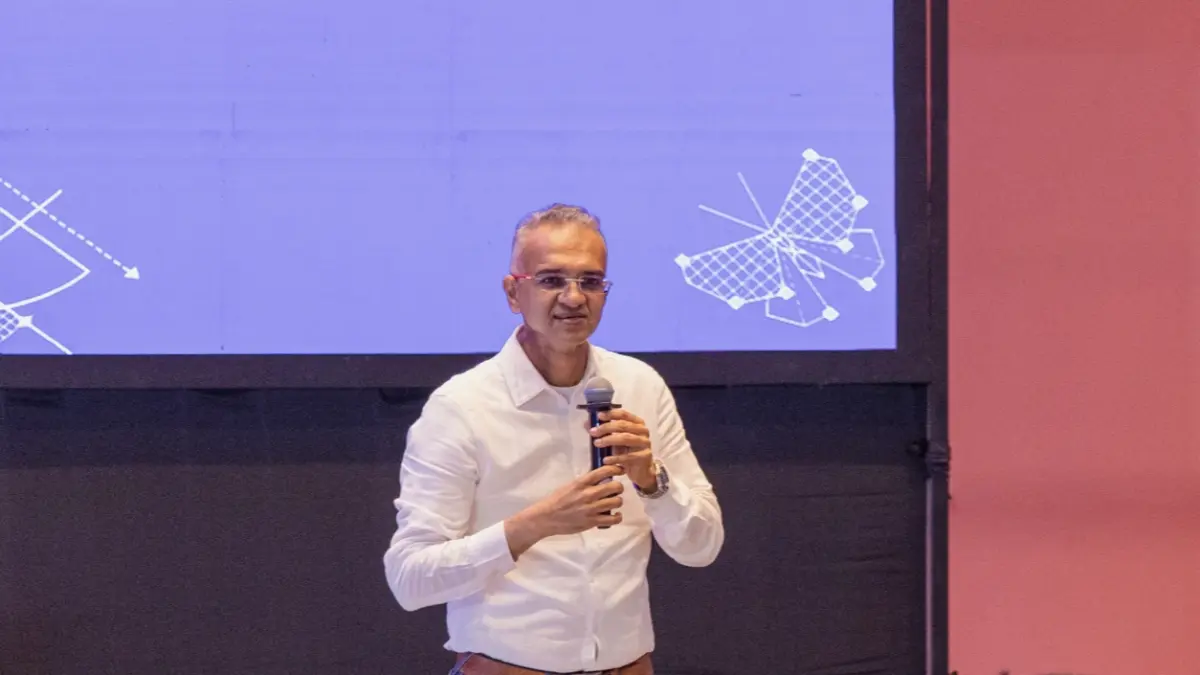
At Mumbai Tech Week (MTW) 2026, Dilip Asbe outlined the roadmap for the next half-billion users. He emphasized that the future of UPI relies on integrating highly localized, deterministic Small Language Models (SLMs) to handle voice onboarding, fraud detection, and credit underwriting.
Supporting Context & Metrics: Scaling to One Billion Transactions
The scale of India’s digital payment ecosystem is unprecedented, but the metrics reveal a stark disparity between transaction volume and market distribution.
| Metric | Current Status (As of Q1 2026) | Target / Statutory Deadline |
|---|---|---|
| Daily UPI Transactions | ~750 Million | 1 Billion+ |
| Dominant Duopoly Share | >80% (PhonePe & Google Pay) | <30% per single app |
| BHIM Market Share | ~1% | N/A (Positioned as sovereign alternative) |
| FIMI AI Adoption | Active (Serving >1 Million users) | Continuous scaling |
| Market Cap Enforcement | Pending | December 31, 2026 |
The Concentration Risk
The concentration of market share in the hands of two foreign-backed entities—PhonePe and Google Pay—poses a systemic risk to India’s financial infrastructure. If either platform experiences a prolonged technical outage, a significant portion of India’s retail economy could grind to a halt.
UPI Market Share Distribution (2026 Estimate)
┌─────────────────────────────────────────────────────────┐
│ PhonePe & Google Pay (Duopoly): ~80%                    │
├──────────────────────────────┬──────────────────────────┤
│ Other Apps (Paytm, etc.): 19%│ BHIM (Sovereign): ~1%    │
└──────────────────────────────┴──────────────────────────┘
NPCI’s proposed solution—a 30% market share cap on transaction volumes processed by any single third-party application provider (TPAP)—has faced repeated delays. Originally slated for earlier enforcement, the deadline is now set for December 31, 2026. Enforcing this cap remains a technical and operational challenge, as restricting users from using their preferred payment app could disrupt the consumer experience.
Official Statements: Dilip Asbe on AI, Guardrails, and Sovereign Alternatives
During his address and subsequent interviews at Mumbai Tech Week 2026, Dilip Asbe provided critical insights into how NPCI intends to navigate the technological and competitive landscapes.
On the Strategic Imperative of AI
Asbe made it clear that reaching the next half-billion users requires shifting from passive payment processing to active, AI-driven facilitation:
"AI will be used very effectively when we look at the next wave of UPI, and that includes all aspects, including reaching new users. We must use AI effectively to protect our current citizens, to find fraud, and to find mules. AI must also be used to provide credit to all the users and merchants who have digital footprints. We must use AI to look at the voice and multilingual solutions to make onboarding simpler."
The Technical Pivot to Small Language Models (SLMs)
While global tech giants focus on massive, multi-billion-parameter Large Language Models (LLMs), Asbe advocates for highly specialized, localized models tailored to the Indian financial context:
"We believe that the models will differentiate from each other based on the datasets that are made available to them. We have a very rich dataset in our ecosystem. I think there is a big opportunity for Indian companies—the banks, fintechs, and the ecosystem—to create small language models which are sharp, specific, and as deterministic as possible."
This emphasis on "deterministic" models is crucial. In financial services, the creative "hallucinations" common in creative LLMs are unacceptable; a transactional AI must be precise, predictable, and fully auditable.
Addressing the Lack of Viable Commercial Models
When questioned about the persistent dominance of Google Pay and PhonePe, Asbe pointed to the economics of the UPI ecosystem. Because UPI operates on a zero-MDR model, third-party apps cannot charge transaction fees, making monetization difficult for newer entrants:
"I believe that there are multiple issues why we see this concentration risk exist, and one of the important reasons is the availability of a viable commercial model. The moment we see the commercial model being available to the ecosystem, I believe newer players will start investing very heavily."
Future Outlook: Navigating the Next Wave of Indian Fintech
As India charges toward its goal of one billion daily transactions, the intersection of regulatory policy, technological innovation, and market dynamics will shape the future of its fintech landscape.
                  ┌─────────────────────────────┐
                  │   Target: 1B Daily Txns     │
                  └──────────────┬──────────────┘
                                 │
         ┌───────────────────────┼───────────────────────┐
         ▼                       ▼                       ▼
┌─────────────────┐     ┌─────────────────┐     ┌─────────────────┐
│ AI-Driven SLMs  │     │ Credit Growth   │     │ Market Cap      │
│ Voice & Fraud   │     │ Underwriting    │     │ Dec 31, 2026    │
└─────────────────┘     └─────────────────┘     └─────────────────┘
1. The Proliferation of Sovereign and Specialized SLMs
NPCis dispute resolution model, FIMI, has proven that domain-specific AI can manage high-volume, low-complexity tasks at scale, having already resolved issues for over a million users. The next step is deploying SLMs at the bank and fintech level. These models will train on localized, anonymized transaction data to detect transaction anomalies and intercept "mule accounts" (accounts used to launder defrauded money) in real time, before the funds leave the banking system.
2. Conversational Voice Banking as the New Standard
While the initial adoption of "Hello UPI" was slow due to language processing limitations, advancements in localized automatic speech recognition (ASR) and natural language understanding (NLU) are bridging the gap. Over the next two to three years, voice-assisted payments in India’s 22 official languages are expected to mature. This will allow users to initiate transactions through spoken commands like, "Send five hundred rupees to my sister," lowering the barrier to entry for rural and elderly demographics.
3. Credit Democratization via Digital Footprints
With millions of small merchants operating entirely within the UPI ecosystem, traditional credit scoring models (which rely on formal income tax returns or credit histories) fail to serve a large portion of the population. By applying AI underwriting models to UPI transaction histories, banks and non-banking financial companies (NBFCs) can assess cash flow health in real time. This enables pre-approved, micro-credit lines directly within the UPI app, turning transaction data into collateral.
4. The Regulatory Dilemma of Agentic Payments
As demonstrated in the 2025 pilots with Razorpay, agentic commerce—where AI agents execute payments autonomously—presents regulatory challenges. The Reserve Bank of India’s stance on payment security has always prioritized user consent, traditionally enforced via two-factor authentication (2FA).
To allow autonomous AI agents to transact, NPCI and the RBI must establish a new regulatory framework. This framework must ensure that if an AI agent executes a transaction, there is an immutable digital audit trail detailing the exact parameters of the user’s consent. If a transaction goes awry, the system must be able to verify whether the AI acted within its authorized boundaries.
5. Enforcing the Market Cap: A Looming Showdown
The December 31, 2026, deadline for the 30% market share cap is approaching. If NPCI enforces the cap strictly, Google Pay and PhonePe may be forced to limit new user onboardings or restrict transaction volumes, potentially pushing users toward alternative platforms like Paytm, BHIM, or bank-owned UPI apps.
However, if new entrants fail to find viable monetization strategies—perhaps through cross-selling insurance, wealth management, or personal loans—the market may remain concentrated. In this scenario, NPCI may have to defer the deadline once again to avoid disrupting the consumer experience.
Ultimately, India’s digital payments ecosystem is entering a mature phase where sheer volume is no longer the sole metric of success. The focus has shifted to resilience, security, and financial inclusion. By integrating deterministic AI models and establishing robust regulatory frameworks for autonomous transactions, NPCI aims to build a financial ecosystem that is not only larger, but smarter, safer, and more equitable.