

Executive Overview
The announcement, while poorly timed for immediate public relations given the seasonal heat, addresses one of the tech industry’s most pressing and wasteful ironies. Modern data centers—particularly those housing high-density servers configured for artificial intelligence (AI) and cloud computing—consume staggering quantities of electricity, nearly all of which is ultimately converted into waste heat. Traditionally, this thermal exhaust is vented harmlessly into the atmosphere through energy-intensive cooling towers and air-conditioning units.
Citylink’s visionary partnership with local energy utility Kogeneracja flips this paradigm on its head. Instead of squandering thermal energy, the upcoming Wrocław facility is being engineered to capture, upgrade, and redirect server exhaust heat to warm homes, businesses, and public infrastructure during Poland’s freezing winters. As the data center scales its computing capacity—with a particular focus on specialized infrastructure dedicated to energy-hungry AI nodes—the volume of recoverable thermal energy will grow in tandem.
This initiative is far from an isolated local experiment. It represents a vanguard movement within civil engineering and green technology. Similar avant-garde projects have recently emerged in the United Kingdom, New Zealand, and Scandinavia, signaling a global shift in how digital infrastructure integrates with urban energy grids. However, as scrutiny intensifies over the carbon footprint of the digital economy, the successful deployment of waste-heat recovery systems in cities like Wrocław may well serve as a vital blueprint for the future of sustainable urban planning.
Detailed Chronology
The Genesis of the Wrocław Partnership
The conceptual framework for the Wrocław district heating project did not materialize overnight. It is the result of months of strategic planning, engineering feasibility studies, and regulatory negotiations between Citylink and Kogeneracja, a prominent regional player in Poland’s energy sector.
As the digital transformation accelerates across Central Europe, Citylink identified Wrocław as a strategic hub for next-generation digital infrastructure. However, recognizing the immense environmental footprint associated with traditional data center cooling architectures, the developer sought a partner capable of integrating industrial-scale thermal output into an existing urban utility framework. Kogeneracja, with its extensive municipal district heating network spanning the city, emerged as the ideal collaborator.
Engineering the Thermal Recovery Loop
The design phase of the Wrocław data center required a radical departure from conventional data center architecture. Typically, facilities are optimized exclusively for power reliability, low latency, and efficient electrical cooling. Citylink’s engineering teams, in coordination with Kogeneracja, pivoted to dual-purpose infrastructure design.
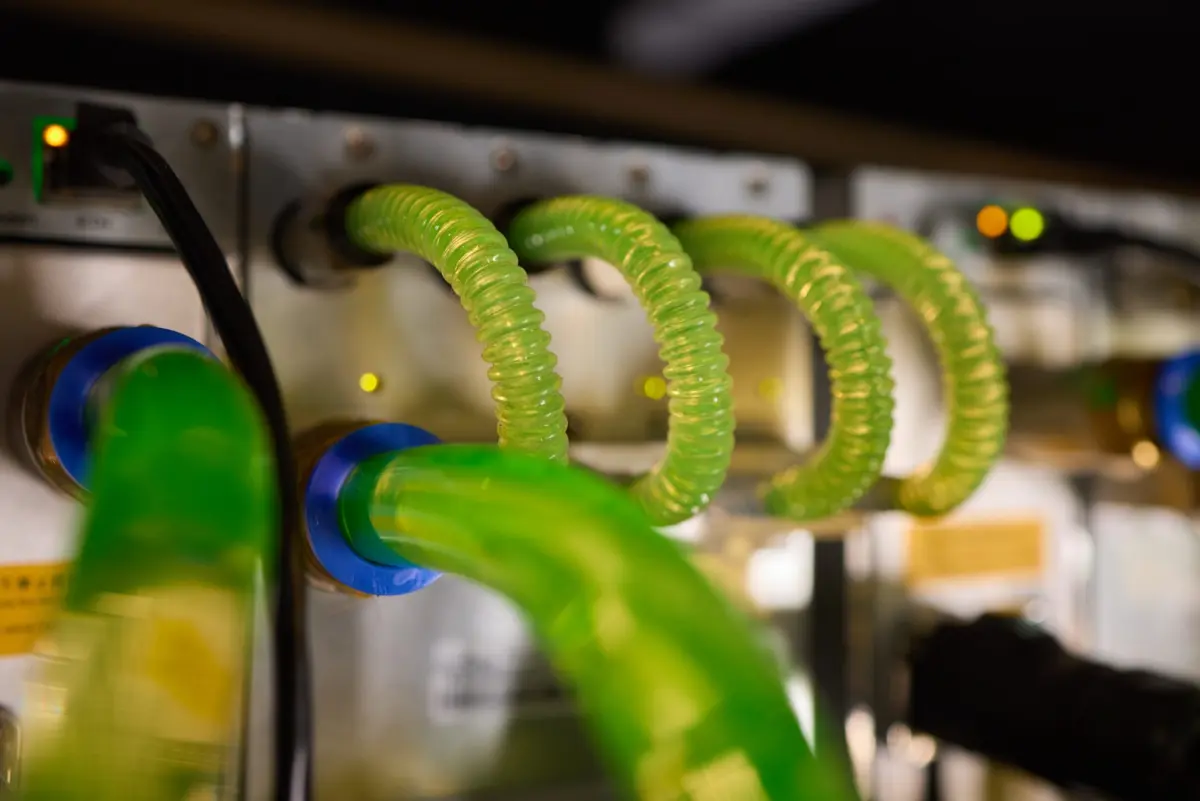
- Capture at the Source: Instead of using ambient air or open-loop water systems to pull heat away from server racks and vent it outdoors, the facility is designed to employ closed-loop liquid cooling systems.
- Thermal Upgrades: Because servers operate at relatively low temperatures compared to traditional industrial boilers, the captured water must pass through high-efficiency industrial heat pumps. These pumps elevate the temperature of the circulating water to levels compatible with municipal district heating requirements (typically between 70°C and 90°C depending on seasonal demands).
- Grid Injection: Once upgraded, the thermal energy is transferred via subterranean pipelines directly into Kogeneracja’s distribution grid, where it can be utilized for space heating and domestic hot water production in nearby residential and commercial districts.
Public Unveiling Amid Climatic Irony
The official announcement of the collaboration arrived during a period of intense public sensitivity regarding ambient temperatures. Across Europe, meteorological agencies reported unprecedented heatwaves, placing strain on power grids due to surging air-conditioning loads.
Announcing a project centered around generating and redistributing heat while citizens wrestled with stifling summer conditions drew wry commentary from observers. Yet, industry experts emphasize that the operational reality of the project is strictly seasonal: the thermal energy captured during the scorching summer months can either be seasonally stored, diverted to industrial processes that require year-round heat (such as greenhouse agriculture or wastewater treatment), or, more immediately, prepared to offset fossil-fuel consumption precisely when Poland’s winters demand intensive residential heating.
Supporting Context & Metrics
The Digital Heat Paradox
To understand the significance of Citylink’s initiative, one must examine the staggering scale of energy consumption and heat generation inherent to the modern digital economy. A single hyperscale data center can consume as much electricity as a small city—often ranging from 50 megawatts (MW) to well over 100 MW. According to thermodynamic laws, virtually 100% of the electrical energy consumed by a data center is ultimately converted into thermal energy.
[Electrical Power Input] ---> (Data Center Servers & AI Nodes) ---> [100% Thermal Output]
                                                                        |
                                                 +----------------------+----------------------+
                                                 |                                             |
                                    [Traditional Approach]                       [Wrocław Sustainable Model]
                                                 |                                             |
                                  Vented to Atmosphere (Wasted)             Captured via Liquid Cooling & Heat Pumps
                                                 |                                             |
                                     Contributes to Urban Heat               Injected into Kogeneracja Municipal Grid
                                                 |                                             |
                                     (Zero Energy Recovery)                  (Heats Homes & Businesses in Winter)
Historically, facility operators viewed this heat as a waste product to be eliminated as quickly and cheaply as possible. Cooling systems themselves consume enormous amounts of auxiliary power—often accounting for 30% to 40% of a facility’s total power usage effectiveness (PUE) overhead. By capturing this heat at the source, projects like the one in Wrocław reduce the energy penalty traditionally associated with keeping servers from overheating.
The Rise of AI and Cloud Infrastructure
The urgency of thermal recovery has escalated dramatically with the explosive growth of artificial intelligence and machine learning applications. High-density AI server nodes, packed with advanced graphics processing units (GPUs) and specialized tensor processing units (TPUs), generate unprecedented thermal loads within localized chassis spaces.
- Power Density Shifts: Traditional enterprise servers historically operated at power densities of 5 to 10 kilowatts (kW) per rack. Modern AI-optimized server racks frequently exceed 40 kW to 100 kW per rack.
- Thermal Concentration: This extreme concentration of heat makes air cooling increasingly unviable, forcing operators to adopt direct-to-chip liquid cooling. Liquid cooling naturally produces a much higher-grade, concentrated stream of warm water, making it fundamentally easier and more economically viable to harvest for municipal heating networks.
Global Precedents: UK, New Zealand, and Scandinavia
Poland is not charting this course alone. Forward-thinking municipalities and developers around the globe are realizing that data centers can act as decentralized power plants for thermal energy:
- United Kingdom: Recent civil engineering frameworks and feasibility studies have positioned data centers as vital nodes in the national energy ecosystem, exploring how wasted thermal energy can feed into urban district heating networks in densely populated urban centers like London.
- New Zealand: Innovative telecommunications and infrastructure projects, such as those spearheaded by Spark on the North Shore, have examined utilizing data center waste heat for localized commercial and recreational applications, demonstrating that even smaller installations yield significant thermal value.
- Scandinavia: Countries like Sweden and Finland have led the charge for over a decade, with facilities such as Stockholm Data Parks successfully supplying heat to tens of thousands of residential homes using server exhaust.
Official Statements
The partnership between Citylink and Kogeneracja has drawn significant commentary from corporate leadership, highlighting the strategic pivot occurring within both the real estate and energy sectors.
Michał Starybrat, Development Director at Citylink:
"The collaboration with Kogeneracja will provide invaluable experience in designing and operating modern data centers, with a particular focus on infrastructure dedicated to AI nodes. The dynamic growth of the artificial intelligence and cloud technology markets generates unprecedented demand for computing power; this collaboration demonstrates how modern digital infrastructure can actively contribute to building the energy ecosystem of the future."
Starybrat’s remarks underscore a growing recognition that real estate developers can no longer afford to treat digital infrastructure assets as isolated, self-contained silos. Instead, data centers must be deeply integrated into the civic metabolism of the cities that host them—co-optimizing water usage, electrical grid stability, and thermal distribution.
Industry analysts note that while utility companies like Kogeneracja have traditionally relied on centralized coal, gas, or biomass combined heat and power (CHP) plants, incorporating decentralized thermal sources like data centers diversifies their input streams and cushions them against future regulatory pressures regarding carbon pricing and fossil-fuel phaseouts.
Future Outlook
Regulatory Pressures and Sustainability Mandates
As international climate agreements tighten and national governments implement stringent carbon-reduction targets, the data center industry faces mounting regulatory headwinds. The European Union’s Energy Efficiency Directive (EED) places rigorous reporting and performance requirements on large-scale data centers, explicitly mandating that new facilities examine the feasibility of utilizing their waste heat.
Failure to integrate waste-heat recovery mechanisms could soon result in punitive regulatory measures, higher operational taxes, or outright zoning restrictions for future data center builds across Europe. Conversely, proactive developers who establish symbiotic relationships with municipal utilities—such as Citylink’s venture in Wrocław—position themselves as industry leaders capable of navigating a low-carbon regulatory landscape.
Technical and Economic Hurdles Ahead
Despite the clear environmental and engineering logic, scaling waste-heat recovery projects presents persistent challenges:
- Distance and Infrastructure Costs: Laying insulated subterranean pipelines from a peripheral data center to densely populated urban heating consumers requires significant capital expenditure.
- Thermal Matching: Data centers operate on a continuous, 24/7 load profile, whereas urban heating demand fluctuates wildly between day and night, and drastically between summer and winter. Solving the seasonal storage conundrum—using thermal energy storage (TES) aquifers or phase-change materials—remains a key engineering frontier.
- Operational Agreements: Structuring commercial tariffs between private digital infrastructure operators and public utility monopolies requires innovative legal frameworks that fairly distribute the costs and revenues of recovered thermal energy.
Conclusion
Citylink and Kogeneracja’s initiative in Wrocław is more than a localized engineering feat; it is a preview of how modern urban landscapes must adapt to the dual pressures of digitalization and climate change. By transforming the massive thermal exhaust of AI and cloud computing into a functional asset for urban heating, the project challenges the traditional narrative of technology as an unmitigated resource drain.
Though announced amid the awkward irony of a summer heatwave, the long-term vision of turning server racks into civic radiators offers a compelling glimpse into a more circular, resource-efficient future—proving that the heat generated by tomorrow’s digital innovations can help keep our cities warm when the winter chill finally sets in.